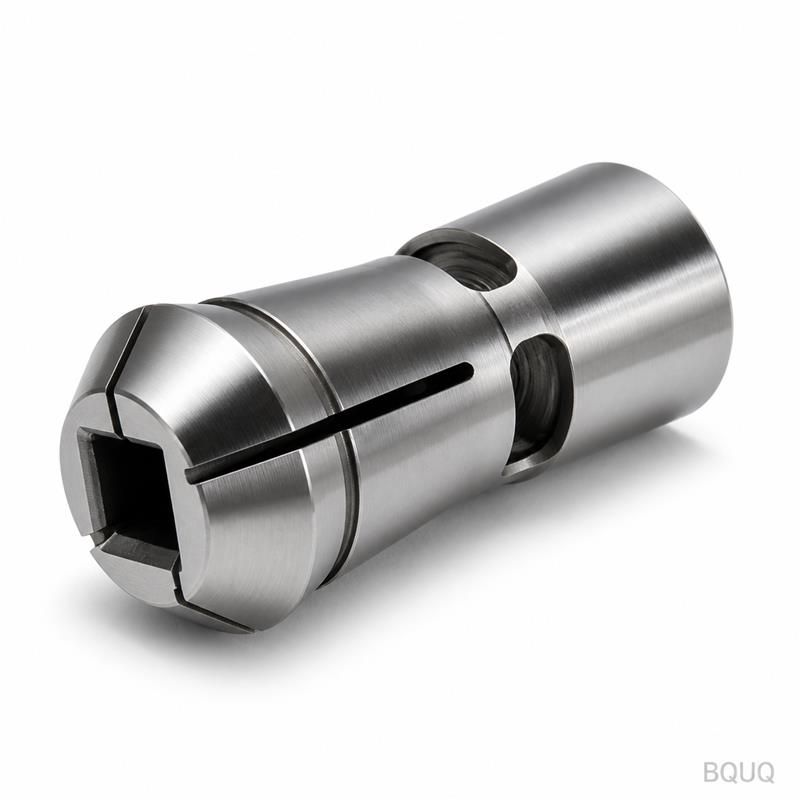
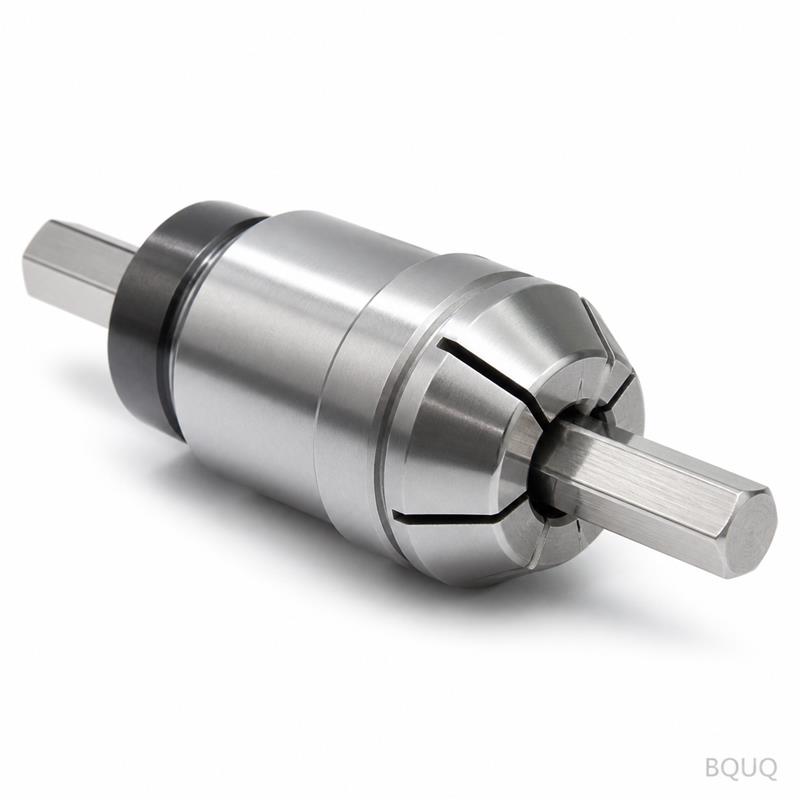
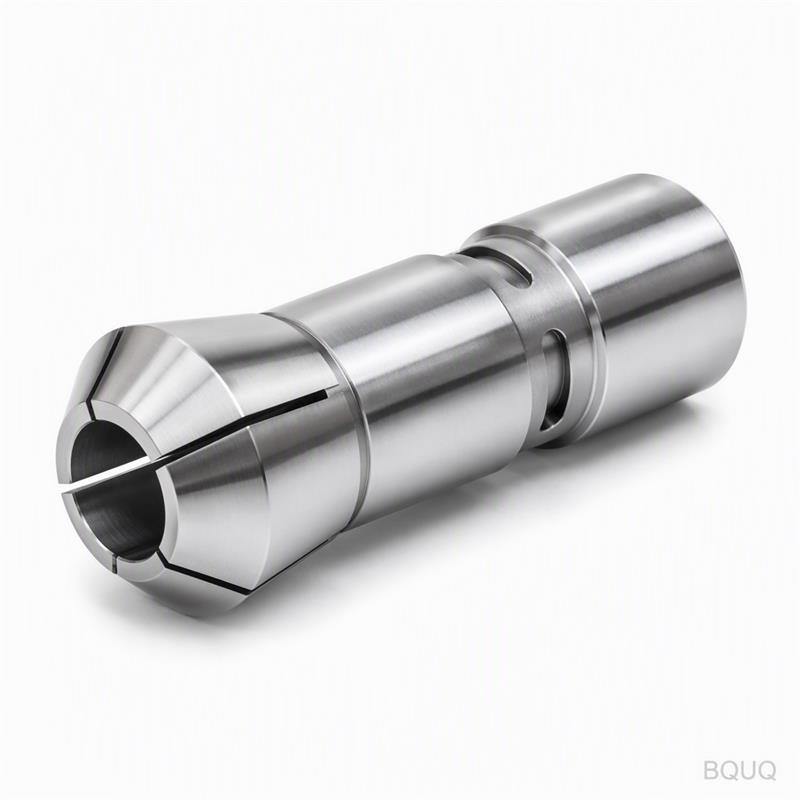
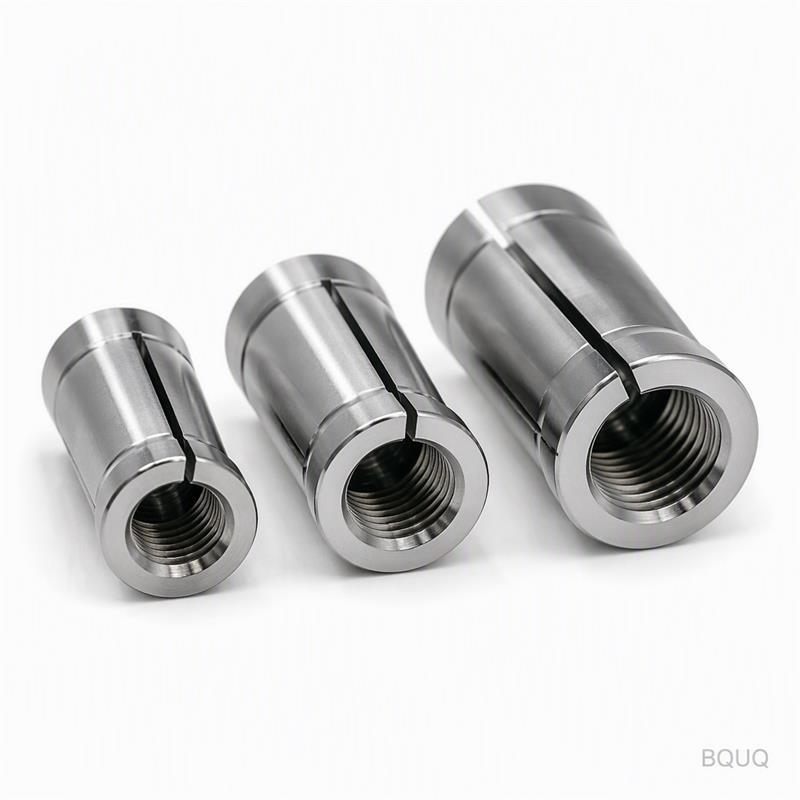
This is a CNC machined auto lathe 32 type square bore spring collet, designed for Swiss-type and automatic lathe spindles that require secure square or rectangular stock gripping.
BQUQ CNC Machined Auto Lathe 32 Type Square Bore Spring Collet
This is a CNC machined auto lathe 32 type square bore spring collet, designed for Swiss-type and automatic lathe spindles that require secure square or rectangular stock gripping. You get guaranteed
Get a Fast Quote for This Part
Send us your drawing / quantity / material — reply within 24h.
This is a CNC machined auto lathe 32 type square bore spring collet, designed for Swiss-type and automatic lathe spindles that require secure square or rectangular stock gripping. You get guaranteed concentricity of 0.005 mm TIR (total indicated runout) and a hardened spring steel body at 58–60 HRC, which translates to less vibration and tighter part tolerances on your production floor. We ship standard sizes in 7 days and custom bores in 12 days from our Dongguan factory, with no MOQ to slow you down.
Why a Square Bore Instead of a Round Bore for Your Stock
If you feed square, hex, or rectangular bar stock into an auto lathe, a round collet bore will deform the material or fail to grip it evenly. Our square bore spring collet matches the stock geometry exactly, distributing clamping force across four flat faces. This eliminates torsion during high-speed machining and prevents the workpiece from spinning in the chuck. The result is consistent machining of flats, slots, and drilled holes without re-tightening or scrap parts.
How the 32 Type Profile Fits Your Spindle and Draw Tube
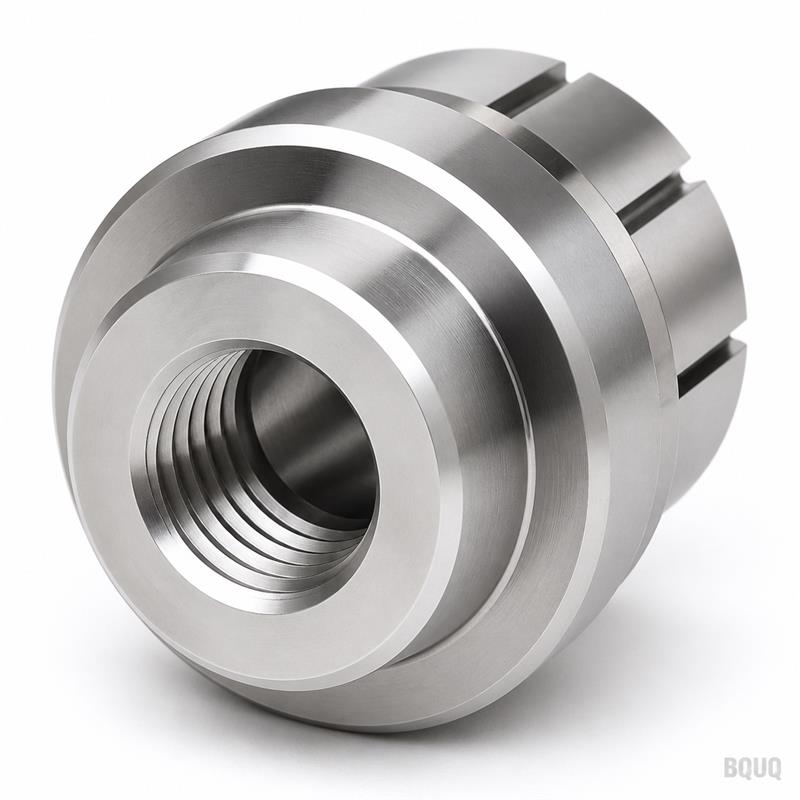
The "32 type" refers to the collet body diameter of 32 mm, which is a standard interface for many Citizen, Star, and Tsugami automatic lathes. The head diameter is 32 mm, the thread is M30 x 1.5, and the overall length is 80 mm. This profile matches the collet seat and draw tube pull-back mechanism, so you can swap out your existing collets without modifying the machine. We can also machine the back end to a custom taper or thread if your spindle uses a proprietary pull-back design.
Material Selection and Heat Treatment for 100,000+ Cycles
We start with either 65Mn spring steel or 42CrMo alloy steel, depending on your stock hardness and clamping force needs. For standard applications, 65Mn offers superior elasticity and fatigue resistance, while 42CrMo is chosen when you need higher wear resistance for abrasive materials like brass or aluminum. After CNC machining, each collet undergoes vacuum heat treatment to 58–60 HRC, followed by cryogenic treatment to stabilize the microstructure. This prevents relaxation or loss of spring force after thousands of open-close cycles.
The Slit Pattern: How We Control Spring Rate and Clamping Force
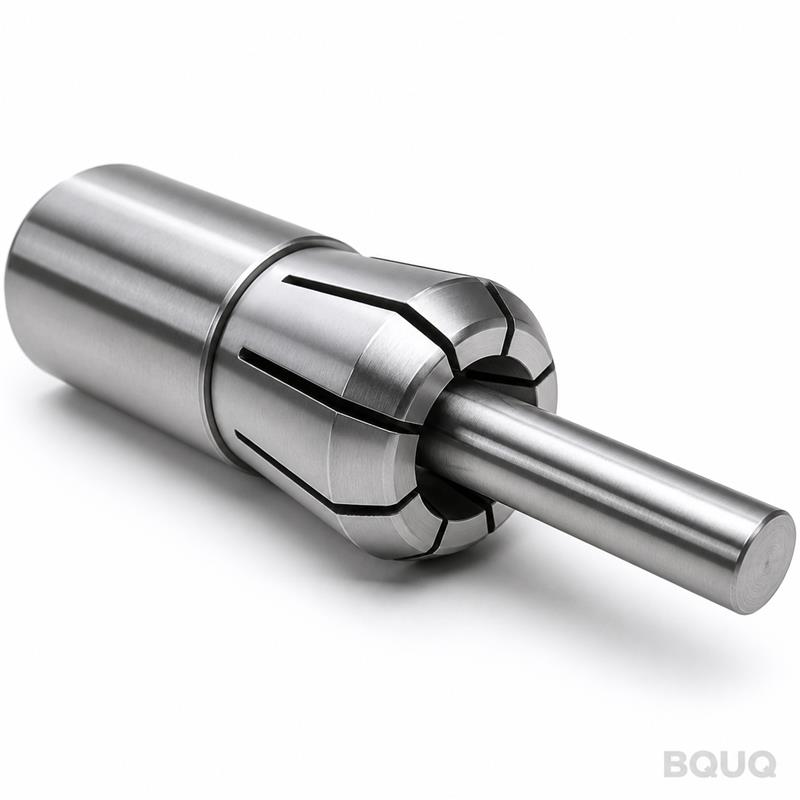
The clamping force is determined by the width, depth, and number of slits machined into the collet body. For the 32 type square bore, we use three slits cut at 120-degree intervals, each 1.2 mm wide and extending 45 mm from the front face. This pattern gives a balanced radial deflection of 0.3 mm at the bore. We calculate the spring rate for your specific draw tube pull force (typically 3–5 kN) so the collet closes by 0.1–0.2 mm when actuated. This precision is what keeps your machined parts within ±0.01 mm tolerances.
Surface Finish and Lubrication Retention on the Bore and Taper
The internal square bore is ground to a surface finish of Ra 0.4 µm, which reduces friction between the collet and your stock, preventing galling on softer materials. The 30-degree taper at the front is lapped to Ra 0.2 µm to ensure a perfect seal against the spindle nose. We also micro-etch a molybdenum disulfide coating on the bore surface. This coating holds lubricant in microscopic pockets, cutting down on heat buildup and extending tool life in your lathe. For high-speed operations above 6,000 RPM, this is critical to avoid premature wear.
Inspection Data We Send with Every Batch: Runout, Hardness, and Bore Size
We do not ship blind. Every collet is inspected on a Zeiss CMM and a custom go/no-go gauge before packaging. You receive a dimensional report that includes bore size to ±0.005 mm, concentricity to 0.005 mm TIR, and hardness test results from three points on the body. We also perform a spring-back test, measuring the ID after 10,000 simulated cycles to confirm the collet returns to within 0.01 mm of its original bore size. If any parameter is out of spec, the collet is scrapped, not reworked.
Specification
Value
Product Name
CNC Machined Auto Lathe 32 Type Square Bore Spring Collet
Collet Body Diameter
32 mm (1.260 in)
Available Square Bore Sizes
4 mm x 4 mm to 20 mm x 20 mm (custom on request)
Overall Length
80 mm (3.150 in)
Thread Size
M30 x 1.5 (metric fine)
Material Options
65Mn Spring Steel or 42CrMo Alloy Steel
Hardness (After Heat Treatment)
58–60 HRC
Internal Bore Surface Finish
Ra 0.4 µm (ground and lapped)
Concentricity (TIR)
0.005 mm
Clamping Deflection
0.1–0.2 mm at rated draw tube force
Lead Time (Standard Size)
7 days
Lead Time (Custom Bore)
12 days
MOQ
No MOQ (single piece accepted)
Country of Origin
Made in China (Dongguan, Guangdong)
How This Collet Performs on Our Own CNC Lathes in Dongguan
We do not just machine these collets—we test them on our own fleet of 20 CNC auto lathes before we offer them to you. In our trial runs with 10 mm square 6061 aluminum stock, we held a surface finish of Ra 0.8 µm and a positional tolerance of ±0.005 mm on a 50 mm long part. The same collet completed 50,000 open-close cycles with no measurable loss in clamping force. This in-house validation is part of our precision manufacturing process, ensuring the collet you receive is production-ready, not just laboratory-approved.
Customization Options: Bore Size, Slit Width, and Material Grade
If your stock is an odd size or you need a different spring rate, we can modify the design. We routinely cut square bores from 3 mm to 25 mm, and we can adjust the slit width from 0.8 mm to 1.5 mm to tune the clamping force for thin-walled tubing. We also offer a carbide-tipped version for abrasive materials like fiberglass-reinforced plastics. Send us your drawing or a sample of your stock, and we will provide a collet that matches your machine's draw tube pull force. For more on tool selection, see our CNC cutting tool selection guide.
Packing and Shipping Details for Export to North America and Europe
Each collet is individually wrapped in VCI (vapor corrosion inhibitor) paper and placed in a foam-lined rigid box to prevent surface damage during transit. For orders of 20 or more, we use wooden pallets with export-grade sealing. We ship via DHL, FedEx, or UPS for small parcels (3–5 days delivery) and by sea freight for bulk orders (20–30 days). All export documentation, including COO (Certificate of Origin), commercial invoice, and material test certificates, is prepared within 24 hours of the order confirmation.
Do you have a minimum order quantity for this collet?
No, we have no MOQ—you can order a single piece for prototyping, and the unit price stays the same as for a batch of 100.
Can you make a square bore size that is not listed in the table?
Yes, we can machine any square bore from 3 mm to 25 mm in 0.5 mm increments, and we will also adjust the outer taper or thread to match your spindle.
How do you verify that the collet will not slip on a 6 mm square bar?
We test each custom bore with a torque wrench on a draw bar fixture, measuring the slip point at 3 different pull forces, and we send you the test data before shipping.
What is your typical lead time if I need a rush order?
For standard 32 type collets, we can ship within 48 hours if the bore size is in stock, and for custom bores, we offer a 5-day express service with a 20% surcharge.
For more details on how we achieve these tolerances, read our CNC machining tolerances guide to understand the difference between standard and high-precision classes.
Request a firm quote within 12 hours. Email your drawing to sc@bquq.com or send a WhatsApp message to +86 13713157787. We will confirm the bore size, material grade, and price within one business day.