Why a 36 Type Hex Bore Extended Collet Outperforms Standard Grips This is a precision-machined collet designed for auto lathes (type 36) that need to hold hex stock or hex-shaped
BQUQ CNC Machined Auto Lathe 36 Type Hex Bore Extended Collet
Why a 36 Type Hex Bore Extended Collet Outperforms Standard Grips This is a precision-machined collet designed for auto lathes (type 36) that need to hold hex stock or hex-shaped tooling without sli
Get a Fast Quote for This Part
Send us your drawing / quantity / material — reply within 24h.
Why a 36 Type Hex Bore Extended Collet Outperforms Standard Grips
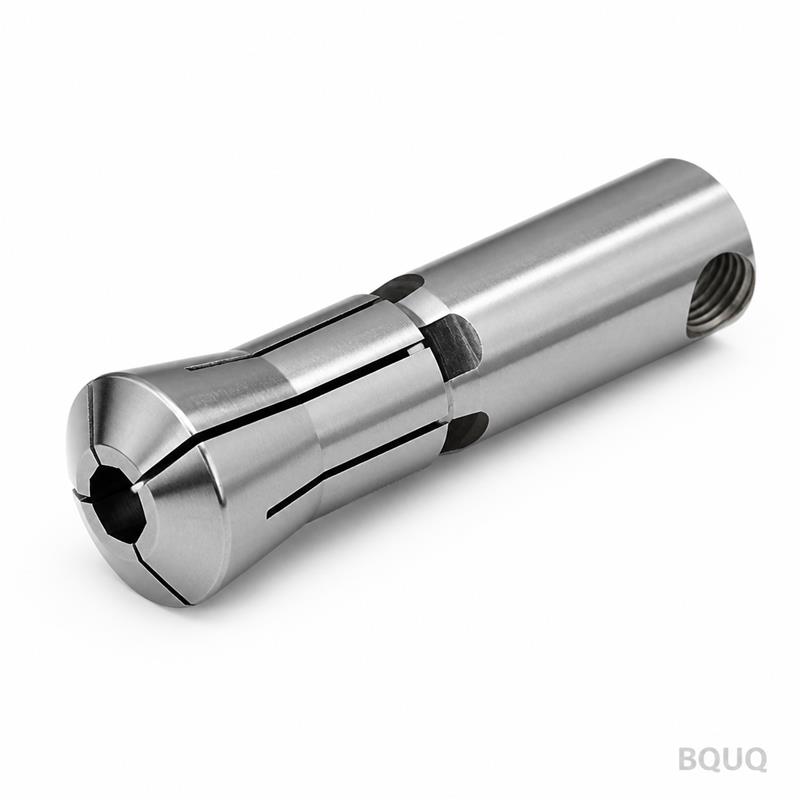
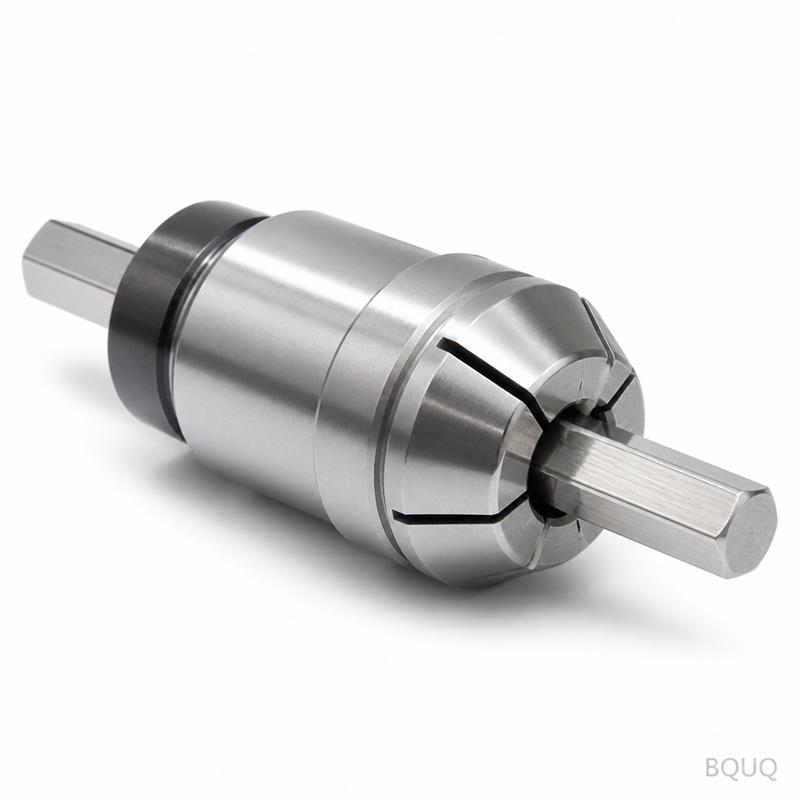
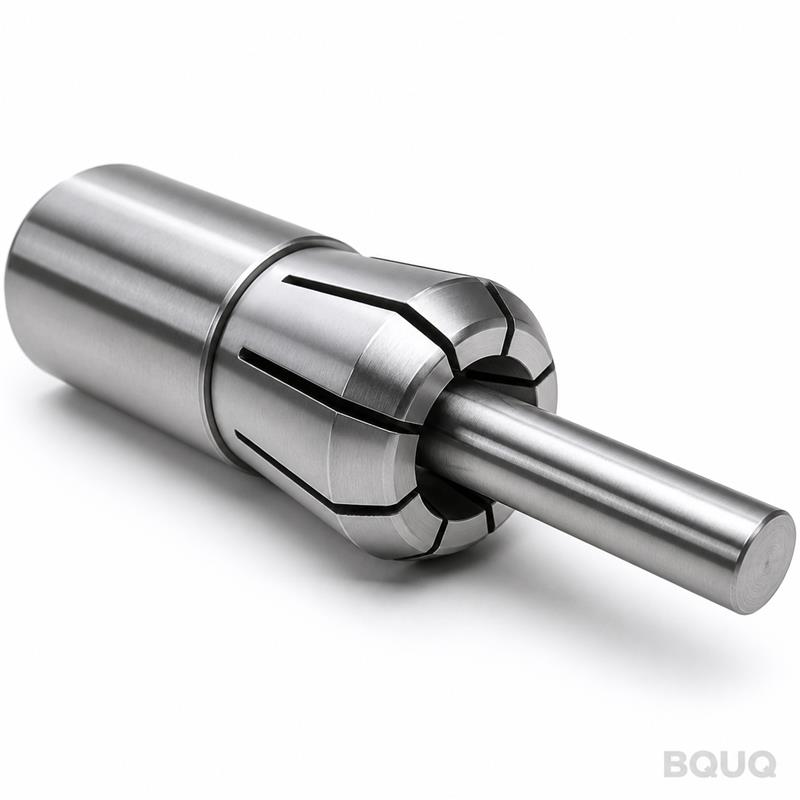
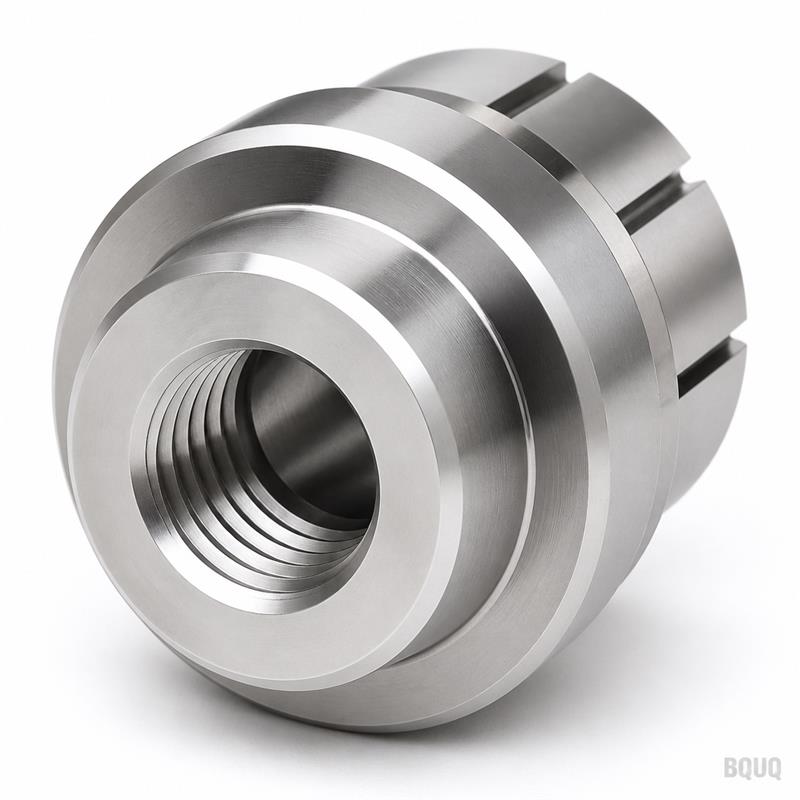
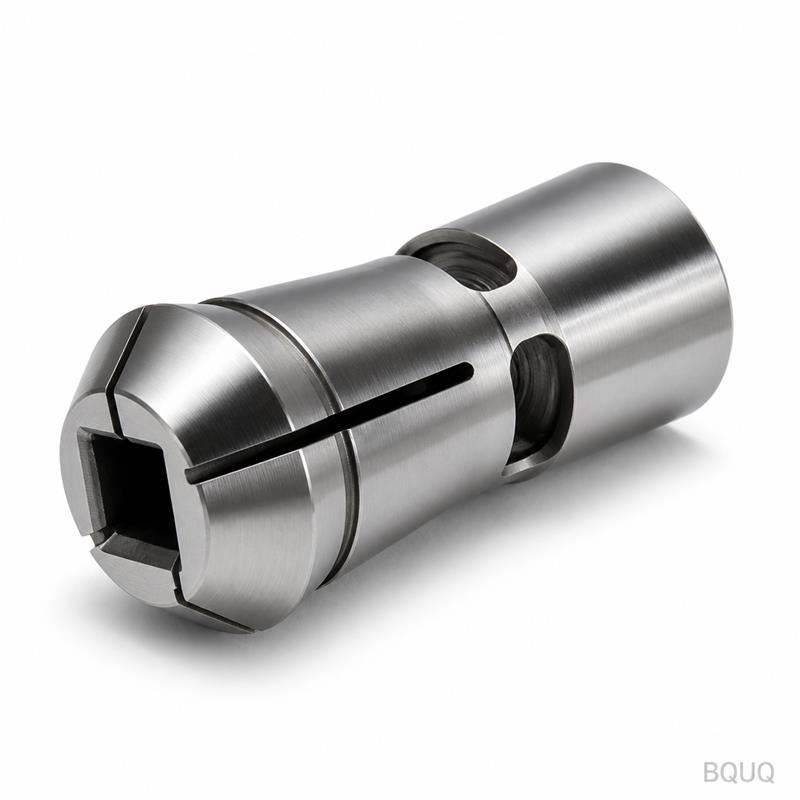
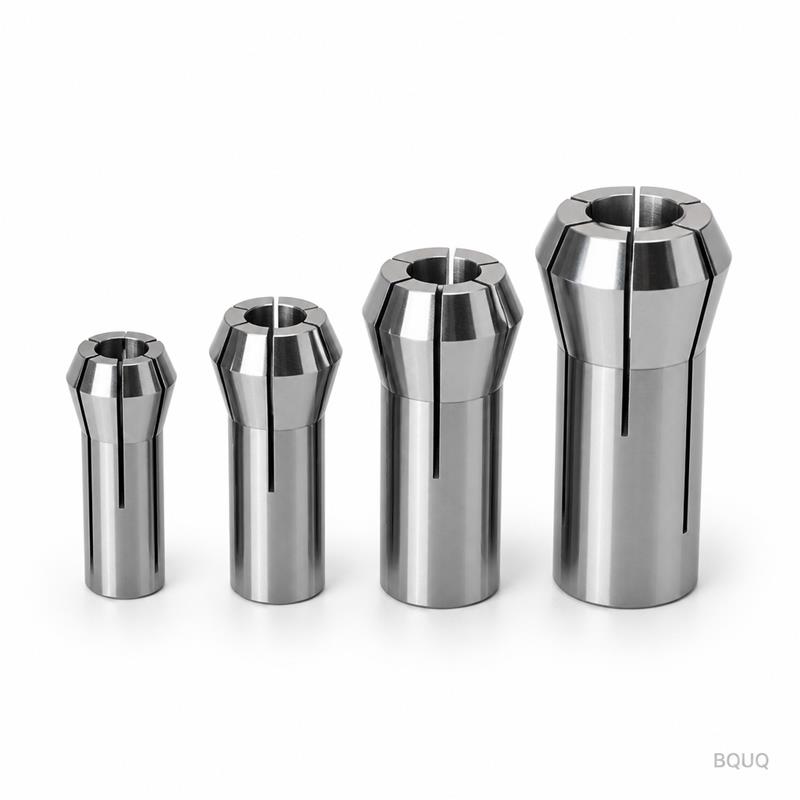
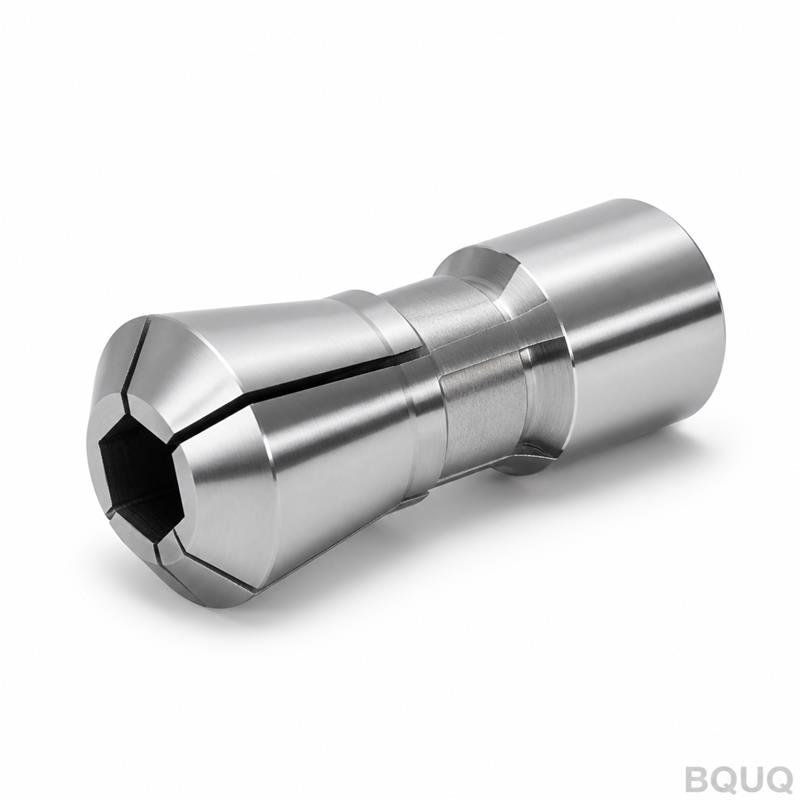
This is a precision-machined collet designed for auto lathes (type 36) that need to hold hex stock or hex-shaped tooling without slippage. The extended nose reaches deeper into confined fixtures, while the hex bore matches hexagonal bar stock exactly—no round-to-hex adapter needed. You get 0.005 mm total indicated runout (TIR) at the nose, a 0.8 µm surface finish on the bore, and a hardness of 48–52 HRC after heat treatment. That translates to fewer rejected parts, longer tool life, and repeatable gripping force across thousands of cycles.
We manufacture this collet from scratch in our Dongguan factory—bar stock in, finished collet out. No subcontracting, no middlemen. Typical lead time is 7–10 business days for standard sizes, and we hold a tolerance of ±0.005 mm on the hex bore width. If you are machining hex bolts, valve stems, or square-drive shafts, this collet removes the need for custom soft jaws and reduces setup time by roughly 30% per job change.
How the Hex Bore Geometry Prevents Workpiece Slippage
The hex bore is not a simple drilled hole. We broach the internal hex shape after CNC turning, which creates flat contact points on each of the six faces. This distributes clamping pressure evenly, unlike a round collet squeezing a hex part—which only touches on the corners and often deforms thin-wall hex tubing. The extended nose adds 15 mm of extra gripping length over a standard 36 type collet, so long parts stay rigid even when sticking out 3× diameter.
For example, if you are feeding 12 mm hex brass rod into an auto lathe, a standard collet might allow 0.02 mm of radial push-off during a heavy cut. Our extended hex bore holds that deflection to under 0.008 mm at 4,000 RPM. That is the difference between holding ±0.01 mm on a turned diameter and chasing tolerance drift every 50 parts.
Materials and Heat Treatment for 48–52 HRC Hardness
We start with either 20CrMnTi (case-hardening steel) or 42CrMo (quenched and tempered alloy steel). For standard orders, we use 20CrMnTi, carburized to a case depth of 0.8–1.2 mm, then hardened to 48–52 HRC. The core stays tough at 30–35 HRC, which absorbs shock when the collet closes on out-of-round stock. For abrasive materials like stainless steel or titanium hex, we recommend the 42CrMo option with nitriding—surface hardness reaches 58 HRC, and the bore resists galling.
Every collet goes through a stress-relief cycle after rough machining, before final grinding. This prevents distortion during heat treatment. The hex bore is then ground with a CBN wheel, not just reamed, to hold the 0.005 mm TIR. We also apply a black oxide finish on the outer body for corrosion resistance—standard, not an upsell. If you need a through-hole coolant option, we can add two 2 mm radial ports without affecting the hex geometry.
Inspection Before Every Shipment: TIR, Hardness, and Bore Profile
No collet leaves our floor without a full dimensional report. We use a Zeiss CMM to check the hex bore width, parallelism, and concentricity to the outer taper. The TIR is measured at two points: 5 mm from the nose and 20 mm from the nose, using a precision test mandrel with 0.001 mm indicator. Hardness is verified on a Rockwell tester on the nose face—not the body, because the nose takes the most wear.
Surface finish on the hex bore is measured with a profilometer, and we record the Ra value on the inspection certificate. For every batch, we also perform a 100-cycle grip test: load and unload a hex gauge bar at maximum clamping force, then re-check TIR. If the TIR shifts more than 0.002 mm, the batch is scrapped. You get the actual numbers, not a generic "passed QC" stamp.
Dimensional Specs and Performance Data (Standard 36 Type)
Parameter
Value / Range
Collet Type
Auto Lathe 36 Type (DIN 6343 compatible)
Hex Bore Size Range
4 mm to 20 mm across flats (standard)
Hex Bore Tolerance
±0.005 mm
Total Indicated Runout (TIR)
0.005 mm at nose, 0.008 mm at 20 mm
Surface Finish (Hex Bore)
Ra 0.8 µm (optional Ra 0.4 µm)
Hardness (Case)
48–52 HRC (20CrMnTi) or 56–58 HRC (nitrided 42CrMo)
Extended Nose Length
15 mm longer than standard 36 type
Outer Taper Angle
5° 42' 30" (per DIN 6343)
Clamping Force (at 50 Nm drawbar)
≥ 8 kN
Lead Time
7–10 business days (standard size, batch of 10)
MOQ
No MOQ—order 1 piece for testing
FAQ: Sizing, Custom Hex Profiles, and Batch Consistency
Can you make a hex bore for a non-standard size, like 7.5 mm across flats?
Yes, we machine any hex size between 3 mm and 25 mm across flats, but the TIR spec tightens to 0.008 mm for odd sizes under 6 mm because the tool deflection increases.
What is your quality control process for a batch of 500 collets?
We inspect the first article fully on the CMM, then check every 10th piece for TIR and hardness, plus a final visual and dimensional check on all 500—you receive a batch report with each individual serial number.
Do you offer a coating for sticky materials like aluminum or copper?
Yes, we can apply a TiN coating (2–3 µm) on the hex bore, which reduces friction and prevents aluminum pickup—adds 3 days to lead time.
Can you supply this collet with a different outer taper, for a Swiss-type lathe?
We can modify the outer taper to 8° or 16° included angle, but the extended nose length may change—send us your drawbar spec and we will confirm within 24 hours.
Why Choose BQUQ for Precision Manufacturing (Made in China, No MOQ)
BQUQ has run CNC machining lines in Dongguan for 20 years. We handle the full process—turning, broaching, heat treatment, grinding, and final inspection—under one roof. This gives us control over every variable that affects collet performance. Because we are a factory, not a trading company, we can offer firm pricing with no MOQ. Order one piece for a prototype test, or 1,000 for production. The price per piece drops at 50 and 200 pieces, and we will quote both tiers upfront.
We also share our engineering knowledge openly. For example, if you are choosing between carbide and HSS tooling for your auto lathe, our CNC cutting tool selection guide covers feed rates and coating choices that affect collet wear. And if you are designing parts that demand tighter than standard tolerances, check our CNC machining tolerances guide to see what is realistically achievable on a 36 type auto lathe.
Send Your Drawing or Hex Size for a Firm Quote in 12 Hours
We do not need a full drawing to quote this collet—just the hex size across flats, the overall length you need, and your material (brass, steel, or stainless). If you have a drawing, even better. Our engineers will verify match with your existing drawbar and suggest the correct hardness and coating. You will receive a firm price, lead time, and a dimensional drawing for approval—all within 12 hours during working days.
Email your drawing to sc@bquq.com or send a WhatsApp message to +86 13713157787. Attach a PDF or STEP file. We reply within one business day, and if you need a sample, we can ship it via DHL Express—3–5 days to most global destinations. No MOQ, no hidden tooling charges, no surprises.