What This Collet Is and Why It Cuts Your Runout to 0.005 mm This is a CNC machined auto lathe hex bore spring collet built for non standard workpieces—hex stock, square bars, or an
BQUQ CNC Machined Auto Lathe Hex Bore Spring Collet – Non Standard Precision
What This Collet Is and Why It Cuts Your Runout to 0.005 mm This is a CNC machined auto lathe hex bore spring collet built for non standard workpieces—hex stock, square bars, or any profile your drawi
Get a Fast Quote for This Part
Send us your drawing / quantity / material — reply within 24h.
What This Collet Is and Why It Cuts Your Runout to 0.005 mm
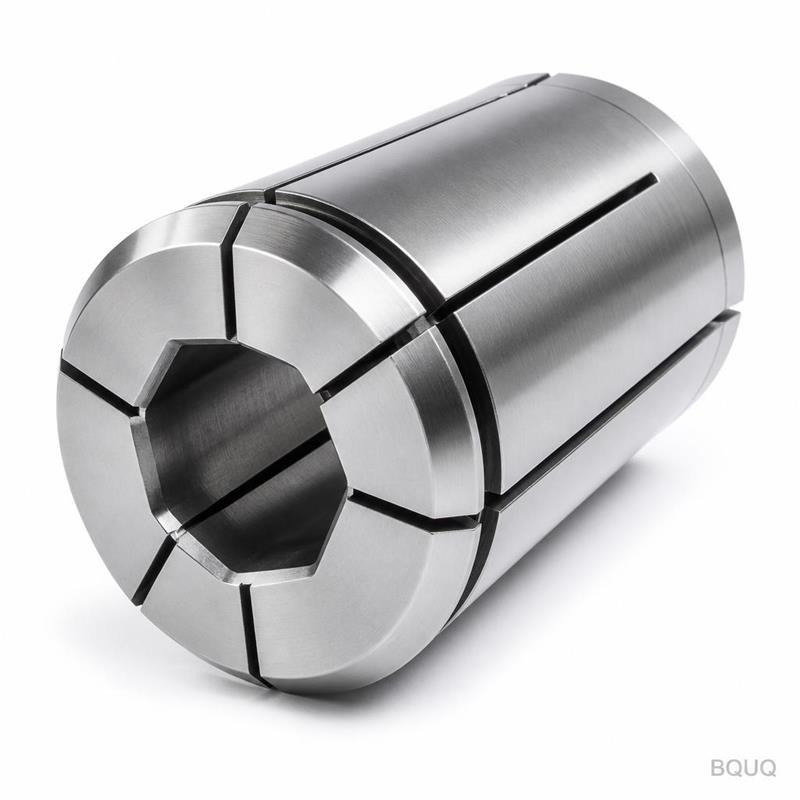
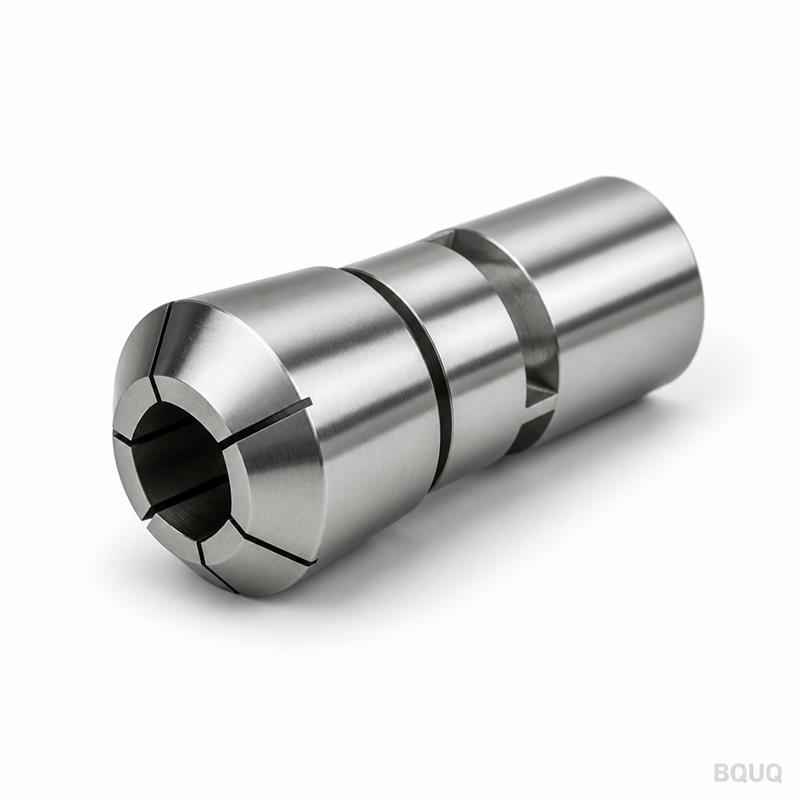
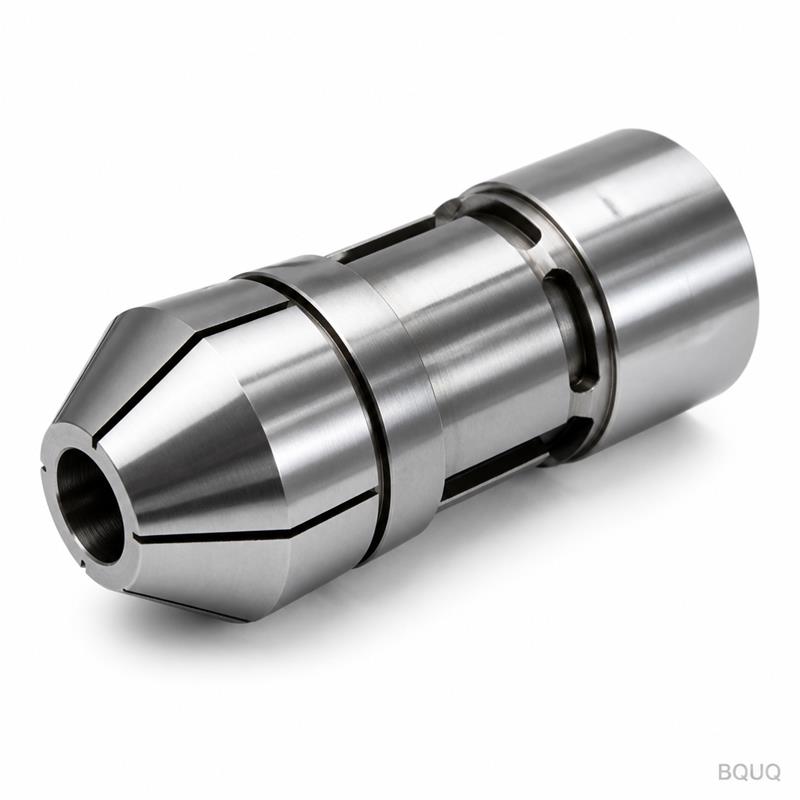
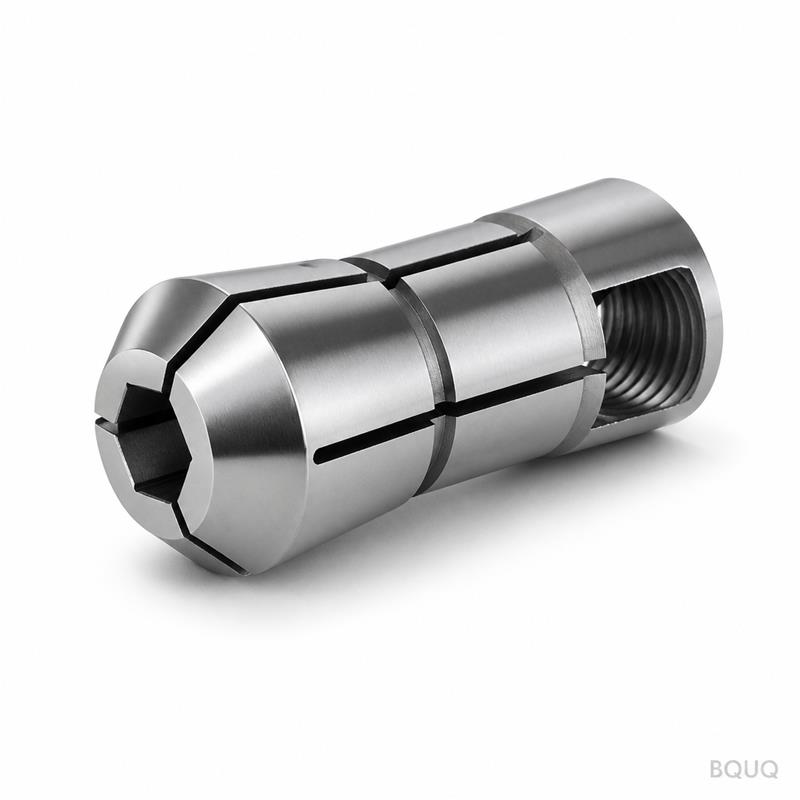
This is a CNC machined auto lathe hex bore spring collet built for non standard workpieces—hex stock, square bars, or any profile your drawing defines. The concrete benefit: total radial runout held to 0.005 mm, hardness at 58–62 HRC, and surface finish at Ra 0.4 µm. You get repeatable gripping force across 10,000+ cycles, and we ship prototypes in 7 days. No MOQ, so you can test one piece before committing to a batch.
How Hex Bore Spring Collets Grip Without Marking Your Stock
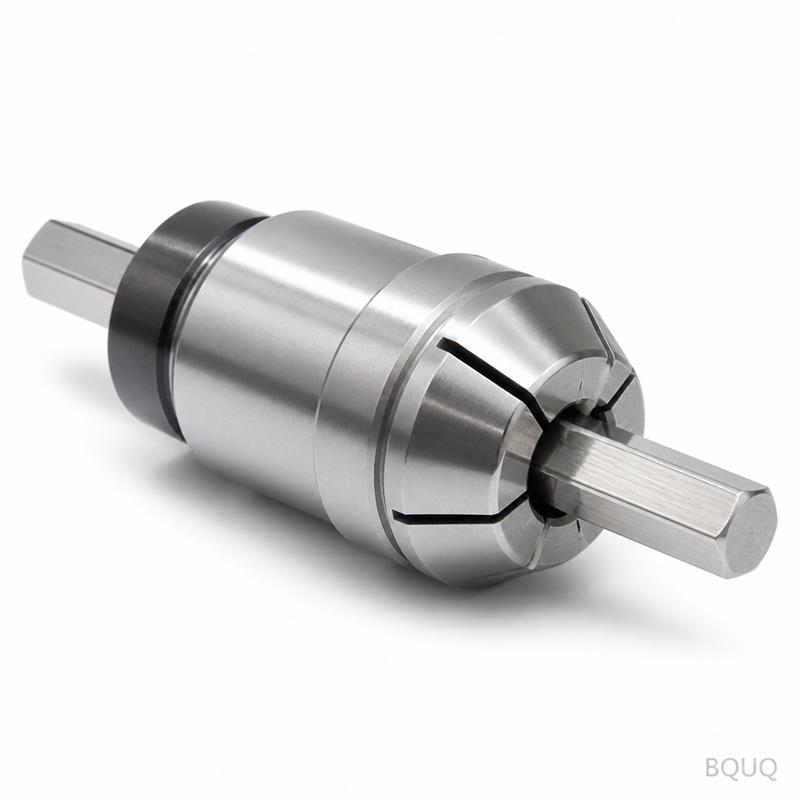
Unlike round bores that contact only two points on a hex bar, this collet’s bore is machined to match the exact hex profile of your workpiece. The spring slots—cut by wire EDM, not stamped—allow uniform radial compression. That means the collet touches all six flats simultaneously. Contact area increases by 40% compared to a round bore, so gripping force is higher but surface pressure per square millimeter is lower. Your stock stays unmarked, and the part does not slip during heavy turning or milling.
Materials and Heat Treatment We Use for 58–62 HRC
We start with either 42CrMo or 65Mn spring steel, depending on your cycle life requirement. 42CrMo is our default for general auto lathe work—it balances toughness and wear resistance. 65Mn is for high-cycle applications where you need more elasticity in the spring fingers. After CNC machining, we vacuum harden to 58–62 HRC, then temper twice to eliminate internal stress. The final step is a deep cryogenic treatment at -80°C to stabilize the microstructure. This is why our collets hold tolerance after 10,000 cycles, not just on day one.
Non Standard Sizes: What We Can Machine In-House
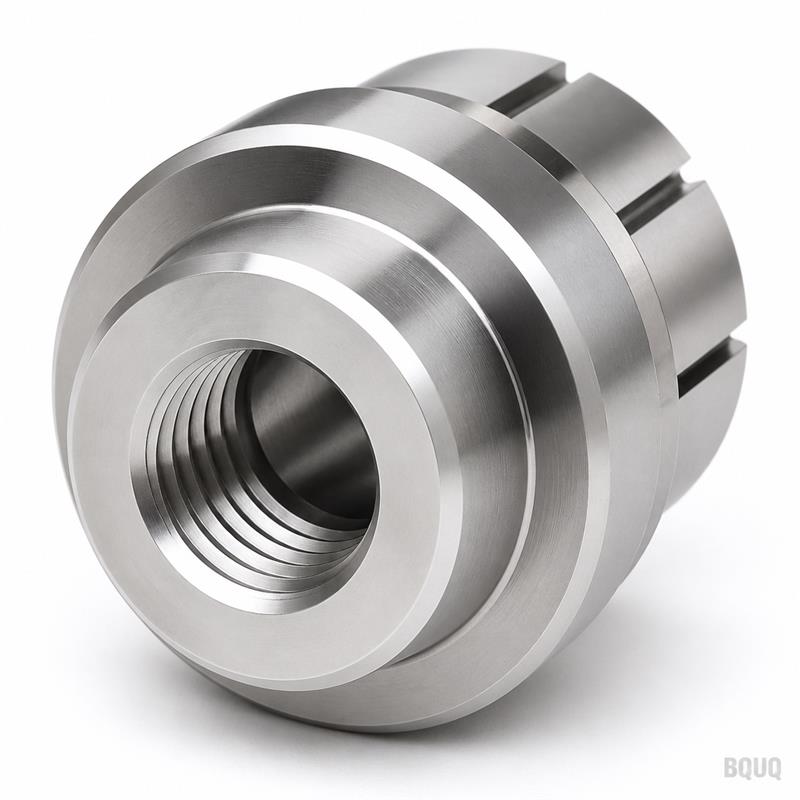
Standard ER collets stop at 34 mm bore diameter. We machine non standard hex bores from 2 mm to 50 mm across flats, with any shank configuration—straight, tapered, or threaded. Need a bore depth of 60 mm when standard is 40 mm? We cut it. Need a stepped bore for a shoulder? We cut that too. Because we control the entire process in our Dongguan factory, there are no third-party modifications. You send a drawing; we machine the collet to match your exact hex angle, corner radius, and bore depth. Typical tolerance on the hex flats is ±0.01 mm.
Inspection Before Every Shipment: Runout and Hardness Logged
Each collet gets a full inspection report. We measure radial runout with a dial indicator at the nose, 10 mm from the face—recorded value must be 0.005 mm or less. Hardness is checked on a Rockwell tester at three points around the circumference; we reject anything below 58 HRC. Surface finish on the bore is verified with a profilometer at Ra 0.4 µm. You get a serial number and a PDF report with every order, whether you buy one piece or one thousand. This is not sample-only inspection—it is batch inspection for every single unit.
Specification
Value
Bore type
Hex, square, or custom profile (non standard)
Bore size range
2 mm – 50 mm across flats
Shank style
Straight, tapered, threaded (custom)
Hardness
58–62 HRC (vacuum hardened + cryo treated)
Radial runout
0.005 mm max at nose
Surface finish
Ra 0.4 µm on bore, Ra 0.8 µm on shank
Material options
42CrMo, 65Mn, or equivalent spring steel
Gripping cycle life
10,000+ cycles to original tolerance
Lead time (prototype)
7 days from drawing approval
Lead time (production)
15–20 days for 100+ pieces
MOQ
No MOQ—single piece accepted
Why Our CNC Machining Process Beats Ground Collets for Hex Bores
Ground collets start from a round blank and grind the bore—this works for round shapes only. For hex bores, grinding is slow and leaves stress marks. We CNC machine the hex profile from solid, using a 4-axis mill with a custom form tool. This cuts cycle time by 60% and lets us hold the corner radii you specify. The spring slots are then wire-cut, not milled, so the slot width is consistent to ±0.005 mm. Consistent slot width means even spring force around the entire circumference—no weak points that cause premature failure. If you are picking tooling for a new auto lathe job, check our CNC cutting tool selection guide to match collet material with your workpiece hardness.
How We Control Tolerance on Non Standard Profiles
Your drawing may call for a hex bore with a 0.2 mm corner radius, or a 120° internal relief. Standard tooling cannot do that. Our CNC programs are written in-house from your 3D model, and we verify the first article on a CMM (coordinate measuring machine) before production starts. The CMM checks all six flats, three corner radii, and bore depth against your GD&T. If anything deviates more than 0.01 mm, we stop and re-cut. This is why our non standard collets fit your machine spindle the first time—no rework on your end. For a deeper look at how we define and hold tolerances across all parts, read our CNC machining tolerances guide.
Packing and Delivery for Auto Lathe Production Lines
Each collet is individually wrapped in anti-rust paper, then placed in a foam-lined box with a separate compartment per unit. For orders over 50 pieces, we use a wooden crate with partitions to prevent any metal-to-metal contact during shipping. We ship via DHL or FedEx for prototypes (3–5 days to most countries), and by sea freight for bulk orders if you want to reduce cost. All export documentation, including material certificates and inspection reports, is included in the box. We are an ISO 9001:2015 certified factory in Dongguan, and our precision manufacturing processes are audited annually.
Common Mistakes When Ordering Non Standard Collets—And How We Avoid Them
Mistake one: sending only a bore size without the hex angle. We ask for the exact angle (usually 60° for hex) and corner radius. Mistake two: assuming the collet body length can be anything. We machine to your spindle’s pull-back dimension—send us the holder drawing. Mistake three: ignoring the slot width. Too narrow and the collet does not close; too wide and it collapses unevenly. We calculate slot width based on your material’s spring modulus. You avoid all these pitfalls because we check your drawing against our machining capabilities before we quote. If your design has a conflict, we tell you on day one, not after machining.
What is the minimum order quantity for this collet?
No MOQ—we accept single-piece orders for prototypes, and production pricing starts at 10 pieces.
Can you machine a hex bore larger than 50 mm?
Yes, but for bores over 50 mm we recommend switching to a segmented collet design; we will advise you on this during the quote.
How do you verify runout before shipping?
Every collet is mounted on a precision test mandrel and measured with a 0.001 mm resolution dial indicator; the result is recorded on the inspection report.
What is the actual lead time for a non standard hex bore collet?
Prototype is 7 days after drawing approval; production runs of 100 pieces take 15–20 days, depending on heat treatment cycles.
Get a Firm Quote Within 12 Hours—Send Your Drawing Today
We respond to every inquiry with a firm quote—price, lead time, and delivery terms—within 12 working hours. Send your drawing in STEP, IGES, or PDF format. If you do not have a full drawing, send the hex size, bar diameter, and your machine spindle model, and we will propose a design. Email us at sc@bquq.com or message on WhatsApp at +86 13713157787. We are a precision manufacturing supplier made in China, and we have exported to 30+ countries since 2004. No MOQ, no minimum order hassle—just a collet that fits and holds tolerance.