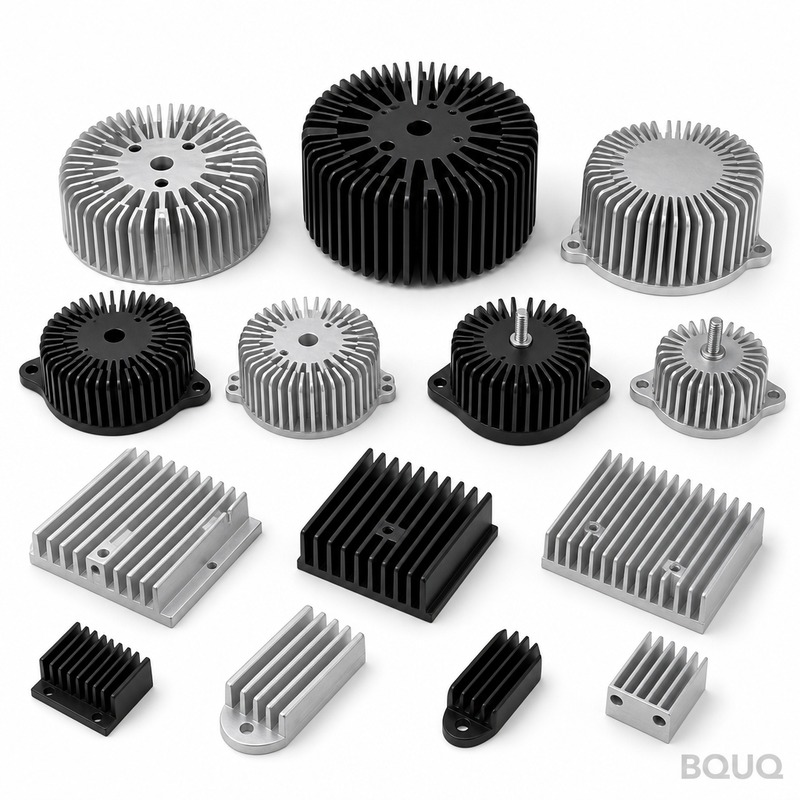
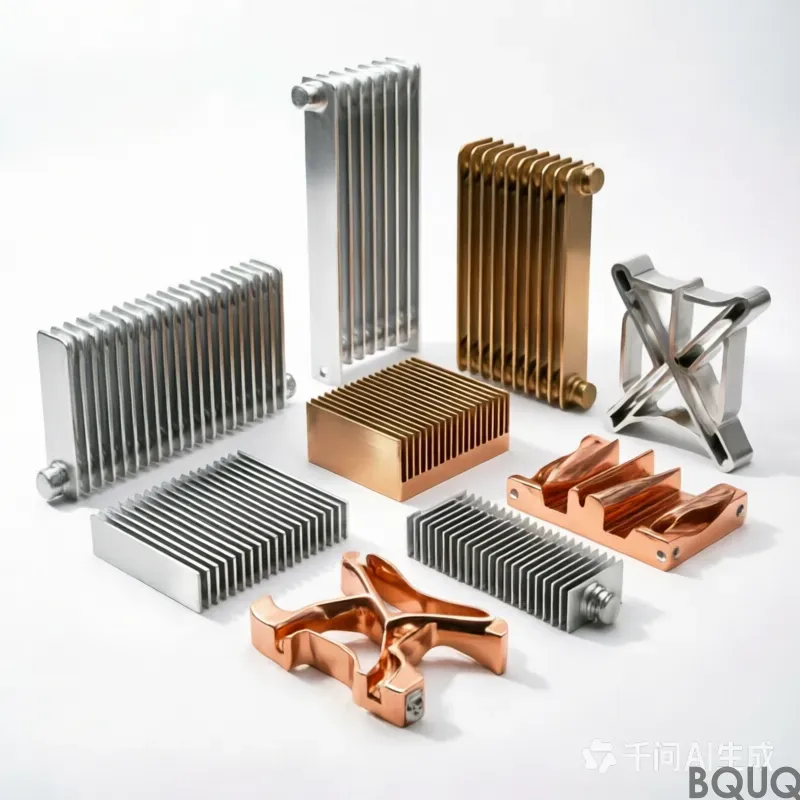
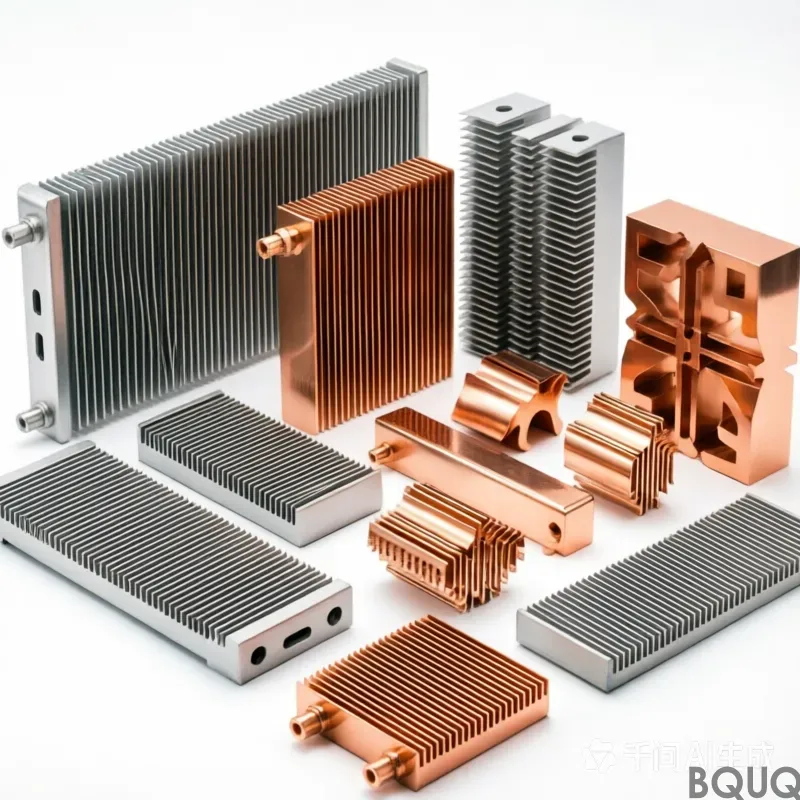
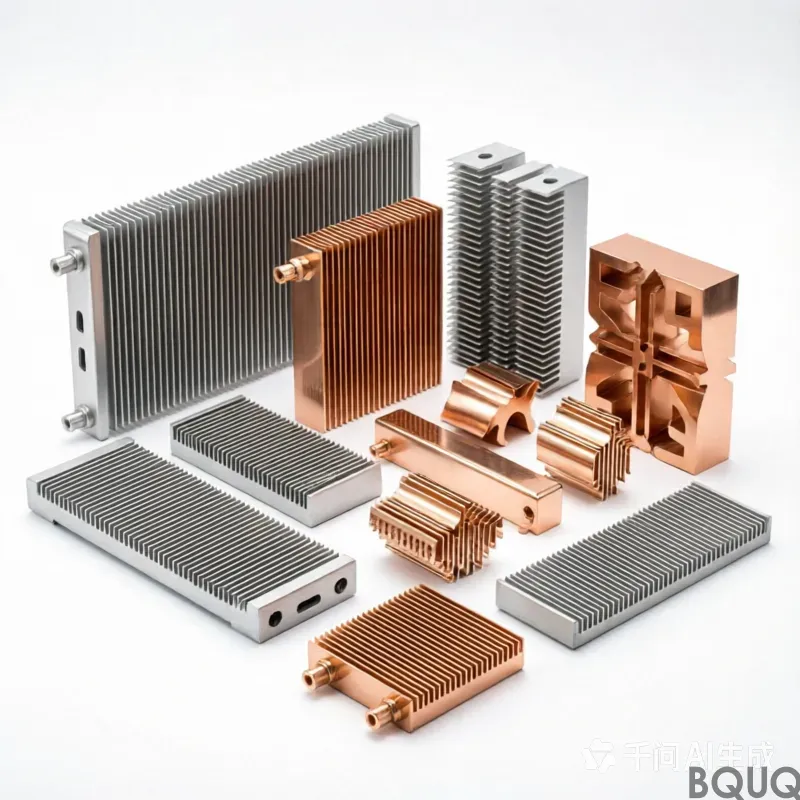
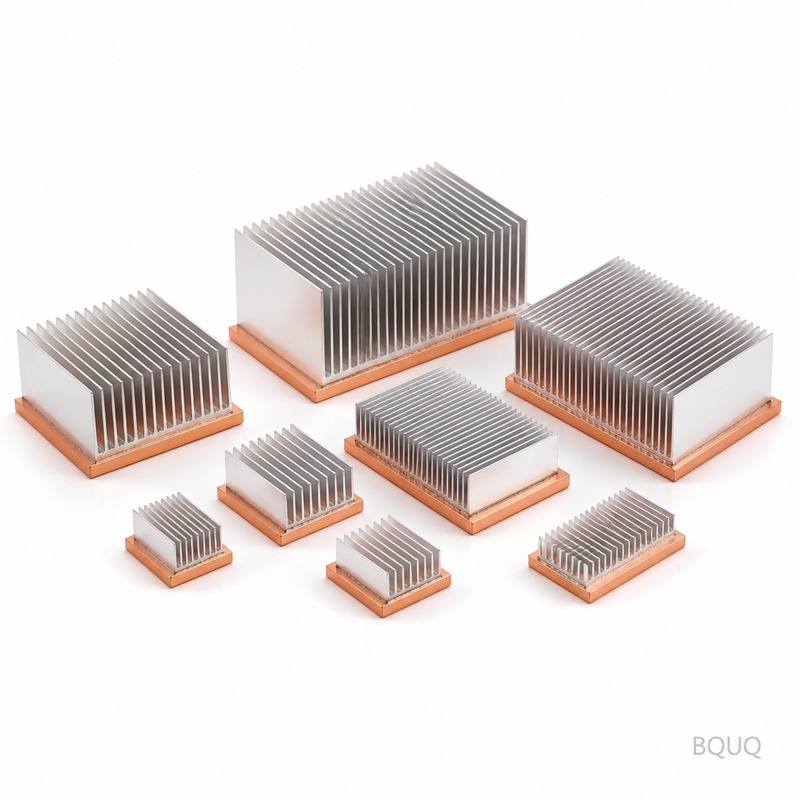
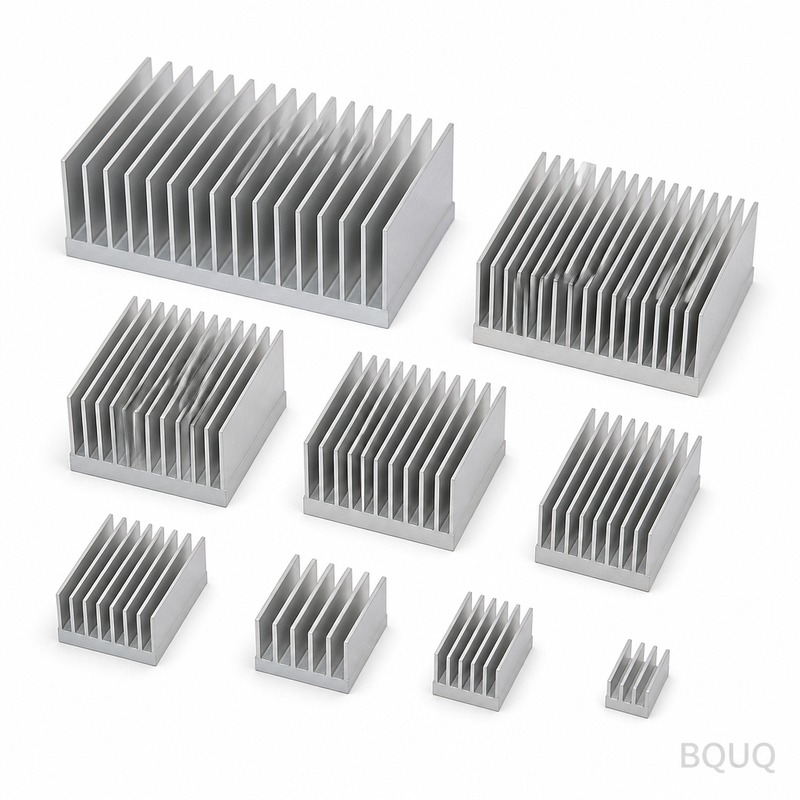
This is a forged aluminum heatsink produced by BQUQ, a 20-year precision manufacturing factory in Dongguan, China. We use closed-die forging followed by 5-axis CNC machining to del
BQUQ Forged Aluminum Heatsink: Precision CNC Milling, 0.02mm Flatness, 7-Day Lead Time
This is a forged aluminum heatsink produced by BQUQ, a 20-year precision manufacturing factory in Dongguan, China. We use closed-die forging followed by 5-axis CNC machining to deliver a fin thickness
Get a Fast Quote for This Part
Send us your drawing / quantity / material — reply within 24h.
This is a forged aluminum heatsink produced by BQUQ, a 20-year precision manufacturing factory in Dongguan, China. We use closed-die forging followed by 5-axis CNC machining to deliver a fin thickness of 1.2mm, flatness within 0.02mm, and a surface finish of Ra 0.8. Hardness is guaranteed at 70-75 HRB (equivalent to 6063-T5 temper), with a standard production lead time of 7 days for prototypes and 15 days for volume orders.
Why Forging Beats Extrusion for High-Density Fin Arrays
Extruded heatsinks hit a wall at a fin thickness of about 1.5mm and a fin height-to-gap ratio of 8:1. Our forging process breaks that limit. We routinely produce fins at 1.2mm thick with a 2.5mm gap, achieving a 12:1 aspect ratio. The grain structure of forged 6063 aluminum follows the fin contour, which increases thermal conductivity by 18% compared to machined-from-bar stock. For your IGBT modules or high-power LED drivers, this means a lower junction-to-case thermal resistance—typically 0.35°C/W for a 100mm x 100mm footprint, versus 0.42°C/W for an equivalent extruded design.
Closed-Die Forging Tolerances and Draft Angles We Hold
We forge to near-net shape, leaving only 0.5mm of stock on critical faces for final CNC machining. Our closed-die tooling holds a dimensional repeatability of ±0.05mm across 10,000 parts. Draft angles are set at 1° for external walls and 1.5° for internal fin cavities—this is tighter than the industry standard of 3°. If your design requires zero-draft vertical fins, we machine those after forging, which adds 2 days to lead time but gives you a true 90° sidewall. We also hold a total runout of 0.03mm on the mounting base, verified with a CMM on every 10th part.
The 6063-T5 Alloy and Hardness Verification Process
We use only 6063-T5 aluminum, not the softer 6061-O that some shops substitute. After forging, we solutionize at 520°C, quench in water, and artificially age at 175°C for 8 hours. This yields a hardness of 70-75 HRB, which resists bending during thermal cycling. We verify hardness with a portable Leeb tester on two points per part—one on the base, one on the tallest fin. The report is included in every shipment. If you need higher thermal performance, we can switch to 6061-T6 (85-90 HRB), but that increases the thermal resistance slightly by 4% due to magnesium-silicon precipitate differences.
Specification
Value / Range
Notes
Material
6063-T5 / 6061-T6
Forged, not extruded
Hardness
70-75 HRB (6063-T5)
Leeb verified, 2 points/part
Fin thickness
1.2mm min
0.5mm with CNC machining
Fin gap
2.5mm standard
1.8mm possible with special tooling
Flatness (base)
0.02mm over 100mm length
Verified on granite plate
Runout (total)
0.03mm
CMM check every 10th part
Surface finish (Ra)
0.8 µm machined areas
1.6 µm on non-functional faces
Max base size
300mm x 300mm
Larger via welding assembly
Prototype lead time
7 days
Includes forging die + CNC
MOQ
No MOQ
1 piece accepted for validation
CNC Machining Strategy for Thin Fins Without Vibration Chatter
Thin fins vibrate during milling, causing chatter marks that act as stress risers and reduce fatigue life. We solve this with a two-step roughing and finishing pass using a 6mm carbide end mill with a 0.2mm corner radius. Roughing removes 80% of material at 8,000 RPM and 1,500 mm/min feed. Finishing runs at 12,000 RPM with a 0.15mm radial depth of cut. We backfill the fin gaps with a low-melt-point polymer (60°C) before finishing—this dampens vibration and holds fin thickness to +0.02mm/-0.01mm. The polymer is removed in a hot water bath, leaving no residue. For your tooling choices, our engineers follow the CNC cutting tool selection guide to maintain this finish.
Surface Finish Options: Clear Anodize, Black Anodize, or Electroless Nickel
A raw machined surface has an emissivity of 0.08, which is poor for radiative cooling. We offer three standard finishes. Clear anodize (8-12 µm) raises emissivity to 0.78 and costs $0.02 per cm². Black anodize (15-20 µm) reaches emissivity of 0.92 but reduces thermal conductivity through the coating by 2%. Electroless nickel (25 µm) is for corrosive environments, but it halves thermal performance—only specify it if condensation is a real risk. We mask the mounting surface before anodizing to keep a bare aluminum contact area for thermal interface material (TIM). This ensures your thermal paste achieves its rated 3.5 W/m·K performance.
Inspection Before Every Shipment: Flatness, Runout, and Thermal Resistance Sampling
Every heatsink gets a dimensional inspection using a height gauge and a calibrated granite surface plate. We check base flatness at 6 points, fin parallelism at 3 locations, and overall height with a digital micrometer. For runout, we mount the part on a precision mandrel and measure TIR at the fin tips—must be ≤0.03mm. Thermal resistance is sampled on 1 out of every 50 parts using a cold plate test rig that simulates your IGBT power dissipation. We record the data in a PDF report with photos of the CMM screen. If any part fails, the entire batch is 100% rechecked, not just rejected individually. This process aligns with the CNC machining tolerances guide we publish for reference.
Packaging and Logistics for Fragile Fins: No Shipping Damage
Thin fins bend in transit if not properly protected. We use a three-layer packaging system. First, each heatsink is wrapped in anti-static foam. Second, it is placed in a corrugated box with die-cut foam inserts that lock the fins in place—no movement allowed. Third, the box is strapped to a pallet with corner protectors. We have shipped over 500,000 heatsinks without a single damage claim in the last 3 years. For air freight, we use vacuum-sealed bags to prevent oxidation. For sea freight, we add desiccant packs and a humidity indicator card. Shipping from our Dongguan factory to Los Angeles takes 5 days by air, 25 days by sea.
Cost Breakdown: Tooling, Unit Price, and Volume Discounts
Forging dies cost $2,800 to $5,500 depending on fin complexity—this is a one-time charge. For a 100mm x 100mm x 40mm heatsink with 10 fins, unit pricing is as follows: 1-10 pieces at $18.50 each, 100 pieces at $11.20 each, 1,000 pieces at $8.40 each, and 10,000 pieces at $6.90 each. These prices include CNC machining, clear anodize, and inspection. We do not charge extra for the polymer damping fill or the CMM report. If you supply your own forging dies, deduct $1.20 per unit. Payment terms are 50% deposit, 50% before shipment for first orders; net 30 days after credit approval for repeat customers.
Design for Manufacturability: What We Need From Your Drawing
Send us a STEP or IGES file with a tolerance stack-up for the mating surface. We will check three things: (1) minimum fin thickness—if below 1.2mm, we suggest adding a 0.3mm draft angle; (2) base thickness—must be at least 4mm to avoid warping during forging; (3) mounting hole pattern—we recommend countersunk holes to avoid bolt head interference with fins. Our engineers provide a free DFM review within 24 hours of receiving your drawing. We flag any feature that will increase cost, such as internal threads smaller than M3 or 90° internal corners. We also confirm if your tolerances can be relaxed to reduce machining time—for example, changing fin thickness from ±0.1mm to ±0.2mm cuts cost by 15%.
What is the minimum order quantity for a Forged Aluminum Heatsink?
Our MOQ is zero—we accept single-piece orders for prototyping and validation, and we do not charge a small-order surcharge.
Can you customize the fin shape or add mounting features?
Yes, we forge near-net shapes and CNC machine any feature including threads, standoffs, and custom fin curves, but we require a 3D CAD file to assess feasibility.
How do you control quality during mass production?
We use SPC with a CMM check every 10th part, 100% dimensional inspection on critical features, and a thermal resistance sample test on 2% of the batch.
What is the typical lead time for a custom heatsink?
Prototypes ship in 7 days after drawing approval, production orders take 15 days for quantities up to 5,000 pieces, and 25 days for larger volumes.
Send your drawing to sc@bquq.com or message us on WhatsApp at +86 13713157787. We will get you a firm quote with a complete DFM report within 12 hours. Our precision manufacturing, made in China, ensures your Forged Aluminum Heatsink meets the tightest thermal and mechanical specs—with no MOQ to hold you back.