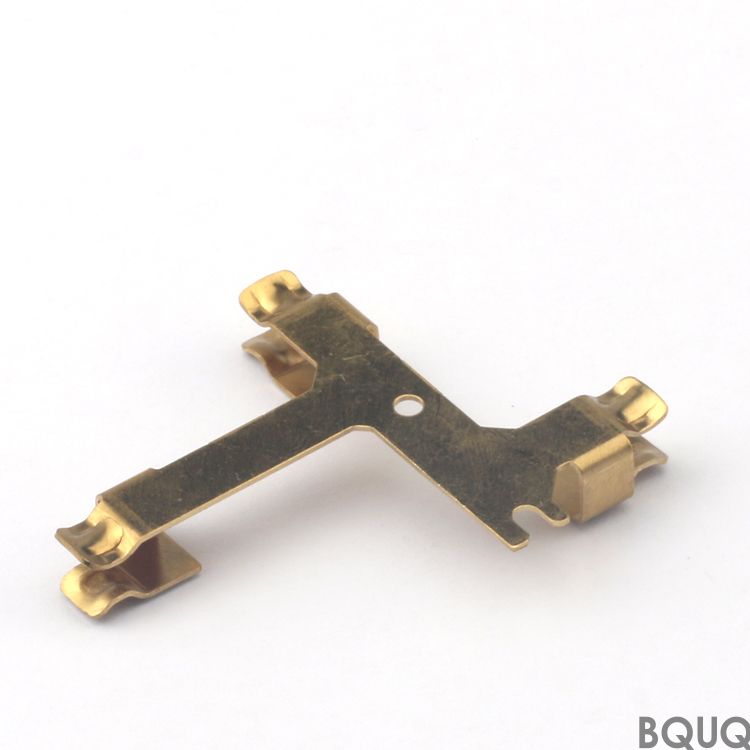
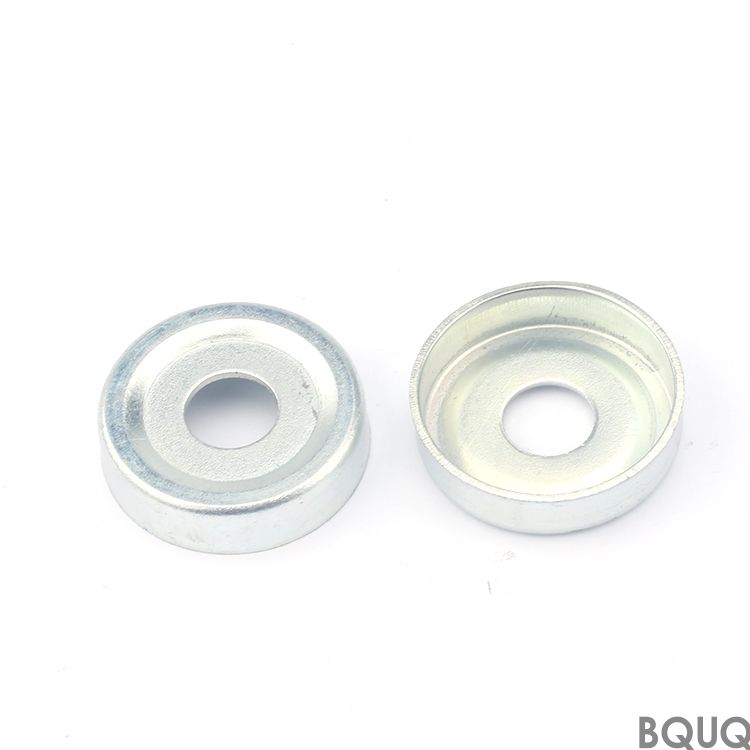
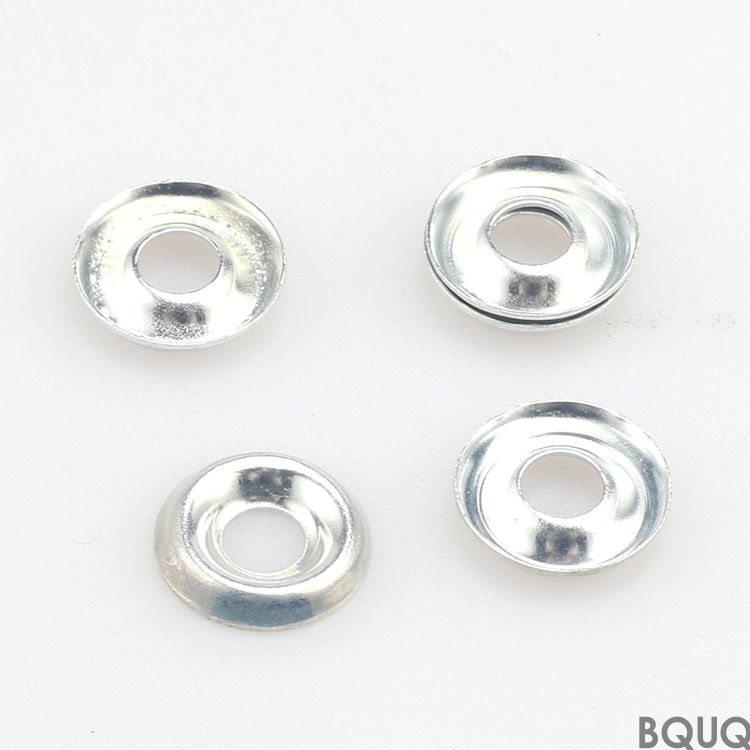
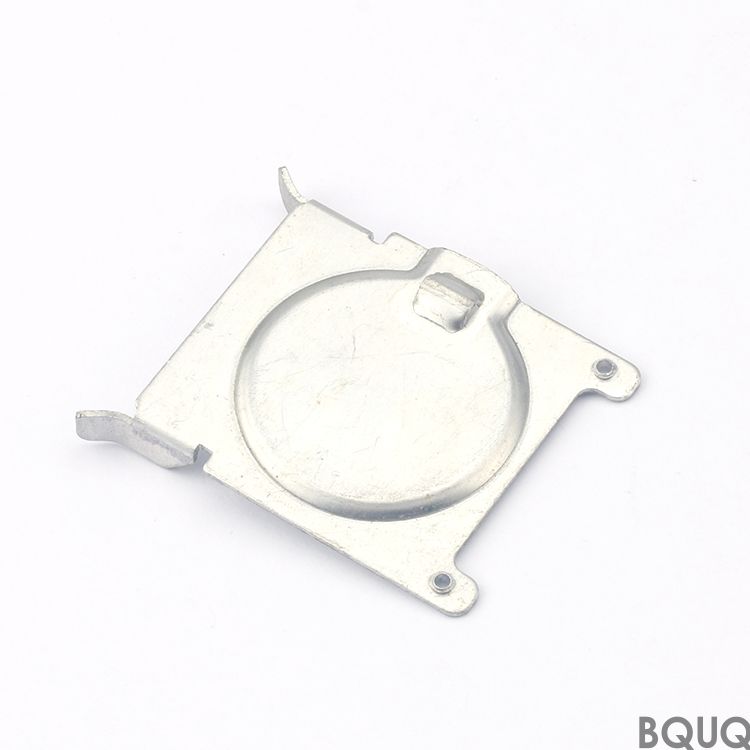
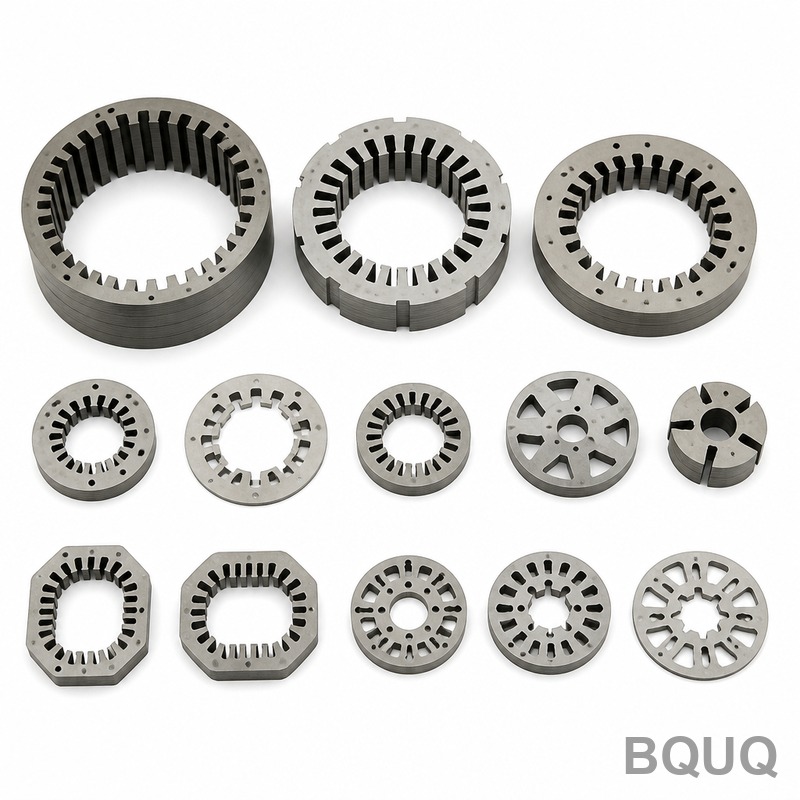
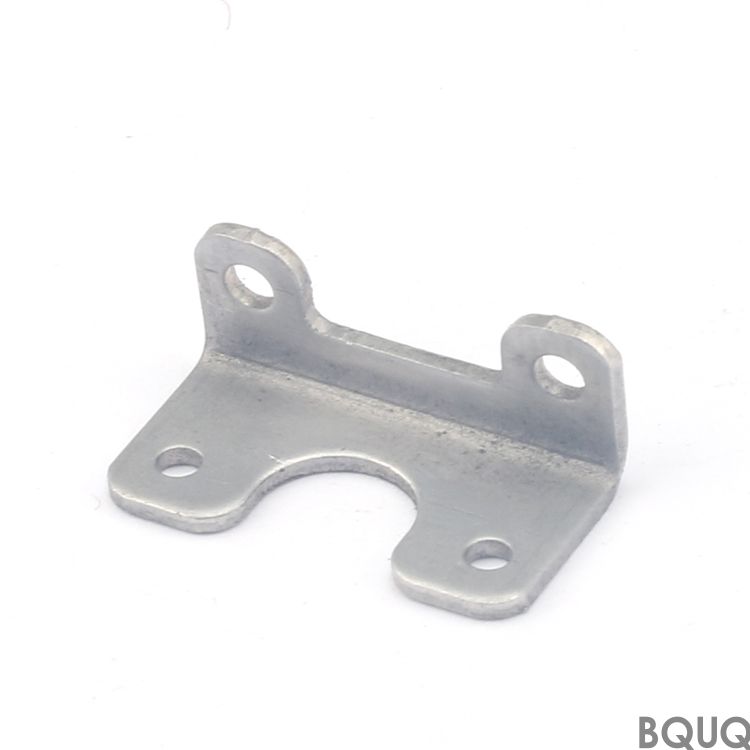
BQUQ Metal Stamping Parts | Precision Manufacturing Made in China
Metal Stamping Parts from BQUQ are cold-formed components produced on 25-ton to 250-ton high-speed presses, holding tolerances of ±0.01 mm on critical dimensions. You get parts with 0.8 µm surface fin
Get a Fast Quote for This Part
Send us your drawing / quantity / material — reply within 24h.
Metal Stamping Parts from BQUQ are cold-formed components produced on 25-ton to 250-ton high-speed presses, holding tolerances of ±0.01 mm on critical dimensions. You get parts with 0.8 µm surface finish, flatness within 0.05 mm, and a 24-hour lead time for prototype tooling. This is precision manufacturing made in China, but with the audit trails and QC rigor you expect from a Tier-1 supplier.
How We Hold ±0.01 mm on High-Volume Runs
Our stamping dies are ground in-house on a Mitsubishi wire EDM, not outsourced. That gives us die clearance control to 0.005 mm. We use a 6-post die set with ball-bearing guides for every progressive die over 5 stations. This eliminates lateral drift. For parts with tight hole-to-hole spacing, we add a micro-adjustable pilot pin system that corrects strip position before every stroke. The result: 99.2% first-pass yield across 20,000-piece runs, verified by our CMM reports.
Materials and Heat Treatment We Use for Edge Hardness
We stock 12 grades of steel, copper, and aluminum. For high-wear edges, we use SK5, 65Mn, and SUS301. If your part needs hardness above 45 HRC, we send it to our in-house vacuum furnace after stamping. We control tempering to ±5°C. Typical range: 40 to 58 HRC. For electrical contacts, we use C2600 brass with a 0.15 µm Ra finish. For structural brackets, we use SPCC and DC01. All coils come with mill certificates — no mixed heats.
Secondary Operations That Remove Burrs Without Distortion
Stamping leaves microscopic burrs. We remove them with a barrel tumbler for small parts or a high-pressure water jet deburring line for larger ones. Then we do a 100% visual check under 10x magnification on any edge longer than 5 mm. If your drawing specifies a chamfer, we add a coining step in the die — no manual filing. This keeps edge break consistent at 0.1 mm max. For parts with threaded holes, we use roll tapping, which pushes material instead of cutting it, preserving grain flow.
Inspection Before Every Shipment: Five Separate Gates
We do not ship on trust. Every lot goes through five gates. First, a first-article inspection (FAI) on the initial 5 pieces, measuring all dimensions against your 2D drawing. Second, in-process checks every 30 minutes using a digital micrometer and pin gauges. Third, a final CMM report on 3 random pieces per 1,000 parts — we measure 6 points on every critical hole. Fourth, a surface roughness check with a Mitutoyo SJ-210. Fifth, a packaging and count verification against your PO. You get the CMM and FAI PDF with every shipment.
Tooling Costs and How We Keep Prototype Dies Cheap
Prototype dies are not production dies. We use a modular die system with standard punches and die buttons. This cuts tooling cost by 40% compared to custom-ground dies. For a simple flat part, prototype tooling starts at $300. For a progressive die with 10 stations, it is $2,500 to $4,000. We amortize this tooling cost over your first 5,000 pieces at no extra charge. If you later move to high volume, we transfer the design to a hardened tool steel die (D2 or M2) for runs above 100,000 pieces.
Quantities That Work: From 100 Pieces to 2 Million
We do not force you into a minimum order. We accept 100-piece prototype runs and 2-million-piece annual contracts. Our press shop runs 24/7, so we slot small orders into gaps between large runs. The typical lead time for 1,000 pieces is 5 working days after tooling approval. For 100,000 pieces, add 7 days. We hold buffer stock for your repeat orders — you can call us on Monday and have parts on Thursday. This is why we say no MOQ. You pay only for what you need.
Stamping vs. CNC Machining: When to Choose Each
If your part has complex 3D contours, deep pockets, or tight internal threads, CNC machining is better. We do that too — our 3-axis and 5-axis machines hold ±0.005 mm. But for flat parts, brackets, clips, or anything with repeated geometry, stamping is 5x faster and 30% cheaper per piece. Check our CNC cutting tool selection guide for tooling choices. For tolerance decisions, read our CNC machining tolerances guide to see which features need stamping vs. secondary machining.
What is the minimum order quantity for Metal Stamping Parts?
There is no MOQ. We take 100-piece prototype orders and scale to 2 million pieces per year.
Can you customize the die for my specific hole pattern?
Yes, we build custom progressive dies from your 2D or 3D file, and we keep the tooling design for free revisions within 30 days.
How do you ensure quality if my part has a 0.01 mm tolerance?
We run a first-article inspection on 5 pieces, then do in-process checks every 30 minutes, plus a final CMM report on 3 random samples per 1,000 parts.
What is your real lead time for a stamping order?
Prototype tooling takes 24 hours, and 1,000 parts ship in 5 working days; 100,000 pieces ship in 12 working days.
Send your drawing for a firm quote within 12 hours. Email sc@bquq.com or WhatsApp +86 13713157787. We reply with price, tooling cost, and lead time — no generic ballparks.
Straight answers from the factory, not a sales brochure.
How do I get a quote for this part?
Send your drawing (STEP, IGES, DWG, DXF or PDF) with quantity and target material to sc@bquq.com or WhatsApp +86 137 1315 7787. Our engineers review the drawing and reply with price, lead time and tooling cost.
What is your MOQ?
We do not set a fixed MOQ. The minimum is decided per part and per process, so tell us your target quantity and we quote against it. Small trial batches are accepted for new parts.
What is the lead time?
Lead time is agreed per order, based on the date you need, the quantity, the material and whether tooling is required. Send your target date with the drawing and we confirm what is achievable before you commit.
What tolerance can you hold?
CNC machining holds ±0.005 mm. Stamping, spring and extrusion parts are made to the tolerances marked on your drawing, and we confirm achievable values at quotation so there are no surprises at inspection.
Can you manufacture parts to my drawing?
Yes. Every order is made to the customer drawing or sample. We run CNC machining, metal stamping, spring coiling and aluminium heat sink extrusion in-house in Dongguan, so one supplier covers the whole part.
STEP, IGES, DWG, DXF and PDF. A 2D drawing with tolerances and surface finish requirements is preferred alongside the 3D model. Hand sketches can be quoted after our engineers redraw them.
How is quality controlled?
Inspection runs through the process, not only at the end: first article approval, in-process checks and a final report per batch, measured with CMM and optical equipment. Material certificates are available on request.
Where is the factory and do you ship worldwide?
Our factory is in Dongguan, Guangdong, China, operating since 2005. We ship worldwide by express, air and sea, and work with the forwarder nominated by the buyer.