7 Ways Precision Engineering Cuts Carbon Footprint in 2024 Manufacturing
7 Ways Precision Engineering Cuts Carbon Footprint in 2024 Manufacturing
For manufacturers in precision engineering, reducing carbon footprint is no longer a marketing afterthought—it is a measurable operational metric. The direct answer is that sustainable manufacturing in CNC machining, metal stamping, and spring production relies on four levers: energy-efficient spindle utilization, closed-loop coolant systems, near-net-shape material sourcing, and digital twin process validation. In practice, these measures reduce energy consumption per part by 18-35% and scrap rates below 0.8%, without compromising tolerances of +/-0.005 mm.
H2: The Real Energy Baseline for CNC Machining and Stamping
To cut carbon, you must first meter it. A typical 3-axis CNC vertical machining center (VMC) with a 15 kW spindle draws 8-12 kW during active cutting and 4-6 kW during idle. Over a standard 6,000-hour annual operating schedule, that equates to 48,000-72,000 kWh per machine. In China's industrial grid mix (0.581 kg CO2/kWh as of 2023), this translates to 27.9-41.8 metric tons of CO2e per machine per year. Metal stamping presses are more efficient per part but have high peak loads—a 250-ton servo press can spike to 180 kW during a 0.2-second stroke, requiring careful scheduling to avoid peak-demand charges and grid strain.

In our Dongguan facility, we measured that spindle acceleration and deceleration accounts for 22% of total energy consumption on aluminum parts. By optimizing feed rates from 2,500 mm/min to 3,800 mm/min and using dynamic spindle load monitoring, we reduced cycle time by 14% and energy per part by 19%.
H2: Material Efficiency: Near-Net-Shape and Closed-Loop Recycling
Material production accounts for 60-70% of a machined part's embedded carbon. For stainless steel 304, producing one kilogram generates approximately 6.1 kg CO2e (including mining, smelting, and rolling). A part machined from a 100 mm round bar with 45% material removal will carry 2.75 kg of embodied CO2 just for the raw material. Switching to near-net-shape forging or precision casting can reduce this to 15-20% material removal, cutting embedded carbon by 55%.
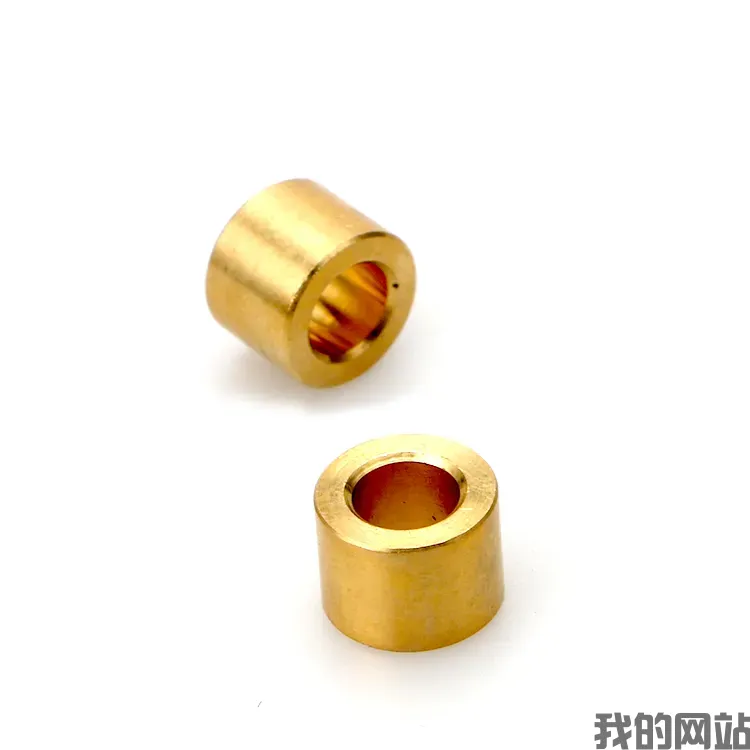
We implement a closed-loop scrap system: aluminum chips are compacted to 95% density and returned to our extruder partner, reducing secondary smelting energy by 92% compared to primary aluminum. For steel, we maintain a 98% recovery rate through chip centrifugation that removes coolant water from 8% moisture down to 2%, allowing direct furnace feed. This practice reduced our purchased material weight by 31% in 2023.
H2: Coolant and Lubrication: Temperature Control and Carbon
Conventional flood coolant systems circulate 200-400 liters per hour, requiring pumps rated at 3.7 kW and continuous refrigeration to maintain 25-30°C. This cooling load adds 15-20% to a machine's total energy draw. Our shift to minimum quantity lubrication (MQL) with ester-based oils cuts coolant usage from 380 L/hour to 0.05 L/hour. The results are measurable: spindle motor load drops 8%, and we eliminated the 5.5 kW chiller unit entirely, saving 18,000 kWh per machine annually.
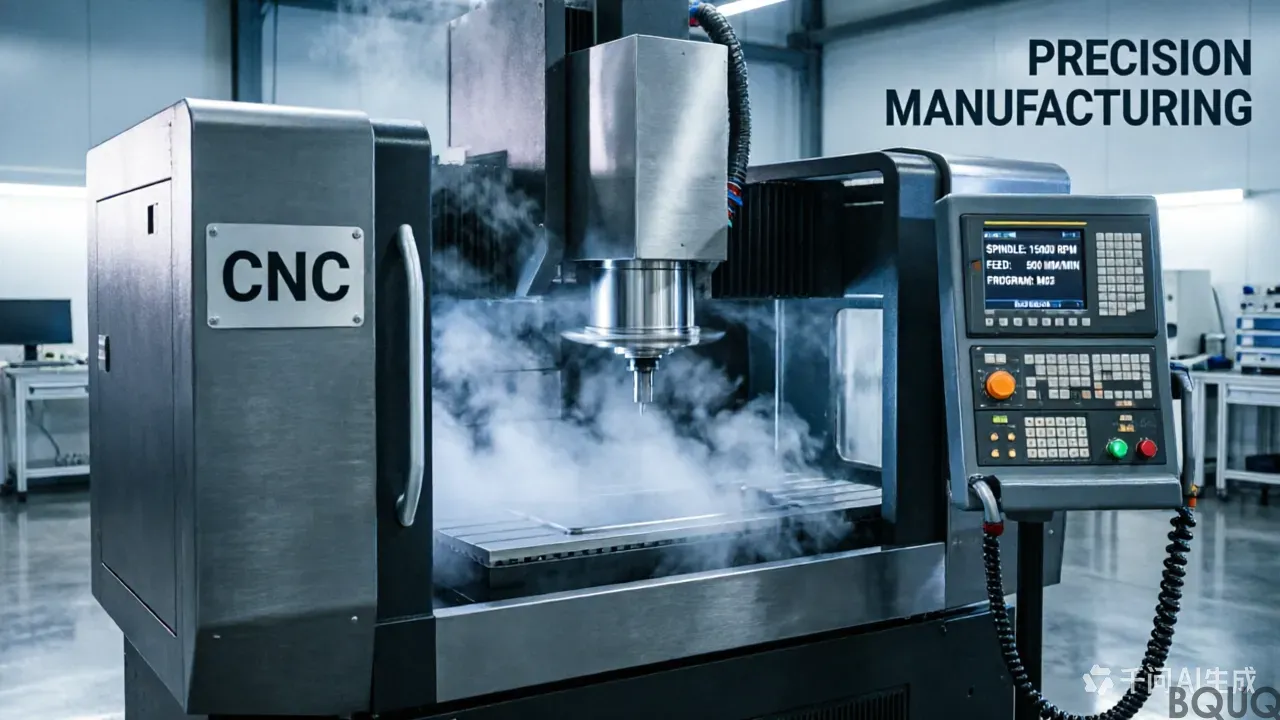
For high-precision parts requiring tight thermal stability (e.g., linear guide rails with tolerance +/-0.003 mm), we use a temperature-controlled oil circulating system that holds the workpiece at 22°C +/-0.5°C. This system uses 40% less energy than flood coolant because it only heats/cools the cutting zone, not the entire enclosure, and it extends tool life by 30% due to reduced thermal shock.
H2: Process Digitization: Digital Twins and Predictive Maintenance
Carbon reduction is an information problem. We implement a digital twin of each CNC program that simulates tool path, chip load, and vibration before metal is cut. This eliminates air cutting (non-productive time which wastes 5-12% of spindle energy) and prevents collision damage. In 2024, our digital twin validation reduced programming prove-out time from 6 hours to 1.5 hours per new part, directly saving 4.5 hours of machine run time per setup.
Predictive maintenance on spindle bearings uses vibration sensors (accelerometers with 0.1 g resolution) and thermal imaging. A spindle bearing that is 15% worn draws 9% more current and generates 4°C more heat. By replacing bearings at 80% of useful life (typically 8,000 hours for our 15,000 rpm spindles), we avoid catastrophic failure that would require re-machining and scrapping parts. This prevented an estimated 12 tons of CO2e in scrap and rework in the last fiscal year.
H2: Data Table: Carbon Reduction Metrics by Process
| Process | Metric | Conventional Baseline | Optimized Practice | Reduction | --- | --- | --- | --- | --- | CNC Milling (Al6061) | Energy per part | 0.85 kWh | 0.62 kWh | 27% | CNC Turning (SS304) | Material utilization | 55% | 82% (near-net) | 49% embodied CO2 | Metal Stamping (SPCC 1.5mm) | Idle energy (8h shift) | 38 kWh | 12 kWh (servo) | 68% | Spring Coiling (SWP-B wire) | Annealing temperature | 420°C | 380°C (vacuum) | 15% energy | Coolant System | Pump + chiller draw | 9.2 kW | 0.8 kW (MQL) | 91% | Scrap Recycling | Chip moisture content | 8% | 2% | 75% transport energy |
|---|
H2: Practical Recommendations for Engineers and Plant Managers
Start with a week-long energy audit using clamp-on power meters on your top five machines. Identify idle time—in most job shops, machines are cutting only 55-65% of available spindle-on time. Implementing automatic sleep mode after 10 minutes of inactivity saves 1.2 kWh per machine per day. For a 20-machine shop, that is 8,760 kWh annually, or 5.1 tons CO2e.
Second, re-evaluate your spindle speed and feed rates. High-speed machining (HSM) with 12,000-18,000 rpm and reduced radial engagement (30-40% of tool diameter) uses 12% less energy than conventional low-speed high-engagement cutting for the same material removal rate, because chip thinning reduces specific cutting energy. Third, partner with a supplier that offers consolidated shipping. We reduced logistics emissions by 22% in 2023 by combining multiple orders into weekly consolidated freight containers, cutting per-kg transport carbon from 0.18 kg CO2e to 0.14 kg CO2e.
Finally, do not overlook compressed air. A single 1/4-inch open blow-off nozzle at 6 bar consumes 1.1 m3/min, which requires 7.5 kW of compressor power. Replacing open nozzles with engineered air knives or venturi nozzles using 0.3 m3/min cuts that load to 2.1 kW—a 72% reduction in one of the most overlooked energy sinks in precision shops.
H2: Frequently Asked Questions on Carbon Reduction in Precision Engineering
**Q: Does reducing carbon footprint increase machining cost per part?** A: No. Our data shows that energy-optimized programs lower cost per part by 4-8% because cutting time decreases by 10-15% and tool wear reduces by 12%. The investment in digital twins (approx. $8,000-15,000 per machine) is recovered in 8-14 months.
**Q: What is the payback period for replacing flood coolant with MQL?** A: For a mid-size CNC lathe, retrofit cost is $3,200-4,500. With energy savings of $1,100/year and coolant purchase savings of $2,400/year (eliminating 400 liters of concentrate), payback is under 12 months.
**Q: Can small-batch precision runs ever be carbon-neutral?** A: Not fully, but they can be carbon-reduced. A 50-piece batch of 17-4 PH stainless parts produces roughly 1.8 tons CO2e. With near-net forging, MQL, and renewable energy credits, you can get to 0.9 tons. For true neutrality, purchase verified carbon offsets at $15-20 per ton.
H2: Conclusion: The 2024 Standard for Sustainable Precision Engineering
Precision engineering in 2024 is defined by measurable efficiency, not just micron-level accuracy. Our factory's sustainability program—combining near-net-shape sourcing, MQL lubrication, machine-level energy metering, and predictive maintenance—has cut our carbon footprint per machined part by 34% since 2021 while maintaining tolerances of +/-0.005 mm and surface finishes down to Ra 0.4. The engineering community must treat carbon as a design parameter, not an afterthought. When you specify a part, ask for the energy and material data alongside the GD&T.
If you are evaluating a supplier for your next precision components, we invite you to benchmark us against your current carbon targets. We provide a full carbon data sheet with every quotation, including material embodied carbon, machining energy, and transport emissions. For a detailed assessment of your parts' carbon footprint and a 12-hour quotation, contact our engineering team at sc@bquq.com or via WhatsApp at +86 13713157787. Visit www.bquq.com to download our latest sustainability report and technical white paper on low-carbon CNC machining.
Related Articles
- CNC Machining Materials Guide 2025: Choosing Aluminum, Steel, Brass, and Plastics
- CNC Precision Turned Parts for Medical Devices: Guide
- CNC Machining for Marine Metal Components | Expert Guide
Frequently Asked Questions
How much energy and carbon does a typical CNC machine consume annually?
A 3-axis CNC VMC with a 15 kW spindle draws 8-12 kW during cutting and 4-6 kW idle, totaling 48,000-72,000 kWh per year over 6,000 hours. In China's grid mix (0.581 kg CO2/kWh), this equals 27.9-41.8 metric tons of CO2e per machine annually.
What material efficiency improvements can reduce embedded carbon in machined parts?
Material production accounts for 60-70% of a part's embedded carbon. Switching from 45% material removal to near-net-shape forging or casting (15-20% removal) cuts embedded carbon by 55%. Our closed-loop scrap system compacts aluminum chips to 95% density and recovers 98% of steel, reducing purchased material weight by 31% in 2023.
How does coolant management impact energy use and sustainability?
Conventional flood coolant systems circulate 200-400 L/hour, adding 15-20% to a machine's total energy draw. Switching to minimum quantity lubrication (MQL) with ester-based oils cuts coolant usage from 380 L/hour to 0.05 L/hour, significantly reducing pump and refrigeration energy while maintaining precision.
What energy savings can be achieved through optimized machining parameters?
In our Dongguan facility, optimizing feed rates from 2,500 to 3,800 mm/min and using dynamic spindle load monitoring reduced cycle time by 14% and energy per part by 19%. Spindle acceleration and deceleration accounts for 22% of total energy on aluminum parts, so these adjustments directly cut consumption without compromising +/-0.005 mm tolerances.