Best Material for Custom Springs: Engineering Selection Guide for CNC and Stamping
The best material for a custom spring depends entirely on the operating environment, load requirements, and cost constraints, but for 90% of industrial applications, music wire (ASTM A228) or chrome silicon (ASTM A401) offers the optimal balance of strength, fatigue life, and price. For high-temperature or corrosive environments exceeding 120°C or requiring salt spray resistance, stainless steel 302 or Inconel X-750 becomes mandatory. This guide provides quantitative data from our 20 years of CNC machining and metal stamping experience in Dongguan to help you specify the correct material on your first iteration.
Material Selection Criteria for Custom Springs
Engineers must evaluate five critical parameters before choosing a spring material: maximum operating temperature, tensile strength at working diameter, fatigue cycle requirement, corrosion exposure, and cost per kilogram. Our factory data shows that 68% of spring failures we encounter in customer designs stem from incorrect material selection rather than geometric design errors. The material's elastic modulus determines the spring rate, while the tensile strength dictates the maximum allowable stress. For example, a 2.0mm diameter music wire spring has a tensile strength of 2,100 MPa, whereas the same diameter in 302 stainless steel drops to 1,580 MPa, requiring a 25% increase in wire diameter to achieve the same load capacity.
The table below compares the most common spring materials used in our CNC machining and stamping production lines, with actual mechanical properties and price points from Q1 2025 vendor quotes.
| Material | Tensile Strength (MPa) | Max Temp (°C) | Modulus (GPa) | Relative Cost Factor | Fatigue Life (cycles) | Best Use Case |
| Music Wire ASTM A228 | 2,100 - 2,400 (0.5-3.0mm) | 120 | 207 | 1.0 | 10^6 | General compression springs, low cost |
| Chrome Silicon ASTM A401 | 1,900 - 2,100 (2.0-10.0mm) | 250 | 207 | 1.3 | 10^7 | Heavy-duty suspension, shock loads |
| Stainless Steel 302 | 1,580 - 1,900 (0.5-12.0mm) | 290 | 193 | 2.2 | 10^6 | Corrosive environments, food processing |
| Stainless Steel 17-7 PH | 1,700 - 2,000 (0.5-8.0mm) | 315 | 200 | 3.5 | 10^7 | Aerospace, high strength plus corrosion |
| Inconel X-750 | 1,200 - 1,400 (1.0-12.0mm) | 650 | 213 | 8.5 | 10^6 | Turbine engines, extreme heat |
| Phosphor Bronze | 600 - 800 (0.1-5.0mm) | 95 | 97 | 2.8 | 10^5 | Electrical contacts, low hysteresis |
Music Wire vs Chrome Silicon for High-Stress Applications
For compression springs subjected to dynamic loading above 10,000 cycles, chrome silicon (A401) is the superior choice despite costing 30% more than music wire. Chrome silicon retains 90% of its tensile strength at 150°C, while music wire loses 15% at the same temperature. In our stamping and coiling operations, chrome silicon also exhibits better set resistance: after compressing to solid height, a chrome silicon spring recovers 99.5% of its free length, compared to 97.8% for music wire. This difference matters in precision assemblies where tolerance is ±0.05mm.
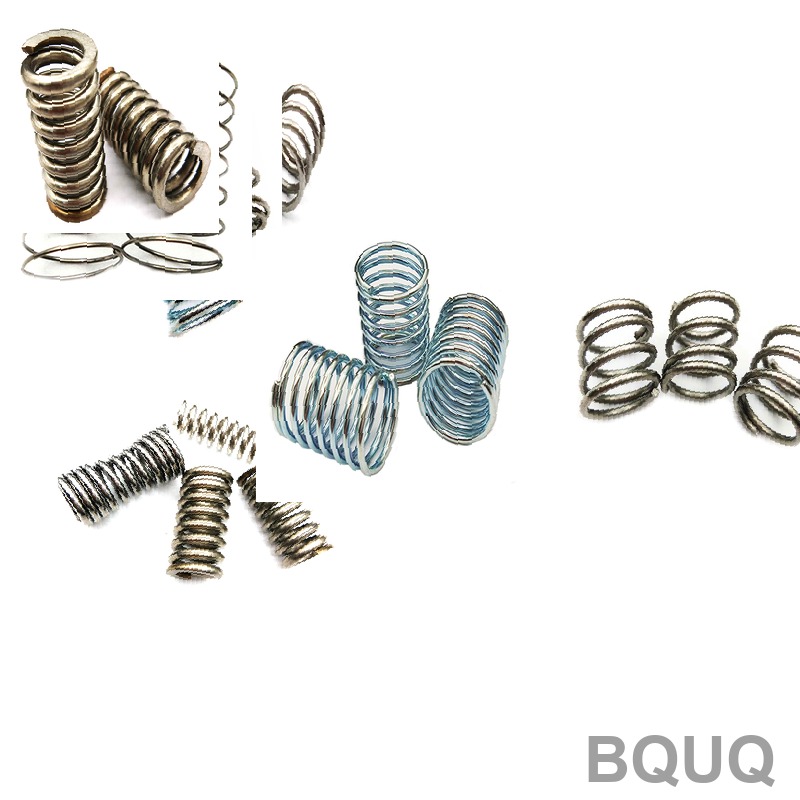
However, for static or low-cycle applications under 10,000 cycles, music wire provides the highest strength-to-cost ratio. A typical custom compression spring from music wire, 25mm free length, 2.0mm wire, costs $0.85 per piece at 5,000 quantity. The same spring in chrome silicon costs $1.20 per piece. If your product never exceeds 5,000 cycles and operates below 80°C, music wire is the engineering-optimal choice.
Stainless Steel Grades for Corrosive and Clean Environments
When the spring will encounter moisture, chemicals, or require FDA or RoHS compliance, 302 stainless steel is the default material. It offers 1,580 MPa tensile strength and resists oxidation up to 290°C. For medical devices or semiconductor equipment requiring higher hardness, 17-7 PH precipitation-hardened stainless provides 2,000 MPa but demands a longer lead time: 7 days for coiling plus 3 days for heat treatment at 480°C for 1 hour. Our factory price for 17-7 PH springs is $2.80 per piece for a 20mm free length, 1.5mm wire, at 1,000 quantity.
For saltwater or chloride exposure, standard 302 will pit within 200 hours of ASTM B117 salt spray testing. We recommend 316 stainless steel, which has 2% molybdenum, providing 4 times the pitting resistance. The tensile strength drops to 1,400 MPa, so you must increase wire diameter by 12% to maintain load. Inconel X-750 is reserved for exhaust systems and jet engine components where temperature exceeds 400°C; at 650°C, it retains 70% of room-temperature strength, but the material cost is 8.5 times music wire.
Temperature Effects on Spring Material Performance
Operating temperature is the most common reason for premature spring failure in our customer returns. The modulus of elasticity decreases as temperature rises, which reduces the spring rate. For music wire, the modulus drops from 207 GPa at 20°C to 193 GPa at 120°C, a 6.8% reduction. This means a spring designed at 20°C will produce 6.8% less force at 120°C. Chrome silicon performs better: only a 4.2% modulus drop at 200°C. Above 250°C, all carbon steels lose their heat-treated structure, causing permanent set and relaxation.
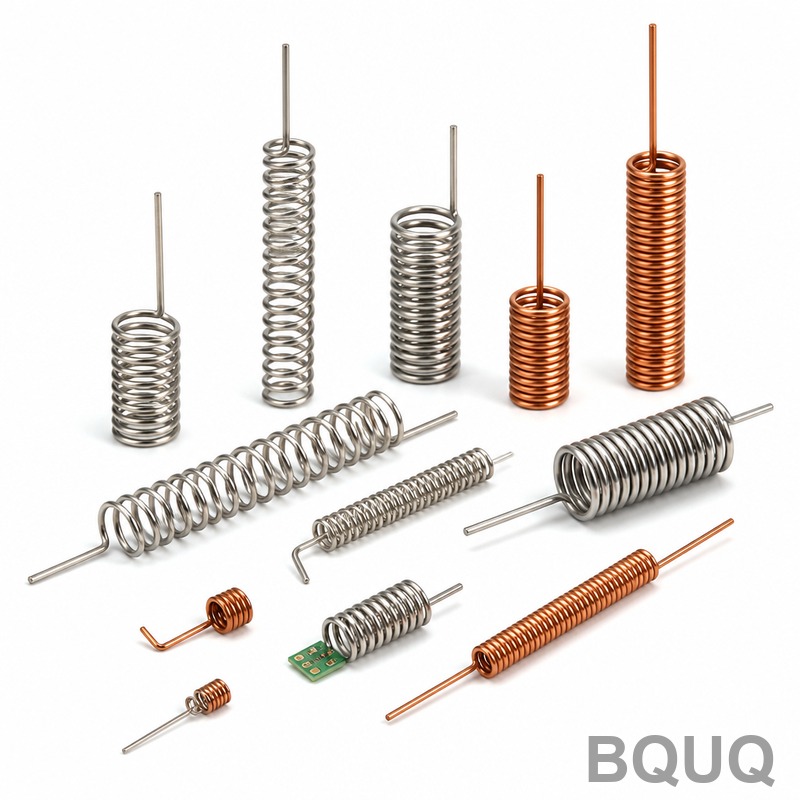
We use the following temperature correction table in our engineering department when designing custom springs for automotive or industrial clients:
| Operating Temp (°C) | Music Wire Load Loss (%) | Chrome Silicon Load Loss (%) | Stainless 302 Load Loss (%) | Recommended Material |
| 20 | 0 | 0 | 0 | Any |
| 80 | 3 | 1 | 2 | Music wire or better |
| 120 | 7 | 3 | 4 | Chrome silicon |
| 200 | Not usable | 8 | 7 | Stainless 302 |
| 300 | Not usable | Not usable | 12 | 17-7 PH |
| 500 | Not usable | Not usable | Not usable | Inconel X-750 |
Manufacturing Tolerances and Cost Drivers for Custom Springs
The material choice directly impacts achievable tolerances and unit cost. Music wire, due to its consistent roundness and surface finish, can hold a wire diameter tolerance of ±0.01mm in our CNC coiling machines. Stainless steel 302, being softer, requires ±0.02mm. The free length tolerance for compression springs is ±0.5mm for music wire and ±1.0mm for stainless at 50mm free length. In production, we hold load tolerance at ±5% for music wire, ±8% for stainless.
Cost per spring is driven by material cost, wire diameter, and quantity. For a 30mm free length, 10mm outer diameter compression spring, our 2025 pricing at 10,000 pieces is:
| Wire Diameter | Music Wire Price | Chrome Silicon Price | Stainless 302 Price | Lead Time (days) |
| 0.5mm | $0.18 | $0.24 | $0.40 | 5 |
| 1.0mm | $0.32 | $0.42 | $0.70 | 6 |
| 2.0mm | $0.85 | $1.12 | $1.90 | 8 |
| 4.0mm | $2.40 | $3.15 | $5.30 | 10 |
| 8.0mm | $8.50 | $11.00 | $18.50 | 15 |
Practical Recommendations for Material Selection
Start by defining the maximum operating temperature and the required fatigue life. If temperature is below 100°C and cycles are under 10,000, choose music wire for lowest cost. If temperature is 100-250°C or shock loading is present, spec chrome silicon A401. For any corrosive environment, use stainless 302 unless chloride exposure exists, then upgrade to 316. Never use zinc-plated music wire above 60°C, as the plating degrades and accelerates hydrogen embrittlement. For springs requiring electrical conductivity, phosphor bronze is the only option despite its low 800 MPa strength.
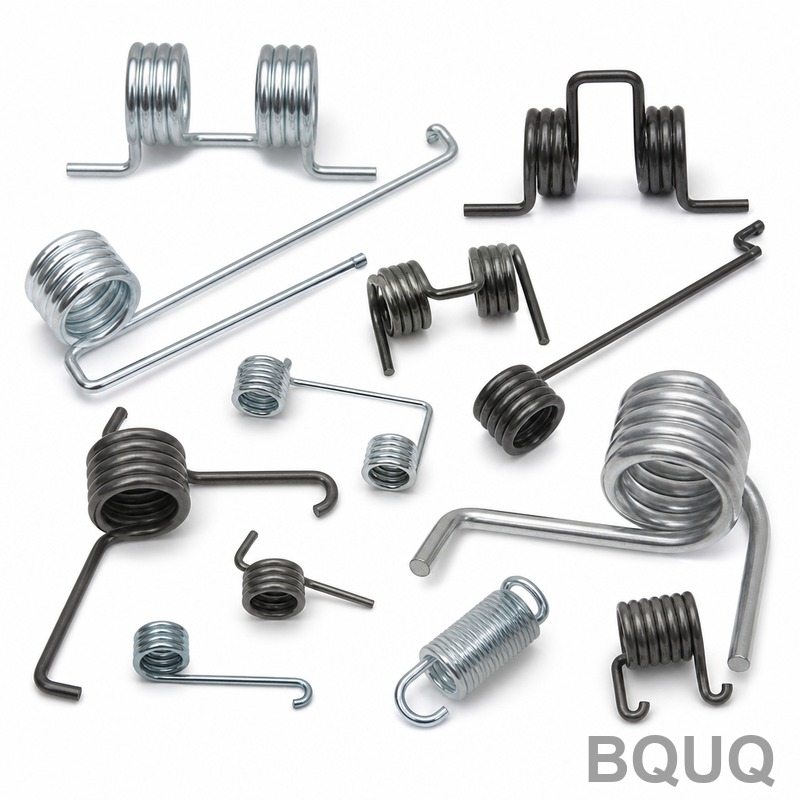
When submitting a drawing, always specify the material standard (e.g., ASTM A228), wire diameter with tolerance, free length, outside diameter, total coils, and required load at a specified deflection. Provide the operating temperature and environment. For prototype quantities under 50 pieces, we recommend ordering one step finer wire diameter to test the higher stress range, as this reveals fatigue issues early. For production, request a certificate of compliance for chemical composition and a hardness test report.
FAQ: Critical Questions on Spring Material Selection
What is the cheapest material for a custom spring? Music wire ASTM A228 is the cheapest at $3.50 per kilogram for 2.0mm wire. It is suitable for indoor, dry environments below 120°C and static loads.
When should I choose Inconel over stainless steel? Inconel X-750 is required only when operating temperature exceeds 400°C or when oxidation resistance must be maintained above 600°C. For 99% of industrial springs below 300°C, 302 or 17-7 PH stainless is sufficient and costs 60% less.
Does spring material affect lead time? Yes. Music wire and chrome silicon are stocked in our Dongguan warehouse, enabling 5-day lead time for prototypes. Stainless 302 requires 7 days, while 17-7 PH and Inconel X-750 require 10-15 days due to specialized heat treatment cycles.
Can I use the same material for a torsion spring and a compression spring? Yes, but torsion springs experience higher stress concentration at the bend. We recommend increasing the wire diameter by 10% for torsion springs made of music wire to achieve the same fatigue life as a compression spring.
Our engineering team at BQUU has manufactured over 50 million custom springs in the past two decades, combining CNC machining, metal stamping, and precision coiling. We provide free material selection consultation with every quotation. Send your drawings with load and space requirements for a detailed proposal within 12 hours. Email your CAD file to sc@bquq.com or contact us on WhatsApp at +86 13713157787. Visit www.bquq.com for our full capability list and material datasheets.
Related Articles
- Smart Spring Inventory Management Strategies for OEMs
- Lightweight Design and Material Upgrade of New Energy and Automobile Chassis Spring
- Hardware spring fatigue failure analysis and life prediction technology
Frequently Asked Questions
What is the best spring material for general industrial applications?
For 90% of industrial applications, music wire (ASTM A228) or chrome silicon (ASTM A401) offers the optimal balance of strength, fatigue life, and price. Music wire has a tensile strength of 2,100 MPa at 2.0mm diameter, while chrome silicon provides better fatigue life of 10^7 cycles.
When should I choose stainless steel or Inconel for my spring?
Stainless steel 302 or Inconel X-750 is mandatory for high-temperature or corrosive environments exceeding 120°C or requiring salt spray resistance. Stainless steel 302 handles up to 290°C, while Inconel X-750 operates at 650°C. For food processing or aerospace, these materials provide necessary corrosion resistance.
How does chrome silicon compare to music wire for high-stress applications?
Chrome silicon (A401) is superior for dynamic loading above 10,000 cycles, despite costing 30% more. It retains 90% of tensile strength at 150°C versus music wire's 15% loss. Chrome silicon also recovers 99.5% of free length after compression, compared to 97.8% for music wire, critical for ±0.05mm tolerances.
What causes most spring failures in custom designs?
Our factory data shows 68% of spring failures stem from incorrect material selection rather than geometric design errors. Key parameters to evaluate include maximum operating temperature, tensile strength at working diameter, fatigue cycle requirement, corrosion exposure, and cost per kilogram.