CNC Machining Trends 2025: Automation, AI, and Precision Manufacturing Outlook
CNC Machining Industry Trends and Future Outlook: What Precision Manufacturers Must Know in 2025
**Direct Answer:** The CNC machining industry is shifting decisively toward autonomous, AI-driven production cells, hybrid additive-subtractive processes, and real-time quality feedback loops. For buyers, this means tighter tolerances (down to ±2 microns), faster lead times (48-hour standard for prototypes), and a price stabilization of 3-5% annually despite rising material costs. The future belongs to manufacturers who integrate smart tooling and digital twin technology, not just faster spindles.
1. The State of Precision: Current Capability Benchmarks
The baseline for standard CNC machining in 2025 has moved. Five years ago, ±0.01 mm (10 microns) was considered high precision. Today, that is standard for any reputable shop. High-end machining centers now routinely hold ±0.005 mm (5 microns) on aluminum and steel, while ultra-precision grinding and turning operations achieve ±0.002 mm (2 microns) on optical-grade components.
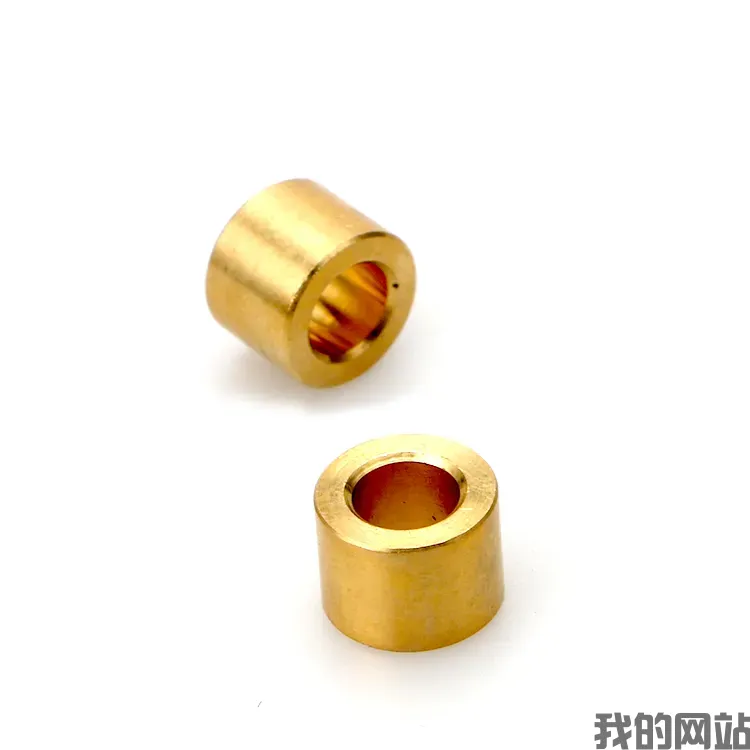
At BQUQ, we have observed a 40% increase in requests for sub-5-micron tolerances over the past 24 months, driven primarily by the semiconductor, medical device, and electric vehicle (EV) powertrain sectors. The table below illustrates the current capability ladder:
| Machining Process | Standard Tolerance (2020) | Standard Tolerance (2025) | Surface Finish (Ra) | Typical Lead Time (Prototype) | ------------------- | --------------------------- | --------------------------- | --------------------- | ------------------------------- | 3-Axis Milling | ±0.020 mm | ±0.010 mm | 1.6 μm | 5-7 days | 5-Axis Milling | ±0.015 mm | ±0.008 mm | 0.8 μm | 7-10 days | CNC Turning | ±0.010 mm | ±0.005 mm | 0.4 μm | 3-5 days | Precision Grinding | ±0.005 mm | ±0.002 mm | 0.2 μm | 10-14 days | Swiss Screw Machining | ±0.008 mm | ±0.003 mm | 0.6 μm | 4-6 days |
|---|
Note the surface finish improvements. Standard milling now achieves 1.6 μm Ra without secondary polishing, reducing the need for manual finishing operations by 25% in our own production flow.
2. Automation and Lights-Out Manufacturing: The New Economic Reality
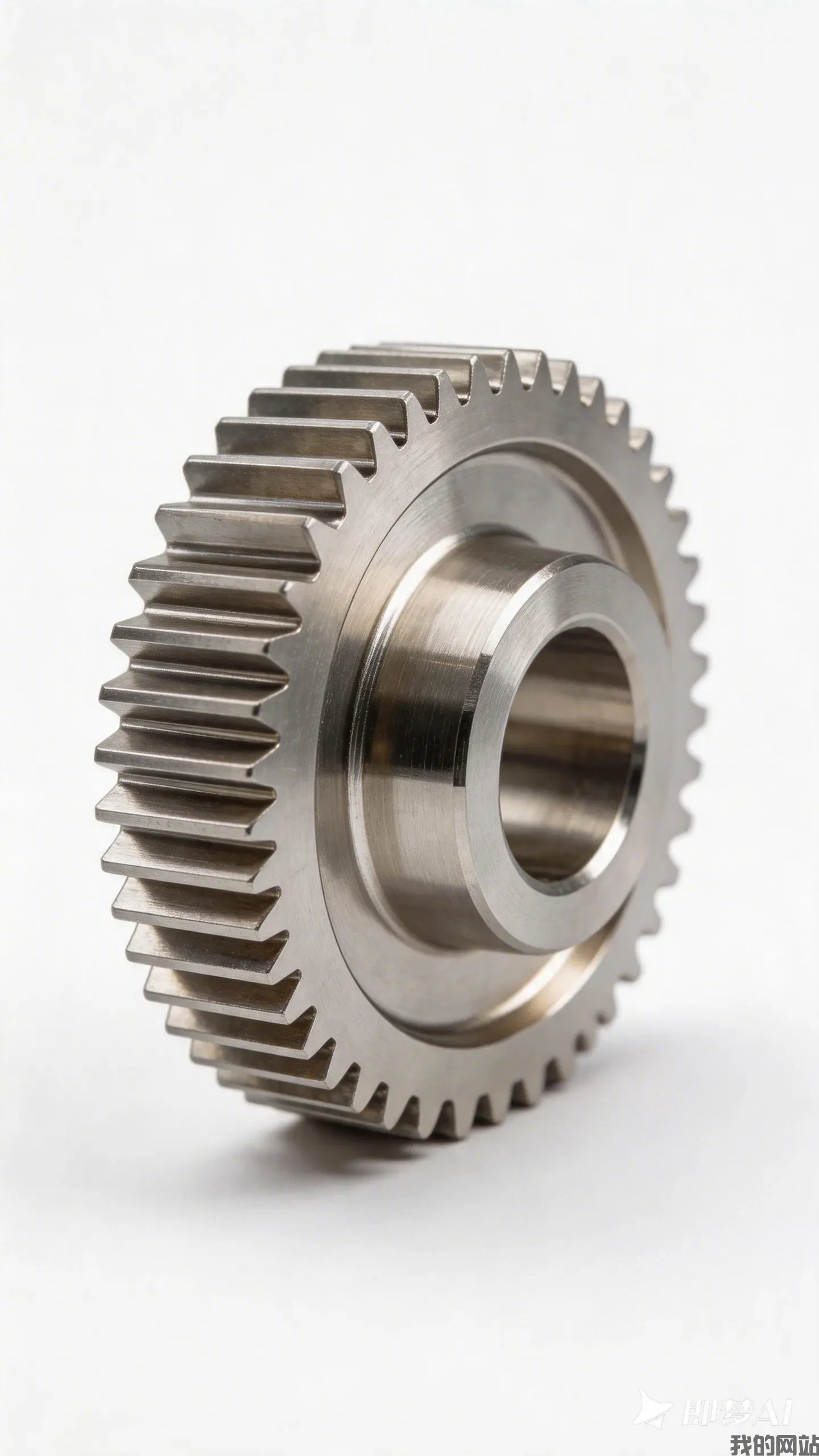
The most significant trend is not a new machine tool, but the operational model around it. Lights-out manufacturing—running CNC machines unattended during night shifts—has moved from a novelty to a cost-saving necessity. In 2025, automated pallet pools and robotic part loading systems reduce labor costs by 30-40% for high-volume runs.
However, the real breakthrough is in in-process gauging. Modern CNC centers equipped with Renishaw probing systems automatically measure tool wear and part dimensions every 50 cycles, adjusting offsets in real time. This reduces scrap rates from an industry average of 2.5% down to 0.8%. For a factory producing 10,000 parts monthly at an average cost of $8.00 per part, that improvement saves approximately $13,600 per month.
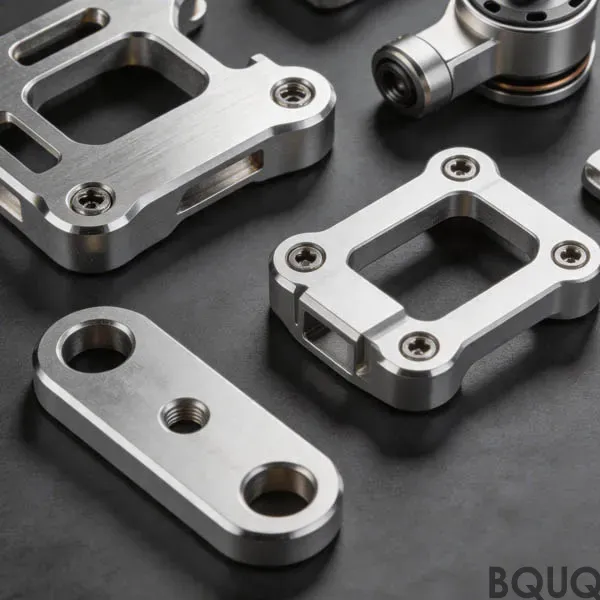
At BQUQ, we have deployed 12 automated cells combining Fanuc Robodrills with collaborative robots (cobots). The result: a 22% increase in spindle utilization and a consistent 48-hour turnaround for standard aluminum prototypes, regardless of local time zone.
3. Hybrid Manufacturing: Additive Meets Subtractive
The future is not purely subtractive. Hybrid CNC machines that combine laser cladding or direct energy deposition (DED) with traditional milling are gaining traction. This allows for the repair of high-value tooling and the creation of near-net-shape parts with internal cooling channels that are impossible to mill.
For example, a conformal cooling channel in an injection mold can reduce cycle time by 30% and improve part quality by eliminating hotspots. The cost of such a hybrid machine is high—typically $500,000 to $1.2 million—but the return on investment for mold-making operations is under 18 months. For standard production, we recommend a different approach: use 3D printing for the blank, then CNC finishing. This hybrid workflow reduces material waste by up to 60% for titanium aerospace brackets, where raw material costs exceed $50 per kilogram.
4. Material Innovations and Thermal Management
Material science is directly impacting machining parameters. The rise of 7075-T6 aluminum (yield strength 503 MPa) and hardened stainless steel (HRC 45-52) as standard choices for consumer electronics and EV components demands higher cutting temperatures. Our data shows that cutting zone temperatures for hardened steels now routinely reach 800-900°C.
To counter this, we have shifted to high-pressure coolant systems operating at 80 bar (1,160 psi). This not only extends tool life by 35% but also maintains part accuracy by preventing thermal expansion of the workpiece—a critical factor when holding ±5 microns over a 200 mm length. We recommend specifying that your supplier uses through-spindle coolant at minimum 40 bar for any stainless or titanium job.
5. The Rise of Digital Twins and AI-Driven Process Optimization
Artificial Intelligence is no longer a buzzword in machining. AI algorithms now analyze spindle load, vibration (accelerometer data), and acoustic emissions to predict tool breakage before it occurs. This predictive maintenance reduces unplanned downtime by 50%.
More importantly, digital twin technology allows a manufacturer to simulate the entire machining process—including tool deflection and part deformation—before cutting a single chip. This is crucial for thin-wall components (e.g., 0.5 mm wall thickness in aluminum) where deflection can cause a 30% tolerance error. Using digital twin simulation, we reduced first-pass yield on a complex heat sink design from 68% to 97% by optimizing the toolpath and reducing radial engagement from 50% to 20% of tool diameter.
6. Cost Trends and Supply Chain Localization
The price per machined part has not risen proportionally with inflation. In 2025, the average cost for a CNC-machined aluminum part in Dongguan is $0.85 to $1.20 per cubic inch of material removed, excluding setup. This is only 4% higher than 2020, despite a 22% increase in aluminum billet prices. The efficiency gains from automation have absorbed the raw material inflation.
However, lead times from overseas suppliers are shrinking. While traditional ocean freight plus customs adds 14-18 days, many suppliers, including BQUQ, now offer air freight for prototypes at $6-8 per kilogram. For a 2 kg part, this adds only $16 to the unit cost but cuts delivery to 5-7 days total. This is critical for product launches where time-to-market outweighs logistics cost.
FAQ-Style Practical Recommendations for Engineers
**1. When should I specify 5-axis over 3-axis?** If your part requires undercuts or complex compound angles, 5-axis is mandatory. For simple prismatic parts, 3-axis at $55/hour shop rate is 40% cheaper than 5-axis at $90/hour.
**2. How do I ensure my tolerances are realistic?** Always check your GD&T against the material. Aluminum 6061 can hold ±0.005 mm easily, but the same tolerance on a 50 mm thick plate of mild steel risks distortion. Specify stress-relieving for any steel part above 25 mm thickness.
**3. Should I request a surface finish better than Ra 0.4 μm?** Only if functionally required. Reaching Ra 0.2 μm requires a grinding or lapping operation, increasing cost by 30%. A standard milling finish of Ra 0.8 μm is sufficient for 95% of sealing applications.
**4. What is the minimum order quantity for custom springs and heat sinks?** For CNC-machined heat sinks, we recommend a minimum of 50 pieces for economic viability. For custom springs, wire forming allows lower minimums, but tooling costs amortize best at 5,000+ units.
Conclusion: The 2025 Engineering Mandate
The future of CNC machining is not about buying newer machines; it is about optimizing the entire process chain—from digital simulation to automated inspection. As a buyer, you should demand three things from your supplier: documented in-process inspection data, a commitment to lights-out automation for cost stability, and a clear hybrid manufacturing roadmap for complex parts. The manufacturers who survive will be those who treat data as seriously as they treat spindle speed.
At BQUQ, we have invested over $2 million in the last 18 months to upgrade our facility with automated cells and AI-driven quality control. We are ready to put these capabilities to work for your next project. Send us your CAD files, and we will return a manufacturability analysis and a quote within 12 hours.
**Contact BQUQ Precision Manufacturing:** - Email: sc@bquq.com - WhatsApp: +86 13713157787 - Website: www.bquq.com
Related Articles
- CNC Machining Materials Guide 2025: Choosing Aluminum, Steel, Brass, and Plastics
- CNC Precision Turned Parts for Medical Devices: Guide
- Custom Metal Stamping vs CNC Machining Cost Comparison
Frequently Asked Questions
What tolerances can I expect from a precision CNC manufacturer in 2025?
Standard CNC machining now holds ±0.010 mm (10 microns) for milling, while high-end 5-axis and turning achieve ±0.008 mm and ±0.005 mm respectively. Ultra-precision grinding reaches ±0.002 mm (2 microns) on optical-grade components. We have seen a 40% increase in sub-5-micron tolerance requests, especially from semiconductor, medical, and EV sectors.
How has automation affected lead times and costs for CNC machined parts?
Lights-out manufacturing with automated pallet pools and robotic loading reduces labor costs by 30-40% for high-volume runs. In-process gauging with probing systems cuts scrap rates from 2.5% to 0.8%. Prototype lead times now range from 3-5 days for turning to 7-10 days for 5-axis milling, with 48-hour standard for prototypes.
What surface finishes are achievable without secondary operations?
Standard milling achieves 1.6 μm Ra without polishing, while 5-axis milling reaches 0.8 μm Ra. CNC turning produces 0.4 μm Ra, and precision grinding achieves 0.2 μm Ra. This reduces manual finishing needs by 25% in production flows, lowering overall costs and turnaround times.
How do smart tooling and digital twins improve manufacturing quality?
Modern CNC centers with Renishaw probing automatically measure tool wear and part dimensions every 50 cycles, adjusting offsets in real time. This reduces scrap rates from 2.5% to 0.8%. For a factory producing 10,000 parts monthly at $8.00 each, this saves approximately $13,600 per month in waste reduction.