Compression Spring vs Torsion Spring vs Extension Spring: Key Differences
The primary difference between compression, torsion, and extension springs lies in their load direction and operational mechanics: compression springs resist axial pushing forces and shorten under load, extension springs resist axial pulling forces and lengthen under load, and torsion springs resist rotational (torque) forces applied around their helix axis. For engineering applications, this dictates not only the coil geometry and end configurations but also the material stress profile, fatigue life, and installation requirements, making selection a matter of functional force vector analysis rather than mere preference.
Force Direction and Load Characteristics
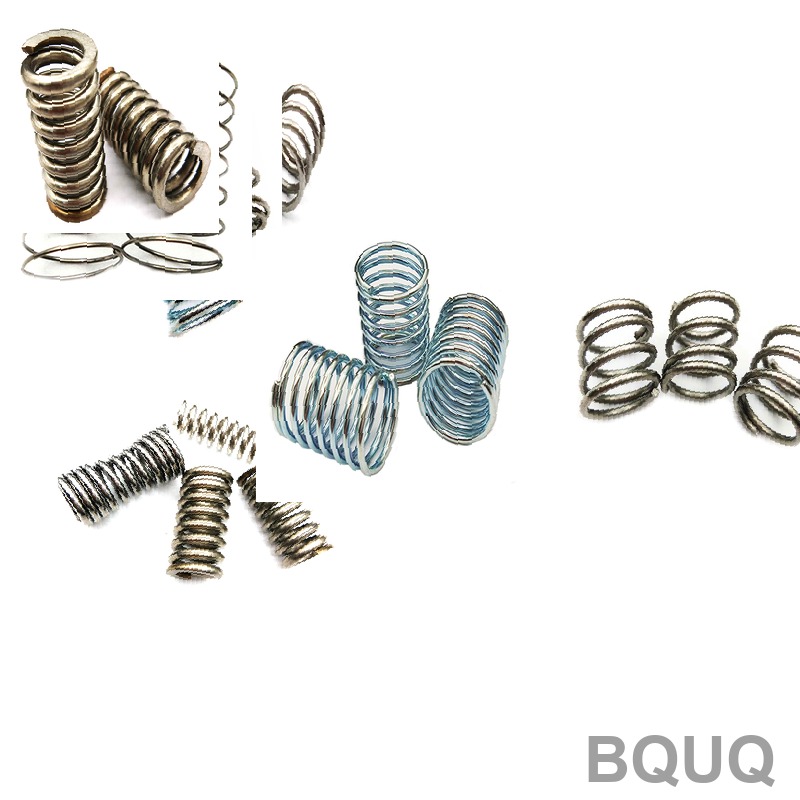
The fundamental distinction is governed by how the spring absorbs and stores mechanical energy. In a compression spring, the load is applied along the longitudinal axis, pushing the coils closer together. The wire experiences torsional stress, but the primary deflection is axial shortening. In an extension spring, the load pulls the coils apart, and the spring typically has initial tension—a force required to begin separating the coils—which is zero in most compression springs. Torsion springs operate in a rotational plane; the load is applied as a bending moment at the ends, causing the coil diameter to decrease slightly as the spring winds tighter. The stress in a torsion spring is bending stress, not torsional stress, which is a critical distinction often misunderstood by design engineers.
End Configurations and Mounting Constraints
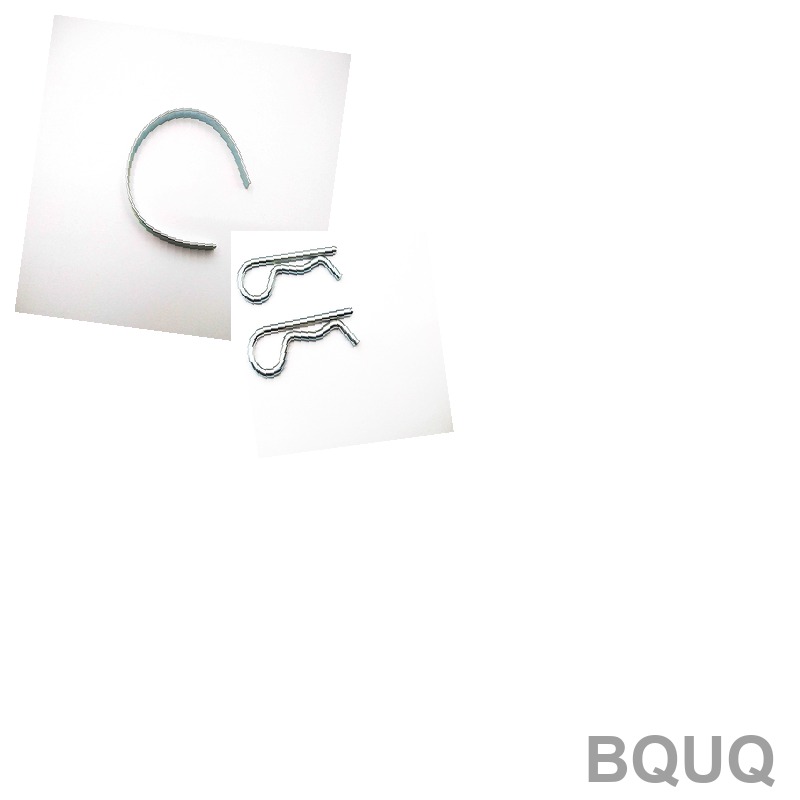
End geometry determines how the spring interfaces with the application and directly affects performance and cost. Compression springs commonly use closed and ground ends to provide a flat seating surface, reducing buckling risk. Extension springs use hooks, loops, or threaded inserts, with the hook being the most common failure point due to stress concentration. Torsion springs require legs (straight extensions of the wire) that can be straight, bent, or hooked to engage with mating components. The number of coils in a torsion spring affects the leg position and the available angular travel. A compression spring with open ends is cheaper but less stable under heavy loads. For extension springs, the hook radius must be at least twice the wire diameter to prevent premature fracture.
Material Selection and Stress Profiles
The stress regime dictates material choice and heat treatment. Compression and extension springs primarily experience torsional stress on the wire cross-section, making high-tensile materials like ASTM A228 music wire (tensile strength 2300-2600 MPa for 1.0 mm wire) or ASTM A313 302 stainless steel suitable. Torsion springs experience bending stress, which allows for higher allowable working stresses—typically 80% of the tensile strength versus 45-50% for compression springs. This means a torsion spring can be made from a smaller diameter wire for the same load, but it requires careful attention to the mandrel size to prevent coil collapse during winding. For high-temperature environments above 150°C, Inconel X-750 is recommended for all types, but its cost is approximately 15-20 times that of carbon steel.
Design Formulas and Spring Rate Calculations
The spring rate (k) defines the relationship between load and deflection. For compression and extension springs, the rate is calculated using the same formula: k = (G × d^4) / (8 × D^3 × Na), where G is the shear modulus (79.3 GPa for music wire), d is wire diameter, D is mean coil diameter, and Na is the number of active coils. For torsion springs, the formula is k = (E × d^4) / (10.8 × D × Na), where E is Young's modulus (196.5 GPa for music wire). The 10.8 factor accounts for the curvature correction. A practical example: a compression spring with d=2.0 mm, D=12.0 mm, Na=8 yields k = (79,300 × 16) / (8 × 1728 × 8) = 11.47 N/mm. A torsion spring with the same wire and coil diameter but only 4 active coils yields k = (196,500 × 16) / (10.8 × 12 × 4) = 6064 N-mm/radian. The units differ fundamentally, confirming the incompatibility of direct rate comparison.
Comparative Data Table for Spring Types
| Parameter | Compression Spring | Extension Spring | Torsion Spring |
| Load Direction | Axial push (shortening) | Axial pull (lengthening) | Rotational (torque) |
| Primary Stress Type | Torsional shear | Torsional shear | Bending stress |
| Typical Wire Diameter Range | 0.1 - 20.0 mm | 0.2 - 10.0 mm | 0.3 - 12.0 mm |
| Standard Tolerance on Rate | +/- 5% to +/- 10% | +/- 5% to +/- 10% | +/- 10% to +/- 15% |
| Standard Tolerance on Free Length | +/- 1.0% or +/- 0.5 mm | +/- 1.5% or +/- 0.75 mm | +/- 2.0% or +/- 1.0 mm |
| Maximum Operating Temperature (Music Wire) | 120°C | 120°C | 120°C |
| Maximum Operating Temperature (302 SS) | 260°C | 260°C | 260°C |
| Typical Cost Index (relative per kg) | 1.0 | 1.3 | 1.8 |
| Initial Tension | None (usually) | Yes (typical 5-10% of max load) | None (leg pre-set only) |
| Common End Types | Closed, ground, open | Hooks, loops, threaded | Straight legs, bent legs, hinged |
| Failure Mode | Buckling, coil clash | Hook fracture, coil separation | Leg bending, coil collapse |
| Lead Time (BQUQ standard) | 5-7 days | 7-10 days | 7-10 days |
Cost and Lead Time Considerations
Manufacturing cost is driven by material waste, tooling complexity, and secondary operations. Compression springs are the most economical because they can be produced on high-speed CNC coilers at rates exceeding 100 parts per minute with minimal secondary processing. Extension springs incur additional cost due to hook-forming operations, which often require a secondary machine or manual adjustment, increasing unit price by roughly 30%. Torsion springs are the most expensive due to the need for precise leg bending and the difficulty of maintaining tight angular tolerances; they often require multiple forming steps and 100% inspection. For a typical production run of 10,000 pieces, a compression spring (2 mm wire, 20 mm OD) may cost $0.08 per piece, an extension spring (same wire) $0.11 per piece, and a torsion spring (same wire, 90-degree legs) $0.15 per piece. Minimum order quantities at BQUQ are 500 pieces for all types, with prototype quantities of 10-50 pieces available at a 3x unit price premium.
Practical Selection Recommendations for Engineers
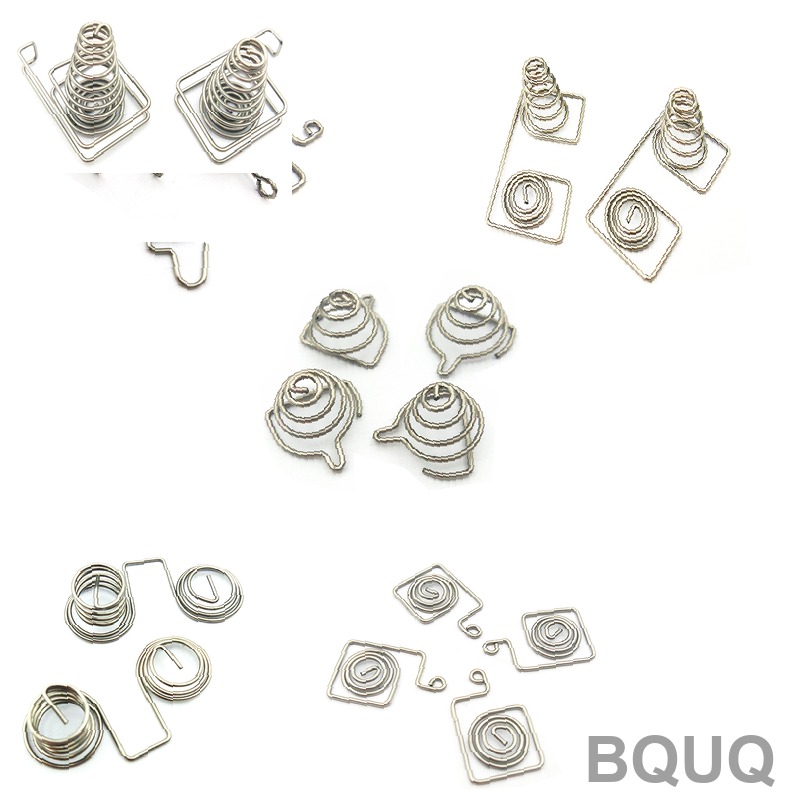
For axial push applications like valve returns or shock absorbers, choose compression springs and specify closed and ground ends if the spring operates in a pocket to prevent buckling. For axial pull applications such as carburetor return mechanisms or garage door assemblies, use extension springs and always specify the initial tension value; never design a system where the extension spring operates at zero load, as this causes coil separation and premature failure. For rotational applications like clothespins, hinges, or electrical switch return mechanisms, select torsion springs and specify the direction of winding (right-hand or left-hand) carefully—the spring must wind in the direction that tightens under load. When space is constrained, remember that torsion springs can handle higher stresses per unit volume due to bending stress advantages, but they require a supporting mandrel to prevent radial buckling.
FAQ-Style Engineering Tips for Spring Selection
Q: Can I use a compression spring to replace an extension spring by inverting the load? No. Compression springs have no initial tension and will not provide a positive return force at zero deflection; the system will have dead travel. Always match the spring type to the force vector. Q: What is the maximum deflection ratio for a compression spring before buckling? For free-standing compression springs, the free length should not exceed 4 times the mean coil diameter. If the ratio exceeds 4, use a guide rod or sleeve. For extension springs, avoid operating beyond 80% of the maximum deflection to prevent hook straightening. For torsion springs, limit angular deflection to 60% of the maximum theoretical rotation to avoid coil clash. Q: How do I specify tolerances correctly? Always reference the relevant standard: DIN 2095 for compression springs, DIN 2097 for extension springs, and DIN 2098 for torsion springs. These standards define tolerance classes (1, 2, and 3) where class 1 is the tightest and costs 25-40% more. For critical applications, specify class 1 on the spring rate and free length, but use class 2 for coil diameter to reduce cost. Q: What is the minimum recommended number of active coils? For compression springs, a minimum of 3 active coils is required to avoid lateral instability. For extension springs, a minimum of 5 active coils is recommended to ensure proper hook alignment. For torsion springs, 3 active coils is the practical minimum, but 5-6 coils are preferred for smoother torque output.
Conclusion
Selecting the correct spring type is a matter of matching the force vector and stress regime to the application requirements. Compression springs handle axial push with torsional stress, extension springs handle axial pull with the addition of initial tension, and torsion springs handle rotational loads with bending stress. The engineering data presented—spring rates, tolerances, material limits, and cost indices—provides a quantitative basis for decision-making. At BQUQ, we have manufactured all three spring types for over 20 years across CNC machining, metal stamping, and heat sink applications, and we understand the subtle manufacturing challenges that affect spring performance. For a specific design review or a quotation, our engineering team can provide a detailed analysis of your spring application, including fatigue life estimation and material selection for corrosive or high-temperature environments. We offer a 12-hour quoting service on all spring inquiries, ensuring your project timeline is not delayed by component sourcing. Submit your drawings or specifications via Email: sc@bquq.com, WhatsApp: +86 13713157787, or visit www.bquq.com for immediate assistance.
Related Articles
- Smart Spring Inventory Management Strategies for OEMs
- Lightweight Design and Material Upgrade of New Energy and Automobile Chassis Spring
- In-depth analysis of technology and process in the hardware spring industry in 2026: a full-dimensional interpretation of high stress, functional integration and engineering certification
Frequently Asked Questions
What is the fundamental difference between compression, torsion, and extension springs?
The primary difference lies in load direction and operational mechanics. Compression springs resist axial pushing forces and shorten under load, extension springs resist axial pulling forces and lengthen under load, and torsion springs resist rotational (torque) forces around their helix axis. This dictates coil geometry, end configurations, material stress profile, and installation requirements.
Why do extension springs have initial tension and how does it affect selection?
Extension springs typically have initial tension—a force required to begin separating the coils—which is zero in most compression springs. This initial tension must be accounted for in the load calculation. Additionally, the hook radius must be at least twice the wire diameter to prevent premature fracture, as hooks are the most common failure point due to stress concentration.
What are the stress profile differences between torsion springs and compression/extension springs?
Compression and extension springs primarily experience torsional stress on the wire cross-section, while torsion springs experience bending stress. This allows torsion springs to use higher allowable working stresses—typically 80% of tensile strength versus 45-50% for compression springs. Consequently, a torsion spring can use a smaller diameter wire for the same load, but requires careful mandrel sizing to prevent coil collapse.
What end configurations are recommended for different spring types?
Compression springs commonly use closed and ground ends for a flat seating surface, reducing buckling risk; open ends are cheaper but less stable under heavy loads. Extension springs use hooks, loops, or threaded inserts, with hook radius at least twice wire diameter. Torsion springs require legs (straight, bent, or hooked) to engage mating components, and coil count affects leg position and angular travel.