Compression Spring vs Torsion Spring vs Extension Spring: What Is the Difference?
The fundamental difference lies in how each spring absorbs and releases mechanical energy: compression springs resist axial pushing forces and shorten under load, extension springs resist axial pulling forces and lengthen under load, and torsion springs resist rotational or twisting forces around their axis. In practical terms, a compression spring pushes back, an extension spring pulls back, and a torsion spring twists back. The choice between them is dictated entirely by the direction of the applied force in your assembly, not by material or manufacturing process, which are often identical across all three types.
What Are the Primary Functional Differences Between Compression, Extension, and Torsion Springs?
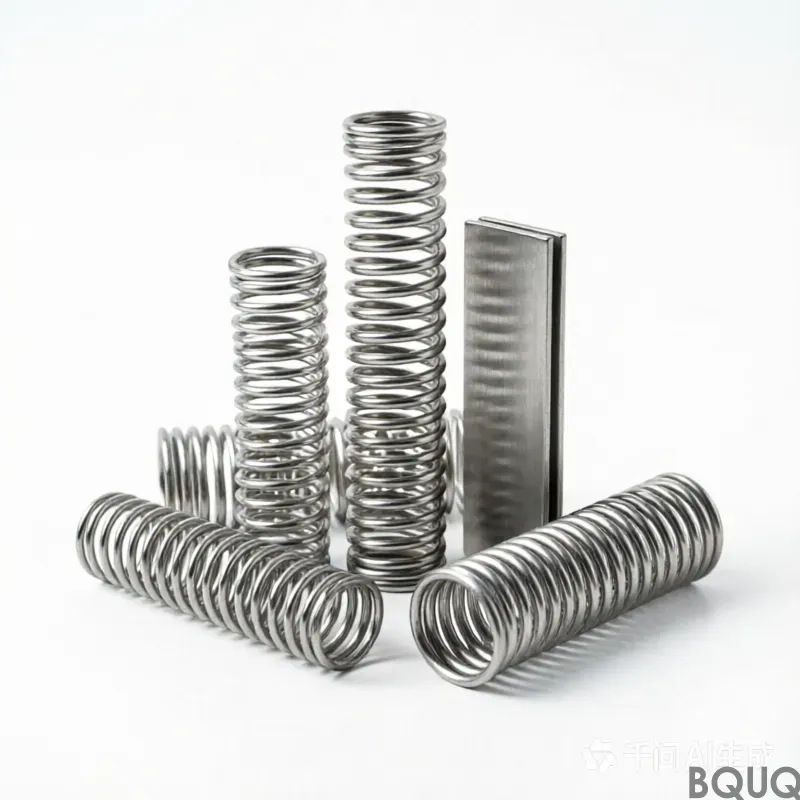
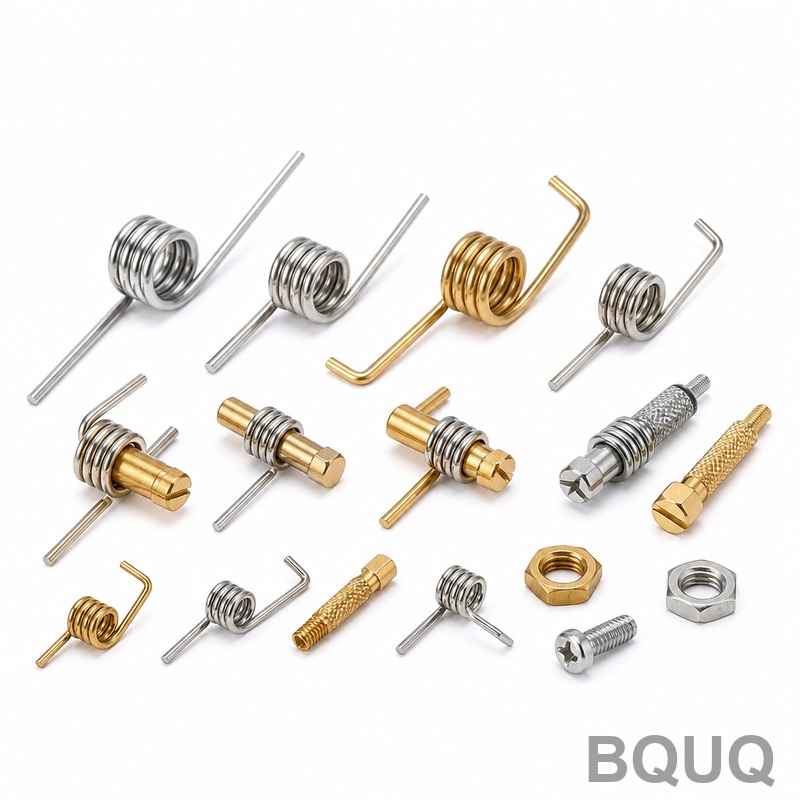
Compression springs are open-coil helical springs designed to oppose a compressive force applied along their longitudinal axis. They are typically manufactured with a gap between adjacent coils (pitch) to allow deflection when loaded, and they operate without initial tension. Extension springs, conversely, are close-wound helical springs with adjacent coils touching in the free state, designed to oppose a tensile or pulling force; they usually feature initial tension (typically 5% to 15% of the full load) that must be overcome before the coils begin to separate. Torsion springs are helical springs that exert a torque (rotational force) when twisted around their axis; they have legs that extend from the coil body to engage with adjacent components, and their ends are configured as straight torsion, short hook ends, or hinged ends depending on the application.
The load direction is the definitive differentiator: compression springs handle pushing loads, extension springs handle pulling loads, and torsion springs handle rotational loads. This dictates the stress profile as well. Compression and extension springs experience primarily shear stress on the wire cross-section, while torsion springs experience bending stress, which allows them to store more energy per unit volume but requires different fatigue analysis.
How Do Load and Deflection Characteristics Compare Across the Three Spring Types?
The load-deflection relationship is linear for all three types within the elastic range, governed by Hooke's Law (F = kx for compression and extension; T = kθ for torsion). However, the practical behavior differs significantly. Compression springs have a solid height limit; when fully compressed, coils touch and no further deflection is possible, causing a rapid non-linear increase in rate at the final 15% of travel. Extension springs with initial tension show zero deflection until the initial tension is exceeded, after which the rate becomes linear; without initial tension, they behave like compression springs but in tension. Torsion springs exhibit a linear torque-angle relationship, but the rate is highly sensitive to the number of active coils and the modulus of elasticity, not the shear modulus.
For example, a typical compression spring with a 10 mm outside diameter, 1 mm wire diameter, and 8 active coils made from ASTM A228 music wire will have a spring rate of approximately 2.5 N/mm and a maximum deflection of 8 mm before solid. An equivalent extension spring with the same geometry but wound with initial tension of 3 N will show no movement until 3 N is applied, then deflect at 2.5 N/mm. A torsion spring with a 10 mm coil diameter, 1 mm wire, and 5 active coils will produce a rate of approximately 0.15 N·mm/degree. The key engineering takeaway is that extension springs are not simply compression springs turned around; the initial tension and end hook stress concentrations significantly alter their behavior.
Which Spring Type Should You Select for Different Mechanical Applications?
Select compression springs for applications requiring a pushing force or shock absorption along a single axis, such as valve return mechanisms, suspension systems, and battery contacts. Select extension springs for applications requiring a pulling force to return a component to a home position, such as garage door mechanisms, trampoline frames, and carburetor linkages. Select torsion springs for applications requiring rotational force or torque, such as clothespins, mousetraps, hinges, and counterbalance mechanisms.
The decision matrix is straightforward: identify the direction of the force your system needs to apply or resist. If the load path is linear and compressive, use a compression spring; if linear and tensile, use an extension spring; if rotational, use a torsion spring. A common mistake is using an extension spring where a compression spring is more suitable, often due to space constraints, but this leads to premature failure because extension spring hooks are stress risers that reduce fatigue life by up to 50% compared to a compression spring of similar dimensions. For high-cycle applications (over 100,000 cycles), always prefer compression springs over extension springs unless axial space is critically limited.
How Do Material Selection and Manufacturing Processes Differ for Each Spring Type?
All three spring types can be manufactured from the same materials, including music wire (ASTM A228), oil-tempered wire (ASTM A229), stainless steel (ASTM A313, types 302 and 316), and chrome silicon (ASTM A401). However, the manufacturing processes differ in the coiling method and end finishing. Compression springs are cold-coiled for wire diameters up to 12.7 mm and hot-coiled above that; they require end grinding on 25% to 100% of the end coils to create flat, square bearing surfaces. Extension springs are also cold-coiled but require specialized hook-forming operations, which are performed after coiling and often involve secondary bending operations that introduce residual stress. Torsion springs are cold-coiled with precise leg bending operations; the legs can be short (90-degree bends), straight (radial), or extended, and the coil body must be wound with a specific direction (right-hand or left-hand) to suit the torque direction.
Material hardness and tensile strength are critical for all types, but torsion springs demand higher-quality material because bending stress concentrates on the inner surface of the coil, making surface defects more catastrophic. For compression and extension springs, the shear stress is more uniform across the wire cross-section, so minor surface defects are less critical. In terms of operating temperature, music wire is limited to 120°C, oil-tempered wire to 150°C, stainless steel 302 to 260°C, and chrome silicon to 230°C for continuous service across all three types. For high-temperature environments above 260°C, you would need Inconel X-750 or similar superalloys, which are available for all three configurations.
What Are the Tolerance and Precision Capabilities for Each Spring Type?
Tolerances are governed by DIN 2095 for cold-coiled compression and extension springs and DIN 2096 for hot-coiled springs; torsion springs follow DIN 2194. For compression springs, the load tolerance can be held to ±5% of the specified load at a given deflection, and free length tolerance to ±1% or ±0.3 mm, whichever is greater. Extension spring tolerances are similar for load, but free length and initial tension tolerances are wider, typically ±2% for free length and ±10% for initial tension. Torsion spring torque tolerance is typically ±5% at a specified angle, and leg position tolerance is ±1 degree.
The achievable tolerances depend heavily on wire diameter consistency and the coiling machine's precision. For high-precision applications, we recommend specifying load tolerances rather than dimensional tolerances, because load is the functional parameter and is less sensitive to minor geometry variations. For example, a compression spring with a 10 mm free length can be held to ±0.1 mm in free length but a load tolerance of ±2% is more reliable and functionally meaningful. Torsion springs require careful attention to the friction between coils during winding, which can cause torque variation of up to 15% if the spring is not properly stress-relieved after forming.
How Much Does Tooling and Prototyping Cost for Each Spring Type?
Tooling costs are minimal for all spring types because springs are formed on CNC coiling machines without dedicated dies; the setup cost is the primary expense. For a prototype run of 100 pieces, expect to pay between $150 and $400 for any spring type, including material, setup, and inspection, with a lead time of 3 to 5 business days. Production tooling (setup and programming) for a specific spring specification ranges from $300 to $800, which is amortized over the production run. There is no significant cost difference between compression, extension, or torsion springs for tooling; the difference appears in piece price due to end-forming complexity.
Extension springs are the most expensive to produce because of the hook-forming operations, which require secondary bending and often manual adjustment, adding 20% to 30% to the piece price compared to a compression spring of identical wire and coil dimensions. Torsion springs are moderately more expensive than compression springs (10% to 20% more) due to leg bending operations. Compression springs are the most economical, especially in large volumes, because end grinding can be automated and the process is fully continuous. For a production run of 10,000 pieces, a compression spring might cost $0.15 per piece, while an extension spring of similar size costs $0.20 to $0.25 per piece.
| Property | Compression Spring | Extension Spring | Torsion Spring |
| Force type | Axial pushing (compressive) | Axial pulling (tensile) | Rotational (torque) |
| Typical spring rate units | N/mm or lbf/in | N/mm or lbf/in | N·mm/degree or lbf·in/degree |
| Initial tension | None | Yes, typically 5% to 15% of full load | None (but friction between coils) |
| End configuration | Closed and ground ends | Hooks (English, German, or loop) | Legs (straight, short, or hinged) |
| Primary stress | Shear stress | Shear stress | Bending stress |
| Manufacturing complexity | Low | High (hook forming) | Medium (leg bending) |
| Relative cost per piece | Baseline (1.0x) | 1.2x to 1.3x | 1.1x to 1.2x |
| Typical tolerance (load) | ±5% | ±5% (load), ±10% (initial tension) | ±5% (torque) |
| Maximum operating temperature (music wire) | 120°C | 120°C | 120°C |
| Fatigue life for equivalent stress | Highest (no stress risers) | Lowest (hook stress risers) | Medium |
Why Do Extension Springs Fail More Often Than Compression Springs in High-Cycle Applications?
Extension springs fail primarily at the hooks, not in the coil body, because the hook is a sharp bend that creates a stress concentration factor of 1.5 to 2.5 compared to the straight wire section. Under cyclic loading, fatigue cracks initiate at the inner surface of the hook bend and propagate rapidly, leading to premature fracture. Compression springs, by contrast, have no such stress risers; the load is distributed evenly across the coil cross-section, and end grinding ensures uniform load transfer across the bearing surface. Torsion springs fail at the inner surface of the coil where bending stress is maximum, but they can be designed with a larger coil index (D/d ratio) to reduce this stress.
For applications exceeding 1 million cycles, we recommend using compression springs whenever possible, or redesigning the extension spring to use a reduced hook radius (minimum 2 times wire diameter) and shot-peened surfaces to induce beneficial compressive residual stress. For torsion springs in high-cycle service, use a coil index above 6 and avoid sharp leg bends; the leg-to-coil transition should have a radius of at least 3 times the wire diameter. If you must use an extension spring for high-cycle service, specify a cross-over or hinged hook design rather than a standard loop, and request a fatigue-rated material like chrome vanadium (ASTM A232), which has a higher endurance limit than music wire.
What Are the Design Limits for Each Spring Type in Terms of Deflection and Speed?
Compression springs can achieve a maximum deflection of up to 80% of the free length before reaching solid height, but the practical maximum is usually 50% to 60% of free length to avoid surging (resonance). Extension springs have a maximum deflection limited by the wire's elastic limit, typically 50% to 70% of the free length, but the hooks limit the practical elongation to about 40% to 50%. Torsion springs have a maximum angular deflection of up to 360 degrees for a single coil, but the practical limit is 180 to 270 degrees to prevent coil binding and excessive stress.
For high-speed applications (over 100 cycles per second), compression springs are prone to surging, which is a resonant condition where the spring's natural frequency matches the operating frequency. The natural frequency of a compression spring can be calculated as f = (d / (π D^2 N)) × sqrt(G / (2ρ)), where d is wire diameter, D is mean coil diameter, N is active coils, G is shear modulus, and ρ is density. For a typical spring with d = 1 mm, D = 8 mm, N = 6, and G = 79.3 GPa, the natural frequency is approximately 1,200 Hz. Extension springs have lower natural frequencies due to the end mass of the hooks, and torsion springs have the highest natural frequencies because they are stiffer in rotation. Always calculate the natural frequency and keep the operating frequency below 80% of the natural frequency to avoid resonance and premature failure.
Which Spring Type Offers the Best Energy Storage Efficiency?
Torsion springs offer the highest energy storage per unit volume because they operate in bending stress, which allows the material to be stressed to a higher percentage of its tensile strength (up to 80%) compared to shear-loaded springs (up to 45% to 50% of tensile strength). The energy storage capacity of a spring is proportional to the square of the maximum allowable stress divided by the modulus of elasticity (for torsion) or the shear modulus (for compression/extension). Since the allowable bending stress is roughly 1.5 times the allowable shear stress, and the modulus of elasticity is about 2.5 times the shear modulus, torsion springs can store approximately 3.5 to 4 times more energy per unit volume than compression or extension springs.
However, this theoretical advantage is often offset by practical constraints. Torsion springs require additional space for the legs and are more difficult to package in compact assemblies. Compression springs are the most space-efficient in terms of axial footprint, but they have a lower energy density. For applications where energy density is critical, such as mechanical watches or small actuators, torsion springs are the preferred choice. For applications where simplicity and reliability are paramount, compression springs remain the standard. In practice, the energy storage efficiency is less important than the load direction and packaging constraints, so do not select a torsion spring solely for energy density if a compression spring fits the space better.
Can You Combine Different Spring Types in a Single Assembly?
Yes, combining spring types is common in complex mechanical systems. For example, a valve assembly may use a compression spring for the main return force and a torsion spring for a secondary rotational positioning function. A common combination is an extension spring used in series with a compression spring to create a progressive rate system, where the extension spring provides the initial low rate and the compression spring engages at a higher deflection to provide a stiffer secondary rate. This is often used in automotive suspension applications to provide a comfortable ride over small bumps and a firmer response over large bumps.
When combining springs, you must account for the total deflection and load sharing. If two springs are in series, the total deflection is the sum of individual deflections, and the load is the same in both; the combined rate is 1/k_total = 1/k1 + 1/k2. If in parallel, the total rate is k_total = k1 + k2, and the load is shared proportionally to the rates. Torsion springs can be combined with linear springs using a cam or lever mechanism to convert rotational torque into linear force or vice versa. However, we recommend avoiding overcomplicated designs; a single well-designed spring with a proper geometry is almost always more reliable and cost-effective than a multi-spring assembly.
FAQ
Can a compression spring be used as an extension spring by reversing the load?
No, because a compression spring has no end hooks and is designed to be loaded in compression; applying a tensile load would cause the coils to separate and the spring would not function. Even if you added hooks, the spring rate and stress distribution would be incorrect for tension, and the lack of initial tension would cause slack in the system. Always use a purpose-designed extension spring for tensile loads.
What is the maximum operating temperature for each spring type?
Music wire (ASTM A228) is limited to 120°C, oil-tempered wire (ASTM A229) to 150°C, stainless steel 302/316 to 260°C, and chrome silicon (ASTM A401) to 230°C for continuous service. For temperatures above 260°C, use Inconel X-750 or Nimonic alloys, which can operate up to 600°C. The temperature rating is the same for all three spring types because it depends on the material, not the spring configuration.
How do I measure the initial tension of an extension spring?
Initial tension is measured by suspending the spring vertically and adding weights until the coils just begin to separate; the load at that point is the initial tension. For production inspection, use a tensile testing machine with a slow crosshead speed and record the load at the first 0.1 mm of extension beyond the free length. The initial tension should be specified as a percentage of the maximum load, typically 5% to 15%.
Which spring type is best for high-frequency applications?
Compression springs are generally best for high-frequency applications because they have no end hooks that add mass and reduce natural frequency. However, you must design for surge resistance by using a high natural frequency (small coil diameter, large wire diameter, fewer active coils) and avoid operating at resonance. Torsion springs can also work at high frequencies but require careful leg design to avoid mass imbalance.
Can torsion springs be made with both right-hand and left-hand winding?
Yes, torsion springs can be wound in either direction, and the winding direction must match the torque direction. A right-hand wound spring will exert torque in a counterclockwise direction when viewed from the end, and a left-hand wound spring will exert torque in a clockwise direction. The winding direction does not affect the spring rate but does affect the leg orientation and installation.
What is the minimum number of coils for a compression spring?
The minimum number of active coils is 3 for a compression spring to ensure stable buckling resistance; fewer coils will cause lateral instability and premature buckling. For extension springs, the minimum is 4 active coils to ensure uniform initial tension, and for torsion springs, the minimum is 2.5 coils to provide adequate body length for leg attachment. Always add at least one inactive end coil to each end for compression springs to allow for proper seating.
#
How much does it cost to prototype a
Related Articles
- Hardware spring fatigue failure analysis and life prediction technology
- In-depth analysis of technology and process in the hardware spring industry in 2026: a full-dimensional interpretation of high stress, functional integration and engineering certification
- From "standard parts" to "functional parts": 2026 hardware spring industry technology trends and functional innovation engineering direction