Custom Spring Manufacturing: Material, Tolerance and Fatigue Life Questions Buyers Ask
When you order custom springs, the three questions that determine success are material selection, achievable tolerance, and fatigue life prediction. The direct answer is: choose a material based on operating temperature and corrosion environment, specify tolerances per DIN 2095 or ASTM A228 standards (typically +/- 5% for load and +/- 2% for free length), and calculate fatigue life using the corrected endurance limit, which for music wire is approximately 45% of tensile strength at 10^7 cycles. This article provides the engineering data you need to specify springs correctly and avoid field failures.
Material Selection Based on Operating Environment
The material choice sets the maximum stress, temperature range, and corrosion resistance of your spring. For general industrial use below 120°C, ASTM A228 music wire (0.80-0.95% carbon) offers the highest tensile strength, ranging from 2300 to 2700 MPa for wire diameters of 0.5 to 6.0 mm. For temperatures above 120°C, chrome silicon (ASTM A401) maintains good relaxation resistance up to 250°C, with a maximum operating temperature of 260°C. For corrosive environments or food contact, stainless steel 302 (ASTM A313) provides adequate strength to 290°C but has a lower maximum stress, typically 55% of music wire. Inconel X-750 is necessary for temperatures above 300°C, retaining 75% of its room temperature strength at 540°C.
Do not substitute materials without recalculating spring rate and stress. A common error is swapping 302 stainless for music wire to solve corrosion, which reduces allowable stress by 20% and requires a larger wire diameter or increased coil count. For cost-sensitive applications below 80°C in dry environments, hard-drawn steel wire (ASTM A227) is acceptable but has 15% lower fatigue strength than music wire. We recommend specifying material by ASTM grade, not generic trade names, to ensure consistent heat treatment response.
Tolerance Classes and Achievable Precision
Tolerance is not a single number; it depends on spring index (D/d), wire diameter, and whether you control load, rate, or free length. For compression springs, DIN 2095 Grade 2 (standard) allows +/- 10% on load, while Grade 1 (precision) allows +/- 5%. In practice, BQUQ can hold +/- 3% on load for wire diameters above 1.0 mm using CNC coiling and stress-relief stabilization, but this adds 8-12% to unit cost. Free length tolerance is tighter: +/- 1.5% for Grade 1, +/- 3% for Grade 2, with a minimum of +/- 0.15 mm.
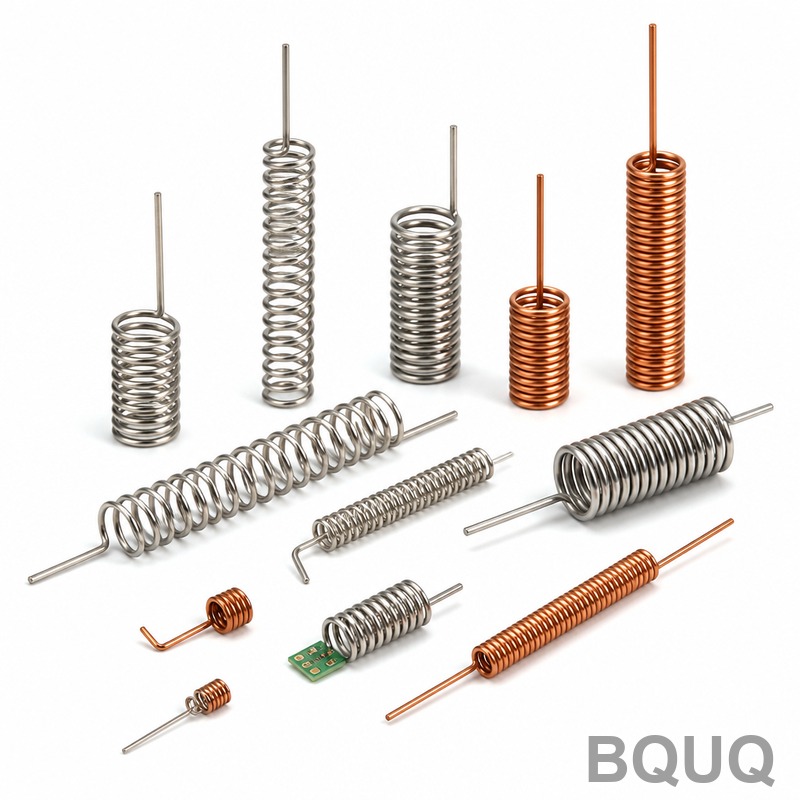
For extension springs, initial tension tolerance is the most difficult to control, typically +/- 10% of specified value. Torsion springs require control of the angular relationship between legs, which we hold to +/- 2 degrees for wire under 3 mm. The achievable tolerance also depends on the number of active coils: springs with fewer than 3 active coils cannot be held to standard tolerance because the rate changes exponentially with coil count. The table below shows typical tolerance values for common spring types:
| Spring Type | Parameter | Standard Tolerance (DIN 2095 Gr.2) | Precision Tolerance (DIN 2095 Gr.1) | BQUQ Capability |
| Compression | Free Length | +/- 3% or +/- 0.3 mm | +/- 1.5% or +/- 0.15 mm | +/- 1% or +/- 0.1 mm |
| Compression | Load at Deflection | +/- 10% | +/- 5% | +/- 3% |
| Extension | Initial Tension | +/- 15% | +/- 10% | +/- 8% |
| Torsion | Angular Position | +/- 3 degrees | +/- 2 degrees | +/- 1.5 degrees |
| Torsion | Torque at Angle | +/- 10% | +/- 5% | +/- 4% |
Fatigue Life Calculation and Test Verification
Fatigue life is determined by the alternating stress range, not the mean stress alone. For a spring operating between 20% and 80% of maximum deflection, the alternating stress is 30% of the maximum stress. Using the Goodman diagram, the corrected endurance limit for music wire at 10^7 cycles is approximately 45% of the minimum tensile strength. For a 2.0 mm music wire spring with a tensile strength of 2300 MPa, the endurance limit is 1035 MPa. If your application requires 10^6 cycles, the allowable stress increases to 55% of tensile strength, or 1265 MPa. Shot peening increases fatigue life by 20-30% by introducing compressive residual stress on the surface, and we recommend it for any spring exceeding 10^5 cycles.
Do not rely on calculated values alone for safety-critical springs. We recommend prototype testing on a spring fatigue tester at 5 Hz for 10^6 cycles, which takes approximately 55 hours. For high-volume production, we perform statistical process control on load at deflection, checking every 50th piece. The cost of a fatigue test is typically 300-800 USD per spring design, which is justified when failure causes downtime exceeding 500 USD per hour. Surface defects are the primary cause of premature fatigue failure; therefore, specify a surface finish of Ra 0.8 micrometers or better for springs above 1.5 mm wire diameter.
Manufacturing Process Impact on Spring Quality
The coiling method determines residual stress and dimensional consistency. CNC coiling (no mandrel) produces tighter tolerances and is suitable for wire from 0.2 to 12 mm, with a maximum coiling speed of 150 parts per minute for small springs. Hot coiling is required for wire above 12 mm or for alloys like Inconel that work-harden rapidly. After coiling, stress relief is mandatory: 230-260°C for 30 minutes for music wire, 370-420°C for chrome silicon, and 480-540°C for stainless steel. Incorrect stress relief temperature causes either incomplete relaxation (resulting in drift) or over-tempering (reducing tensile strength by 10%).
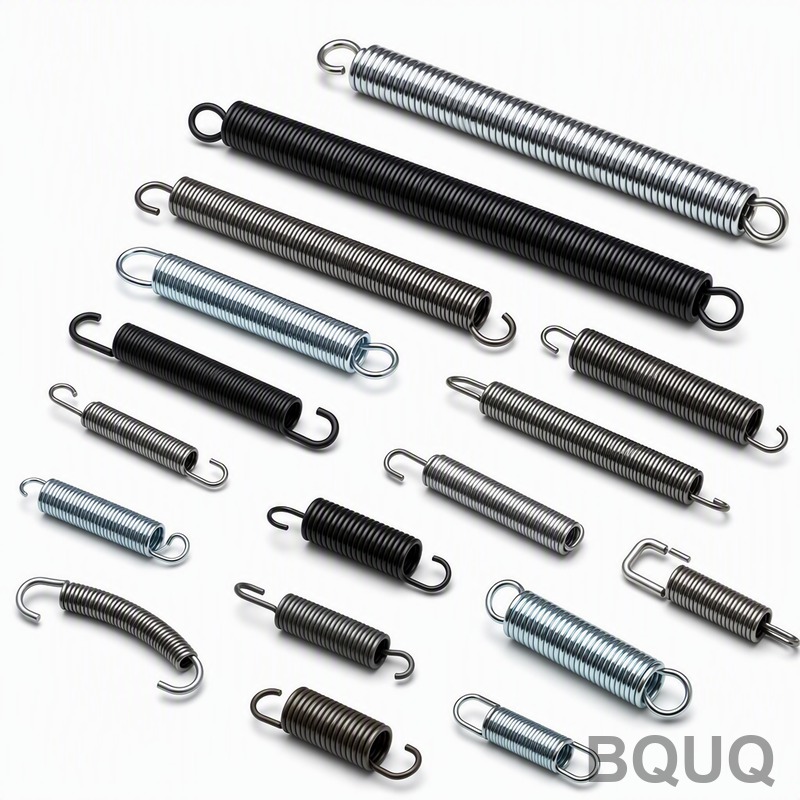
Grinding of compression spring ends is necessary for squareness and load accuracy. For springs with a free length to mean diameter ratio above 1.5, we grind both ends to achieve a flatness of 0.002 mm per mm of mean diameter. Preset or scragging (compressing to solid height) is recommended for all compression springs to induce beneficial residual stress and stabilize dimensions. This process adds 0.5-1% to the cost but reduces load relaxation by 30-50% during the first operational cycle. For springs needing maximum fatigue life, we recommend a combination of shot peening (intensity 0.15-0.25 A) and presetting.
Cost Drivers and Lead Time Considerations
The price of a custom spring is driven by material cost (30-40%), tooling and setup (20-25%), heat treatment and finishing (15-20%), and inspection (10-15%). For a typical compression spring, 2.0 mm music wire, 20 mm free length, 5 active coils, the unit price at 1,000 pieces is approximately 0.35-0.55 USD. At 10,000 pieces, the price drops to 0.18-0.28 USD. Precision tolerance (Grade 1) adds 15-25% over Grade 2. Shot peening adds 0.05-0.10 USD per piece depending on size. Tooling cost ranges from 150-400 USD for a new design, which is waived for orders above 5,000 pieces.
Lead time for prototypes is 3-5 business days, including material sourcing and stress relief. Standard production runs (1,000-50,000 pieces) require 10-15 business days. Large orders above 100,000 pieces or exotic materials (Inconel, Elgiloy) require 20-25 business days. We recommend ordering 5-10% spare springs for critical applications, as the replacement lead time is often longer than the original order. For annual volume contracts, we can warehouse your material and reduce lead time to 7 business days.
Common Specification Errors and How to Avoid Them
The most frequent error in spring drawings is specifying only free length and wire diameter without defining the working deflection range. This forces the manufacturer to assume stress levels, which may exceed the endurance limit. Always specify: wire diameter, mean coil diameter, total coils, free length, solid height, and load at two different deflections. For extension springs, specify initial tension and maximum extended length. For torsion springs, specify torque at a given angular deflection and the direction of wind.
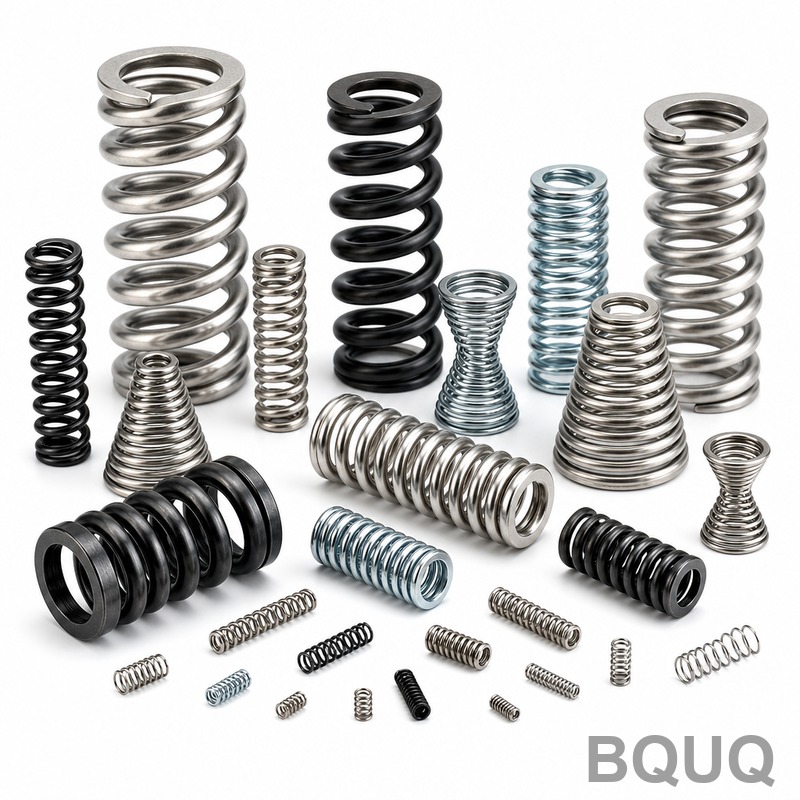
Another common error is confusing spring rate with load. Spring rate (N/mm) is the slope of the load-deflection curve, while load at a specific height is an absolute value. We recommend specifying both, but if only one is given, we calculate the other and confirm before production. Finally, do not specify a surface finish that is tighter than necessary. A mirror finish (Ra 0.2) increases cost by 30% but provides no fatigue benefit over a clean ground finish (Ra 0.8) unless the spring is operating in a corrosive medium.
Practical Recommendations for Spring Buyers
For maximum reliability and lowest total cost, follow these steps. First, define the operating temperature range and environment (humidity, chemicals) before contacting a supplier. Second, calculate the maximum and minimum working stress using the spring index formula; if the ratio of maximum stress to tensile strength exceeds 45%, increase wire diameter or select a higher grade material. Third, request a fatigue life estimate from the manufacturer, including the number of cycles and the desired confidence level (typically 90% survival at 10^6 cycles). Fourth, order prototypes with the exact final finish (shot peened or not) and test them in your actual assembly, not just on a spring tester.
Always request a material certificate (EN 10204 3.1) for springs used in safety applications. This certificate confirms the chemical composition and mechanical properties of the wire batch. For high-volume production, ask for a capability study (Cpk value) on load and free length. A Cpk above 1.33 indicates a stable process. Finally, consider the total cost of ownership: a cheaper spring that fails after 10,000 cycles in a 100,000-cycle application costs more in downtime and replacement labor than a premium spring that lasts the full life.
BQUUQ has manufactured custom springs in Dongguan, China for over 20 years, serving automotive, medical, and electronics industries. We provide CNC coiling, hot coiling, grinding, shot peening, and full fatigue testing in-house. Our engineers can review your spring design free of charge and provide a fatigue life calculation within one business day. For an accurate quote, send your drawing with material, tolerance, and cycle requirements. We respond with a detailed quotation and lead time within 12 hours. Email your specifications to sc@bquq.com or contact us on WhatsApp at +86 13713157787. Visit www.bquq.com to download our spring design guide and tolerance charts.
Related Articles
- Where to Buy Custom Metal Springs Online: Top 7 Suppliers
- Lightweight Design and Material Upgrade of New Energy and Automobile Chassis Spring
- From "standard parts" to "functional parts": 2026 hardware spring industry technology trends and functional innovation engineering direction
Frequently Asked Questions
What is the maximum operating temperature for music wire springs?
ASTM A228 music wire is suitable for general industrial use below 120°C. For temperatures above 120°C, you should switch to chrome silicon (ASTM A401), which maintains good relaxation resistance up to 250°C with a maximum operating temperature of 260°C.
What tolerance can I expect on spring load for precision compression springs?
Per DIN 2095, Grade 1 precision allows +/- 5% on load, while Grade 2 standard allows +/- 10%. In practice, BQUQ can hold +/- 3% on load for wire diameters above 1.0 mm using CNC coiling and stress-relief stabilization, but this adds 8-12% to unit cost.
Can I substitute 302 stainless steel for music wire to solve a corrosion problem?
No, not without redesign. Swapping 302 stainless for music wire reduces allowable stress by 20%, requiring a larger wire diameter or increased coil count. Stainless 302 provides adequate strength to 290°C but has a lower maximum stress, typically 55% of music wire.
What is the fatigue life of music wire springs at 10^7 cycles?
The corrected endurance limit for music wire is approximately 45% of its tensile strength at 10^7 cycles. Music wire tensile strength ranges from 2300 to 2700 MPa for wire diameters of 0.5 to 6.0 mm, so fatigue life must be calculated using this endurance limit.