Custom vs Catalog Springs: When to Specify Custom for Precision Engineering
For most precision manufacturing applications, catalog springs are the economically superior choice when a standard design meets your load, rate, and dimensional requirements within tolerance. However, you should specify custom springs when your application demands non-standard geometry, exotic materials, fatigue life beyond catalog ratings, or tight tolerances below typical industry standards. The decision hinges on a simple cost-benefit analysis: catalog springs cost 30-70% less per unit but custom springs deliver exact performance, reducing downstream rework and warranty risks.
Material and Performance Limitations of Catalog Springs
Catalog springs are manufactured in high volumes using standard materials such as music wire (ASTM A228), oil-tempered chrome silicon (ASTM A401), and stainless steel 302 (ASTM A313). These materials cover approximately 85% of general industrial applications. However, catalog offerings rarely include high-temperature alloys like Inconel X-750 (usable to 600°C) or Elgiloy (for corrosive medical environments). If your operating temperature exceeds 120°C for music wire or 220°C for chrome silicon, catalog springs will experience stress relaxation and premature set. A custom spring allows you to specify material chemistry, heat treatment, and surface finishing precisely, ensuring stable load at elevated temperatures.
Tolerance Comparison: Catalog vs Custom Springs
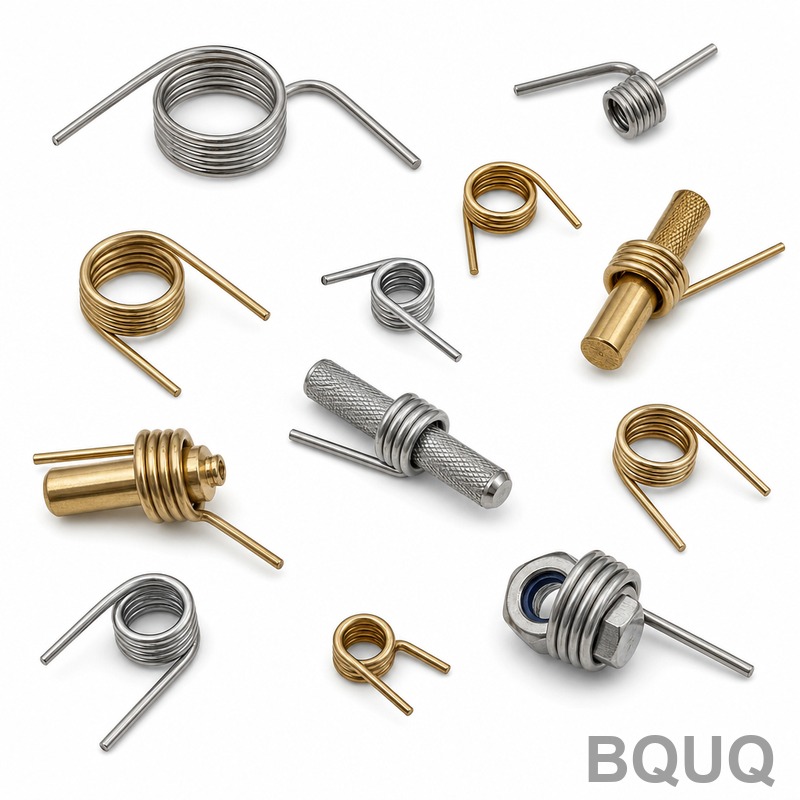
Catalog springs typically conform to ISO 2768-m or general spring tolerances, which allow load variation of ±10% and free length variation of ±2% or ±0.5mm, whichever is greater. For precision assemblies, these tolerances often cause inconsistent preload, leading to vibration, noise, or premature failure. Custom springs can hold load tolerance to ±5% or even ±3% with 100% load testing. Dimensional tolerances on wire diameter, coil diameter, and free length can be held to ±0.05mm or tighter. The table below summarizes typical achievable tolerances.
| Parameter | Catalog Spring Tolerance | Custom Spring Tolerance | Critical Application Requirement |
| Free Length | ±2.0% or ±0.5mm | ±0.3% or ±0.1mm | Valve springs, safety mechanisms |
| Load at Specified Height | ±10% | ±5% (tested) | Clutch systems, pressure relief |
| Outer Diameter | ±1.0% or ±0.3mm | ±0.3% or ±0.05mm | Precision bores, guide pins |
| Wire Diameter | ±0.03mm (standard) | ±0.01mm (custom draw) | Dynamic fatigue, stress concentration |
| Total Coils | ±1/4 coil | ±1/8 coil | Resonance avoidance |
| Surface Finish | Shot-peened (general) | Controlled shot-peen, 100% inspection | High-cycle applications above 10^7 cycles |
Cost Breakdown and Minimum Order Quantities
Catalog springs have no engineering cost and no tooling fee, with unit prices ranging from $0.05 to $2.00 depending on size and material. They are available off-the-shelf with lead times of 1-3 days. Custom springs involve engineering design review ($150-$500), tooling and setup ($300-$1500), and prototype sampling ($200-$800). Unit prices for custom springs are typically $0.50 to $5.00 for small-to-medium quantities (100-10,000 pieces). Minimum order quantities for custom springs are usually 500 pieces for compression springs and 100 pieces for custom wire forms, though BQUQ can accommodate lower volumes with a small-batch surcharge of 15-20%.
The economic break-even point occurs when your required quantity exceeds 5,000 pieces annually. At this volume, custom springs amortize tooling costs to under $0.10 per part, making them competitive with catalogs while offering superior performance. For quantities below 1,000 pieces per year, catalog springs are almost always the correct economic choice unless functional requirements cannot be met.
Fatigue Life and Dynamic Performance
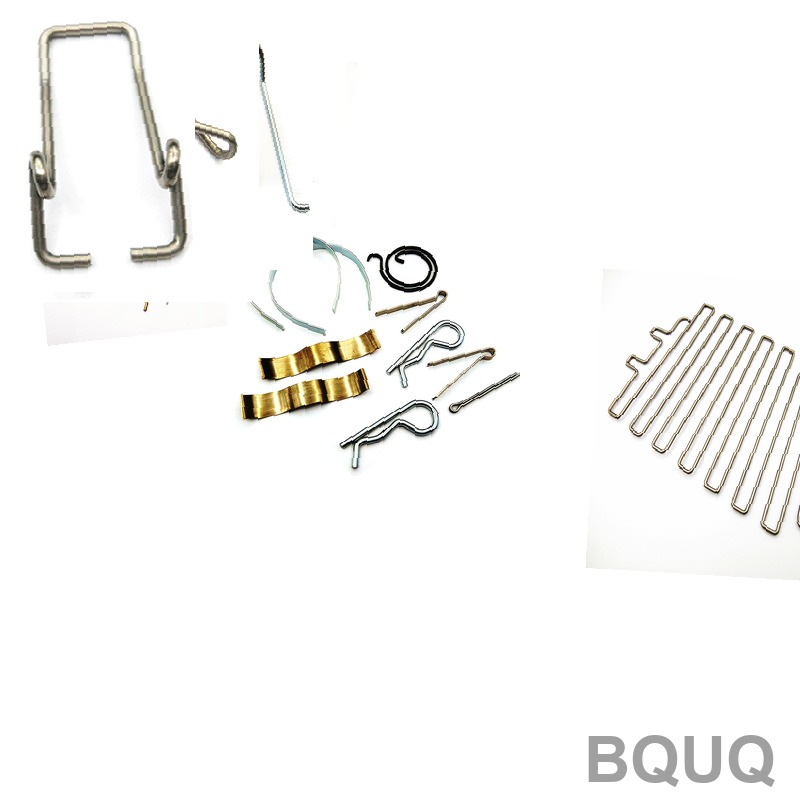
Catalog springs are generally rated for 10^5 to 10^6 cycles under normal stress ranges. They are shot-peened but not necessarily with controlled intensity or coverage. For applications exceeding 10^7 cycles, such as automotive valve springs, fuel injectors, or high-speed actuators, custom springs are mandatory. Custom spring design allows for stress optimization through wire diameter selection, mean coil diameter adjustment, and end coil grinding. BQUQ manufactures springs with fatigue life up to 10^8 cycles by controlling surface defects below 0.02mm, using vacuum-degassed wire, and applying dual-shot peening with 100% coverage verification.
Temperature also affects fatigue life dramatically. At 150°C, music wire loses 30% of its fatigue strength. Custom springs using chrome silicon or 17-7PH stainless steel maintain fatigue strength up to 250°C. If your application involves cyclic loading above 100°C, catalog springs will fail prematurely, and a custom spring with appropriate material and presetting (warm setting) is the only reliable option.
Dimensional and Geometric Constraints
Catalog springs are limited to standard wire diameters, standard coil ratios (D/d between 4 and 12), and standard end configurations (closed, ground, or plain). If your design requires a spring with a coil ratio below 4 (very stiff, small diameter) or above 12 (highly flexible, large diameter), catalog options are scarce. Similarly, if you need a conical spring, a barrel-shaped spring, or a spring with variable pitch for progressive rate, you must specify custom. Custom springs can be manufactured with wire diameters from 0.1mm to 20mm, free lengths from 1mm to 500mm, and any end configuration including reduced OD ends for tight radial spaces.
Another common issue is spring rate tolerance in catalogs. Standard rate tolerance is ±10%, but for precision indexing mechanisms or counterbalance systems, you may need ±5% or tighter. Custom springs allow rate matching within a set, ensuring uniform performance across multiple units in a system.
Lead Time and Supply Chain Considerations
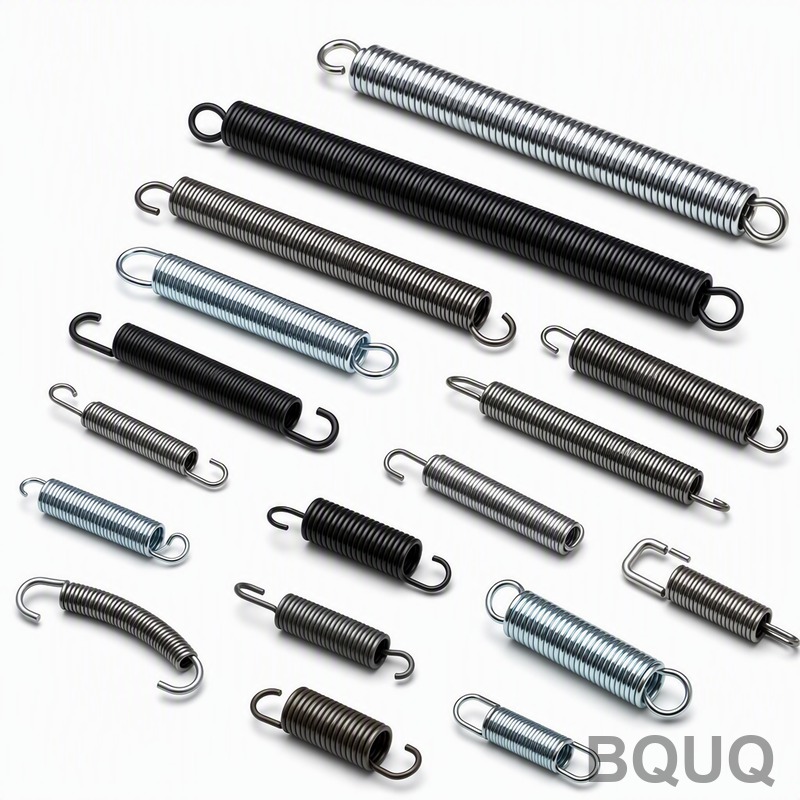
Catalog springs offer immediate availability, but they carry hidden supply chain risks. If the manufacturer discontinues a line or changes their process, your approved spring may no longer be available with identical properties. Custom springs, once designed and qualified, become your proprietary part with controlled drawings and specifications. You can also negotiate blanket orders with scheduled releases, securing pricing and availability for 12-24 months. For high-volume production, BQUQ offers custom spring manufacturing with lead times of 10-15 working days for prototypes and 20-30 working days for production quantities of 10,000 to 500,000 pieces. We provide full material certifications, dimensional reports, and load test data with every batch.
FAQ-Style Engineering Tips for Spring Selection
When evaluating a catalog spring, request the manufacturer's load-deflection curve and confirm the tolerance band at your operating height. A spring that tests within tolerance at free length may still deviate significantly at compressed height. Always verify the solid height against your assembly's minimum space requirement. For custom springs, provide the operating temperature, expected cycle count, and environmental exposure (humidity, chemicals, salt spray) in your RFQ. This data enables correct material selection and surface treatment, such as zinc plating, passivation, or PTFE coating. If you are retrofitting an existing design, measure the current spring's wire diameter, OD, free length, and rate with 0.01mm accuracy before contacting a manufacturer. This avoids guesswork and accelerates the quotation process.
Conclusion and Recommendation
The decision between custom and catalog springs is not about which is better overall but which fits your specific engineering constraints. For prototyping, low-volume production, or non-critical applications, catalog springs provide speed and low cost. For production runs above 5,000 pieces, high-cycle fatigue requirements, tight tolerances, or extreme temperatures, custom springs deliver measurable performance gains that reduce total cost of ownership. BQUQ recommends a simple decision matrix: if any two of your requirements exceed catalog limits (tolerance, temperature, fatigue, geometry, material), specify custom. Our engineering team provides free design review and will advise honestly whether a catalog spring can suffice.
When you are ready to move forward, BQUQ offers 12-hour quotation turnaround on custom spring designs. Send your drawings, specifications, or sample parts to our engineering team. Email: sc@bquq.com, WhatsApp: +86 13713157787, or visit www.bquq.com to submit your RFQ online. With 20 years of precision manufacturing experience in CNC machining, metal stamping, and springs, we will deliver a solution that meets your exact performance and budget requirements.