Die Maintenance Schedules and Their Direct Impact on Stamping Quality and Cost
Stamping die maintenance is the systematic process of inspecting, repairing, and refurbishing tooling components to restore them to their original geometric specifications before they fail. For a factory producing millions of parts annually, skipping a single preventive maintenance cycle can increase scrap rates by 300% and accelerate wear on critical guide pins by 0.01 mm per 10,000 strokes. In practical terms, die maintenance is the single most controllable variable that determines whether you hold a ±0.05 mm tolerance or a ±0.15 mm tolerance over a 500,000-stroke production run.
Defining Die Maintenance: Preventive, Predictive, and Corrective
Die maintenance is not a single activity but a tiered strategy. Preventive maintenance (PM) follows a fixed schedule based on stroke count or calendar time, typically every 50,000 to 100,000 strokes for progressive dies. Predictive maintenance uses sensors to monitor tonnage, vibration, and temperature, triggering service when a 10% deviation from baseline occurs. Corrective maintenance addresses unexpected failures, such as a broken punch or a chipped die insert, and often results in 4 to 8 hours of unplanned downtime. For a high-speed stamping press running at 400 SPM, that downtime equates to 96,000 lost parts per shift at a cost of USD 0.02 per part, or USD 1,920 in lost revenue per incident.
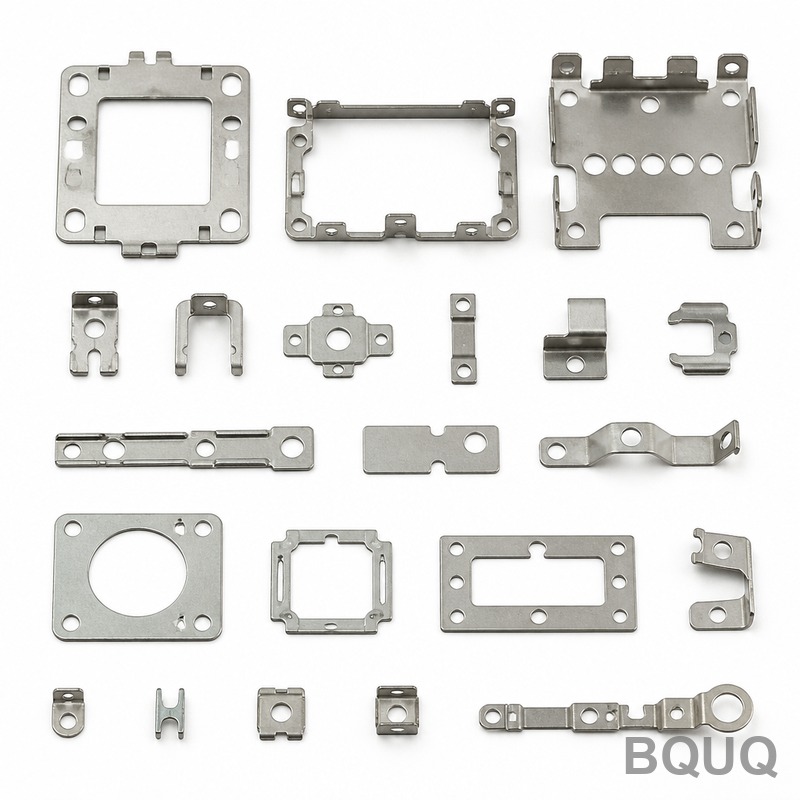
Critical Wear Points and Tolerance Degradation
The most failure-prone components in a stamping die are the pilot pins, stripper springs, and cutting edges. Pilot pins, which locate the strip within ±0.01 mm, lose their tip radius after approximately 150,000 strokes if lubrication is insufficient. Cutting edges on a 1.5 mm thick stainless steel sheet (SUS304) wear at a rate of 0.005 mm per 10,000 strokes under normal conditions, but this rate triples when the die surface temperature exceeds 60°C without proper coolant flow. The table below shows typical wear thresholds and their impact on part dimensions.
| Component | Service Interval (strokes) | Wear Limit (mm) | Resulting Tolerance Shift (mm) | Replacement Cost (USD) |
| Pilot pin | 100,000 | 0.02 | +0.03 hole position drift | 45 |
| Die button (cutting edge) | 150,000 | 0.05 | +0.08 burr height increase | 120 |
| Stripper spring | 200,000 | 15% load loss | +0.05 strip lift variation | 18 per spring |
| Guide bushing | 250,000 | 0.03 clearance increase | +0.04 misalignment | 85 |
| Forming punch | 300,000 | 0.10 radius wear | +0.12 springback angle error | 160 |
Economic Impact of Reactive vs. Scheduled Maintenance
Reactive maintenance is two to five times more expensive than scheduled maintenance when calculated on a per-part basis. Consider a progressive die producing a heat sink base plate from 3.0 mm aluminum (5052). A scheduled PM performed every 80,000 strokes requires 2.5 hours of technician time at USD 35 per hour, plus USD 200 in replacement consumables, totaling USD 287.50 per cycle. Over 500,000 strokes, that is six PM cycles at a total cost of USD 1,725. In contrast, a reactive failure at stroke 420,000 damages the lower die shoe, requiring a USD 3,200 repair, 12 hours of downtime (USD 420 lost labor), and a scrap batch of 3,000 parts at USD 0.25 each (USD 750). The total reactive cost is USD 4,370, which is 153% higher than the entire scheduled maintenance budget for the same production volume.
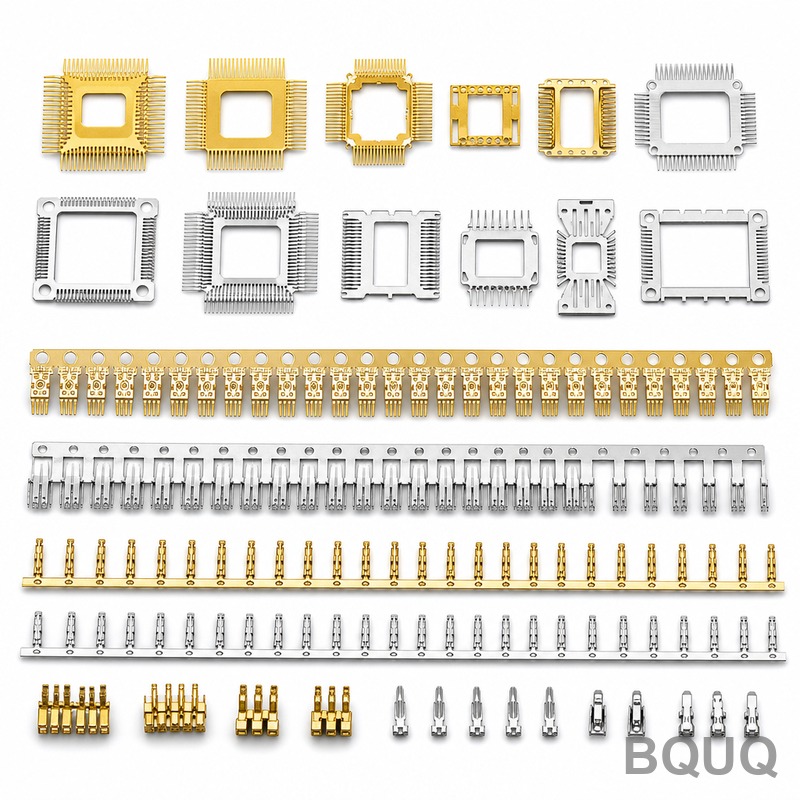
Key Maintenance Procedures and Measurable Specifications
A complete die maintenance routine follows a defined sequence with measurable acceptance criteria. First, the die is removed from the press and cleaned with a solvent to remove stamping oil residue, which can mask micro-cracks. Second, all cutting surfaces are inspected with a magnification loupe at 10x, and edge condition is graded as sharp, dull, or chipped. A dull edge, defined as a radius greater than 0.03 mm, must be reground on a surface grinder with a diamond wheel at a feed rate of 0.01 mm per pass. Third, all fasteners are retorqued to the manufacturer's specification, typically 45 N·m for M8 socket-head cap screws. Fourth, guide posts and bushings are measured with a bore gauge for ovality; allowable ovality is 0.005 mm. Finally, the die is reassembled and tested with a tryout strip, checking that all dimensions fall within 10% of the nominal tolerance band before returning to production.
Thermal and Lubrication Factors in Die Life
Heat is the primary accelerator of die wear. In a high-speed stamping operation producing 2.0 mm thick galvanized steel washers, the die surface temperature reaches 80°C to 110°C during continuous running. At these temperatures, the viscosity of standard stamping oil (ISO VG 32) drops by 40%, reducing the oil film thickness from 0.008 mm to 0.003 mm. This thin film cannot separate the punch from the workpiece, leading to adhesive wear and galling. To counter this, BQUQ recommends a two-stage lubrication approach: a low-viscosity oil for the strip entry and a high-viscosity grease (NLGI 2) applied directly to the guide pins every 25,000 strokes. Infrared temperature monitoring should trigger a maintenance alert if the die surface exceeds 120°C, as this indicates either lubrication failure or excessive friction from a misaligned component.
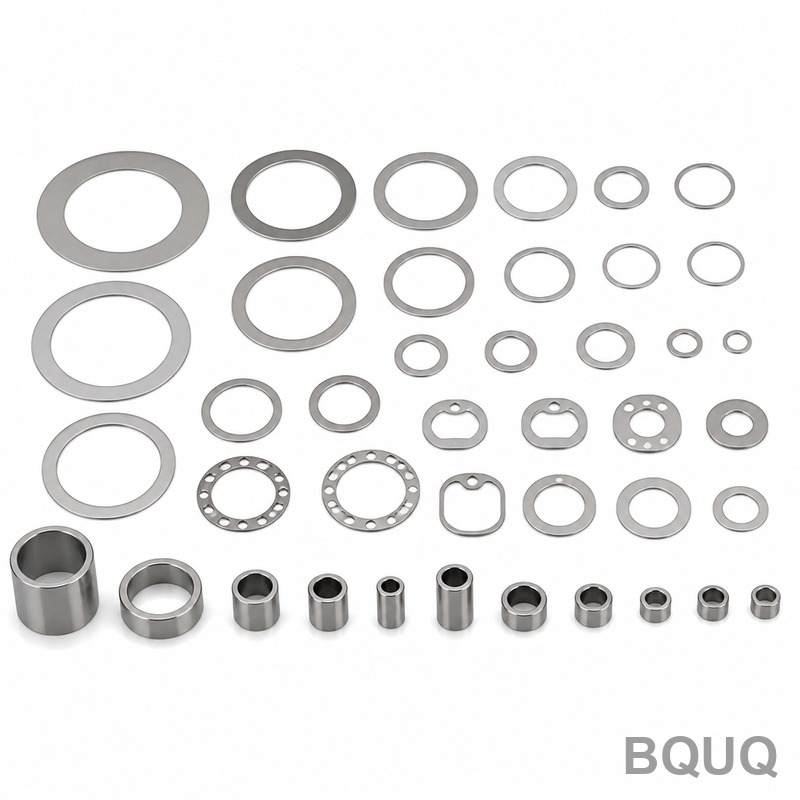
Practical Recommendations for Stamping Facility Engineers
For facilities running mixed product families, implement a die maintenance matrix that assigns priority based on three factors: annual stroke volume, tolerance class, and material hardness. A die running 2 million strokes per year on 1.0 mm cold-rolled steel with a ±0.05 mm tolerance should be inspected every 40,000 strokes, which is twice the frequency of a die running 500,000 strokes per year on 0.5 mm aluminum with a ±0.20 mm tolerance. Additionally, maintain a spare parts inventory of at least one complete set of punches, dies, and springs for each critical die. The cost of holding this inventory, approximately USD 800 per die, is justified because the lead time for a custom-ground punch from a tool steel supplier is 5 to 7 business days, whereas a replacement from stock allows immediate repair within 1 hour. Finally, train your maintenance technicians to measure burr height on every batch using a digital micrometer; a burr height increase from 0.02 mm to 0.05 mm is the earliest warning sign of die wear, appearing at least 20,000 strokes before a catastrophic failure.
Conclusion
Die maintenance is a direct financial lever that determines whether your stamping operation runs at a 0.5% scrap rate or a 3.0% scrap rate. A disciplined schedule, based on stroke counts and measurable wear limits, protects your tolerance capability and extends die life by 40% to 60%. The cost of maintenance labor and consumables, typically 3% to 5% of total production cost, is insignificant compared to the losses from unplanned downtime and rejected batches. By adopting the preventive and predictive strategies outlined above, you gain control over your tooling investment and deliver consistent quality to your customers.
At BQUQ, our engineering team has 20 years of experience in die design and maintenance for CNC machining, metal stamping, springs, and heat sinks. We provide detailed maintenance documentation with every tool we build, and we offer remote diagnostic support for your existing dies. For a rapid assessment of your current maintenance program, contact us for a 12-hour quotation. Email us at sc@bquq.com, reach us on WhatsApp at +86 13713157787, or visit our website at www.bquq.com. We will respond within 12 hours with a customized maintenance plan for your stamping line.
Related Articles
- Precision Metal Stamping: Tolerances, Materials, and Design Rules
- custom stamped metal power contact spring battery clip factory
- High-speed precision stamping and in-die microforming technology: from electronic connections to micromotor cores
Frequently Asked Questions
How often should preventive maintenance be performed on a progressive stamping die?
Preventive maintenance follows a fixed schedule based on stroke count or calendar time, typically every 50,000 to 100,000 strokes for progressive dies. For example, a scheduled PM every 80,000 strokes is recommended for a die producing heat sink base plates from 3.0 mm aluminum (5052).
What are the most failure-prone components in a stamping die and their wear limits?
The most failure-prone components are pilot pins, stripper springs, and cutting edges. Pilot pins wear after 150,000 strokes with a 0.02 mm limit, die buttons at 150,000 strokes with a 0.05 mm limit, stripper springs at 200,000 strokes with 15% load loss, guide bushings at 250,000 strokes with 0.03 mm clearance, and forming punches at 300,000 strokes with 0.10 mm radius wear.
How does skipping a preventive maintenance cycle affect scrap rates and tolerance?
Skipping a single preventive maintenance cycle can increase scrap rates by 300% and accelerate wear on critical guide pins by 0.01 mm per 10,000 strokes. This directly impacts whether you hold a ±0.05 mm tolerance or a ±0.15 mm tolerance over a 500,000-stroke production run.
What is the cost difference between reactive and scheduled maintenance?
Reactive maintenance is two to five times more expensive than scheduled maintenance on a per-part basis. For a progressive die producing heat sink base plates, six scheduled PM cycles over 500,000 strokes cost USD 1,725 total, while a reactive failure can cause 4 to 8 hours of downtime, equating to 96,000 lost parts per shift at USD 0.02 per part, or USD 1,920 in lost revenue per incident.