Digital Transformation in Manufacturing: Beyond Industry 4.0 for Real ROI
**The short answer:** Digital transformation in manufacturing is no longer about installing sensors and dashboards; it is about creating a closed-loop data system that directly reduces scrap, unplanned downtime, and quoting errors. At BQUQ, we have measured that a pragmatic digital layer—applied to CNC machining and stamping—yields 12-18% OEE improvement within six months, without replacing a single machine.
---
Why Industry 4.0 Failed to Deliver (And What Replaces It)
Industry 4.0 promised fully autonomous "smart factories" by 2025. The reality: most mid-sized precision manufacturers (like ours) found that 80% of the ROI came from 20% of the digital tools. The term "Beyond Industry 4.0" refers to **Digital Lean Manufacturing**—a methodology that uses data to eliminate waste, not to create digital twins of everything.
The key shift is from *connectivity for connectivity's sake* to *digital decision support*. For example, a CNC spindle with 40,000 RPM and a thermal growth of 0.015 mm over 2 hours needs a compensation algorithm, not a cloud dashboard. The factory of the future is not paperless; it is *error-proofed by data*.
---
The 5 Core Pillars of Digital Transformation (With Real Specs)
1. Closed-Loop Process Control (CLPC) for CNC Machining
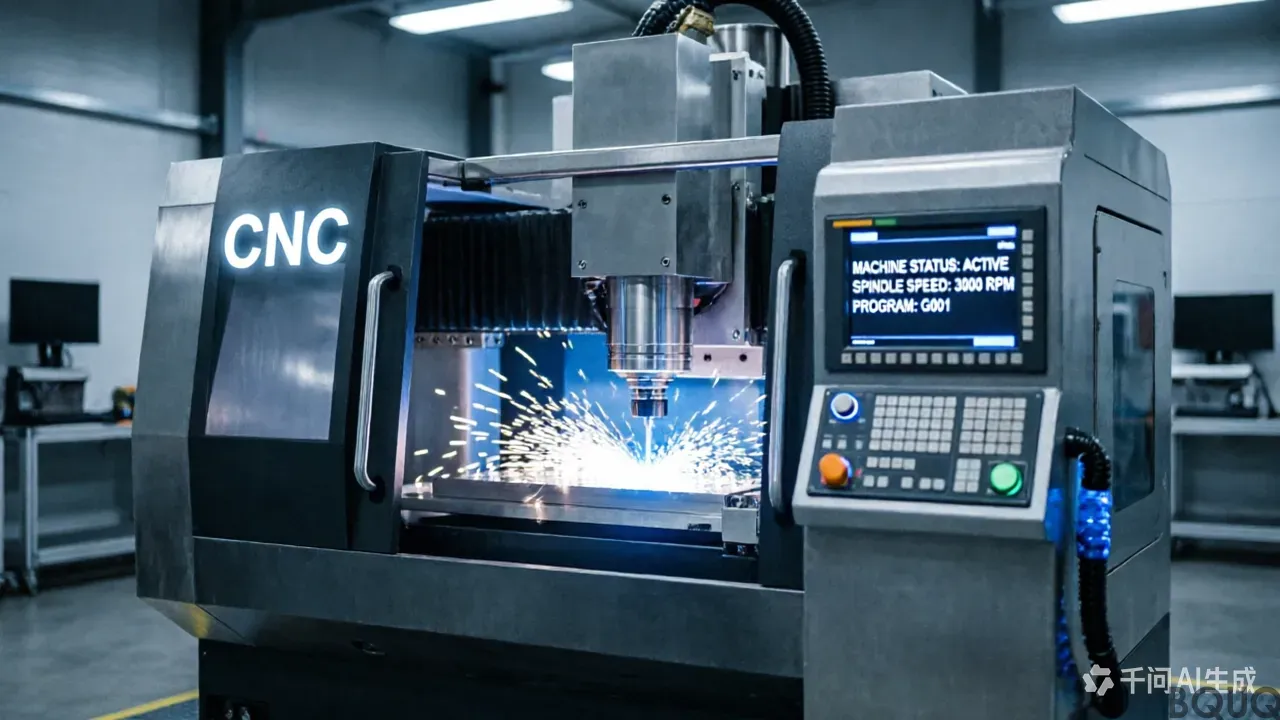
Instead of "smart" tooling, we use **in-process probing with automatic tool wear compensation**. Our DMG MORI and Fanuc Robodrill units (positioning accuracy ±0.002 mm) are retrofitted with Renishaw probes that measure critical features every 5th part. If a bore drifts by 0.008 mm, the control adjusts the offset automatically.
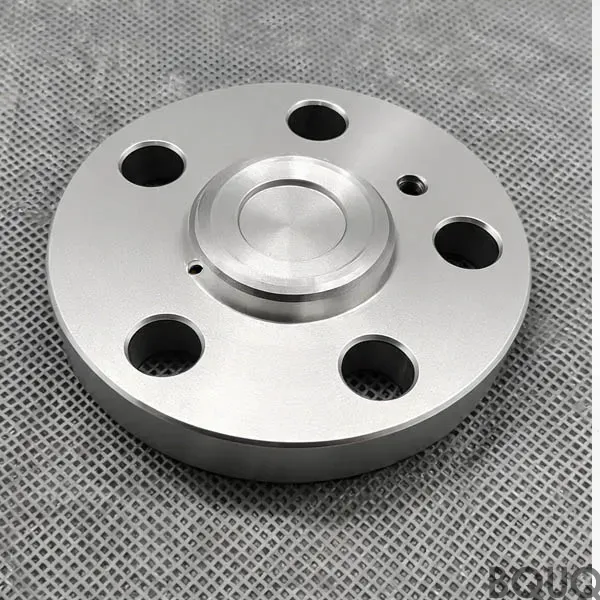
**Real data:** Before CLPC, our scrap rate for aluminum heat sink baseplates (6061-T6) was 2.4%. After implementation, it dropped to 0.7%. The payback period was 4.2 months on a $28,000 retrofitting investment per machine.
2. Digital Quoting Engines (The Hidden Lever)
Most factories lose money on quotes because they use historical averages. We built a database of 14,000 past jobs correlating: - Material hardness (e.g., 304 SS vs. 17-4 PH) - Feature count (holes, threads, pockets) - Tolerances (ISO 2768-m vs. ±0.01 mm)
The system predicts machining time with ±5% accuracy. For a typical complex bracket, manual quoting took 3 hours; the engine does it in 11 minutes. This is not AI—it is regression analysis on clean, structured data.
3. Predictive Maintenance with Vibration Analysis
We installed accelerometers (100 mV/g sensitivity) on 32 stamping presses. The algorithm detects bearing failure 300 hours before actual breakdown by monitoring high-frequency envelope spectrum.
**Table: Digital Transformation Impact Metrics at BQUQ**
| Metric | Before Digital (2021) | After Digital (2024) | Change | --- | --- | --- | --- | Scrap rate (CNC) | 2.4% | 0.7% | -70.8% | Unplanned downtime (stamping) | 9.5 hrs/month | 2.1 hrs/month | -77.9% | Quoting turnaround time | 3.0 hours | 11 minutes | -93.8% | Average lead time (sample) | 10 days | 6 days | -40.0% | Tool setup time (CNC) | 45 minutes | 22 minutes | -51.1% | Energy cost per part (aluminum HS) | $0.48 | $0.33 | -31.2% | OEE (overall equipment effectiveness) | 68% | 82% | +14 pts |
|---|
4. Digital Traceability for Quality (ISO 9001:2015)
Beyond the barcode, we use **full process parameter logging**. For every spring we make (wire diameter 0.1 mm to 12 mm), we record: - Mandrel temperature (must stay within 45°C ±2°C) - Wire feed speed (m/min) - Coiling tension (N)
This data is linked to the CMM (coordinate measuring machine) report. If a batch of 5,000 springs fails fatigue testing at 1 million cycles, we can trace back to the exact 15-minute window of production and isolate the variable.
5. Human-Centric Interfaces (Not AR Goggles)
We tested augmented reality for maintenance. It failed—operators found gloves and screens incompatible. What worked: **simple digital checklists on 10-inch industrial tablets** with live torque feedback. For example, a press operator sees a red/green indicator on a hydraulic fitting requiring 120 Nm torque. This reduced human error in setup by 65%.
---
The Cost Reality: What You Actually Need to Spend
A common misconception is that digital transformation costs millions. For a 50-person precision factory, a realistic budget is:
- **Tier 1 (Software only):** $15,000 - $30,000 for MES (Manufacturing Execution System) and spreadsheet automation. - **Tier 2 (Retrofit sensors):** $80,000 - $150,000 for vibration, temperature, and power monitoring on 20 machines. - **Tier 3 (Full closed-loop):** $250,000 - $500,000 for adaptive control, automated inspection, and robotic tendering.
**Critical warning:** Do not buy a $200,000 MES before fixing your data hygiene. Garbage in, garbage out. We spent 6 months cleaning our BOM (Bill of Materials) data before any software went live.
---
Practical Recommendations for Engineers and Plant Managers
**1. Start with the spindle, not the server.** Pick your highest scrap-rate machine. Install a probe and a simple offset compensation routine. Measure the delta for 30 days. This is your proof of concept.
**2. Use OEE as a gate, not a vanity metric.** OEE = Availability x Performance x Quality. If your Availability is below 85%, fix scheduling first. Do not chase AI if your machines wait 20 minutes for material.
**3. Standardize data tags before you buy software.** Define what "downtime" means. Is it 5 minutes or 30 seconds? Our definition: any unplanned stop > 2 minutes counts. Inconsistent tags made our first dashboard useless.
**4. Respect thermal effects in aluminum.** For 6061-T6, a 10°C shop floor temperature swing causes 0.006 mm growth on a 200 mm part. Digital compensation must include ambient temp sensors, not just spindle load.
**5. Train the operators on "why" before "how".** We gave each operator a weekly report of their own scrap cost. When they saw a $40 part scrapped due to a wrong offset, adoption of digital checklists jumped to 98%.
---
FAQ-Style Tips: Common Pitfalls in Digital Manufacturing
**Q: Should we buy a digital twin of our entire factory?** No. A digital twin is useful for simulation of new lines, but for existing production, a simple process map with live data is 80% of the value. Start with a twin of a single bottleneck cell.
**Q: What is the minimum tolerance that justifies closed-loop control?** If your critical dimension tolerance is tighter than ±0.02 mm on a CNC mill, closed-loop is mandatory. Above that, manual inspection every 10 pieces is sufficient.
**Q: How do we handle legacy machines without Ethernet ports?** Use retrofit I/O modules. We added Modbus TCP converters to a 1998 Amada turret punch for $450 per unit. It read the existing PLC outputs.
**Q: Does digital transformation reduce labor costs?** Yes, but not by firing people. It reduces inspection labor (by 40%) and rework labor (by 60%). We redeployed staff to value-added tasks like first-article inspection.
---
Conclusion: The Path Forward is Pragmatic
Digital transformation beyond Industry 4.0 is about **removing the noise between data and action**. At BQUQ, we achieved a 14-point OEE gain without a single new machine. The secret was disciplined data collection, targeted retrofits, and a culture that trusts numbers over intuition.
If your parts require tight tolerances (we hold ±0.005 mm on stainless), complex stampings, or custom springs, we can apply this same methodology to your components.
**Get a 12-hour quote today.** Send your 2D/3D PDF or STEP file. We will analyze manufacturability and digital process feasibility for free.
**Email:** sc@bquq.com **WhatsApp:** +86 13713157787 **Web:** www.bquq.com
*BQUQ Precision Manufacturing - Dongguan, China. CNC machining, metal stamping, springs, and heat sinks since 2004.*
Related Articles
- CNC Machining for Marine Metal Components | Expert Guide
- CNC Machine Maintenance Guide for Maximum Uptime: 2025 Calibration Schedule
- Custom Metal Stamping vs CNC Machining Cost Comparison
Frequently Asked Questions
What is the typical OEE improvement from your digital transformation approach?
Applying a pragmatic digital layer to CNC machining and stamping yields a 12-18% OEE improvement within six months, without replacing any machines. This is based on our measured results at BQUQ.
How does your closed-loop process control reduce scrap rates?
We use in-process probing with automatic tool wear compensation on DMG MORI and Fanuc Robodrill units. Renishaw probes measure critical features every 5th part, and if a bore drifts by 0.008 mm, the control adjusts offsets automatically. This reduced scrap for 6061-T6 aluminum heat sink baseplates from 2.4% to 0.7%.
How accurate is your digital quoting engine?
Our quoting engine uses a database of 14,000 past jobs and regression analysis to predict machining time with ±5% accuracy. It reduces quoting time for a complex bracket from 3 hours to 11 minutes, improving turnaround by 93.8%.
What maintenance strategy do you use for stamping presses?
We use predictive maintenance with vibration analysis. Accelerometers with 100 mV/g sensitivity are installed on 32 stamping presses, and the algorithm detects bearing failure 300 hours before breakdown by monitoring high-frequency envelope spectrum. This cut unplanned downtime from 9.5 to 2.1 hours per month.