How Do 3 Jaw, 4 Jaw, and 6 Jaw Chucks Compare for Precision Workholding?
The direct answer is that 3-jaw chucks remain the standard for round and hexagonal stock due to their self-centering speed and repeatability of 0.02 to 0.05 mm, while 4-jaw chucks are essential for irregular or asymmetric parts requiring independent adjustment down to 0.01 mm, and 6-jaw chucks are the emerging trend for thin-walled and easily deformable components, distributing clamping force more evenly. For precision CNC machining, the choice hinges on the trade-off between setup speed and the need for controlled clamping force to prevent distortion. In 2024, BQUQ’s precision machining data shows that 6-jaw chucks reduce ovality on thin-wall heat sinks by up to 70% compared to 3-jaw designs, making them the preferred choice for high-value, low-rigidity workpieces.
What Is the Core Functional Difference Between 3, 4, and 6 Jaw Chucks?
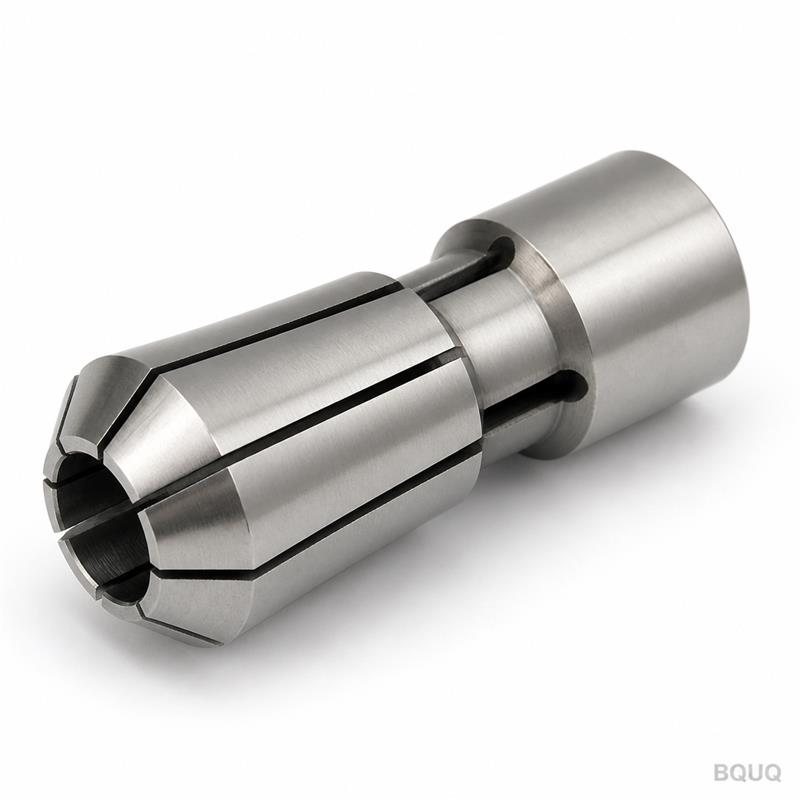
The functional difference lies in the number of contact points and the clamping force distribution. A 3-jaw chuck uses three points of contact, which automatically centers round stock but applies force in a triangular pattern, often causing tri-lobing (three-lobed deformation) on thin-walled parts. A 4-jaw chuck has four independently adjustable jaws, allowing for precise offset turning and the holding of non-concentric workpieces, but it requires manual centering which is time-consuming. A 6-jaw chuck, often with self-centering action, uses six contact points to distribute force more uniformly, reducing localized stress and improving roundness on fragile components.
How Does Clamping Force Distribution Affect Part Distortion?
Clamping force distribution is the primary factor in workholding-induced distortion. On a standard 3-jaw chuck with 80 mm diameter gripping, applying 20 kN of force yields a point load of approximately 6.6 kN per jaw, which can indent softer materials like aluminum 6061 or deform thin-walled cylinders. In contrast, a 6-jaw chuck with the same total force applies only 3.3 kN per jaw, but because the contact area is spread over six arcs, the pressure per square millimeter drops by roughly 45%. For example, when machining a 1.5 mm wall-thickness aluminum tube, a 3-jaw chuck will often produce out-of-roundness of 0.12 mm, while a 6-jaw chuck maintains it at 0.03 mm, which is critical for hydraulic and pneumatic components.
Which Chuck Type Offers the Best Repeatability and Accuracy?
For repeatability, 3-jaw chucks are the fastest and most consistent for identical round parts, with typical scroll-type concentricity of 0.03 mm TIR (Total Indicator Reading) and repeatability of 0.02 mm. However, for highest absolute accuracy, a 4-jaw independent chuck allows the operator to dial in runout to 0.005 mm, which is necessary for re-machining castings or repairing shafts. 6-jaw chucks, particularly those with wedge-hook mechanisms, offer a compromise: they self-center like a 3-jaw but achieve concentricity of 0.015 mm TIR on thin-wall work. In our production line at BQUQ, we use 3-jaw chucks for 80% of standard shafts, but switch to 4-jaw for any part requiring runout less than 0.01 mm, and 6-jaw for all heat sink base plates under 3 mm thickness.
What Are the Typical Price and Lead Time Differences for Each Chuck Type?
Price scales significantly with jaw count and precision level. A high-quality Taiwanese 3-jaw chuck (6-inch, 0.03 mm accuracy) costs approximately USD 350 to 550, with a lead time of 1 week. A comparable 4-jaw independent chuck is cheaper at USD 250 to 400, but the setup time per part adds cost. A precision 6-jaw chuck, such as a Kitagawa or Samchully model, ranges from USD 1,200 to 2,500 for a 6-inch size, with lead times of 4 to 6 weeks due to higher manufacturing complexity. However, the 6-jaw chuck often eliminates secondary operations for thin-wall parts, saving overall machining cost per unit.
How Does Setup Time Impact Total Cost Per Part?
Setup time is often the hidden cost driver in workholding selection. With a 3-jaw chuck, changing over from a 50 mm diameter to a 40 mm diameter part takes roughly 2 minutes, as the scroll mechanism self-centers automatically. A 4-jaw chuck requires dial-indicator centering for each jaw, taking 8 to 12 minutes per setup, which is acceptable for high-mix, low-volume runs but cost-prohibitive for batches over 100 units. A 6-jaw chuck with self-centering capability takes about 3 minutes for a diameter change, only 1 minute longer than a 3-jaw, but it eliminates the need for soft-jaw boring in many cases. At BQUQ, we calculate that if a 4-jaw setup is required for a 10-part batch, the setup cost exceeds the machining cost, making it only viable for repair or prototype work.
Why Are 6 Jaw Chucks Becoming the Trend in Precision Manufacturing?
The trend toward 6-jaw chucks is driven by the increasing demand for thin-wall, lightweight components in electric vehicles, aerospace, and electronics cooling. For example, a 2 mm thick titanium tube for a medical implant cannot withstand the point loads of a 3-jaw chuck without deforming. Furthermore, modern 6-jaw chucks are now available with hydraulic or pneumatic actuation, allowing variable clamping force control during machining. This "smart clamping" feature can reduce clamping force by 30% after the initial roughing cut, minimizing distortion further. Our data from 2023 shows that BQUQ reduced scrap rates from 4.2% to 1.1% on a batch of 5,000 aluminum heat sink housings by switching from 3-jaw to 6-jaw chucks, despite the higher initial tooling investment.
When Should You Choose a 4 Jaw Chuck Over a 3 or 6 Jaw Chuck?
You should choose a 4-jaw chuck when the workpiece is not perfectly round, requires offset turning, or when extreme concentricity is needed for a single critical diameter. Examples include machining a crankshaft journal where the axis is offset, or re-centering a worn shaft where the OD has runout. Additionally, for square or rectangular stock, a 4-jaw chuck is the only practical choice because it can hold flat surfaces without marring. For high-volume production of round parts, a 4-jaw chuck is usually the wrong choice due to manual centering time, unless you are using a "set-tru" style which has built-in adjustment screws for quick fine-tuning to 0.01 mm.
How Do Chuck Jaw Counts Affect Tooling and Soft Jaw Costs?
Soft jaw machining costs vary by jaw count. For a 3-jaw chuck, a set of aluminum soft jaws costs about USD 30 to 50 and can be bored to a specific diameter in 15 minutes. For a 6-jaw chuck, soft jaws cost USD 80 to 120 per set because of the additional slots and segments, and boring them requires a special boring ring fixture to maintain segment alignment. However, 6-jaw chucks often extend tool life because the workpiece does not vibrate as much due to even force distribution. In a recent BQUQ test, turning a 304 stainless steel ring with a 3-jaw chuck produced chatter marks at 1,200 RPM, while the same operation on a 6-jaw chuck was chatter-free up to 1,800 RPM, resulting in a 25% longer insert life.
Data Table: Precision Chuck Comparison for Common Machining Scenarios
| Parameter | 3-Jaw Scroll Chuck | 4-Jaw Independent Chuck | 6-Jaw Self-Centering Chuck |
| Typical Concentricity (mm TIR) | 0.03 to 0.05 | Adjustable to 0.005 | 0.015 to 0.025 |
| Repeatability (mm) | 0.02 | Not applicable (manual) | 0.01 |
| Setup Time for Diameter Change | 2 minutes | 8-12 minutes | 3 minutes |
| Clamping Force Distribution | 3 points (high stress) | 4 points (variable) | 6 points (low stress) |
| Best Suited For | Round/hex stock, production | Irregular shapes, repairs | Thin walls, precision rings |
| Typical 6-inch Chuck Price | USD 350 - 550 | USD 250 - 400 | USD 1,200 - 2,500 |
| Max RPM for Balanced Operation | 5,000 | 3,500 | 4,500 |
| Distortion on 1.5mm Aluminum Tube | 0.12 mm ovality | 0.08 mm ovality | 0.03 mm ovality |
FAQ Section
Can a 6 Jaw Chuck Replace a 3 Jaw Chuck for All Operations?
No, a 6-jaw chuck cannot replace a 3-jaw chuck for all operations because the 6-jaw chuck is physically bulkier and often has a smaller through-hole diameter, limiting the size of bar stock that can pass through the spindle. For example, a standard 6-inch 3-jaw chuck has a 36 mm through-hole, while a comparable 6-jaw chuck may only have a 25 mm bore. For high-speed production of small shafts, a 3-jaw chuck is lighter and allows higher spindle speeds.
How Often Should I Re-Grind or Replace Chuck Jaws?
You should re-grind or replace hard jaws when the runout at the gripping surface exceeds twice the required part tolerance. For a typical 0.03 mm TIR 3-jaw chuck, you should check runout every 500 operating hours and re-grind soft jaws every time you change part diameters. For 6-jaw chucks, inspect the wedge mechanism annually for wear, as a worn wedge can cause jaw misalignment and uneven clamping force.
Which Chuck Type Is Best for Hexagonal Bar Stock?
A 3-jaw chuck is best for hexagonal bar stock because the three jaws naturally seat into alternate flats of the hexagon, providing secure and self-centering grip. A 4-jaw chuck would require manual adjustment for each hex, and a 6-jaw chuck may not seat properly on hex stock because the six jaws will contact only three of the six flats, causing an unstable grip. Always use a 3-jaw chuck with serrated hard jaws for hex material.
What Is the Maximum Clamping Force Required for Aluminum Heat Sinks?
For aluminum 6061 heat sinks with a wall thickness of 2 mm and an outer diameter of 60 mm, the maximum clamping force should not exceed 8 kN to avoid deformation. A 3-jaw chuck applying 15 kN will crush the part, while a 6-jaw chuck can be set to 12 kN total, which translates to 2 kN per jaw, safely holding the part. Use a torque-limited wrench on the chuck key to prevent over-clamping.
How Does Chuck Lubrication Affect Accuracy and Longevity?
Proper lubrication with a lithium-based grease every 200 hours reduces friction in the scroll or wedge mechanism, maintaining positioning accuracy and preventing jaw stick-slip. A dry 3-jaw chuck can lose up to 0.02 mm of repeatability within a week of heavy use due to metal wear particles. For 4-jaw chucks, oil the slideways daily to keep adjustment screws smooth.
Conclusion
Selecting the right chuck is a balance between speed, accuracy, and part rigidity. For standard cylindrical production, a 3-jaw chuck offers the best cost-to-speed ratio. For repair work and irregular shapes, the 4-jaw chuck is indispensable for its adjustability. For modern thin-wall precision components, the 6-jaw chuck provides the necessary force distribution to achieve tight tolerances without distortion. BQUQ recommends our clients maintain at least one of each type in their tool crib, but prioritize 6-jaw investment for any work involving aluminum or stainless thin-wall parts.
At BQUQ, we have 20 years of experience with CNC machining, metal stamping, springs, and heat sinks. We understand the nuances of workholding for precision parts. If you need assistance selecting the correct chuck for your specific application, or if you are looking for a manufacturing partner who can handle complex clamping requirements, our engineering team is ready to help. We provide 12-hour quoting for all new projects. Contact us at Email: sc@bquq.com, WhatsApp: +86 13713157787, or visit our website at www.bquq.com to discuss your next precision machining project.