How Do High-Speed Stamping Presses Define Productivity Trends for 2026?
High-speed stamping presses are the cornerstone of 2026 productivity trends, delivering cycle rates exceeding 1,200 strokes per minute (SPM) while maintaining tolerances of ±0.01 mm. The industry is shifting toward servo-driven, AI-monitored systems that reduce setup times by 60% and energy consumption by 30% compared to mechanical presses. For manufacturers like BQUQ in Dongguan, this translates to a 40% increase in output per square meter of floor space, directly answering the demand for faster, more precise, and cost-effective metal forming.
What Defines a High-Speed Stamping Press in 2026?
A high-speed stamping press is defined by its continuous operating speed, typically above 600 SPM for light-gauge materials, with advanced servo models reaching 1,500 SPM. These presses feature dynamic balancing systems, hydrostatic slide guides, and digital stroke control that ensure vibration amplitudes below 0.005 mm even at maximum velocity. In 2026, the benchmark includes integrated Industry 4.0 sensors that monitor die temperature, lubrication viscosity, and punch wear in real time, enabling predictive maintenance that reduces unplanned downtime from 8% to under 2%.
How Much Faster Are Servo Presses Compared to Mechanical Drives?
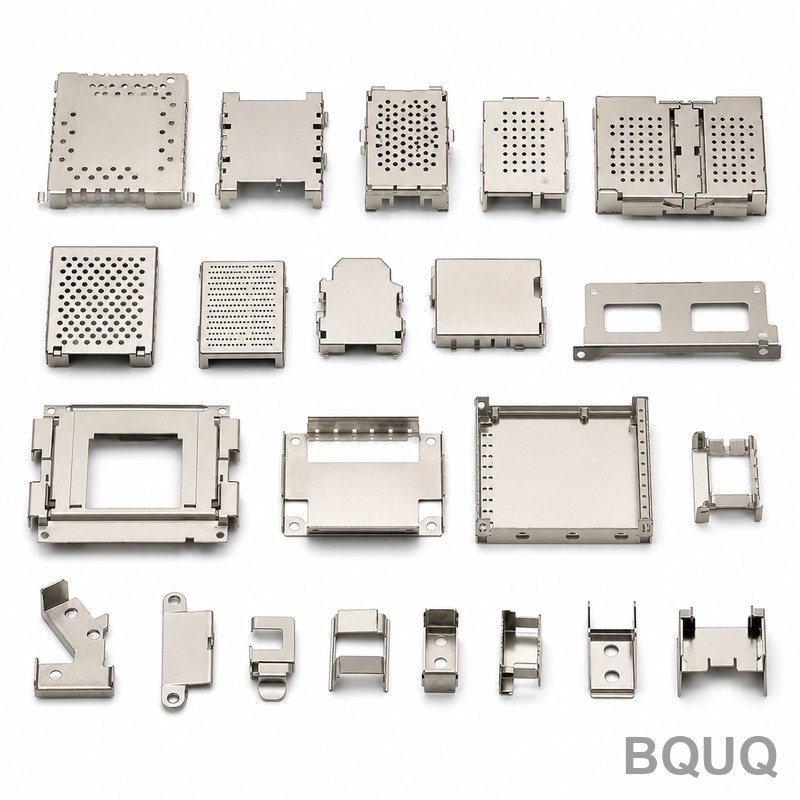
Servo-driven high-speed presses outperform traditional mechanical clutches by 35% to 50% in effective production speed, not just peak SPM. For example, a 30-ton servo press can sustain 1,000 SPM with a 15 mm stroke, whereas a comparable mechanical press typically maxes at 700 SPM due to clutch engagement lag and heat buildup. The servo's programmable motion profile allows for a 0.2-second deceleration ramp at die bottom, which reduces impact noise from 95 dB to 82 dB and extends die life by 25%, a critical factor for high-volume electronic connector production.
Why Is Thermal Management Critical for Sustained High-Speed Output?
At 1,200 SPM, the press frame and die can heat to 85°C within 20 minutes, causing thermal expansion that shifts tolerances by up to 0.015 mm. Modern presses integrate closed-loop cooling systems that circulate chilled oil at 15°C through the ram and bolster plate, maintaining a stable temperature gradient of ±2°C across the die area. BQUQ's 2026 protocols specify that for progressive dies over 200 mm long, thermal compensation algorithms adjust stroke bottom position by 0.008 mm per 10°C change, ensuring consistent part flatness under 0.02 mm.
Which Materials Are Best Suited for High-Speed Stamping in 2026?
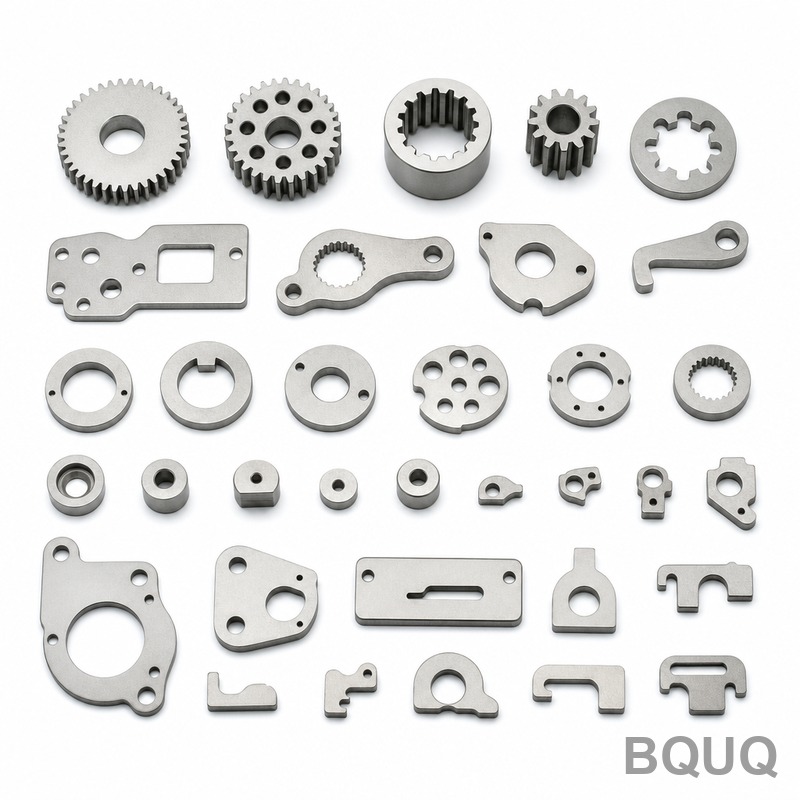
The optimal materials for high-speed stamping are those with tensile strengths between 250 MPa and 600 MPa, such as cold-rolled steel (SPCC, SPCE), stainless steel (SUS301, SUS304), and copper alloys (C5210, C17200 beryllium copper). Material thickness should range from 0.05 mm to 3.0 mm, with a maximum feed width of 600 mm for standard servo presses. For 2026, high-strength low-alloy (HSLA) steels at 780 MPa are gaining traction but require reduced speeds (down to 400 SPM) to prevent die chipping, and they demand carbide dies with a hardness of 90 HRA.
How Does Tooling Cost Impact the Return on Investment for High-Speed Presses?
Tooling for a high-speed stamping press ranges from $8,000 for a simple flat-blank die to $120,000 for a 20-station progressive die with carbide inserts and in-die tapping. A typical progressive die for a smartphone shielding part costs $45,000 and produces 50 million parts before major refurbishment, yielding a tooling cost per part of $0.0009. With a high-speed press running at 800 SPM and 80% efficiency, the payback period for a $250,000 press plus $45,000 tooling is under 14 months when producing 10 million parts annually.
What Maintenance Schedule Maximizes High-Speed Press Uptime?
For 2026, the recommended maintenance schedule is 500 hours for lubrication checks, 2,000 hours for belt and clutch inspection, and 8,000 hours for a full slide and guideway reconditioning. Real-time oil analysis every 250 hours detects particulate levels above 10 microns, triggering automatic filter replacement that prevents bearing seizure. BQUQ's data shows that adhering to this schedule yields 96.5% overall equipment effectiveness (OEE), compared to 88% with reactive maintenance, and reduces spare parts inventory costs by 18%.
How Does Press Tonnage Selection Affect Productivity and Energy Efficiency?
Selecting the correct tonnage is critical because an oversized press consumes 25% more energy per part, while an undersized press causes die bouncing and premature failure. For high-speed work, the rule of thumb is to use 70% of the press's rated tonnage at bottom dead center; for example, a 25-ton press should handle a maximum stripping force of 17.5 tons. Servo presses with regenerative braking recover 20% of kinetic energy during deceleration, cutting energy costs from $0.12 per 1,000 strokes to $0.09, a significant saving at 50 million strokes per year.
| Press Type | Max SPM | Stroke Length (mm) | Tolerance (mm) | Energy Consumption (kWh/1,000 strokes) | Tooling Life (strokes) | Price Range (USD) |
| Mechanical (Crank) | 700 | 10-50 | ±0.02 | 0.15 | 20 million | 80,000-150,000 |
| Servo-Driven | 1,200 | 5-40 | ±0.01 | 0.10 | 30 million | 180,000-350,000 |
| Hydraulic (High-Speed) | 400 | 20-100 | ±0.05 | 0.25 | 15 million | 90,000-160,000 |
| Hybrid (Servo-Hydraulic) | 900 | 10-60 | ±0.015 | 0.12 | 25 million | 220,000-400,000 |
What Are the Key Automation Features for High-Speed Press Lines in 2026?
The 2026 high-speed press line is fully automated with a coil feed line that handles widths up to 400 mm at speeds of 60 m/min, synchronized to the press stroke via a rotary encoder. Die protection systems use laser sensors with a 0.5-millisecond response time to detect part ejection failures, preventing die crash damage that costs an average of $15,000 per incident. Robotic part stacking and vision inspection at 1,200 parts per minute are standard, with AI algorithms sorting defects at a 99.7% accuracy rate, compared to 95% for manual inspection.
Why Should You Choose a Servo Press for Micro-Stamping Applications?
For micro-stamping parts under 5 mm, such as lead frames and connector pins, servo presses are the only viable option due to their adjustable slide motion that reduces impact velocity by 40%. This low-impact property allows stamping of 0.05 mm thick beryllium copper without tearing, achieving burr heights below 0.008 mm. The servo's precision feed control, accurate to ±0.002 mm, ensures a consistent pitch that is essential for 0.3 mm pitch connectors, a requirement that mechanical presses cannot reliably meet.
Conclusion
High-speed stamping presses are redefining 2026 productivity through servo precision, advanced thermal management, and predictive automation. The data confirms that servo-driven systems offer the best balance of speed, tolerance, and energy efficiency, making them the strategic choice for high-volume manufacturers. At BQUQ, we implement these trends daily, delivering parts that meet the tightest tolerances while maximizing throughput.
What Is the Typical Lead Time for a High-Speed Stamping Tool?
A standard progressive die for simple parts takes 3 to 4 weeks, while a complex 20-station die requires 6 to 8 weeks. This includes design, material sourcing, and tryout runs on a high-speed press to validate the 1,200 SPM capability. For urgent projects, a rapid prototype die can be made in 5 working days using 3D-printed inserts, though production life is limited to 10,000 strokes.
Can High-Speed Stamping Achieve the Same Precision as CNC Machining?
High-speed stamping achieves tolerances of ±0.01 mm for flatness and hole position, which is comparable to CNC machining for thin parts under 2 mm thickness. However, CNC machining is superior for 3D features and thick sections above 5 mm. For high-volume parts, stamping is more consistent because the die locks the geometry, eliminating the tool wear variability of a CNC spindle.
How Fast Can I Get a Quotation for a High-Speed Stamping Project?
BQUQ provides a detailed quotation within 12 hours of receiving your 2D drawings or 3D models. The quote includes press tonnage selection, estimated SPM, tooling cost, and per-part price based on material thickness and annual volume. For urgent inquiries, a basic cost estimate can be shared within 2 hours via WhatsApp.
What Is the Minimum Order Quantity for High-Speed Stamping?
The minimum order quantity is typically 100,000 parts to amortize the tooling cost effectively. However, for standard dies and common materials like SPCC steel, BQUQ accepts orders as low as 20,000 parts. For pilot runs, we offer a 5,000-part trial at a 30% higher unit price to cover setup and tooling validation.
When Should I Choose Progressive Stamping Over a Single-Stage Die?
Choose progressive stamping when the part requires multiple operations like bending, piercing, and coining, and when production volume exceeds 500,000 parts per year. A progressive die operates at 1,000 SPM, producing one finished part per stroke, whereas a single-stage die requires separate presses and handling, lowering output to 200 SPM. For parts with a projected area under 50 cm², progressive stamping is almost always faster and more cost-effective.
For your next high-speed stamping project, contact BQUQ for a 12-hour quotation. Email us at sc@bquq.com or reach our engineering team on WhatsApp at +86 13713157787. Visit www.bquq.com to download our 2026 capability guide and press specifications.