How Does Metal Stamping Produce Appliance Enclosures, Brackets and Structural Parts?
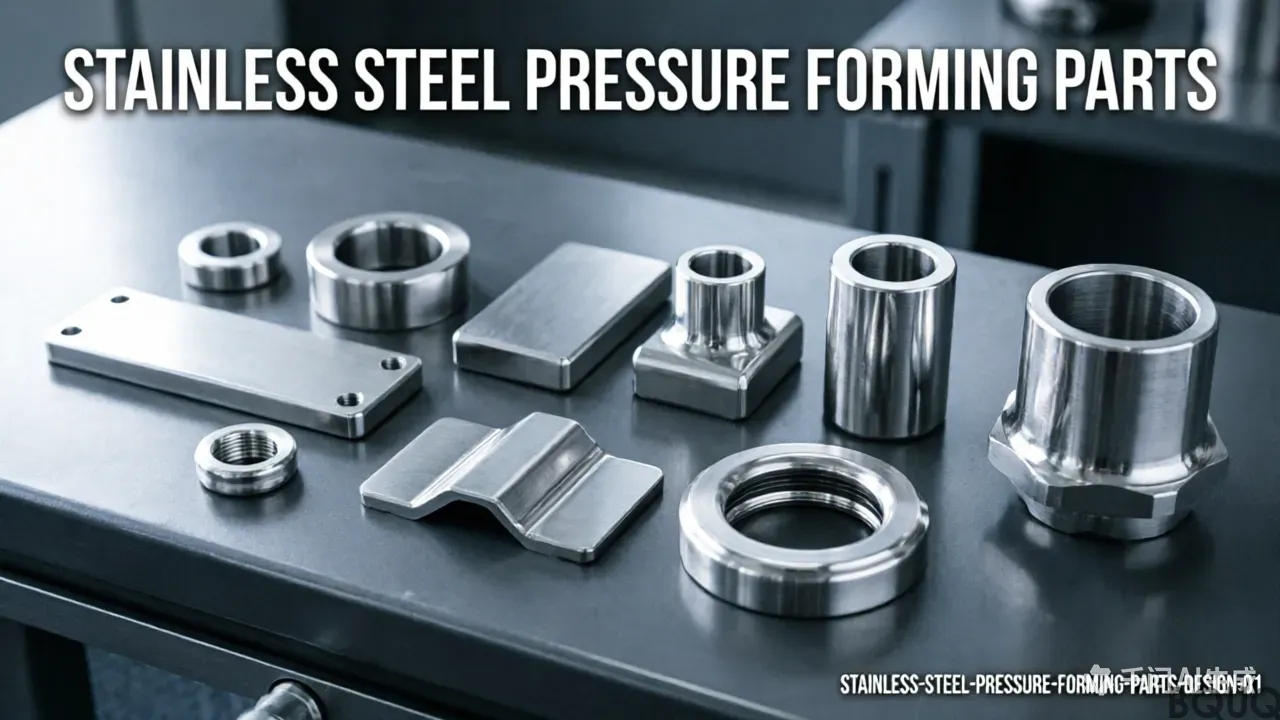
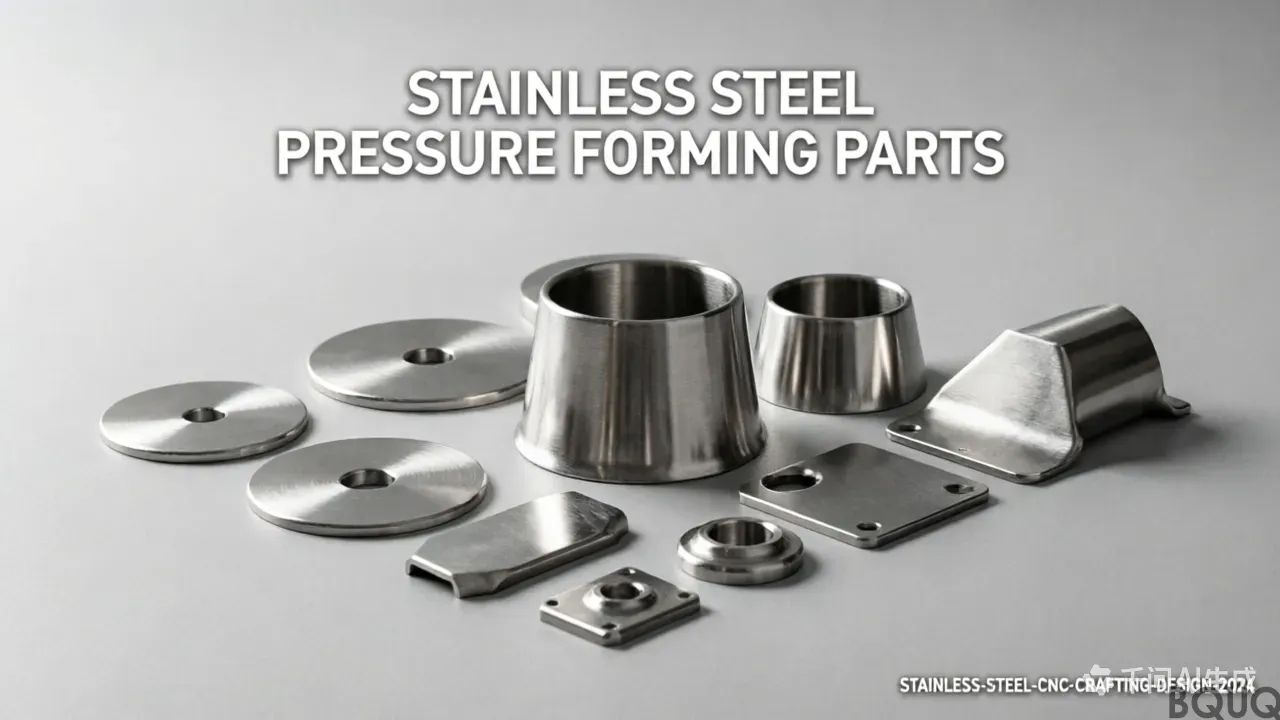
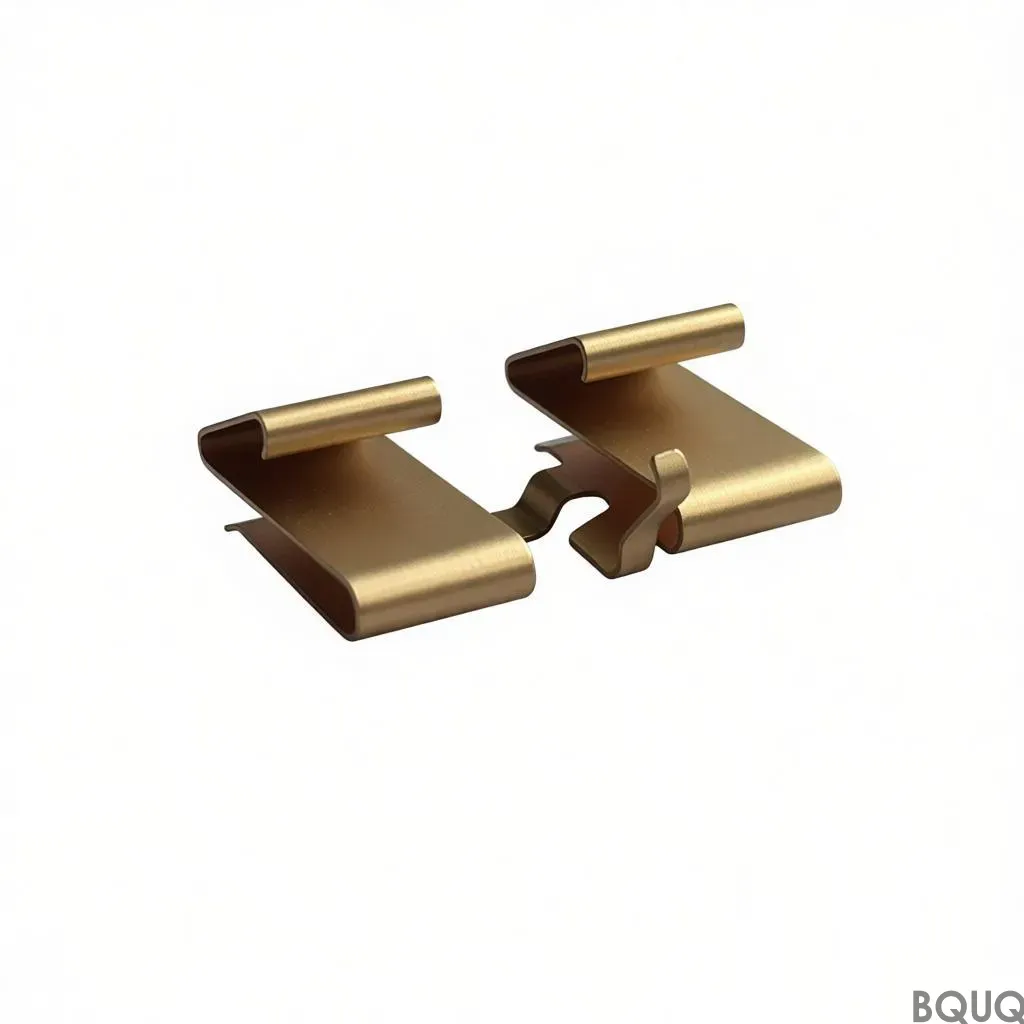
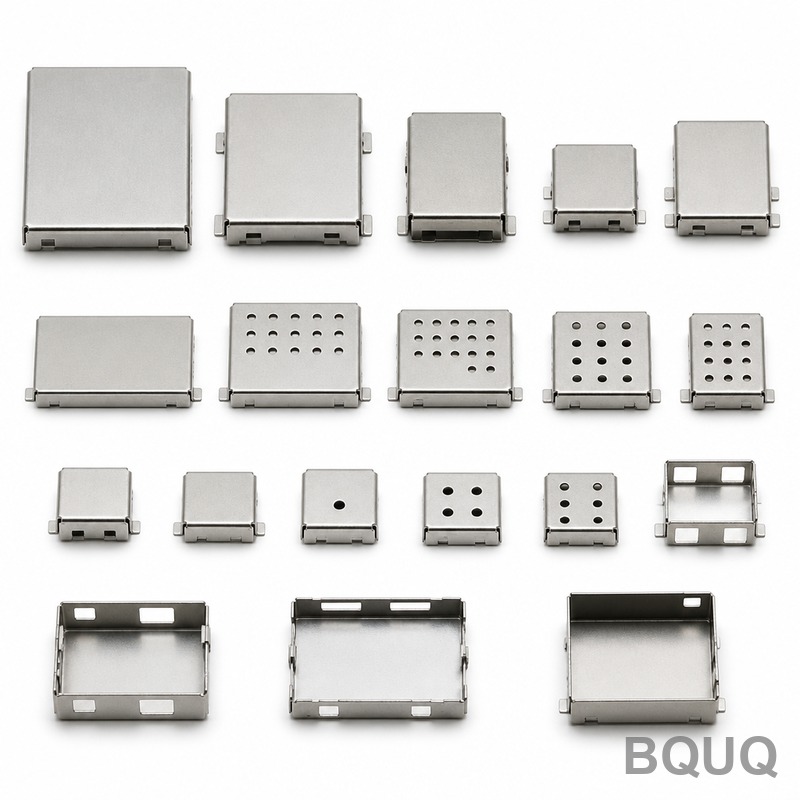
Metal stamping is the most cost-effective and repeatable manufacturing process for appliance enclosures, brackets, and structural parts, producing components from flat metal coils at cycle rates of 20 to 60 strokes per minute. For high-volume appliance production (over 10,000 units annually), stamped parts achieve tolerances of ±0.05 mm for critical features and cost 30% to 70% less than CNC machining equivalents. This article details the materials, tooling, tolerances, and design rules that determine success in appliance-grade stamping, based on BQUQ’s two decades of production data from Dongguan.
What Materials Are Best for Stamped Appliance Structural Parts?
Cold-rolled steel (CRS) grades SPCC and SPCD dominate appliance structural stamping, representing roughly 65% of BQUQ’s annual stamping output for this sector. CRS offers a tensile strength of 270-410 MPa, excellent weldability, and a surface finish suitable for powder coating or plating, at a material cost of approximately USD 0.70 to 0.90 per kilogram. For corrosion-resistant enclosures, 304 stainless steel (tensile 515 MPa) is chosen for kitchen and medical appliances, while 5052 aluminum alloy (tensile 230 MPa) is preferred for lightweight portable appliance frames, offering a 40% weight reduction versus steel.
Material thickness selection follows a strict engineering logic: 0.8 mm to 1.2 mm CRS for internal brackets, 1.5 mm to 2.0 mm for load-bearing structural plates, and 0.5 mm to 0.8 mm for cosmetic enclosures. Galvanized steel (SGCC) with a Z180 zinc coating (180 g/m²) is used for washing machine and dryer housings, providing corrosion resistance up to 500 hours in salt spray testing. Material grade directly impacts die wear; stamping 304 stainless causes tool wear at 0.015 mm per 100,000 strokes, versus 0.005 mm for SPCC.
How Do Tolerances and Flatness Requirements Differ by Part Type?
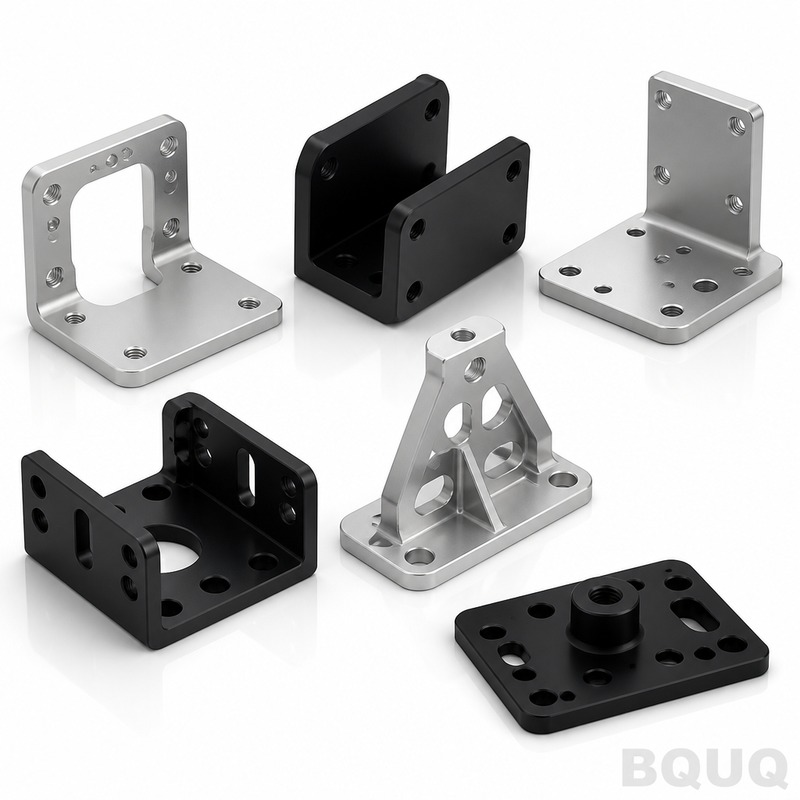
Appliance enclosures require dimensional tolerances of ±0.10 mm on visible seams and ±0.20 mm on overall length, while structural brackets demand tighter hole-to-hole tolerances of ±0.05 mm for screw alignment. Flatness is the most critical specification for stamped structural parts: a 200 mm long bracket must maintain flatness within 0.15 mm total, measured on a granite surface plate, to prevent assembly stress and vibration noise. Enclosure surfaces, however, prioritize surface finish (Ra 0.8 to 1.6 µm) over flatness, as any die marks become visible after painting.
Piercing and blanking operations hold hole diameter tolerances of ±0.03 mm for diameters under 10 mm, expanding to ±0.08 mm for larger openings. Bend tolerances are angle-specific: 90-degree bends maintain ±0.5 degrees, while progressive die stations can hold bend-to-hole positional accuracy of ±0.10 mm. For example, a refrigerator hinge bracket stamped at BQUQ uses a 2.0 mm SPCC blank, achieving a hole-to-bend distance tolerance of ±0.07 mm, verified by CMM inspection on every production batch.
Which Stamping Process Is Right for Enclosures Versus Brackets?
Progressive die stamping is the correct process for enclosures and brackets requiring multiple operations (piercing, forming, embossing, trimming) in a single pass, with production rates of 30 to 50 parts per minute. For large enclosures exceeding 400 mm in length, a transfer die or tandem press line is required, as the part cannot be lifted by the strip carrier; this adds 15% to 25% cost per part versus progressive stamping. For very thick structural parts (over 3.0 mm steel), a compound die with a hydraulic press (200 to 400 tons) is necessary, reducing speed to 8 to 15 strokes per minute.
The decision matrix is based on part size and annual volume: parts under 300 mm with volumes above 50,000 pieces/year suit progressive dies; parts over 300 mm with volumes above 20,000 pieces/year require transfer dies; and prototype or low-volume brackets (under 1,000 pieces) are best produced on a CNC turret punch press or by laser cutting, despite a 5x higher per-part cost. BQUQ’s rule of thumb: if the part fits within a 300 mm x 300 mm envelope and has fewer than 10 forming stations, progressive stamping is always the lowest-cost option, typically USD 0.05 to 0.15 per part in tooling amortization.
How Much Does Tooling Cost for Appliance Stamping Dies?
Tooling investment for appliance stamping ranges from USD 8,000 for a simple flat blanking die to USD 120,000 for a complex progressive die with 12 or more stations, with a typical enclosure die costing USD 35,000 to USD 70,000. BQUQ’s standard pricing for a 6-station progressive die for a 150 mm x 100 mm bracket is USD 28,000 to USD 45,000, including D2 tool steel punches and carbide inserts for piercing stations. Die lead time is 25 to 45 working days, depending on the number of stations and the need for 3D simulation of the forming sequence.
Tooling cost per part drops dramatically with volume: a USD 40,000 die for 500,000 parts adds only USD 0.08 per part, while the same die for 10,000 parts adds USD 4.00 per part, making stamping uneconomical below roughly 20,000 annual pieces. For appliance OEMs, the practical break-even point against CNC machining is 8,000 to 15,000 parts per year, depending on part complexity. Maintenance costs run 3% to 5% of die cost annually, with routine sharpening required every 150,000 to 300,000 strokes for CRS, and every 50,000 to 80,000 strokes for stainless steel.
Why Is Springback Compensation Critical for Structural Bracket Accuracy?
Springback in stamped steel brackets ranges from 2 to 5 degrees on 90-degree bends and increases to 8 degrees for high-strength steel (DP600) or aluminum, requiring precise over-bending compensation in the die design. For a 1.5 mm SPCC bracket, the die must bend to 87 degrees to achieve a final 90-degree angle, while 5052 aluminum requires a 6-degree over-bend due to its lower modulus of elasticity. BQUQ uses finite element analysis (FEA) on every new die to predict springback, reducing first-try die corrections from an industry average of three iterations to 1.2 iterations.
The springback effect is most severe on flanged structural parts with bend radii under 1.0 times material thickness, where the inner surface is compressed beyond its yield point. Corrective actions include adding coining steps at the bend line (increasing force by 30%), using bottoming dies that squeeze the material at the end of the stroke, or specifying material with tighter yield strength ranges (e.g., SPCC with 270-310 MPa instead of 270-410 MPa). For critical chassis brackets, BQUQ recommends a bend radius of at least 1.5 times material thickness to keep springback below 1.5 degrees and eliminate the need for secondary straightening operations.
What Are the Key Design Rules for Structural Stamped Parts?
Minimum feature sizes follow material thickness (t): minimum hole diameter equals 1.0 t for steel and 1.2 t for aluminum, and minimum slot width equals 1.5 t to prevent punch breakage. Minimum bend distance from an edge must be 2.0 t plus the bend radius, and the minimum flange height is 3.0 t, below which the material tears instead of forming cleanly. For a 1.2 mm steel enclosure, this means holes must be at least 1.2 mm diameter, and flanges at least 3.6 mm high, with a minimum bend radius of 1.2 mm to avoid cracking.
Structural integrity requires ribbing or embossing on flat panels larger than 100 mm x 100 mm to increase stiffness by up to 50% without adding material thickness, a rule BQUQ applies to all appliance backplates and motor mounts. Corner radii on cutouts must be at least 0.5 t to prevent stress concentrations; sharp corners cause die breakage and part cracking. For threaded holes in brackets thinner than 1.5 mm, engineers must design for clinch nuts (PEM or equivalent) rather than tapping, as tapped threads in thin sheet provide only 30% of required pull-out strength.
Can Metal Stamping Handle Both High Volume and Prototype Quantities?
Yes, but with different tooling strategies: high-volume production uses hard tooling with 1,000,000+ stroke life, while prototype and pilot runs (50 to 500 pieces) use soft tooling with cast urethane dies costing 60% less and delivered in 7 to 10 days. BQUQ offers a two-phase approach where prototype soft tools validate the design, then transition to production hard tools after design freeze, reducing total tooling risk by catching dimensional errors early. For quantities of 1,000 to 5,000 pieces, a simplified hard die with only critical stations (piercing and one forming step) can achieve per-part costs of USD 0.50 to 1.20, versus USD 3.00 to 8.00 for CNC machining.
The practical volume threshold for stamping versus fabrication: above 5,000 pieces per year, stamping is always cheaper; between 1,000 and 5,000, stamping is competitive if the part has more than 4 features (holes, bends, flanges); below 1,000, laser cutting plus press brake forming is more economical. BQUQ’s appliance clients typically order 20,000 to 500,000 stamped brackets per year, making hard tooling the only viable choice. For emergency replacement parts, BQUQ can produce stamped brackets from existing dies within 48 hours, leveraging stored tooling and material inventory.
How Do You Validate Quality in Stamped Appliance Parts?
Quality validation begins with first-article inspection using a coordinate measuring machine (CMM) that checks 20 to 40 critical dimensions per part, with a pass criterion of Cpk ≥ 1.33 for all features. In-process controls include automated optical inspection for hole positions (accuracy ±0.02 mm) and continuous thickness monitoring of incoming coils, as material thickness variation of ±0.05 mm can change springback by 1 degree. For structural parts, BQUQ performs a 100% bend test on a sample of 5 parts per hour, checking for micro-cracks using dye penetrant on 304 stainless steel.
Salt spray testing per ASTM B117 is mandatory for appliance enclosures, with a minimum requirement of 72 hours for indoor parts and 200 hours for outdoor parts. Tensile testing of stamped coupons verifies that the material retained 95% of its original yield strength after forming, ensuring that the stamping process did not overwork or fracture the steel. The table below summarizes BQUQ’s standard acceptance criteria for appliance-grade stamped components:
| Parameter | Enclosure Parts | Structural Brackets | Test Method |
| Dimensional tolerance | ±0.10 mm | ±0.05 mm | CMM, 3D scan |
| Hole position tolerance | ±0.15 mm | ±0.07 mm | Optical comparator |
| Flatness (per 100 mm) | 0.20 mm | 0.10 mm | Surface plate |
| Bend angle tolerance | ±1.0 degree | ±0.5 degree | Digital protractor |
| Surface roughness (Ra) | 1.6 µm | 3.2 µm | Profilometer |
| Burr height (max) | 0.10 mm | 0.05 mm | Optical microscope |
| Material hardness change | N/A | ±5 HRB max | Rockwell tester |
What Is the Typical Lead Time and Cost for a Complete Stamped Enclosure?
A complete stamped enclosure (two halves, 0.8 mm CRS, powder coated) requires 6 to 8 weeks from design approval to first production shipment, including 4 weeks for die construction and 2 weeks for sampling and surface treatment. Per-part cost for a 200 mm x 150 mm x 50 mm enclosure at 50,000 pieces annually is USD 1.80 to 2.60, broken down as 45% material, 25% stamping labor and overhead, 15% powder coating, and 15% packaging and logistics. Doubling the annual volume to 100,000 pieces reduces the per-part cost by approximately 18% due to reduced tooling amortization and bulk material pricing.
For structural brackets, a typical 100 mm x 50 mm bracket with 4 holes and 2 bends costs USD 0.30 to 0.60 per piece at 50,000 volume, with tooling at USD 15,000 to 25,000. Expedited tooling is available at a 25% premium, compressing the die build from 30 to 18 working days. BQUQ recommends ordering stamped parts with a minimum of 3 months of safety stock, as die maintenance or material supply interruptions can add 2 to 3 weeks to standard lead times.
Frequently Asked Questions
What Is the Minimum Order Quantity for Custom Stamped Appliance Parts?
For production hard tooling, BQUQ requires a minimum annual volume of 10,000 pieces to justify the tooling investment, but prototype quantities of 50 to 500 pieces are accepted using soft tooling at a premium of 40% to 60% over production prices. The MOQ for standard stock items, such as generic L-brackets or mounting plates, is 1,000 pieces. For pilot runs before full production, we recommend ordering 500 to 1,000 pieces to validate assembly fit and finish.
How Long Does a Stamping Die Last Before Replacement?
A well-maintained progressive die for CRS lasts between 2,000,000 and 5,000,000 strokes before major rebuild, with carbide inserts lasting 5,000,000+ strokes for piercing operations. For 304 stainless steel, die life drops to 800,000 to 1,500,000 strokes due to abrasive wear, requiring punch replacement every 200,000 strokes. Routine maintenance, including cleaning and lubrication every 50,000 strokes, extends die life by up to 40%.
Can Stamped Parts Be Welded or Riveted to Other Components?
Yes, stamped CRS parts are fully weldable using MIG, TIG, or resistance spot welding, provided the zinc coating is removed at weld points to prevent porosity. Riveting with self-piercing rivets (SPR) is preferred for aluminum-to-steel joints where welding is not feasible, with a typical joint strength of 3.5 kN per rivet. For appliance enclosures, BQUQ recommends using PEM clinch studs or nuts, which provide a thread strength of 5.0 kN in 1.0 mm steel.
What Finishes Are Available for Stamped Appliance Enclosures?
Powder coating is the standard finish, available in any RAL color with a gloss range of 10% to 90%, applied at 60 to 80 µm thickness and cured at 200°C for 10 minutes. Zinc plating (clear or yellow) at 8 to 12 µm is used for internal brackets, providing 72 to 120 hours of salt spray resistance. Anodizing is available for aluminum parts, producing a 10 to 25 µm hard coat with a hardness of 300 to 400 HV.
How Should Designers Specify Tolerances to Minimize Stamping Cost?
Only critical functional dimensions should be specified at ±0.05 mm; all other dimensions should default to ±0.20 mm for steel and ±0.25 mm for aluminum, as tighter tolerances increase die cost by 15% to 30% and slow production rates. Specify hole positions relative to a single datum, not multiple datums, to avoid cumulative tolerance stack-up. BQUQ recommends including the phrase "GD&T per ASME Y14.5-2018" and limiting true position callouts to 10 or fewer per part.
What Is the Maximum Part Size That Can Be Stamped at BQUQ?
BQUQ’s largest stamping press is a 630-ton machine with a bed size of 2,500 mm x 1,400 mm, accommodating parts up to 1,800 mm in length and 3.0 mm thick CRS. For larger enclosures, we use a tandem press line that can handle parts up to 3,000 mm in length, with a maximum width of 1,200 mm. Parts exceeding these dimensions must be fabricated by laser cutting and press brake forming, which is suitable for volumes under 5,000 pieces per year.
How Do You Reduce the Risk of Cosmetic Defects on Visible Enclosure Surfaces?
Use a dedicated cosmetic die with polished surfaces (Ra 0.2 µm) and apply a thin film lubricant (5 g/m²) to prevent galling and scratches during forming. Design the strip layout so that all piercing and forming operations occur on the inner surface, leaving the outer surface untouched by tooling. BQUQ also uses a post-stamping inspection under 3,000 K lighting to catch surface defects such as orange peel, die lines, or tiny burrs that become visible after powder coating.
BQUQ has manufactured stamped appliance components for 20 years, serving global brands in refrigeration, laundry, and kitchen appliances from our Dongguan facility. We maintain 40 stamping presses from 25 to 630 tons, in-house tool making, and a full metrology lab. For a detailed quotation, send your 3D models or 2D drawings to sc@bquq.com, and our engineering team will respond within 12 hours with cost estimates, tooling pricing, and DFM feedback. Alternatively, reach us on WhatsApp at +86 13713157787 or visit www.bquq.com to start your appliance stamping project today.