How Does Precision Stamping Ensure Reliable Electrical Contacts and Terminals?
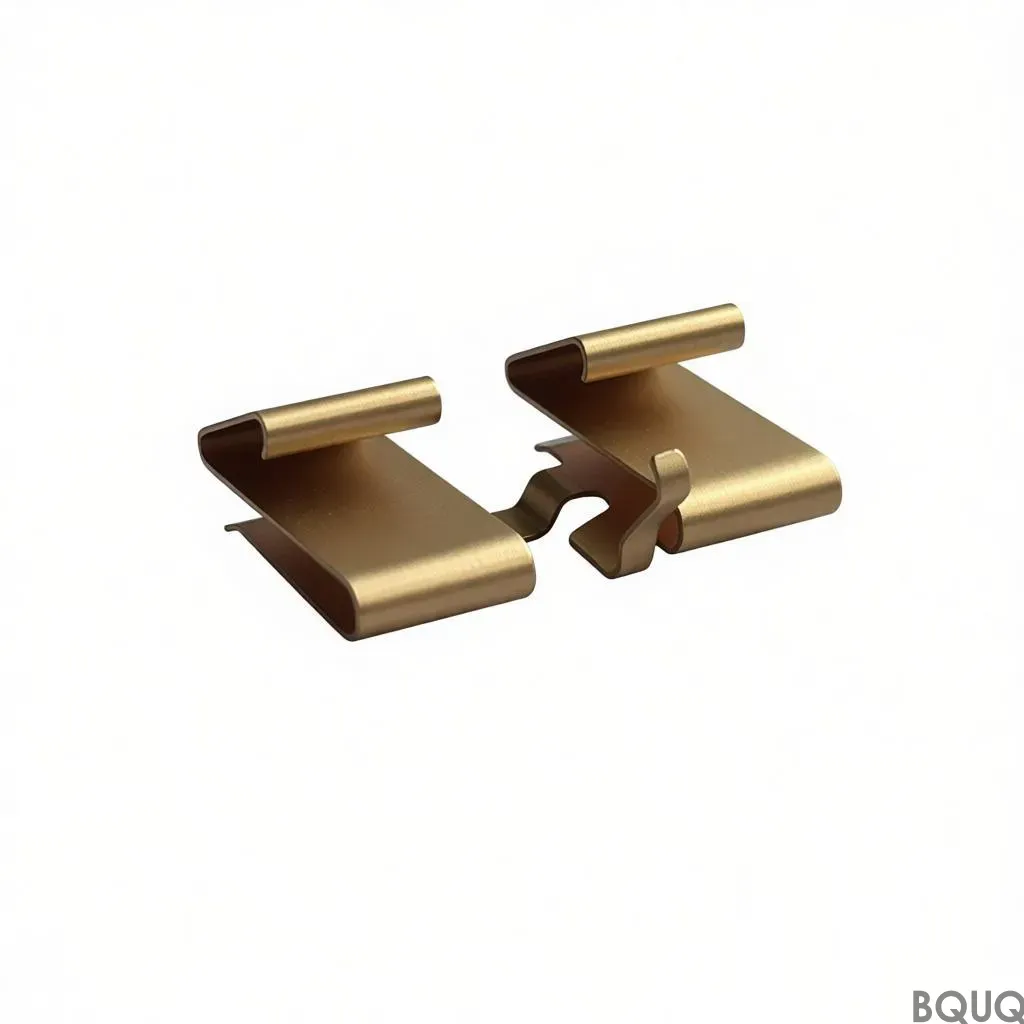
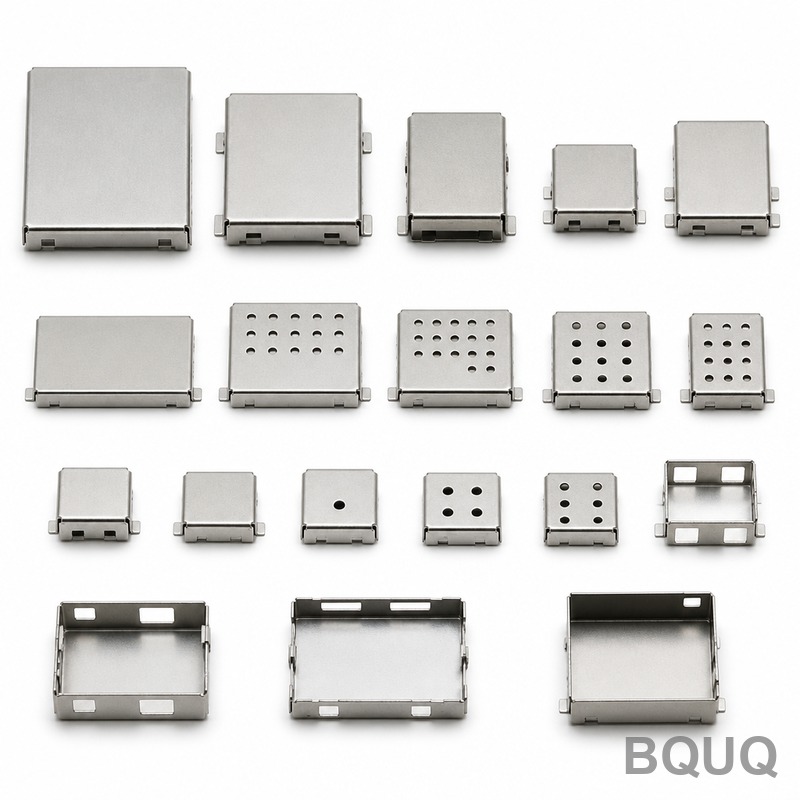
Precision stamping ensures reliable electrical contacts and terminals by delivering micron-level dimensional consistency, superior surface finishes, and repeatable material properties at high production volumes, all at a lower cost than machining. The process achieves tolerances of ±0.01 mm on critical contact surfaces, which directly reduces contact resistance and prevents intermittent signal failures. By combining progressive die technology with advanced material selection, stamping produces billions of dependable connectors used in automotive, aerospace, and consumer electronics applications.
What Tolerances Can Precision Stamping Achieve on Electrical Contacts?
Precision stamping achieves tolerances of ±0.01 mm (0.0004 inches) on critical dimensions such as contact beam width, terminal height, and mating surface flatness. For high-current terminals carrying more than 50 amps, flatness is held within 0.02 mm across the entire contact face to ensure maximum surface-to-surface contact. Standard stamping tolerances range from ±0.05 mm for general-purpose terminals to ±0.01 mm for fine-blanking or high-speed progressive dies used in automotive connector systems. In comparison, traditional machining typically holds ±0.02 mm but at a cost per part that is 5 to 10 times higher for volumes above 100,000 pieces.
How Does Material Selection Affect Contact Reliability?
Material selection is the single largest factor in contact reliability, with copper alloys dominating the field due to their balance of conductivity, strength, and corrosion resistance. Beryllium copper (C17200) offers the highest strength at 1,100–1,400 MPa tensile with 20–30% IACS conductivity, making it ideal for spring contacts in harsh environments. Phosphor bronze (C52100) provides 55% IACS conductivity and excellent fatigue life for terminal springs, while brass (C26000) is the economic choice at 28% IACS for low-cycle applications. For power contacts, oxygen-free copper (C10100) with 101% IACS conductivity is used, but it requires thicker cross-sections due to its lower strength of 220–250 MPa. The table below summarizes key material trade-offs for stamped electrical contacts.
| Material | Tensile Strength (MPa) | Electrical Conductivity (% IACS) | Fatigue Life (cycles) | Typical Application |
| C17200 Beryllium Copper | 1,100–1,400 | 20–30 | 100,000+ | Automotive relay contacts, high-reliability springs |
| C52100 Phosphor Bronze | 480–720 | 45–55 | 50,000–80,000 | Connector terminals, switch springs |
| C26000 Brass | 330–520 | 26–28 | 10,000–20,000 | Low-cost consumer connectors |
| C10100 OFC | 220–250 | 101 | 5,000–10,000 | Power busbars, high-current terminals |
| C70250 Copper-Nickel-Silicon | 700–850 | 45–55 | 80,000+ | EV battery connectors, high-temperature environments |
Why Does Progressive Die Stamping Outperform Other Manufacturing Methods?
Progressive die stamping outperforms CNC machining, casting, and metal injection molding for electrical contacts due to its combination of speed, precision, and cost efficiency at scale. A single progressive die can produce 500 to 1,200 parts per minute, which translates to over 1.5 million parts per day on a 24-hour shift. In contrast, CNC machining produces a comparable terminal in 15–30 seconds per part, capping output at roughly 3,000 parts per day. The stamping process also integrates multiple operations—blanking, bending, coining, and tapping—into a single pass, eliminating secondary handling that introduces dimensional drift. For a typical automotive terminal priced at $0.08–$0.15 per piece, stamping tooling costs $15,000–$60,000, which amortizes to less than $0.01 per part over a 5-million-piece run, compared to $0.30–$0.50 per part for machined equivalents.
Which Surface Finishes and Plating Are Critical for Contact Reliability?
Surface finish and plating directly determine contact resistance, wear resistance, and corrosion protection in stamped electrical contacts. The base stamping process achieves a surface roughness of Ra 0.4–0.8 μm, which is then refined by coining the contact area to Ra 0.1–0.2 μm for critical mating surfaces. Gold plating, applied at 0.76–1.27 μm thickness, is standard for low-voltage signal contacts (under 12V) where oxide layers would otherwise block current flow. Silver plating at 2–5 μm is used for power contacts up to 100 amps, with the caveat that silver tarnishes in sulfur-rich environments, requiring a nickel underplate of 1–2 μm for barrier protection. Tin plating at 3–5 μm is the cost-effective choice for consumer electronics, with a maximum service temperature of 150°C. For high-temperature automotive applications, palladium-nickel alloys (80/20) plated to 0.5–1.5 μm replace gold at 30% lower cost while maintaining performance up to 200°C.
How Do Stamping Process Parameters Impact Contact Resistance?
Stamping process parameters—including die clearance, stamping speed, and lubrication—have a measurable impact on contact resistance through their effect on edge quality and material work hardening. Die clearance of 5–8% of material thickness produces a clean shear zone with minimal burr, which prevents sharp edges from concentrating current and creating hot spots. Excessive burrs above 0.05 mm can increase contact resistance by 15–25% because the effective contact area is reduced. Stamping speed also affects performance: speeds above 800 strokes per minute induce adiabatic heating that can anneal the material, reducing hardness by up to 20% and increasing resistance. Proper lubrication with low-viscosity mineral oils (20–30 cSt at 40°C) reduces die wear and maintains surface integrity, with typical die life exceeding 50 million strokes before maintenance is required.
What Quality Control Methods Validate Stamped Contact Reliability?
Quality control for stamped contacts relies on in-process dimensional measurement, electrical testing, and environmental validation to ensure reliability in the field. Automated vision systems inspect every part at 1,200 ppm, measuring critical dimensions to ±0.005 mm and rejecting parts with burrs, cracks, or plating voids. Contact resistance is sampled at a rate of one part per 10,000 and tested using a four-wire Kelvin method at 10 mA and 50 mV, with acceptance criteria of less than 10 mΩ for gold-plated signal contacts and less than 0.5 mΩ for silver-plated power contacts. Environmental testing per IEC 60068-2-60 subjects samples to 21 days of mixed flowing gas at 30°C and 70% RH, with allowed resistance drift limited to 20% of initial values. Thermal cycling from -40°C to +150°C for 500 cycles validates solder joint integrity and plating adhesion, with failures requiring re-qualification of the entire die setup.
Can Precision Stamping Handle High-Volume Production Without Quality Loss?
Precision stamping maintains full quality consistency at high volumes when the die is properly maintained and process parameters are continuously monitored. A typical progressive die for a small terminal can produce 50 million parts over its lifetime, with maintenance intervals every 500,000–1 million strokes for re-grinding and polishing. Statistical process control (SPC) tracks critical dimensions on a per-lot basis, with Cpk values of 1.67 or higher required for automotive-grade contacts. Real-time monitoring of stamping tonnage and die temperature allows predictive maintenance, reducing unplanned downtime to below 2% of total production time. In practice, BQUQ has delivered runs of 20 million stamped contacts for EV battery management systems with a customer-reported field failure rate of less than 0.5 parts per million.
FAQ
What Is the Minimum Order Quantity for Precision Stamped Electrical Contacts?
The minimum order quantity for precision stamped contacts is typically 50,000 pieces for standard materials like brass or phosphor bronze, and 100,000 pieces for beryllium copper or specialty alloys. Lower volumes are possible but result in higher per-piece costs due to die amortization, with a 10,000-piece run costing $0.25–$0.40 per part versus $0.05–$0.10 per part at 500,000 pieces. Prototype stamping with soft tooling can support 1,000–5,000 pieces at $1–$2 per part for design validation.
How Long Does Die Tooling Take to Manufacture?
Die tooling for a new electrical contact typically takes 4–6 weeks for progressive dies with up to 20 stations, including design, steel machining, wire EDM, and tryout. Complex dies with 30+ stations or with in-die tapping and coining can extend lead times to 8–10 weeks. First article inspection reports are delivered within 5 business days after die completion.
What Is the Cost Difference Between Stamping and CNC Machining for Contacts?
Stamping is 80–90% cheaper than CNC machining for production volumes above 100,000 pieces, with stamped parts costing $0.05–$0.15 versus $0.30–$0.80 for machined parts. The breakeven point is typically around 20,000–30,000 pieces, after which stamping's lower cycle time and material utilization dominate. For volumes below 10,000 pieces, CNC machining is often more economical due to zero tooling cost.
Which Industries Rely Most on Precision Stamped Electrical Contacts?
The automotive industry is the largest consumer, using stamped contacts in every connector, relay, and sensor, with an average vehicle containing over 300 stamped terminals. Aerospace and defense demand the highest reliability grades, with contacts certified to MIL-DTL-55302 and NASA standards. Medical devices, including pacemakers and surgical equipment, require gold-plated stamped contacts with documented traceability and biocompatibility per ISO 10993.
Can Stamped Contacts Handle High-Temperature Environments?
Yes, stamped contacts can operate at temperatures up to 200°C when using appropriate base materials and plating systems. Beryllium copper retains 70% of its room-temperature strength at 200°C, while copper-nickel-silicon alloys maintain 85% strength at 250°C. Silver plating is limited to 150°C in oxidizing atmospheres, while gold-palladium alloys extend to 200°C without degradation.
What Is the Typical Lead Time for Production Orders?
Standard production lead time for stamped electrical contacts is 2–3 weeks after tooling approval, including raw material procurement, stamping, plating, and final inspection. For repeat orders with existing tooling, lead time shortens to 5–7 business days. Expedited 48-hour delivery is available for critical line-down situations at a 20% surcharge.
Conclusion
Precision stamping delivers the reliability that electrical contacts and terminals demand through repeatable micron-level tolerances, engineered material selection, and validated quality control processes. The combination of ±0.01 mm dimensional accuracy, surface finishes down to Ra 0.1 μm, and plating systems designed for specific current and temperature ranges ensures consistent electrical performance across millions of cycles. For engineers specifying connectors, relays, or power terminals, precision stamping offers the lowest cost per reliable connection. At BQUQ, our 20 years of precision manufacturing experience across CNC machining, stamping, and heat sink production enables us to provide robust solutions for your contact needs. Send us your drawings for a 12-hour quote and engineering review at sc@bquq.com or WhatsApp +86 13713157787, and visit www.bquq.com for more details.