How Long Does a Stamping Die Last? Tooling Life and Maintenance Guide
A stamping die typically lasts between 500,000 and 5,000,000 strokes, depending on material thickness, die steel grade, and maintenance frequency. For example, a D2 steel die stamping 1.0 mm mild steel can produce 1.5 million parts before requiring major rework. However, with proper maintenance and carbide inserts, tooling life can extend beyond 10 million strokes.
What Is the Average Stamping Die Lifespan in Strokes?
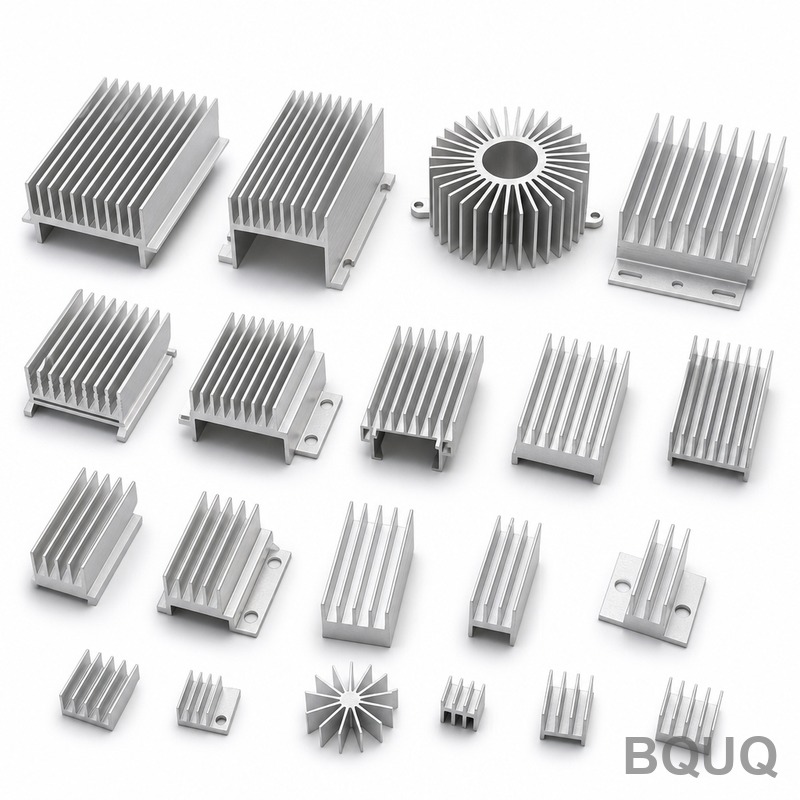
The average lifespan of a stamping die ranges from 500,000 to 3,000,000 strokes for standard production dies. Light-duty dies stamping thin aluminum (0.3–0.8 mm) often exceed 5,000,000 strokes, while heavy-duty dies forming 3.0 mm stainless steel may only reach 800,000 strokes. In our Dongguan factory, we track die life per component: progressive dies for heat sink fins average 2.2 million hits, while compound dies for spring washers average 1.8 million hits. These figures assume a maintenance interval of every 50,000 strokes for lubrication and every 200,000 strokes for edge sharpening.
How Does Die Material Affect Tooling Life?
Die material is the single largest factor in tooling longevity. High-carbon high-chromium steel (D2) provides a baseline of 1.0–1.5 million strokes. Powder metallurgy steel (e.g., ASP23 or Vanadis 4) extends life to 3.0–4.5 million strokes due to higher wear resistance. Carbide dies, though costing 3–5 times more, achieve 10–20 million strokes and are preferred for high-volume electronics connectors. For example, a tungsten carbide die stamping 0.2 mm beryllium copper at BQUQ runs 15 million hits before carbide chipping occurs. Tool steel hardness should be 58–62 HRC for D2 and 60–64 HRC for powder steels, with nitriding or TiN coating adding 30–50% life.
Which Stamping Processes Reduce Die Wear Most?
Progressive stamping with proper strip lubrication reduces die wear by up to 40% compared to dry stamping. Using a micro-emulsion lubricant (viscosity 20–40 cSt at 40°C) on 1.0 mm steel lowers friction coefficient from 0.15 to 0.08. Additionally, reducing stamping speed from 200 SPM (strokes per minute) to 120 SPM decreases impact energy per stroke, extending punch edge life by 25%. Air blowing or vacuuming slugs away prevents chip recutting, which is a common cause of premature edge rollover. Finally, incorporating a pilot pin with ±0.005 mm alignment accuracy reduces lateral forces that cause die misalignment and cracking.
How Often Should a Stamping Die Be Maintained?
A stamping die should receive preventive maintenance every 50,000 strokes for lubrication checks and every 200,000 strokes for complete inspection and edge sharpening. At BQUQ, we schedule maintenance based on part dimensional drift: if a critical dimension (e.g., hole diameter) shifts by 0.01 mm from nominal, we stop production and resharpen. Typical maintenance actions include cleaning with solvent, checking punch-to-die clearance (should be 5–10% of material thickness), and measuring wear on guide posts (tolerance ±0.002 mm). For high-speed dies running above 300 SPM, weekly ultrasonic cleaning of lubrication channels is mandatory to prevent seizure.
What Are the Common Failure Modes of Stamping Dies?
The four most common failure modes are abrasive wear, adhesive galling, fatigue cracking, and edge chipping. Abrasive wear accounts for 60% of die failures and appears as rounding on punch edges, increasing burr height from 0.02 mm to 0.10 mm. Adhesive galling occurs when material welds to the die surface, typically at high temperatures above 200°C, leaving a rough pick-up pattern. Fatigue cracking from repeated impact stress appears as fine lines near corners, propagating after 1.0–1.5 million cycles in D2 steel. Edge chipping from misalignment or hard inclusions (e.g., scale on hot-rolled steel) can remove 0.5 mm of carbide edge instantly. Monitoring burr height is the best early indicator: when burr exceeds 10% of material thickness, resharpen immediately.
How Can Die Maintenance Extend Tooling Life?
Proper maintenance can double or triple die life. Resharpening the punch and die surfaces by grinding 0.05–0.10 mm removes the work-hardened layer and restores sharp edges; this can be done 10–15 times before the die loses its geometry. Applying a fresh titanium nitride (TiN) coating after every third resharpening adds lubricity and hardness (2,300 HV vs. 800 HV for uncoated D2). Correcting die clearance after wear is critical: for 1.0 mm steel, clearance should be 0.06–0.10 mm per side; if it exceeds 0.15 mm, the die must be re-machined or replaced. Also, replacing springs every 500,000 strokes prevents uneven pressure distribution, which causes localized wear. In our experience, a well-maintained die at 2,500,000 strokes produces parts with the same tolerance (±0.02 mm) as a new die.
What Is the Cost of Die Repair vs. Replacement?
Die repair costs 15–30% of a new die, but replacement becomes economical when repair frequency exceeds one per 100,000 strokes. For example, a progressive die for a heat sink costs $18,000 new. Resharpening costs $800–$1,200 and extends life by 300,000 strokes. Over 3,000,000 strokes, resharpening 8 times totals $9,600, which is still cheaper than a replacement. However, if the die base plate cracks or guide pins wear beyond ±0.01 mm, repair costs rise to $6,000–$9,000 and a new die is recommended. Typical die repair turnaround at BQUQ is 3–5 working days for resharpening and 7–10 days for major repairs involving new punches. For carbide dies, replacement is usually chosen after 10 million strokes because re-grinding carbide requires diamond wheels and costs $2,000–$3,000 per session.
| Die Material | Hardness (HRC) | Typical Life (Strokes) | Cost per Die (USD) | Maintenance Interval (Strokes) |
| D2 Steel | 58–62 | 1,000,000–1,500,000 | 8,000–15,000 | 50,000 |
| Powder Steel (ASP23) | 60–64 | 3,000,000–4,500,000 | 15,000–25,000 | 80,000 |
| Tungsten Carbide | 78–82 HRA | 10,000,000–20,000,000 | 40,000–70,000 | 150,000 |
| Coated D2 (TiN) | 58–62 + coating | 1,500,000–2,200,000 | 9,000–16,000 | 60,000 |
| H13 (Hot Stamping) | 48–52 | 500,000–800,000 | 12,000–20,000 | 30,000 |
When Should You Replace a Stamping Die Rather Than Repair It?
Replace a stamping die when the die base shows deformation, when punches require replacement more often than every 150,000 strokes, or when part tolerances cannot be held even after full maintenance. Specifically, if the die set guide pins have more than 0.02 mm play, the die will produce inconsistent parts despite sharp edges. Also, replace if crack propagation in the die block exceeds 5 mm in length, as welding repairs in high-stress areas fail within 50,000 strokes. For high-volume production (over 5 million parts per year), investing in a new carbide die every 2–3 years is more cost-effective than repeated repairs to a steel die, reducing downtime by 30%.
What Is the Impact of Stamping Speed on Die Life?
Stamping speed directly affects die temperature and wear rate. At 150 SPM, die surface temperature stays below 80°C, and lubricant film remains intact, yielding a die life of 2.0 million strokes. At 400 SPM, die temperature rises to 150–180°C, breaking down the lubricant and increasing adhesive galling, reducing life to 1.0 million strokes. For thin materials (0.2 mm) running at 600 SPM, we recommend oil-mist lubrication and forced air cooling to maintain die life above 1.5 million strokes. Lowering speed from 300 to 200 SPM increases cycle time by 50% but can extend die life by 70%, which is often a better economic trade-off for expensive carbide tooling.
FAQ Section
How Many Strokes Can a Carbide Stamping Die Last?
A tungsten carbide stamping die can last between 10,000,000 and 20,000,000 strokes under normal conditions. With proper lubrication and a clean strip surface, some carbide dies in our connector production have exceeded 25 million strokes before requiring re-grinding. The main limitation is chipping from hard inclusions, not abrasive wear.
What Is the Best Lubricant for Stamping Dies?
The best lubricant is a chlorine-free extreme-pressure oil with a viscosity of 30–50 cSt at 40°C for steel stamping. For aluminum and copper, use a lighter oil (10–20 cSt) to prevent staining. Apply 2–5 g/m² of lubricant evenly; too much causes hydraulic entrapment, and too little causes galling.
Can Stamping Dies Be Repaired by Welding?
Yes, welding can repair minor cracks and edge chips, but only on low-stress areas like the die base or stripper plate. Do not weld on cutting edges because the heat-affected zone softens the steel, reducing edge life by 50%. Use TIG welding with a matching tool steel filler and post-weld tempering at 200°C.
How Do You Measure Die Wear Accurately?
Measure die wear by checking burr height on stamped parts using a micrometer (acceptable limit is 10% of material thickness). Also measure punch diameter and die opening with a bore gauge; a change of 0.01 mm indicates the start of wear. For advanced monitoring, use a dial indicator to check punch penetration depth (nominal ±0.005 mm).
What Is the Lead Time for a New Stamping Die?
A simple compound die takes 15–20 working days, a progressive die takes 25–35 working days, and a carbide die takes 40–50 working days. At BQUQ, we provide a 3D die design review within 48 hours of receiving your part drawing. Urgent repairs for standard dies can be completed in 3–5 days.
Does Material Thickness Affect Die Life Significantly?
Yes, doubling material thickness reduces die life by approximately 60%. For example, stamping 1.0 mm steel yields 1.5 million strokes, while 2.0 mm steel yields only 600,000 strokes on the same die material. This is because cutting force increases proportionally with thickness, accelerating edge wear and impact fatigue.
How Often Should Guide Pins Be Replaced?
Guide pins should be replaced when clearance exceeds 0.02 mm, typically every 800,000–1,200,000 strokes. Using ball-bearing guide pins with preload reduces wear and extends replacement interval to 2,000,000 strokes. Regularly check bushing wear with a plug gauge; any scoring requires immediate replacement.
Conclusion
Stamping die life is not a fixed number but a function of material, maintenance, and operating parameters. By selecting powder steel or carbide for high-volume runs, scheduling maintenance every 50,000–200,000 strokes, and monitoring burr height, you can reliably achieve 2–4 million strokes from a standard die and over 10 million from carbide. The key is early detection of wear through dimensional inspection and immediate corrective action.
For a detailed die life assessment based on your specific part geometry and material, contact BQUQ for a free engineering review. We provide 12-hour quoting for new dies and repair services. Email: sc@bquq.com, WhatsApp: +86 13713157787, www.bquq.com.