How Much Does a Metal Stamping Die Cost? Tooling Price Breakdown for 2026
A metal stamping die typically costs between $1,500 for a simple blanking die and $80,000 or more for a large, progressive transfer die. For 2026, the average price for a medium-complexity progressive die used in automotive or electronics components is $15,000 to $45,000, with lead times of 4 to 10 weeks. The final price is driven by the number of stations, part material thickness, tolerance requirements, and the die's expected lifespan, not by the part size alone.
Which Factors Have the Biggest Impact on Stamping Die Price?
The single largest cost driver is the die's station count and construction type. A simple single-station blanking die uses one punch and one die button, while a progressive die with 8 to 15 stations can perform cutting, bending, and coining in a single press stroke. Each station adds $2,000 to $5,000 in machining and assembly labor.
Part material thickness also dictates die steel selection. Parts from 0.3 mm to 1.5 mm thick can use D2 tool steel, but parts over 3.0 mm thick require M2 high-speed steel or carbide inserts, which raise material costs by 40% to 60%. Tight tolerances below ±0.05 mm force additional wire EDM operations and hand polishing, adding 15% to 25% to the total tooling quote. For 2026, raw steel prices have stabilized at approximately $8 to $12 per kilogram for D2, but carbide grades are now $85 to $120 per kilogram.
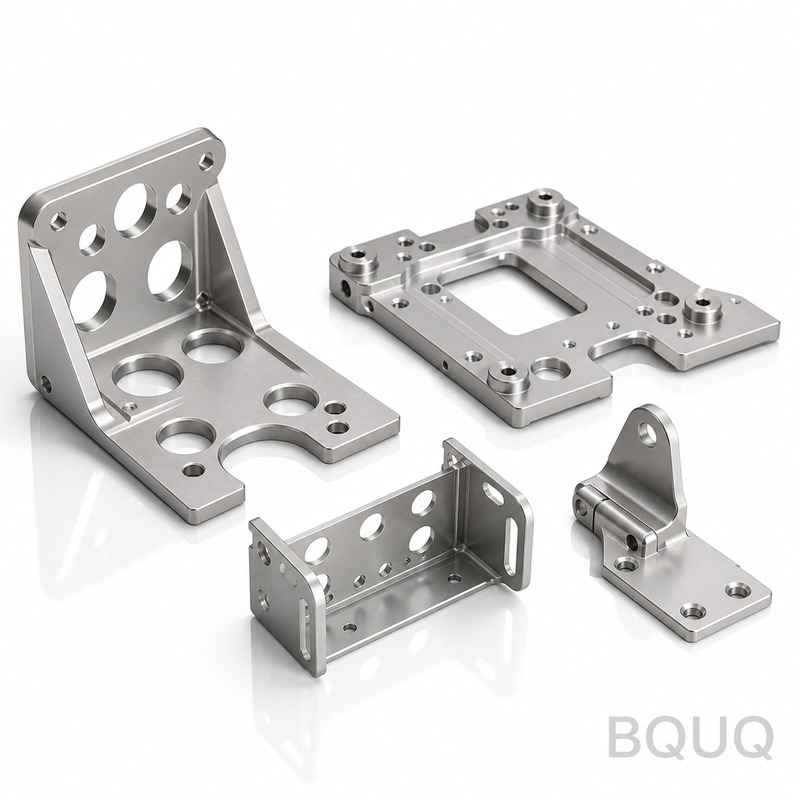
How Much Does a Simple Blanking Die Cost in 2026?
A simple blanking die, also called a blanking tool, is the cheapest entry point into stamping. For a flat part under 50 mm x 50 mm with a thickness of 1.0 mm or less, a basic single-station die costs between $1,500 and $3,800. This price includes the die set, punch, die button, stripper plate, and basic dowel pin alignment.
These dies are typically built with a 1-million-stroke lifespan and use standard guide pins rather than ball cages. If you require a hardened die with a 3-million-stroke lifespan, the price rises to $4,500 to $6,000 due to additional heat treatment and grinding. For prototype validation, many factories offer soft tooling made from pre-hardened P20 steel, which costs $800 to $1,500 but only lasts for 10,000 to 20,000 strokes.
What Is the Price Range for a Progressive Stamping Die?
Progressive dies are the workhorse for high-volume production, and 2026 pricing reflects their complexity. A 5-station progressive die for a simple bracket or clip, with a strip width of 25 mm, costs $8,000 to $15,000. A 10-station die for a connector terminal with 0.2 mm thickness and ±0.02 mm tolerance costs $20,000 to $35,000.
For large automotive structural parts, such as seat rails or door hinge reinforcements, a 15-station progressive die with a strip width of 300 mm and material thickness of 2.5 mm costs $45,000 to $80,000. The table below summarizes 2026 pricing based on station count and feature complexity.
| Die Type | Station Count | Part Size | Material Thickness | 2026 Price Range | Lead Time |
| Single Hit Blanking | 1 | <50 mm | <1.0 mm | $1,500 - $3,800 | 2-3 weeks |
| Compound Die | 1-2 | <80 mm | <1.5 mm | $4,000 - $8,000 | 3-4 weeks |
| Progressive (Simple) | 5-8 | <100 mm | <1.0 mm | $8,000 - $18,000 | 4-6 weeks |
| Progressive (Medium) | 10-15 | <250 mm | <2.0 mm | $20,000 - $45,000 | 6-8 weeks |
| Progressive (Complex) | 15-20 | >250 mm | >2.5 mm | $45,000 - $80,000 | 8-10 weeks |
| Carbide Progressive | 10-20 | <200 mm | <0.5 mm | $50,000 - $90,000 | 8-12 weeks |
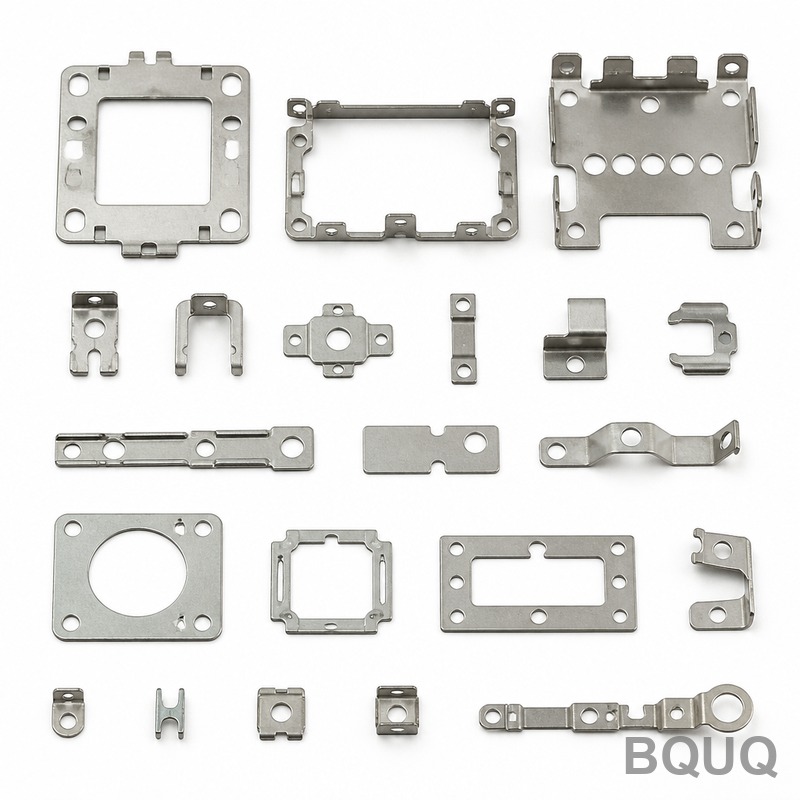
How Does Part Tolerance Affect Tooling Cost Per Unit?
Tolerance requirements directly influence the machining processes used to cut the die steel. Standard tolerances of ±0.10 mm allow for conventional CNC milling and jig grinding, which are relatively fast and inexpensive. Moving to ±0.05 mm requires wire cut EDM for all cutting edges, adding 10% to 15% to the die cost.
Tolerances of ±0.02 mm or tighter, common for electrical terminals and fuel system components, require CNC surface grinding, lapping, and final hand fitting by a master toolmaker. This level of precision increases the tooling price by 25% to 35% compared to a standard tolerance die. In 2026, a precision progressive die for a 0.15 mm thick copper alloy terminal with ±0.01 mm tolerance is quoted at $55,000 to $70,000, whereas the same part at ±0.10 mm would cost roughly $18,000.
Why Does Die Lifespan Change the Tooling Price So Much?
Die lifespan determines the steel grade and heat treatment depth. A die rated for 1 million strokes can be made from D2 steel hardened to 58-60 HRC, with a case depth of 1.5 mm. This die costs the baseline price. A die rated for 5 million strokes uses powder metallurgy steel like ASP23 or carbide inserts, hardened to 62-64 HRC, with a case depth of 3.0 mm or more.
The price difference is 30% to 50% higher for the extended lifespan. For example, a 10-station progressive die for a steel clip costs $22,000 at a 1-million-stroke rating. The same die redesigned for 5-million-stroke production costs $31,000 because of premium steel, additional vacuum heat treatment cycles, and PVD coating (titanium nitride) on the punches. If your annual volume is under 500,000 parts, a standard D2 die is the cost-effective choice. If your volume exceeds 2 million parts per year, the premium die pays for itself through reduced downtime and maintenance.
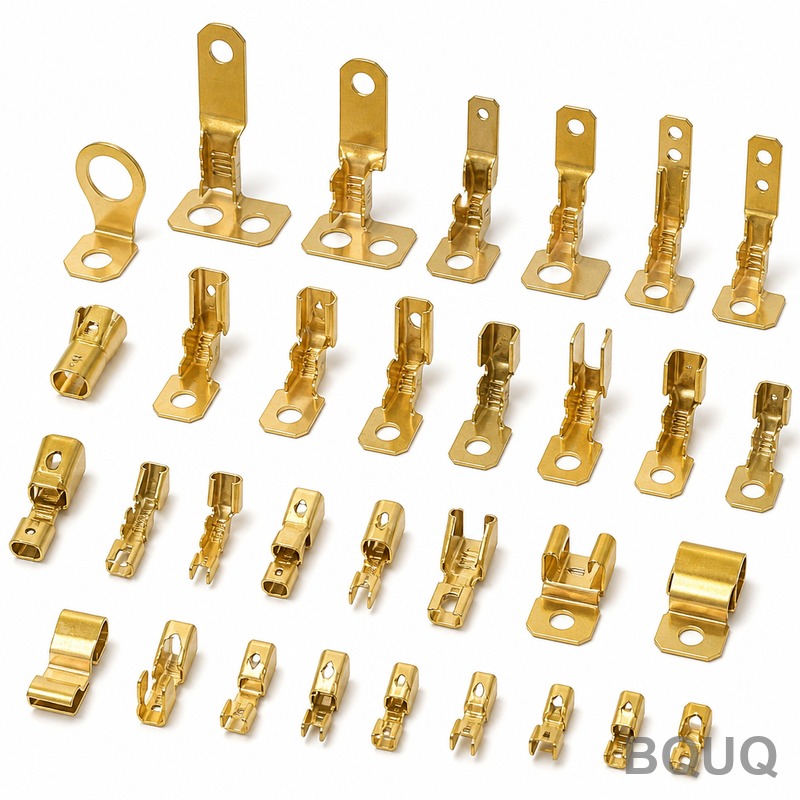
When Should You Choose a Transfer Die Instead of a Progressive Die?
Transfer dies are necessary when the part geometry requires significant forming in multiple directions, which cannot be achieved with a continuous strip. A transfer die costs $30,000 to $70,000 for medium complexity, and it operates by mechanically transferring the part between stations using fingers or a transfer press. In 2026, transfer dies are recommended for parts with deep draws exceeding 30 mm or parts requiring complex flanging on multiple planes.
The main trade-off is speed. Progressive dies run at 400 to 800 strokes per minute, while transfer dies run at 60 to 150 strokes per minute. For a deep-drawn motor housing with a 40 mm draw depth and 2.0 mm thick steel, a transfer die at $55,000 is the only reliable option because a progressive die would tear the material at the required draw ratio. The per-part cost is higher, but the tooling cost is still 40% lower than a multi-stage tandem press line.
What Are the Hidden Costs in a Stamping Die Quote?
Most quotes exclude the try-out press time, which can add $500 to $2,000 to the final bill. A standard try-out run of 300 to 500 parts is usually included, but if dimensional validation requires 2,000 parts for statistical process control, the factory charges press time at $80 to $150 per hour. Additionally, design changes after tool steel cutting begin incur a 10% to 20% modification fee, or a full re-cut cost if the change affects the strip layout.
Shipping and rigging for a die weighing 2 to 5 metric tons costs $800 to $2,500 depending on destination. Die storage is another hidden cost: if you do not take delivery immediately, BQUQ charges $50 per month per pallet position. Finally, maintenance tooling, such as spare punches and die buttons, typically adds 5% to 8% to the initial quote. Always ask for a full breakdown that includes these items to compare quotes accurately.
What Is the Typical Lead Time for a Custom Stamping Die?
Standard blanking dies are delivered in 2 to 3 weeks. Progressive dies with 5 to 10 stations take 4 to 6 weeks, while complex 15-station dies require 8 to 10 weeks. Carbide dies and transfer dies with extensive CAM programming are the longest, at 10 to 12 weeks.
Lead time is compressed by ordering die steel before the design is finalized. At BQUQ, we stock D2, M2, and ASP23 blanks in common sizes, which cuts 1 to 2 weeks off the standard schedule. For urgent projects, a 24-hour design review and 7-day expedited machining is available at a 15% premium. It is critical to freeze the part design and material grade before ordering tooling, as any change after the first 10 days of machining adds 2 to 4 weeks to the schedule.
How Can You Reduce Stamping Die Cost Without Sacrificing Quality?
Reduce the number of stations by combining operations where possible. For example, using a single forming station instead of two separate bending stations saves $4,000 to $6,000. Relaxing the tolerance from ±0.05 mm to ±0.08 mm on non-critical dimensions can reduce machining time by 20%. Another effective method is to choose a standard die set size from the factory's inventory, which eliminates the $1,200 to $2,000 custom die set cost.
For high-volume production, consider a family die that produces two or three different part numbers in one pass. This adds 15% to the die cost but eliminates the need for a second die and second press setup. Finally, request a detailed DFM (Design for Manufacturing) review before quoting. BQUQ offers this free of charge, and it typically identifies 10% to 20% in tooling savings by adjusting bend radii, hole positions, and strip layout.
Conclusion
In 2026, a metal stamping die costs $1,500 to $90,000 depending on station count, tolerance, material thickness, and lifespan. The most common quote for a medium-complexity progressive die is $20,000 to $45,000 with a 6-8 week lead time. To get an accurate price, provide the part drawing, material grade, annual volume, and tolerance requirements.
FAQ
How much does a stamping die cost for a simple flat washer?
A simple blanking die for a flat washer under 30 mm diameter costs $1,500 to $2,500 in 2026. This includes the punch, die button, and stripper plate, with a lifespan of 1 million strokes and a 2-week lead time.
Can I use a 3D-printed stamping die for low-volume production?
Yes, for volumes under 5,000 parts, a 3D-printed die from maraging steel costs $800 to $1,500 and can produce parts up to 1.0 mm thick. However, the die life is limited to about 5,000 strokes, and tolerances are limited to ±0.15 mm.
What is the difference between hard tooling and soft tooling for stamping?
Hard tooling uses heat-treated D2 or M2 steel and lasts over 1 million strokes, costing $8,000 and up. Soft tooling uses pre-hardened P20 steel, costs 40% to 60% less, but only lasts 10,000 to 20,000 strokes, making it ideal for prototypes.
How long does a progressive stamping die last before needing replacement?
A properly maintained D2 progressive die lasts 1 to 3 million strokes. A carbide or powder metallurgy die lasts 5 to 10 million strokes. After reaching this limit, the cutting edges can be reground two to three times, extending life by 50% before full replacement.
Does part material hardness affect the stamping die price?
Yes, materials over 40 HRC, such as spring steel or hardened stainless steel, require stronger die materials and slower press speeds. This increases die cost by 20% to 30% due to the need for carbide punches and additional shock-absorbing components.
How much does it cost to modify an existing stamping die for a design change?
A minor change, such as adding a hole or adjusting a bend angle, costs $1,000 to $3,000 and takes 3-5 days. A major change affecting the strip layout costs $8,000 to $15,000, which is often close to the cost of a new die.
Is it cheaper to buy a stamping die from China versus the US or Europe?
A comparable progressive die from China costs 30% to 50% less than from the US or Europe, primarily due to lower labor rates for tool and die makers. At BQUQ, a $30,000 die from a US supplier would typically cost $16,000 to $20,000, with the same D2 steel and CNC machining standards.
For an accurate 2026 tooling quote, send your part drawing to BQUQ. Our engineers respond within 12 hours with a full cost breakdown and DFM suggestions. Contact us at sc@bquq.com or WhatsApp +86 13713157787. Visit www.bquq.com for more information on our CNC machining, stamping, and heat sink capabilities.
Related Articles
- Multi-Physics Coupled Failure Mechanisms and Systematic Prevention Strategies in Stamping Processes
- Stamping digital factory and simulation-driven design: from virtual prototype to digital twin operation
- High-speed precision stamping and in-die microforming technology: from electronic connections to micromotor cores