How to Choose a Spring Manufacturer: Quality and Capability Criteria
Choosing a spring manufacturer requires evaluating metallurgical traceability, dimensional capability, and process control, not just comparing unit prices. A qualified supplier must demonstrate tolerances within ±0.05 mm for wire diameters under 3.0 mm, offer material certificates per ASTM A228 or EN 10270, and maintain a defect rate below 500 PPM. You should also verify their fatigue testing protocols, surface finishing options, and lead times, as these factors determine the lifespan and reliability of your final assembly.
What Are the Core Quality Certifications and Material Traceability Requirements?
A reputable spring manufacturer must hold ISO 9001:2015 as a baseline, with IATF 16949 preferred for automotive applications. For critical industries like medical devices or aerospace, look for AS9100D certification and compliance with RoHS and REACH directives. Material traceability is non-negotiable: the supplier must provide mill test certificates for every coil of wire, including chemical composition (e.g., carbon content 0.65-0.75% for music wire), tensile strength, and heat number. Ask for their incoming inspection records—a robust facility will perform eddy current testing on 100% of raw wire to detect surface defects before manufacturing.
How Do You Evaluate Dimensional Tolerances and Spring Rate Consistency?
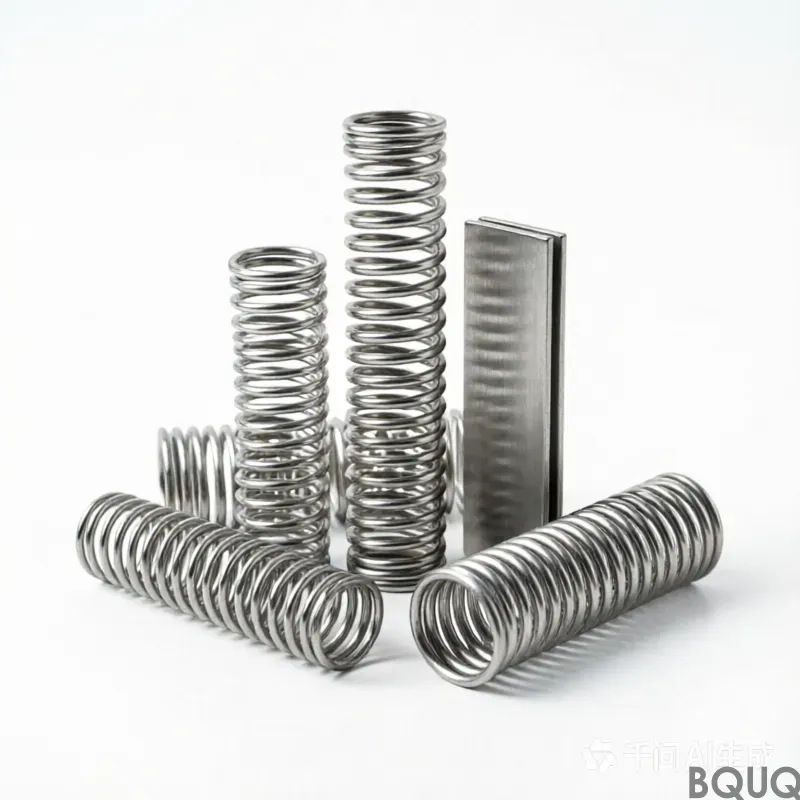
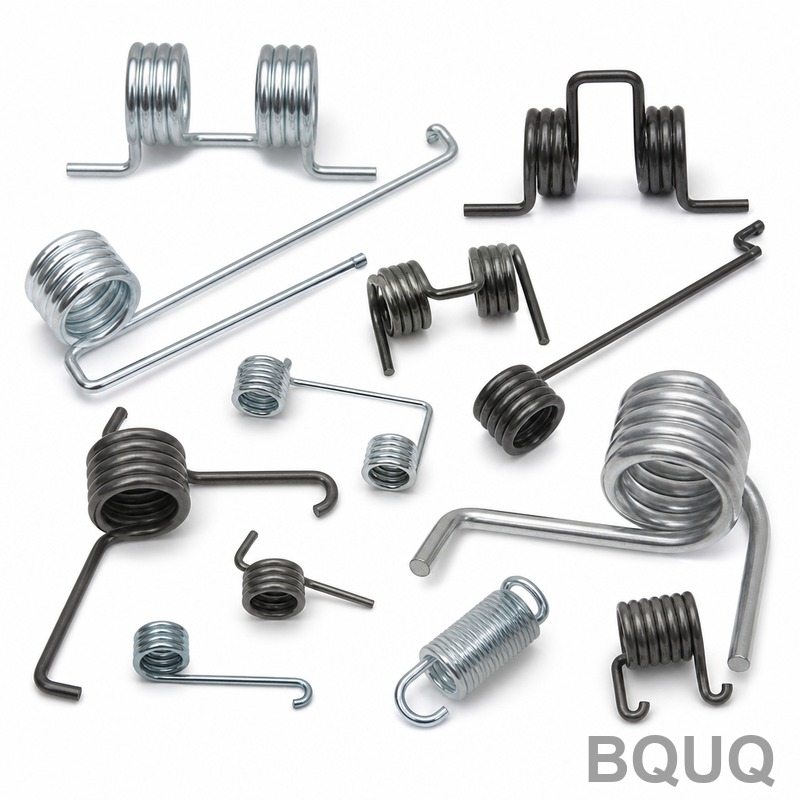
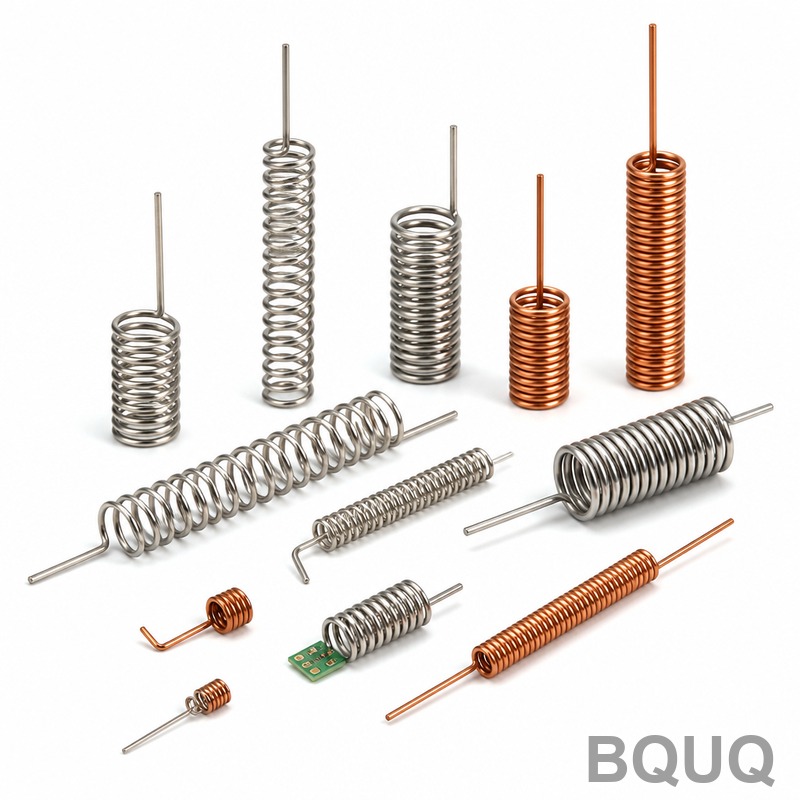
Precision springs demand tight tolerances on outer diameter, free length, and coil count. For compression springs with wire diameter 0.5-5.0 mm, a capable manufacturer holds OD tolerances of ±0.05 mm and free length tolerances of ±0.25 mm or ±1%, whichever is greater. Spring rate consistency should be within ±3% across a production batch of 10,000 pieces. Request a capability study (Cpk value) for your specific spring; a Cpk of 1.33 or higher indicates a statistically controlled process. For torsion springs, angular tolerance should be ±2 degrees, and for extension springs, initial tension must be controlled within ±5% of the specified value.
Which Materials and Coatings Should a Capable Spring Manufacturer Offer?
The manufacturer should stock or readily source a wide range of materials: music wire (ASTM A228, tensile up to 2300 MPa), oil-tempered chrome silicon (ASTM A401, for high-stress applications up to 200°C), stainless steel 302/304 (ASTM A313, for corrosion resistance), and Inconel X-750 for high-temperature environments up to 650°C. For surface protection, they should offer zinc plating (5-8 µm, with hexavalent chromium-free passivation), powder coating, or electroless nickel plating (12-20 µm). Additionally, mechanical pre-setting (scragging) to relieve residual stress is critical for springs operating above 60% of the material's tensile strength. Ask if they provide shot peening, which can increase fatigue life by 30-50% for dynamic applications.
How Can You Assess Fatigue Life and Testing Capabilities?
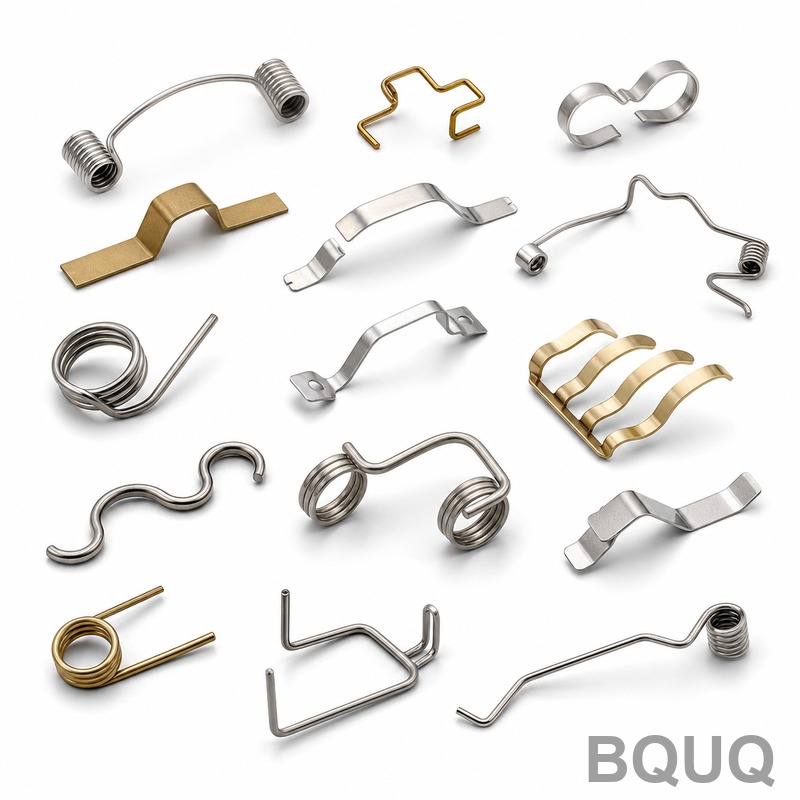
Fatigue testing is the differentiator between a commodity spring maker and an engineering partner. The manufacturer should operate spring testing machines capable of cycling at 10 Hz or higher, with programmable load profiles. For a typical compression spring rated for 1 million cycles, they should provide an S-N curve (stress vs. cycle count) generated from actual production samples, not theoretical calculations. Verify their equipment for load testing: a digital force tester with ±0.5% accuracy per ASTM F1566, and a fatigue tester that can apply a preload and alternating load simultaneously. Ask for their internal rejection rate during fatigue testing—a rate below 0.1% is excellent, while anything above 1% signals process instability.
What Is the Typical Lead Time and MOQ for Custom Springs?
Lead times vary significantly based on wire diameter and batch size. For prototype quantities (5-500 pieces), a responsive manufacturer can ship within 3-5 business days using CNC coiling machines with rapid setup changeover. For production volumes (10,000+ pieces), expect 2-3 weeks for standard materials like music wire or stainless steel, and 4-6 weeks if special materials or custom coatings are required. The minimum order quantity (MOQ) should be flexible; many precision manufacturers accept 500-piece orders for initial validation, though the unit price may increase by 15-25% compared to 50,000-piece runs. Always request a manufacturing lead time quote in writing, including days for material procurement, coiling, heat treatment, and final inspection.
How Does the Choice of Manufacturing Process Affect Spring Performance?
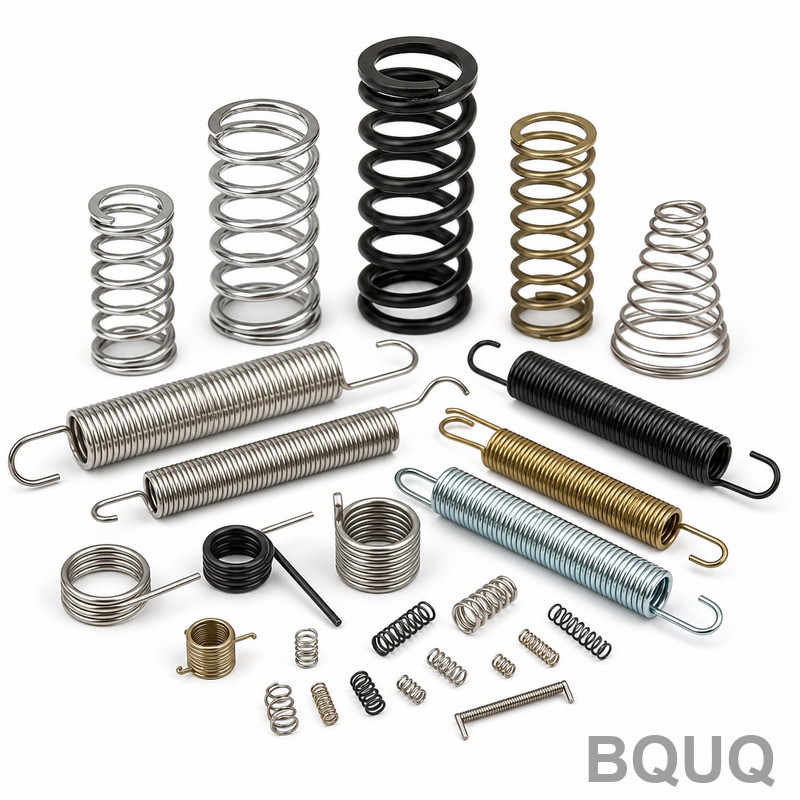
The coiling method directly impacts the residual stress distribution and fatigue resistance. CNC coiling (mandrel-based) is standard for wire diameters from 0.1 mm to 12.0 mm, offering repeatability of ±0.02 mm on coil diameter. For wire thicker than 12.0 mm, hot winding with subsequent quenching and tempering is required, which introduces different mechanical properties and a rougher surface finish. Compare this to four-slide forming, which is better for complex spring shapes like clips or wire forms but generally achieves looser tolerances of ±0.10 mm. The manufacturer should clearly state which process they use for your spring design and provide a process failure mode analysis (PFMEA) on request.
Which Quality Inspection Reports Should You Request Before Mass Production?
Before placing a purchase order, request a sample inspection report (SIR) that includes dimensional measurements from at least 30 pieces, a material certificate, and a load test graph. For the first article inspection (FAI), the report must comply with AS9102 or PPAP Level 3, covering all dimensions, material properties, and special characteristics. A high-quality manufacturer will also provide a statistical process control (SPC) chart showing the distribution of spring rate and free length across the batch. Finally, verify their calibration certificates for all measuring equipment—force testers, optical comparators, and micrometers—which should be traceable to national standards (e.g., NIST or CNAS) with calibration intervals not exceeding 12 months.
| Capability Parameter | Prototype (5-500 pcs) | Production (10,000+ pcs) | Industry Benchmark |
| Wire Diameter Range | 0.1 - 12.0 mm | 0.2 - 8.0 mm | 0.05 - 20.0 mm |
| OD Tolerance (Wire < 3mm) | ±0.05 mm | ±0.08 mm | ±0.10 mm |
| Spring Rate Tolerance | ±2% | ±3% | ±5% |
| Fatigue Life (Compression) | Tested to 100k cycles | Tested to 1M cycles | 100k - 10M cycles |
| Lead Time | 3-5 business days | 2-3 weeks | 1-4 weeks |
| Cpk Requirement | 1.00 min | 1.33 min | 1.00 min |
| Surface Coating Thickness | Zinc 5-8 µm | Zinc 5-8 µm | 3-12 µm |
What Are the Hidden Costs and Red Flags When Outsourcing Springs?
The lowest quote is rarely the most cost-effective. Hidden costs include tooling fees for custom mandrels (typically $200-$800 per spring design), heat treatment surcharges for chrome silicon or stainless steel, and expedited shipping fees that can add 10-15% to the total cost. Red flags include a manufacturer who cannot provide a Cpk report, refuses to share their heat treatment furnace temperature logs (which should be 400-450°C for stress relief), or quotes a spring rate tolerance looser than ±5% without technical justification. Also, verify their secondary operations capability—grinding of end coils is essential for squareness (perpendicularity within 2 degrees), and a supplier lacking in-house grinding will add 2-3 days of lead time and 5-8% cost.
How Should You Structure a Qualification Test Program for a New Supplier?
Begin with a material audit: request mill certificates and perform a Rockwell hardness test (target HRC 44-50 for music wire). Next, run a 50-piece sample batch and measure free length, OD, and spring rate against your drawing. Conduct a load test at 80% of the maximum deflection and compare the result to the specified load within ±3%. For dynamic applications, run a 200,000-cycle fatigue test at a stress level of 40% of tensile strength; the spring must show no permanent set greater than 0.5% of free length. Finally, perform a salt spray test (ASTM B117) for 48 hours on coated samples to verify corrosion resistance. Only after passing all these steps should you approve the supplier for a pilot production run of 1,000 pieces.
FAQ Section
What Is the Minimum Order Quantity for Custom Springs?
Most precision manufacturers accept 500 pieces for custom springs, but the minimum can drop to 100 pieces for prototypes with a price premium. For standard catalog springs, there is often no MOQ, but custom tooling costs apply for non-standard OD or wire size. Always confirm the MOQ in writing before requesting a quote.
How Fast Can I Get a Prototype Spring?
With CNC coiling equipment and in-house tooling, a prototype can be produced within 24-48 hours after receiving your drawing. Add 1-2 days for stress relief heat treatment and surface coating if required. Express shipping can deliver domestic prototypes in 3 days total.
Which Spring Material Is Best for High Temperatures?
Inconel X-750 is the best choice for continuous operation up to 650°C, while chrome silicon steel is suitable up to 200°C. For lower temperatures, stainless steel 302 maintains good corrosion resistance but loses strength above 300°C. Always specify the maximum operating temperature and required load at temperature in your RFQ.
Can a Spring Manufacturer Match My Exact Spring Rate?
Yes, a capable manufacturer can achieve a spring rate within ±2% of your specified value by adjusting the coil pitch during setup. This requires a CNC coiling machine with closed-loop feedback and a torque motor on the wire feed. Request a spring rate histogram from the first article inspection to confirm process capability.
What Surface Coating Is Best for Corrosion Resistance?
Electroless nickel plating (12-20 µm) offers superior corrosion resistance compared to zinc plating and provides a harder surface. For severe environments, a PTFE (Teflon) coating reduces friction but is thinner (5-10 µm) and more expensive. Zinc plating with trivalent passivation is the most economical choice for indoor applications.
How Do I Specify the End Coils for a Compression Spring?
Specify whether the ends are closed and ground, closed and not ground, or plain ends. Closed and ground ends are required for springs that must stand square, providing a bearing surface with perpendicularity within 2 degrees. This operation adds 1-2 days to lead time and 3-5% to cost but is essential for load accuracy.
When Should I Use a Spring Manufacturer over a Local Machine Shop?
Use a dedicated spring manufacturer when your design requires fatigue life above 100,000 cycles, tight tolerances below ±0.1 mm, or specialized materials like Inconel or chrome silicon. Machine shops can produce simple springs for static applications but lack the coiling mandrels, heat treatment ovens, and fatigue testing rigs needed for robust spring performance. For production volumes above 5,000 pieces, a spring specialist will also offer lower per-unit costs.
BQUQ Precision Manufacturing offers 20 years of experience in CNC machining, metal stamping, and spring production. For a rapid assessment of your spring design and a feasibility report within 12 hours, contact our engineering team at sc@bquq.com or via WhatsApp at +86 13713157787. Visit www.bquq.com to download our spring design checklist and submit your RFQ for a same-day quotation.
Related Articles
- Where to Buy Custom Metal Springs Online: Top 7 Suppliers
- In-depth analysis of technology and process in the hardware spring industry in 2026: a full-dimensional interpretation of high stress, functional integration and engineering certification
- From "standard parts" to "functional parts": 2026 hardware spring industry technology trends and functional innovation engineering direction