How to Get a Metal Stamping Quote: What Information Suppliers Need
Getting a fast, accurate metal stamping quote is not about sending a vague CAD file and hoping for the best. The direct answer is that suppliers need a complete engineering package: a detailed 2D drawing with GD&T, a 3D model (STEP or IGES), material specification with grade and temper, annual quantity and delivery schedule, surface finish requirements, and any secondary operations like tapping or heat treatment. Missing even one of these data points can lead to a quote that is 20-30% off the true cost or, worse, a production run that fails your quality audits.
At BQUQ, a precision manufacturing facility with over 20 years of experience in CNC machining and metal stamping, we process over 400 quote requests monthly. We have found that engineers who provide structured data receive their quotes in under 12 hours, while those with incomplete packages face 2-3 day delays for clarification. This article details the exact information required, with real tolerances and pricing logic, to ensure your next stamping quote is both rapid and reliable.
Material Grade and Temper Specification
The single most common mistake in RFQs is specifying "stainless steel" or "aluminum" without a grade. This forces the supplier to guess, which introduces risk and pricing variance. For metal stamping, you must specify the exact alloy and temper because it directly affects springback, tool wear, and bend radius.
For example, using 304 stainless steel versus 301 full-hard stainless steel changes the required press tonnage by up to 15% and alters the minimum bend radius from 1.0T to 2.0T. Similarly, aluminum 5052-H32 is formable, but 6061-T6 is brittle and prone to cracking under severe bending. Include the hardness value if critical, such as Rockwell B 85 for cold-rolled steel. If you are unsure, specify the application environment (e.g., corrosive, high-temperature) and let the supplier recommend a cost-effective equivalent. For high-temperature heat sink applications, we often recommend C11000 copper with a temper of H01 or H02, which maintains thermal conductivity at 388 W/m·K while ensuring adequate stamping ductility.
Detailed 2D Drawing with GD&T and Tolerances
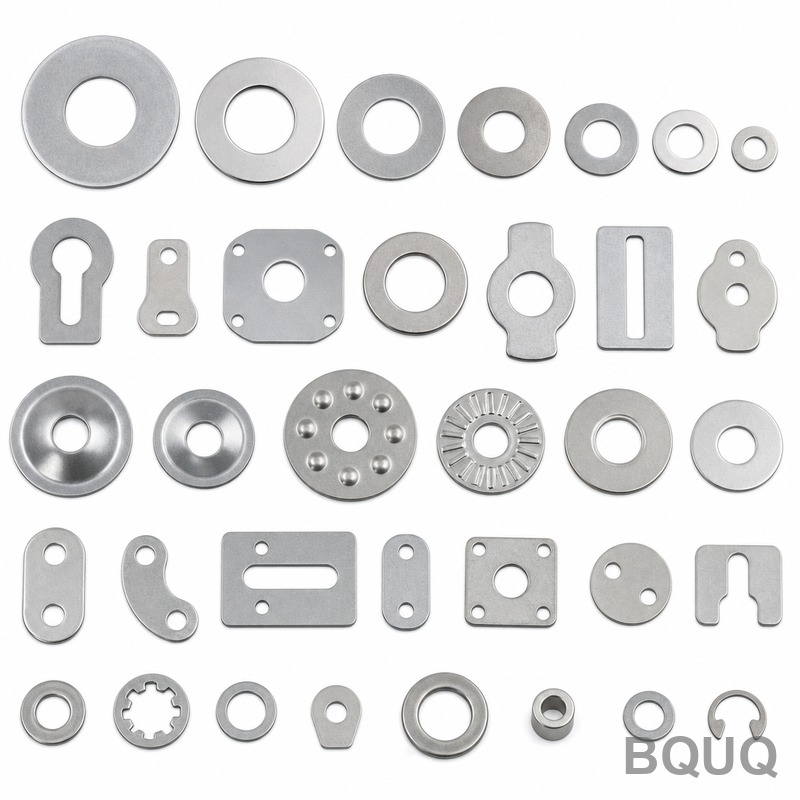
A 3D model alone is insufficient for a binding quote. You must provide a 2D drawing that defines critical dimensions with Geometric Dimensioning and Tolerancing (GD&T). This is non-negotiable for precision stamping. Standard stamping tolerances are typically ±0.1 mm for hole-to-hole spacing, but with precision tooling, we can hold ±0.02 mm on critical features.
Your drawing must specify: - Datum references for measuring critical surfaces - Flatness tolerance (critical for mating surfaces, usually 0.05 mm per 100 mm length) - Burr direction and maximum allowable burr height (typically 0.05 mm for thin gauge, 0.13 mm for thicker stock) - Surface finish requirements, such as Ra 1.6 µm for sealing surfaces versus a standard mill finish of Ra 3.2 µm
If you do not specify tolerances, the supplier will default to DIN 6935 or similar standards, which may be too loose for your assembly. This often leads to rework costs that are triple the initial stamping price. At BQUQ, we routinely quote progressive die stamping at ±0.02 mm on hole centers, but this requires the drawing to identify those holes as critical features.
Annual Volume, Part Complexity, and Tooling Budget
The price per part is inversely proportional to quantity, but not linearly. You must provide the estimated annual volume and the expected total run life of the tool. This determines whether a progressive die, a compound die, or a transfer die is the most economical choice.
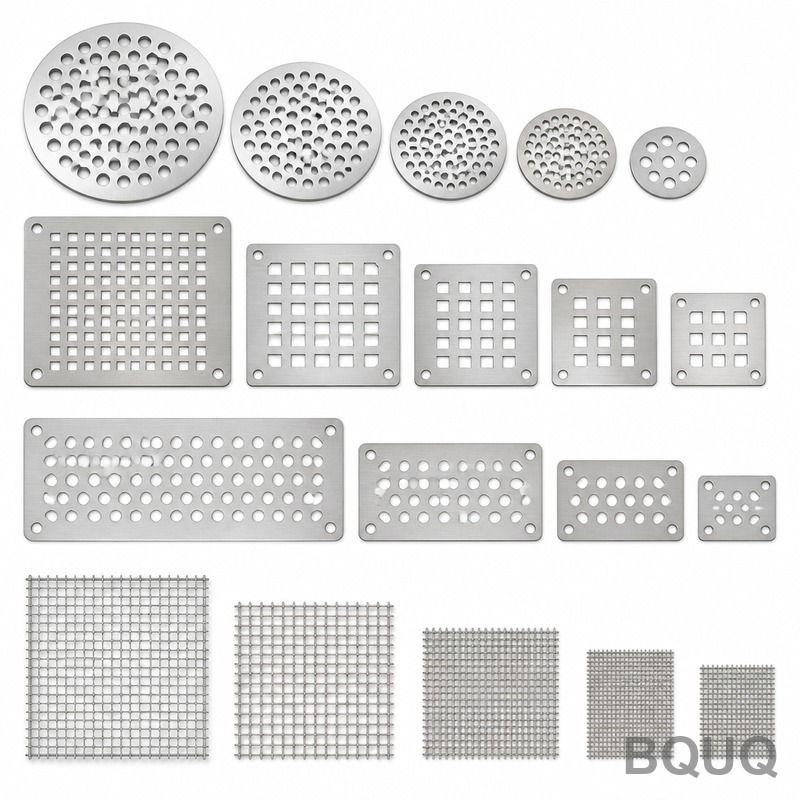
A simple flat washer at 1 million parts per year might cost USD 0.01 per part, but a complex bracket with 10 bends and 4 tapped holes at 50,000 parts per year could cost USD 2.50 per part. The tooling cost is amortized over the total quantity. For example, a progressive die for a small heat sink clip might cost USD 8,000 and last for 1 million strokes. If your annual volume is only 20,000, the tooling cost per part is USD 0.40, which is often higher than the stamping cost itself. In this case, a CNC machining alternative or a simpler two-stage die might be more viable. Always state your tooling budget expectation, as this influences the die material (e.g., D2 tool steel vs. M2 high-speed steel) and the level of automation.
Secondary Operations and Finishing Requirements
Stamping is rarely the final step. You must list all secondary operations, as they often account for 30-50% of the total part cost. These include: - Tapping or thread forming (e.g., M3 x 0.5, depth 6 mm) - Heat treatment (e.g., case hardening to HRC 45-50 for spring steel) - Plating (zinc, nickel, or tin) - Powder coating or anodizing (e.g., Type II Class 2 black anodize) - Deburring and vibratory finishing
For example, a stamped spring made from 1075 steel requires austenitizing at 815°C and oil quenching, followed by tempering at 315°C to achieve the required hardness. This adds approximately USD 0.15 per part in processing costs. If you specify a RoHS-compliant trivalent zinc plating, add another USD 0.05 per part. Providing the exact specification (e.g., ASTM B633 SC1 for zinc plating) prevents ambiguity. If you omit these details, the supplier will quote for the stamping only, and you will face costly change orders later.
Data Table: Required Information vs. Impact on Quote Accuracy
| Information Required | Typical Specification Example | Impact if Missing | Cost Variance if Missing |
| Material Grade & Temper | SUS 301 1/2H, thickness 0.8 mm | Incorrect springback, tool breakage | ±15% |
| 2D Drawing with GD&T | Flatness 0.05 mm, position tol Ø0.1 mm | Rework, assembly failure | ±20% |
| Annual Volume & Tooling Budget | 100,000 pcs/year, USD 5,000 tooling | Wrong die type (progressive vs. single) | ±35% |
| Secondary Operations | Zinc plating, ASTM B633 SC1 | Unplanned plating line setup | ±25% |
| Surface Finish Requirement | Ra 1.6 µm on sealing face | Functional leakage | ±10% |
| Packaging & Delivery | Bulk pack, 5,000 pcs/carton, FOB Shenzhen | Freight cost miscalculation | ±5% |
FAQ-Style Tips for a Faster Quote
Question: Should I send a STEP file or a PDF drawing? Answer: Send both. The STEP file is used for die design simulation, but the PDF with dimensions is used for tolerance verification. A 3D model without a drawing is considered a preliminary inquiry, not a formal RFQ.
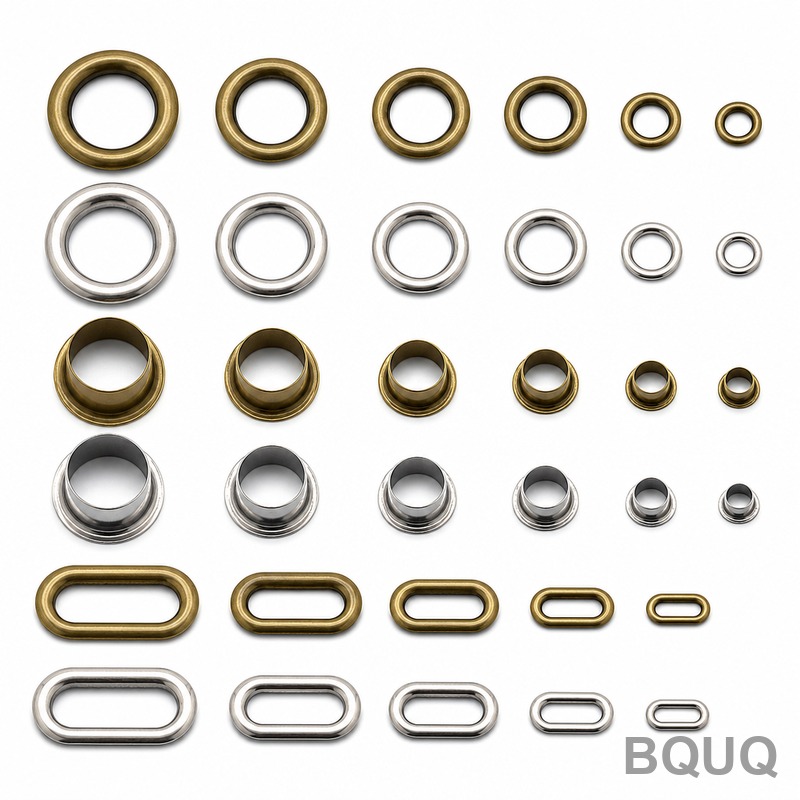
Question: How do I handle tolerances that are too tight for stamping? Answer: If you require a tolerance tighter than ±0.02 mm on a stamped feature, consider specifying a secondary machining operation (e.g., a precision ream after stamping). This is cheaper than trying to maintain a stamping tolerance that requires excessive die maintenance. For example, a stamped hole of Ø3.0 mm can be held at ±0.05 mm, but a reamed hole can achieve ±0.01 mm for an added cost of USD 0.02 per part.
Question: What is the minimum order quantity (MOQ) for stamping? Answer: MOQ is often tied to tooling amortization. At BQUQ, we accept MOQs as low as 5,000 pieces for simple parts, but the unit price will be higher. For complex progressive die parts, an MOQ of 50,000 pieces is common to justify the die cost. Always ask for a tiered pricing quote at 10k, 50k, and 100k units.
Question: Can I get a quote without a final material decision? Answer: Yes, but only for budgeting purposes. State "Material TBD, estimate for SPCC cold rolled steel" and the supplier can provide a baseline. However, final pricing will not be valid until the material is confirmed, as copper can cost 4x more than steel per kilogram.
Practical Recommendations for Engineers
First, consolidate your supplier requirements into a single PDF that includes a cover sheet with the part number, revision level, and material declaration. This prevents version control issues. Second, always specify the required surface roughness on functional surfaces. A stamped edge that is sheared will have a burnished zone; if you need a fully smooth edge, you must specify a shaving operation, which adds a die station and cost.
Third, be realistic about lead times. A simple prototype using a soft tool (aluminum die) can be delivered in 3-5 days, but a production progressive die takes 3-4 weeks to build and try out. For high-volume parts, request a "tooling tryout" report with first article inspection (FAI) data, including dimensional measurements from a CMM. This ensures the die produces parts within your specified tolerance before you commit to full production. Finally, review the part design for stamping feasibility: avoid tight radii smaller than 0.5T, maintain a minimum distance of 2T between holes, and design features that allow the strip to advance without excessive twisting.
Conclusion
An accurate metal stamping quote depends entirely on the clarity and completeness of your engineering data. By providing a 2D drawing with GD&T, exact material grade and temper, annual quantity, tooling budget, and all secondary operations, you enable the supplier to quote precisely and competitively. Incomplete information leads to inflated pricing to cover risk or, worse, production delays. The data table above serves as a checklist for your next RFQ. At BQUQ, our engineers review every inquiry for manufacturability and cost reduction opportunities before quoting.
For a precise quotation on your next metal stamping project, send your complete drawings and specifications. We provide a rapid 12-hour quoting service with detailed feedback on design for manufacturability. Contact us via Email: sc@bquq.com, WhatsApp: +86 13713157787, or visit our website at www.bquq.com.
Related Articles
- Precision Metal Stamping: Tolerances, Materials, and Design Rules
- Metal Parts Finishing Guide After Stamping | Complete
- Multi-Physics Coupled Failure Mechanisms and Systematic Prevention Strategies in Stamping Processes
Frequently Asked Questions
What information do I need to provide to get an accurate metal stamping quote?
You need a complete engineering package: a detailed 2D drawing with GD&T, a 3D model (STEP or IGES), material specification with grade and temper, annual quantity and delivery schedule, surface finish requirements, and any secondary operations like tapping or heat treatment. Missing data can cause quotes to be 20-30% off the true cost.
Why is specifying the exact material grade and temper so important for stamping?
Specifying only 'stainless steel' or 'aluminum' forces suppliers to guess, affecting springback, tool wear, and bend radius. For example, 304 stainless versus 301 full-hard changes press tonnage by up to 15% and alters the minimum bend radius from 1.0T to 2.0T. Aluminum 5052-H32 is formable, but 6061-T6 is brittle and prone to cracking under severe bending.
What tolerances can I expect on a precision metal stamping part?
Standard stamping tolerances are typically ±0.1 mm for hole-to-hole spacing, but with precision tooling, we can hold ±0.02 mm on critical features. Flatness tolerance is usually 0.05 mm per 100 mm length, and maximum allowable burr height is typically 0.05 mm for thin gauge or 0.13 mm for thicker stock.
How quickly will I receive a quote if I provide complete information?
Engineers who provide structured data receive their quotes in under 12 hours. Those with incomplete packages face 2-3 day delays for clarification. At BQUQ, we process over 400 quote requests monthly and have over 20 years of experience in CNC machining and metal stamping.