How to Order Custom Springs: What Specifications You Must Provide?
To order custom springs correctly, you must provide at minimum these seven specifications: wire diameter, outer diameter, free length, total coils, material grade, load at a defined height, and end finish type. Missing any one of these critical parameters can shift your spring's actual spring rate by over 10% and lead to premature fatigue failure. This article details the exact data points, tolerances, and engineering context required to ensure your custom spring meets performance and lifespan targets on the first production run.
What Are the Seven Critical Dimensions Required for a Custom Spring Order?
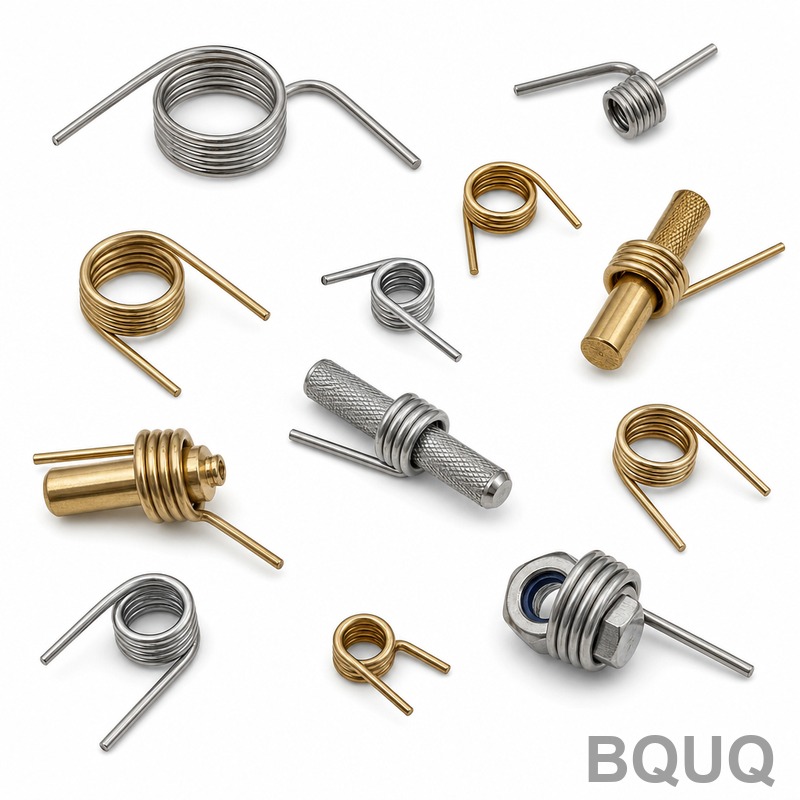
For any compression, extension, or torsion spring, the foundation of your order is a complete set of dimensional data. You must specify wire diameter (d), outer diameter (OD) or mean diameter (D), and free length (L). For compression springs, also include total coils (Nt) and solid height (Hs). For extension springs, specify body length inside hooks and initial tension. For torsion springs, provide leg length and leg angle at load. Additionally, define the direction of helix (right-hand is standard) and the exact position of ends relative to each other. Without these, a spring manufacturer cannot calculate the spring rate (k), which is expressed in N/mm or lbf/in. A typical compression spring with a 2.0 mm wire diameter and 20 mm OD will have a rate tolerance of +/- 5% per ISO 10243 standards.
How Do You Define the Load Requirements and Spring Rate?
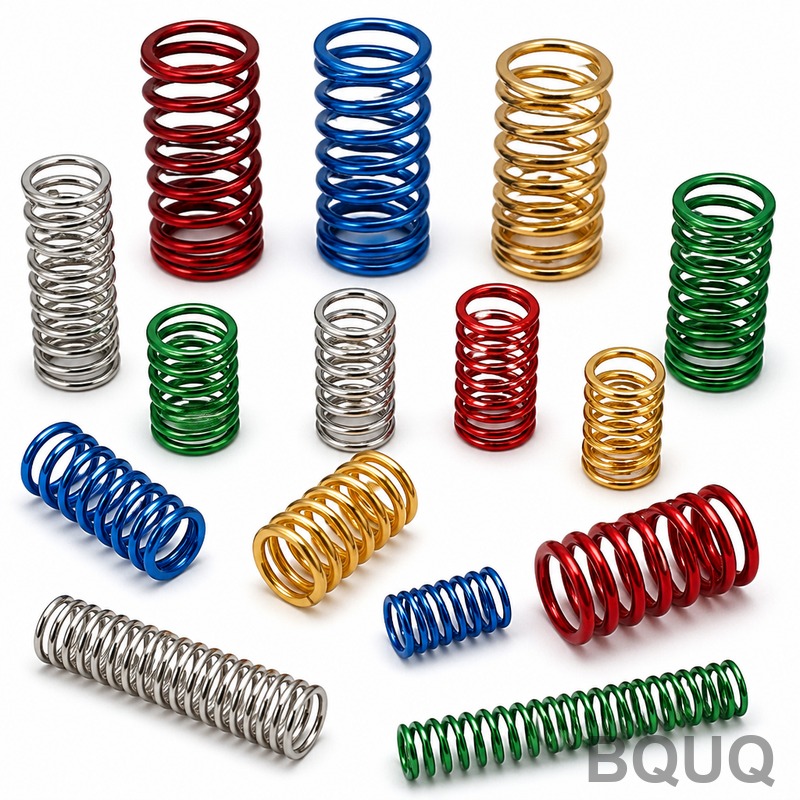
You must specify the load (F1, F2) at two specific working heights (L1, L2), or alternatively, provide the spring rate (k) and one load point. The spring rate is calculated as k = (F2 - F1) / (L1 - L2). For a precision die spring, a load tolerance of +/- 5% is standard, but for medical device springs, you may require +/- 2%, which increases cost by approximately 15-20%. You must also define the maximum deflection or the solid height condition. Operating a spring to 80% of its maximum deflection is safe for standard chrome silicon steel (ASTM A401), while 90% deflection is acceptable for high-tensile music wire (ASTM A228). If you fail to specify a maximum working load, the factory will assume a 25% safety margin, which often results in an oversized spring that does not fit your assembly.
Which Material Grades Are Best for Your Application Environment?
Selecting the correct material is a mandatory specification. For temperatures up to 120°C, use music wire (ASTM A228) or hard-drawn steel (ASTM A227). For temperatures up to 250°C, use oil-tempered chrome silicon (ASTM A401) or chrome vanadium (ASTM A231). For corrosive environments, specify 302 stainless steel (ASTM A313) for general use, 316 stainless for saltwater, or 17-7 PH for high strength with corrosion resistance. For high-temperature applications above 300°C, you need Inconel X-750 or Nimonic 90. The material choice directly affects maximum operating stress; music wire can handle 45% of tensile strength in static applications, while chrome silicon can handle 50%. If you specify a material without a standard, the factory will default to a commercial grade, which may have a tensile strength variation of +/- 10%.
How Much Does Custom Spring Tooling and Setup Cost?
Tooling costs for custom springs range from zero for standard sizes to $800 for a basic compression spring former, and up to $5,000 for complex torsion springs with custom mandrels. For a standard compression spring with wire diameter under 5 mm, no tooling is required if the spring can be made on a CNC coiler with digital setup. The setup charge is typically $150 to $300 per run. For a custom torsion spring with a specific leg form, a custom tool costs $1,200 to $3,500 and has a lead time of 5 to 7 days. Spring prices per piece vary significantly: a 2 mm wire, 20 mm OD, 50 mm length compression spring in music wire costs $0.15 to $0.40 per piece for quantities of 10,000. For quantities under 100, the unit price may exceed $5.00 due to setup amortization.
What Tolerances Should You Specify for Your Spring Dimensions?
Tolerance specifications depend on the criticality of the spring in your assembly. Standard commercial tolerances per ASTM A125 or ISO 10243 are as follows: free length +/- 1.0% or +/- 0.5 mm (whichever is greater), outer diameter +/- 1.0% or +/- 0.3 mm, and spring rate +/- 5%. For precision applications, you can request half these tolerances, which increases manufacturing cost by 20-30%. The table below shows typical tolerance grades for custom springs:
| Parameter | Commercial Grade | Precision Grade | High Precision Grade |
| Free Length | +/- 1.0% or 0.5 mm | +/- 0.5% or 0.25 mm | +/- 0.25% or 0.10 mm |
| Outer Diameter | +/- 1.0% or 0.3 mm | +/- 0.5% or 0.15 mm | +/- 0.25% or 0.08 mm |
| Spring Rate | +/- 5.0% | +/- 3.0% | +/- 1.5% |
| Total Coils | +/- 1/4 coil | +/- 1/8 coil | +/- 1/16 coil |
| Solid Height | +/- 2.0% | +/- 1.0% | +/- 0.5% |
How Do You Specify End Finishes and Surface Treatment?
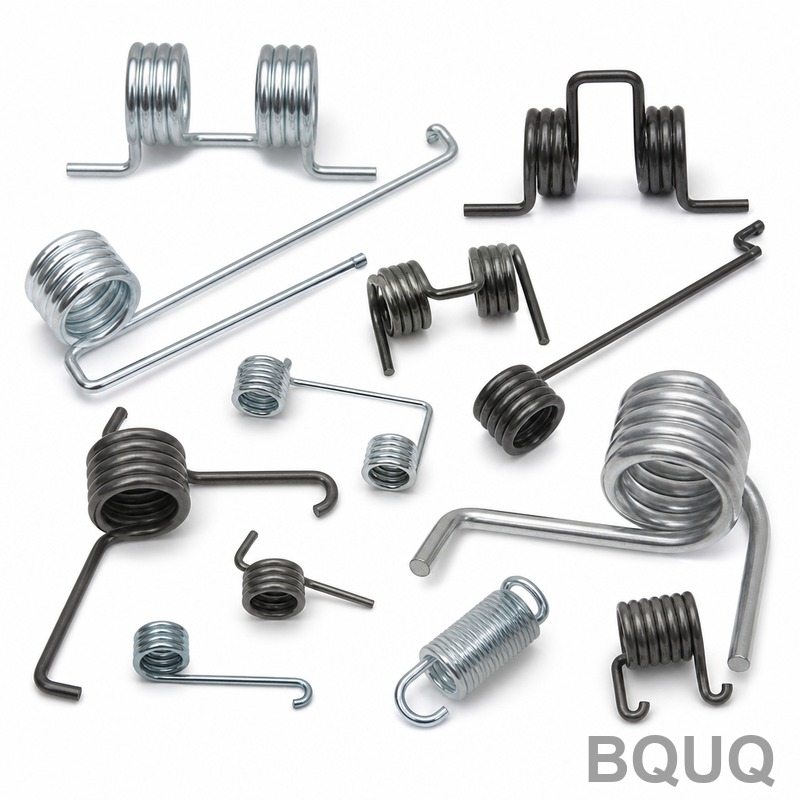
End finish is a mandatory specification because it affects the load-bearing capability and free standing ability of the spring. For compression springs, you must choose between closed ends, closed and ground ends, or open ends. Closed and ground ends are required for springs that must stand square; this ensures 80-90% of the end circumference contacts the mating surface. Grinding costs $0.02 to $0.05 per end for a 10 mm OD spring. For surface treatment, specify zinc plating (clear or yellow) for corrosion resistance up to 96 hours salt spray, or powder coating for thicker protection. For springs that will experience cyclic loading, specify shot peening, which increases fatigue life by 20-50%. The shot peening process adds $0.01 to $0.03 per piece for small springs. If you do not specify a finish, carbon steel springs will rust within 24 hours in a humid environment, leading to immediate failure.
Why Is It Critical to Provide the Operating Environment and Cycle Life?
Your spring specification is incomplete without stating the operating environment and required fatigue life. You must state the maximum operating temperature, the presence of moisture or chemicals, and the required number of cycles. For a spring requiring 1,000,000 cycles, the design stress must be below 30% of the material's tensile strength for music wire. For 10,000,000 cycles, the stress must be below 25%. If you specify a spring to operate at 80°C in a humid environment, the factory will recommend chrome silicon with a black oxide coating or zinc plating. Additionally, you must provide the operating frequency if the spring is in a dynamic system. For high-frequency operation above 10 Hz, the spring weight and resonant frequency must be calculated to avoid surging. A spring that surges can fail within minutes, whereas a properly designed one will last for years.
What Information Is Needed for a Precise Quotation and Fast Delivery?
To receive an accurate quotation within 12 hours, provide a complete specification sheet with the following data points: application type (compression, extension, torsion), wire diameter, outer or inner diameter, free length, total coils, material grade, end type, surface finish, required loads at specific heights, and annual quantity. Also, include a drawing in PDF or STEP format if available. BQUQ's engineering team will verify your spring design for stress, buckling, and resonance. For standard springs without special tooling, prototype samples are available in 3-5 days and production lead time is 10-15 days after sample approval. For urgent orders, express production with a 48-hour turnaround is available for an additional 20% surcharge on the piece price, subject to material availability.
What Are the Most Common Mistakes When Ordering Custom Springs?
The most common mistake is providing only the outer diameter and free length, omitting the wire diameter and total coils. This forces the factory to guess the spring rate, which often leads to a spring that is too weak or too strong. The second mistake is specifying a load tolerance that is too tight, such as +/- 1%, which increases cost by 40% but is rarely necessary for most applications. The third mistake is failing to specify the direction of the helix when the spring is used in a rotating assembly. A spring wound in the wrong direction can unwind or bind, causing immediate mechanical failure. The fourth mistake is not specifying the maximum compressed length (solid height), which can lead to coil binding and premature breakage.
What Are the Standard Lead Times for Custom Spring Production?
For a standard compression spring with wire diameter up to 5 mm, sample lead time is 3 to 5 working days, including tooling setup and material procurement. Mass production lead time is 10 to 15 working days after sample approval for quantities under 100,000 pieces. For torsion springs with complex leg forms, add 3 to 5 days for tooling fabrication. For springs requiring non-standard materials like Inconel or titanium, add 10 to 15 days for material procurement. BQUQ offers a 12-hour quotation service for any custom spring specification. For urgent requirements, the factory can expedite samples within 48 hours if the wire material is in stock, which covers over 60% of standard spring steel grades.
Can You Order Springs Without a Drawing?
Yes, you can order springs without a formal drawing if you provide all the critical dimensions and loads in a text format or email. BQUQ's engineers will generate a manufacturing drawing for your approval before production. However, for complex springs with multiple loads, variable pitch, or special end hooks, a drawing is highly recommended to avoid miscommunication. In the absence of a drawing, the factory will rely on standard definitions for end types and tolerances, which may not match your exact requirement. It is always safer to provide a sketch with critical dimensions even if it is not to scale. For a spring with a free length of 50 mm and a required load of 100 N at 40 mm, the factory can accurately produce the spring from this data alone.
Conclusion
Ordering custom springs accurately requires providing seven core specifications: wire diameter, outer diameter, free length, total coils, material, load requirements, and end finish. By including tolerances, operating environment, and cycle life, you ensure the spring will function correctly and last as long as your product requires. BQUQ, with 20 years of experience in CNC machining, metal stamping, springs, and heat sinks, can manufacture custom springs from 0.1 mm to 20 mm wire diameter with precision tolerances down to +/- 0.01 mm. Send your complete specifications to our engineering team for a free design review and quotation within 12 hours. For immediate assistance, contact us at Email: sc@bquq.com, WhatsApp: +86 13713157787, or visit www.bquq.com.