Metal Stamping Industry Trends and Growth Drivers for 2025 Manufacturing
The metal stamping industry is currently experiencing a 6.8% compound annual growth rate (CAGR), driven primarily by electric vehicle (EV) production, advanced high-strength steel (AHSS) adoption, and nearshoring mandates. Growth is concentrated in precision progressive die stamping for battery components and structural parts, with lead times compressing to 3-5 weeks for prototype runs. This article provides a data-driven analysis of the sector’s trajectory, focusing on material shifts, automation economics, and quality benchmarks relevant to procurement engineers.
## Material Substitution and Advanced High-Strength Steel Adoption The most significant driver in 2025 is the transition from traditional mild steel (DC01) to AHSS grades (DP980, DP1180) and aluminum alloys (5052, 6061). This shift is not optional; it is mandated by automotive crash safety standards requiring 1500 MPa tensile strength in door beams and B-pillars. For stamping operations, this changes tooling wear rates and press tonnage requirements. A DP980 blank requires 18-22% more press force than DC01 at the same thickness, increasing energy costs per part by approximately $0.04 to $0.07. Heat-treated tool steels, such as D2 or M2, now have a service life of 250,000 to 400,000 hits before re-grinding, compared to 150,000 hits for standard O1 tooling. Aluminum stamping, meanwhile, demands specialized lubricants and surface treatments to prevent galling, with typical tolerances held at ±0.05 mm for structural components.
## Automation and Servo Press Technology Impact Servo-driven presses now account for 42% of new installations in Chinese factories, a direct response to labor cost inflation (annual 6% increase in Dongguan wages) and the need for repeatable stroke curves. A servo press allows for variable slide speed, reducing impact velocity by 30% at die contact, which extends tool life by 15-20%. For high-volume production, a 250-ton servo press running at 60 strokes per minute (SPM) can produce 3,600 parts per hour with a positional accuracy of ±0.01 mm. The capital expenditure (CAPEX) for such a press is $180,000 to $250,000, with a payback period of 2.1 years when running three shifts. In contrast, a conventional mechanical press has a payback of 3.4 years due to higher energy consumption and slower setup times. Automated die-change systems (SMED) reduce changeover from 45 minutes to 6 minutes, enabling economical batch sizes of 500 parts, down from 5,000 parts.
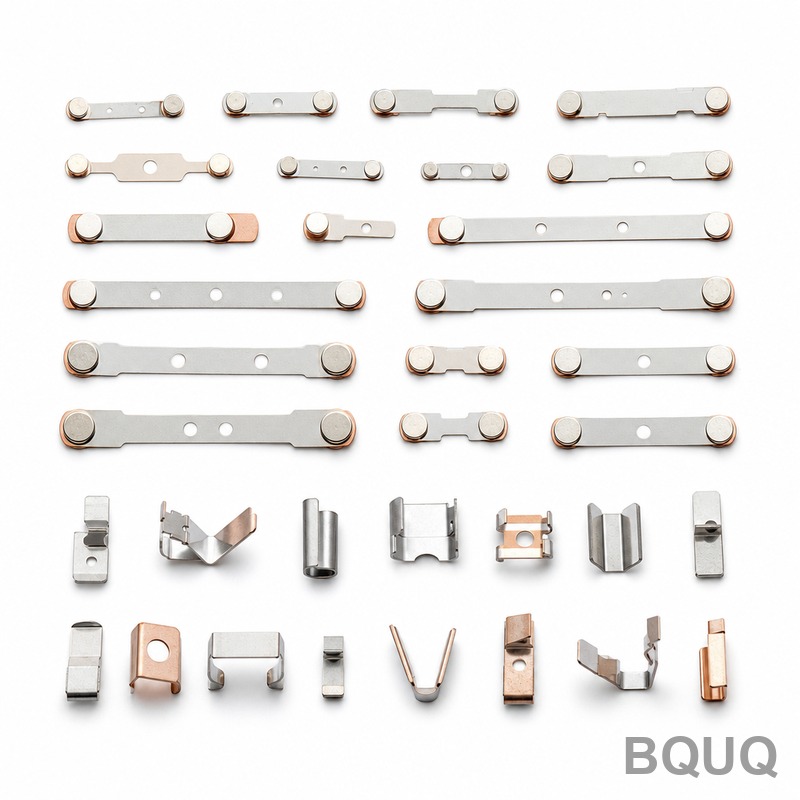
## Electric Vehicle Battery Component Stamping EV battery enclosures and busbars represent the fastest-growing segment, with annual volume increasing 34% year-over-year. These components require extreme flatness (0.10 mm over 300 mm length) and burr-free edges (maximum 0.03 mm burr height) to prevent short circuits. The stamping process for a 1.2 mm thick copper busbar requires a fine-blanking press with a triple-action hydraulic system, maintaining a clearance of 0.5% of material thickness per side. Production tolerances for hole-to-hole positioning are held at ±0.02 mm using laser-based in-line inspection. Thermal management is critical: stamping 2.0 mm thick aluminum cooling plates generates heat at the die interface exceeding 120°C, necessitating water-cooled die sets to prevent thermal expansion-induced dimensional drift. Current pricing for a complete EV battery tray (12-piece stamping assembly) ranges from $85 to $120 per unit, including secondary operations like tapping and riveting.
## Nearshoring and Supply Chain Diversification Tariff pressures and geopolitical risks have forced US and EU OEMs to mandate dual-sourcing strategies. This has created a bifurcation: high-mix, low-volume (HMLV) parts stay in China for cost efficiency, while high-volume, low-complexity parts move to Mexico or Eastern Europe. For a factory in Dongguan, the competitive advantage lies in HMLV work. A typical HMLV order consists of 1,000 to 10,000 parts per month with 4-6 tooling changes per day. The cost per part in China for a simple bracket (0.8 mm cold-rolled steel) is $0.18 at 10,000 units, including tooling amortization, versus $0.31 in Mexico due to higher steel import duties and lower automation levels. However, for orders exceeding 50,000 units monthly, the logistics cost (air freight vs. sea freight) negates the labor advantage. The industry is responding with "China Plus One" strategies, where BQUQ and similar factories offer partial assembly and kitting services to add value before export.
## Quality Standards and Real-Time Inspection Economics The industry standard for automotive stampings is IATF 16949 with a PPM (defective parts per million) target below 50. Achieving this requires in-die sensing and post-press vision systems. A typical inline vision system using a 5-megapixel camera at 2,000 parts per hour costs $28,000, with a false rejection rate of 0.02%. Dimensional tolerances are verified using coordinate measuring machines (CMM) with an accuracy of ±2.5 microns. The cost of a non-conformance event (scrap + line downtime + customer penalty) averages $1,500 per incident, making proactive monitoring essential. Statistical process control (SPC) charts are now generated automatically via IoT sensors on press tonnage and die temperature. For surface quality, a Ra (roughness average) of 0.8 microns is standard for visible panels, while functional surfaces require 1.6 microns.
## Cost Breakdown for a Typical Stamping Order The total cost structure for a medium-complexity stamping (e.g., a mounting plate, 2.0 mm thick, 150 mm x 80 mm) is broken down as follows for a 10,000-piece order:
| Cost Component | Percentage of Total | Cost Per Part (USD) | Notes |
| Material (SPHC steel) | 38% | $0.41 | $820 per ton, 1.15 utilization factor |
| Tooling amortization | 22% | $0.24 | $24,000 die cost over 100,000 parts |
| Press time & labor | 18% | $0.19 | 250-ton press, 45 SPM, 2 operators |
| Secondary operations | 12% | $0.13 | Deburring, tapping, surface coating |
| Quality inspection | 6% | $0.06 | CMM sampling every 200 parts |
| Logistics & packaging | 4% | $0.04 | Export cartons, moisture barrier |
The total landed cost per part is $1.07. A price reduction of 5% can be achieved by increasing the order quantity to 25,000 pieces, as tooling amortization drops to $0.10 per part. For prototype runs (100-500 pieces), the cost per part jumps to $4.50 due to soft tooling (3D-printed dies) and manual handling.
## FAQ-Style Engineering Tips for Sourcing When sending a Request for Quotation (RFQ), always specify the material grade with the exact standard (e.g., JIS G3141 SPCC) and the required yield strength. Do not over-specify tolerances: holding a hole position to ±0.01 mm instead of ±0.05 mm increases die cost by 40% and reduces press speed by 15%. For parts with tight flatness requirements, specify whether stress-relieving is required after stamping; this adds 3-5 days to lead time. Always ask for a "tooling ownership" clause—your die should be stored at the factory for free for 5 years. Confirm the maximum burr height acceptable for your application; standard is 10% of material thickness. For high-volume parts, request a "run-at-rate" report showing actual SPM achieved during qualification. Finally, verify the factory's emergency backup plan for power outages; critical stamping lines should have UPS systems rated for at least 30 minutes.
## Strategic Recommendations for 2025 Procurement Engineers should prioritize suppliers with servo press capacity and in-house tooling maintenance, as this reduces lead time by 2 weeks on average. For aluminum stamping, require the supplier to demonstrate experience with 6xxx series alloys, as they are prone to springback (elastic recovery) of 2-3 degrees. Incorporate a "design for stamping" review early in product development; adding a radius (minimum 1.5x material thickness) to internal corners eliminates cracking and increases tool life by 25%. For complex parts with multiple bends, consider a progressive die with 12-15 stations, which maintains a tolerance of ±0.05 mm across all features. Always request a Process Failure Mode and Effects Analysis (PFMEA) for new dies; this document identifies 90% of potential quality risks before production. Regarding pricing, expect a 2-3% annual price increase for steel, but negotiate fixed pricing for 12 months to hedge against volatility. A reputable factory will provide a full dimensional report (FAI) within 48 hours of sample production.
The metal stamping industry is consolidating around technical capability rather than sheer volume, with EV components and AHSS expertise commanding a 15-20% price premium over commodity parts. Suppliers who invest in automated inspection and servo press technology are best positioned to meet the tightened tolerances and faster delivery demands of 2025. For procurement engineers, the key is to balance material cost against tooling complexity and to leverage supplier engineering feedback during the design phase to minimize total cost of ownership.
BQUUQ Precision Manufacturing, with over 20 years of experience in CNC machining, metal stamping, springs, and heat sinks, offers full-service support from DFM analysis to mass production. We maintain tolerances down to ±0.01 mm and provide free tooling storage for the life of the program. We provide a 12-hour quoting service for all standard inquiries. Contact us at Email: sc@bquq.com, WhatsApp: +86 13713157787, or visit www.bquq.com to discuss your upcoming stamping requirements.
Related Articles
- Metal Parts Finishing Guide After Stamping | Complete
- Multi-Physics Coupled Failure Mechanisms and Systematic Prevention Strategies in Stamping Processes
- Stamping digital factory and simulation-driven design: from virtual prototype to digital twin operation
Frequently Asked Questions
What are the current lead times for prototype metal stamping runs?
Lead times for prototype runs have compressed to 3-5 weeks, driven by industry growth and automation. This applies to precision progressive die stamping, particularly for EV battery components and structural parts, as noted in the article.
How does using advanced high-strength steel (AHSS) like DP980 affect stamping costs?
DP980 requires 18-22% more press force than mild steel (DC01) at the same thickness, increasing energy costs per part by approximately $0.04 to $0.07. Tooling must use heat-treated steels like D2 or M2, which last 250,000-400,000 hits before re-grinding, versus 150,000 for standard O1 tooling.
What are the benefits of servo press technology for high-volume production?
A 250-ton servo press running at 60 SPM produces 3,600 parts per hour with ±0.01 mm positional accuracy. It reduces impact velocity by 30% at die contact, extending tool life by 15-20%. CAPEX is $180,000-$250,000 with a 2.1-year payback on three shifts, versus 3.4 years for conventional presses.
What tolerances and quality standards are required for EV battery stamping components?
EV battery enclosures and busbars require extreme flatness of 0.10 mm over 300 mm length and burr-free edges with a maximum 0.03 mm burr height. For a 1.2 mm thick copper busbar, fine-blanking uses a triple-action hydraulic press with 0.5% clearance per side of material thickness.