Metal Stamping vs CNC Machining: How to Choose the Right Process
The Direct Answer
For high-volume production runs exceeding 5,000 units, metal stamping offers a 60-80% lower per-piece cost, while CNC machining is the superior choice for low-volume prototypes, complex geometries, and tight tolerances below ±0.05 mm. The decision hinges on your annual quantity, required tolerances, material thickness, and part complexity. Stamping excels at producing identical parts rapidly (up to 1,200 strokes per minute), whereas CNC machining provides unmatched flexibility with setup times measured in hours, not weeks.
Material Selection and Thickness Constraints
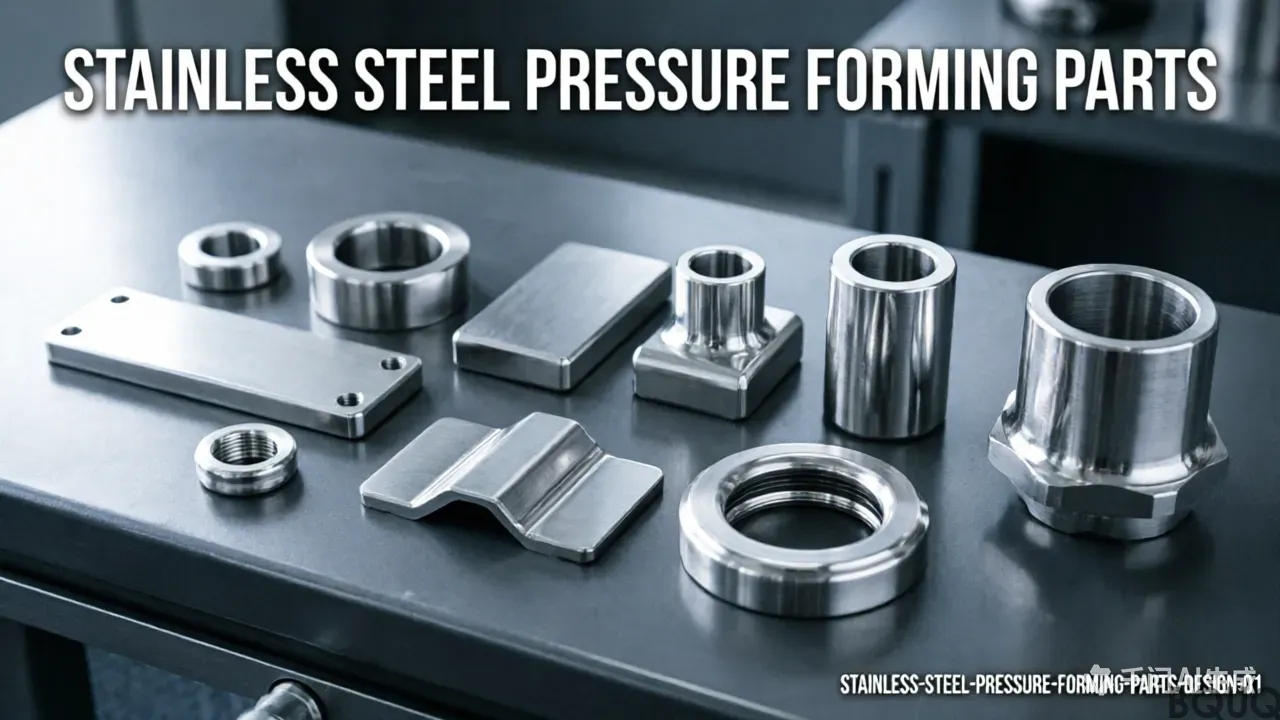
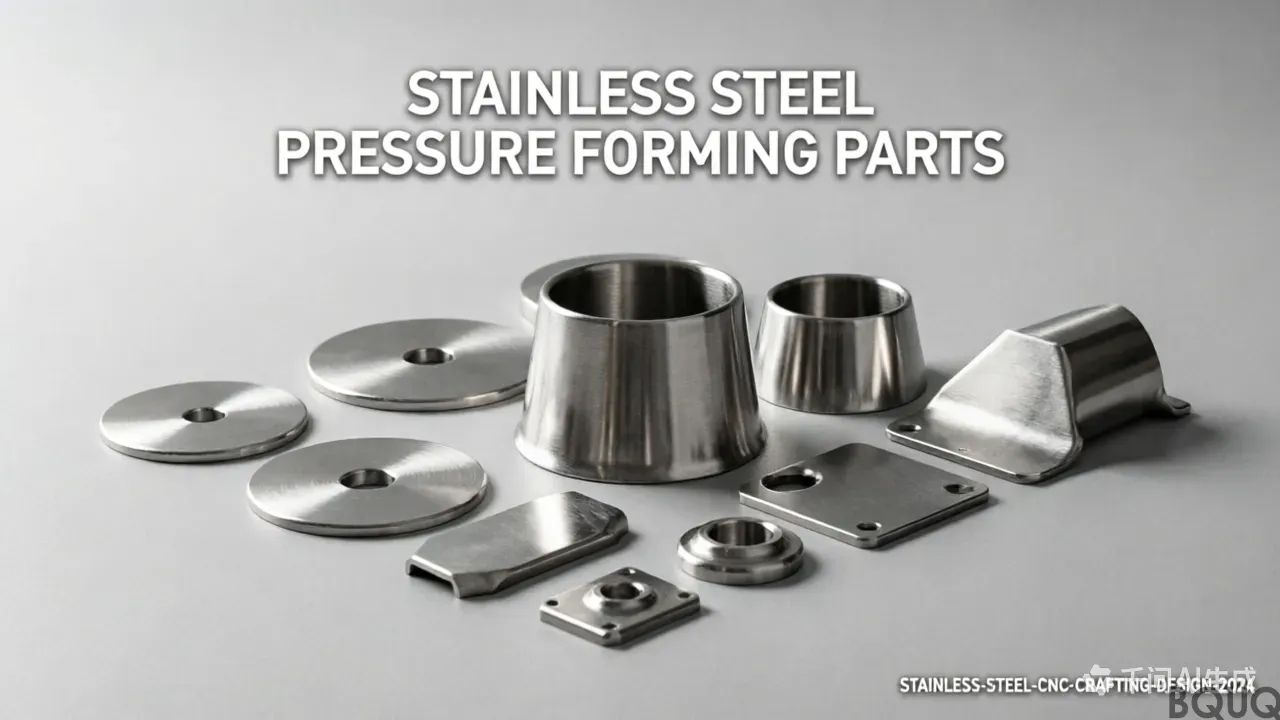
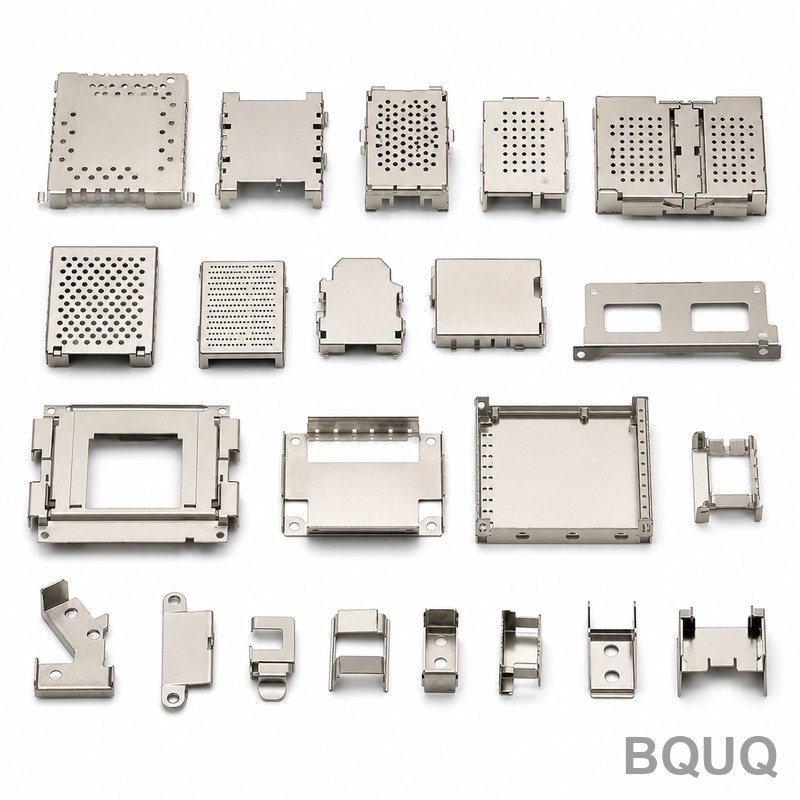
Material choice directly determines process viability. CNC machining handles virtually any engineering material, including hardened steels up to 62 HRC, titanium alloys (Ti-6Al-4V), and aluminum 7075-T6. Metal stamping works best with ductile materials that can withstand cold working without cracking: low-carbon steels (SPCC, DC01), aluminum 5052-H32, brass, and copper.
Material thickness presents a hard boundary. Progressive die stamping typically processes sheet metal from 0.1 mm to 6.0 mm. Beyond 6.0 mm, you require heavy stamping presses (400 tons or more) and the tooling costs escalate by 35-50%. CNC machining has no practical thickness limit; we routinely machine blocks up to 500 mm x 500 mm x 300 mm. For material utilization, stamping produces near-zero scrap (5-8% typical), while CNC machining of a solid billet can generate 40-70% scrap, particularly for complex hollow parts.
Tolerance Capabilities and Surface Finish
Precision requirements often eliminate one process immediately. Progressive die stamping holds tolerances of ±0.05 mm to ±0.13 mm for critical dimensions, dependent on material springback and die wear. CNC machining achieves ±0.01 mm to ±0.025 mm consistently, and our 5-axis centers hold ±0.005 mm on features under 50 mm.
Surface finish also diverges sharply. Stamped edges show a characteristic burnish zone (about 1/3 of material thickness) and a fracture zone; the resultant surface roughness ranges from Ra 1.6 to 6.3 µm. CNC milling produces Ra 0.8 µm standard, and we can achieve Ra 0.2 µm with fine finishing passes. If your design requires a mirror finish or a precisely controlled edge radius, CNC machining is the only viable option.
| Process Parameter | Metal Stamping (Progressive Die) | CNC Machining (3-Axis/5-Axis) |
| Annual Volume (economic) | 10,000 – 5,000,000+ | 1 – 10,000 |
| Achievable Tolerance | ±0.05 mm | ±0.01 mm |
| Typical Surface Finish (Ra) | 1.6 – 6.3 µm | 0.2 – 0.8 µm |
| Material Thickness Range | 0.1 – 6.0 mm | No limit (billet size) |
| Tooling/Setup Cost | $3,000 – $50,000 | $50 – $500 |
| Per-Piece Cost (100 pcs) | $8 – $15 | $25 – $60 |
| Per-Piece Cost (10,000 pcs) | $0.30 – $1.20 | $4 – $15 |
| Lead Time (first article) | 4 – 8 weeks | 3 – 7 days |
| Design Change Cost | High (die rework $1,000+) | Low (reprogramming $100) |
| Part Complexity Limit | Moderate (2D + simple forms) | High (3D freeform surfaces) |
| Secondary Operations | Required (deburring, tapping) | Minimal (often none) |
Cost Breakdown and Economic Break-Even Analysis
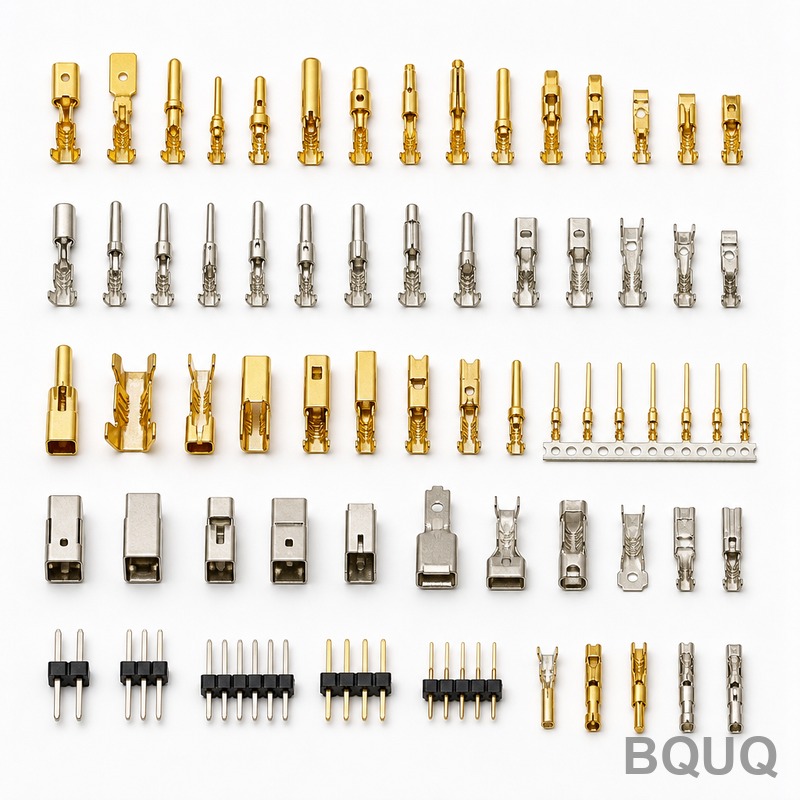
Tooling amortization drives the economic decision. A progressive die for a mid-complexity bracket costs between $8,000 and $25,000. A CNC machining fixture and program setup costs $150 to $400. The per-piece machining cost at a $85/hour shop rate is $4 to $12 for a typical 3-minute cycle time. Stamping per-piece cost at 2,000 strokes per hour, including press time and labor, runs $0.10 to $0.50.
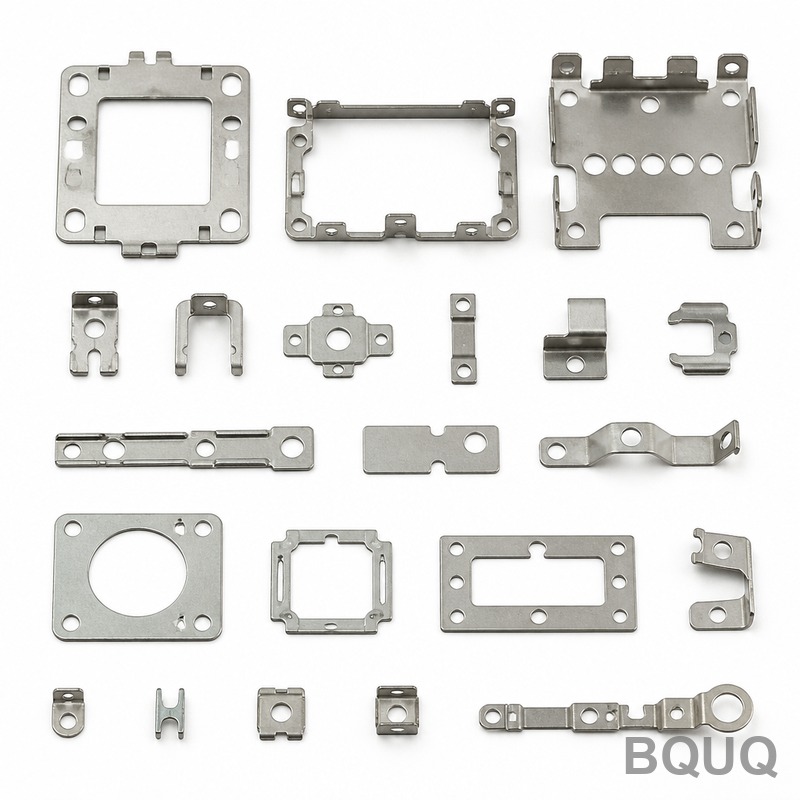
The break-even point occurs between 3,000 and 8,000 units depending on geometry. For example, a 50 mm x 30 mm aluminum bracket with two holes: CNC machining costs $5.20 per piece (2.5 minutes cycle). Stamping costs $0.85 per piece with a $12,000 die. Break-even = $12,000 / ($5.20 - $0.85) = 2,759 units. Below this quantity, CNC machining wins; above it, stamping pays for itself within the first production year.
Hidden costs matter. Stamping requires secondary deburring at $0.03-$0.08 per part and often tapping operations. CNC machining produces finished parts directly from the machine. For parts requiring multiple bending axes, stamping needs additional forming stations, adding 15-20% to tooling cost. For machining, complex 5-axis parts may require EDM for internal corners under 0.5 mm radius, adding $50-$200 per part.
Lead Times and Production Speed
Speed separates these processes at scale. A single stamping press cycle produces one complete part in 0.5 to 2 seconds. A 200-ton press running at 60 strokes per minute yields 3,600 parts per hour. CNC machining produces one part every 2 to 15 minutes depending on material removal volume. For a production order of 50,000 pieces, stamping completes in 14 hours of press time, while machining would require 2,000 hours.
However, the first article timeline favors machining. Our CNC department quotes and ships prototypes in 3-5 business days. Stamping requires designing and fabricating the die: CAD design (1 week), die machining (2-3 weeks), tryout and adjustment (1-2 weeks). Total stamping lead time is 4-8 weeks. If you are launching a new product and need market validation, starting with CNC machining for the pilot run and transitioning to stamping after product acceptance is the standard engineering strategy.
Design for Manufacturability (DFM) Recommendations
Follow these rules to select the optimal process and avoid costly revisions.
For metal stamping: - Maintain minimum bend radius of 1x material thickness for mild steel, 1.5x for aluminum - Avoid tight tolerances on hole-to-bend distances; keep them above 2x material thickness - Use hole diameters greater than 1.2x material thickness to prevent punch breakage - Design for consistent wall thickness; stamping cannot create variable thickness features - Specify burr direction on the drawing to control edge quality
For CNC machining: - Design internal corners with radius of at least 1.0 mm for standard end mills; use 0.5 mm for specialty tools at 30% higher cost - Deep pockets (depth > 4x diameter) require special tooling and increase cycle time by 50% - Avoid thin walls below 1.0 mm in aluminum; they deflect during machining causing vibration marks - Specify threads using standard tap sizes (M3, M4, M5) to avoid custom tooling - For 5-axis parts, minimize the number of setup orientations to reduce cost
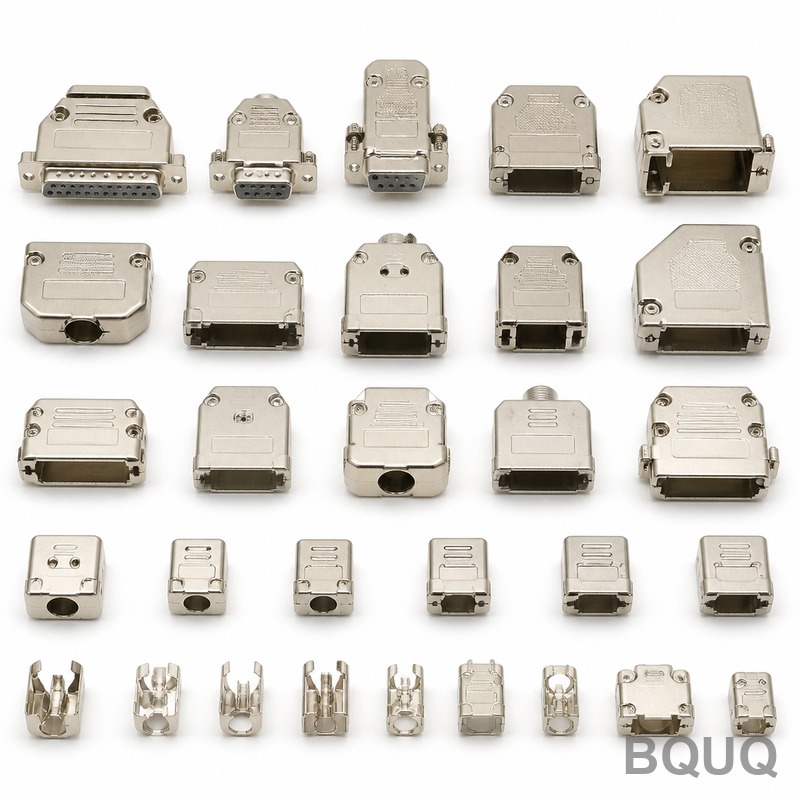
A hybrid approach often delivers the best result: CNC machine the critical mating surfaces after stamping. This combines stamping's low cost for bulk geometry with machining's precision for sealing faces or bearing seats. We produce many heat sink assemblies this way, stamping the fin array and machining the base plate to ±0.02 mm flatness for optimal thermal contact.
FAQ-Style Engineering Tips
What is the minimum quantity for metal stamping to be economical? For a simple flat blank, stamping becomes cheaper than machining above 2,000 units. For a complex 3D form with multiple bends, the break-even point rises to 6,000-8,000 units. Always calculate using your specific geometry and material.
Can stamped parts achieve the same strength as machined parts? Yes, and sometimes better. Stamping work-hardens the material, increasing yield strength by 10-20% in the bend areas. However, machined parts from billet have no residual stress and are preferred for fatigue-critical aerospace applications.
How do I handle a design that changes frequently? Stay with CNC machining. Die modifications cost $500-$3,000 per change and take 3-5 days. CNC changes require only a CAM reprogramming ($50-$150) and immediate execution. Only commit to stamping once your design is frozen and validated.
What about secondary operations like threads or rivets? Stamped parts almost always need secondary tapping or riveting, adding 5-10% to piece cost. CNC machining can tap threads in the same setup. If your part needs multiple threaded holes, CNC machining becomes more attractive even at higher volumes.
Conclusion and Next Steps
Choose metal stamping when your annual volume exceeds 5,000-10,000 units, material is under 6.0 mm thick, tolerances are ±0.05 mm or looser, and the design is stable. Choose CNC machining for prototyping, low volumes, tight tolerances, thick materials, complex 3D geometries, and frequent design iterations. For parts that require both high volume and precision, use a hybrid stamped-plus-machined approach. BQUQ operates both a 12-station progressive die shop and a 15-machine CNC department under one roof in Dongguan, allowing you to compare real quotes for both processes without switching vendors. We provide process recommendations backed by 20 years of manufacturing data, not guesswork.
| Send your 2D drawing or 3D model for a no-obligation process analysis and quotation within 12 hours. Email: sc@bquq.com | WhatsApp: +86 13713157787 | www.bquq.com. |