Metal Stamping vs CNC Machining: Which Process Is Cheaper for Your Part?
The direct answer is that metal stamping is cheaper than CNC machining for high-volume production runs (typically above 5,000 to 10,000 parts), while CNC machining is cheaper for low-volume production, prototyping, or parts with complex 3D geometries. At BQUQ, we have 20 years of experience in both processes, and the break-even point usually falls between 1,000 and 5,000 units depending on part size and material thickness. For a simple bracket, a stamped part might cost $0.15 per unit at 50,000 pieces, whereas the same CNC-machined part would cost roughly $4.50 per unit at that volume.
What Is the Fundamental Cost Difference Between Stamping and CNC Machining?
The core difference lies in how each process allocates costs. Metal stamping has a high initial tooling cost (dies) but a very low recurring per-part cost, making it ideal for mass production. CNC machining has virtually no tooling cost (only fixture design, typically $100 to $500) but a high per-part cost driven by machine time, typically billed at $60 to $100 per hour. For a simple flat part with holes, stamping tooling might cost $3,000 to $8,000, while the per-part cost drops to $0.10 to $0.50. In contrast, CNC machining of the same part takes 5 to 15 minutes, resulting in a per-part cost of $8 to $25 regardless of quantity.
How Does Part Quantity Determine the Cheaper Process?
The quantity threshold is the single most important factor. For quantities under 500 pieces, CNC machining is always cheaper because stamping tooling costs cannot be amortized. Between 500 and 5,000 pieces, the decision depends on part complexity and material thickness; simple parts favor stamping at the upper end of this range. Above 10,000 pieces, metal stamping is almost always the lower-cost option, often by a factor of 10 to 20. For example, a 2mm thick steel bracket: at 100 pieces, CNC costs $12 per part and stamping costs $35 per part (including tooling amortization); at 100,000 pieces, CNC remains at $12 per part while stamping drops to $0.18 per part.
What Tolerances Can Each Process Achieve and Does It Affect Price?
Tolerance requirements directly influence cost because tighter tolerances increase scrap rates and secondary operations. CNC machining routinely achieves tolerances of +/- 0.005 mm to +/- 0.025 mm (ISO 2768-fine), which often eliminates the need for secondary finishing. Metal stamping typically holds +/- 0.05 mm to +/- 0.13 mm for blanking and piercing, but precision stamping can reach +/- 0.013 mm with specialized dies. If your part requires tolerances tighter than +/- 0.05 mm on multiple features, CNC machining is often cheaper because precision stamping dies are extremely expensive (add 30% to 50% to tooling cost) and still may require secondary machining. For standard tolerances (+/- 0.1 mm or looser), stamping is more economical.
How Does Material Type and Thickness Influence Process Selection?
Material choice affects both processes differently. CNC machining can handle virtually any metal, including hardened steels (up to 60 HRC), titanium, and Inconel, though machining these raises costs by 20% to 40% due to slower speeds and tool wear. Metal stamping is limited to materials with good ductility, including low-carbon steel, stainless steel 304/316, aluminum 5052/6061, copper, and brass. Material thickness is critical: CNC machining can handle thick blocks (up to 200 mm) easily, while stamping is typically limited to 0.1 mm to 6.0 mm for steel. For a 10mm thick aluminum part, stamping would require progressive hot stamping (tooling cost above $20,000), making CNC machining the cheaper choice unless volume exceeds 200,000 pieces. For thin parts (under 2 mm), stamping is vastly cheaper and faster, producing up to 800 parts per minute versus 1 part every 10 minutes on a CNC mill.
Which Part Geometries Favor Stamping Over Machining or Vice Versa?
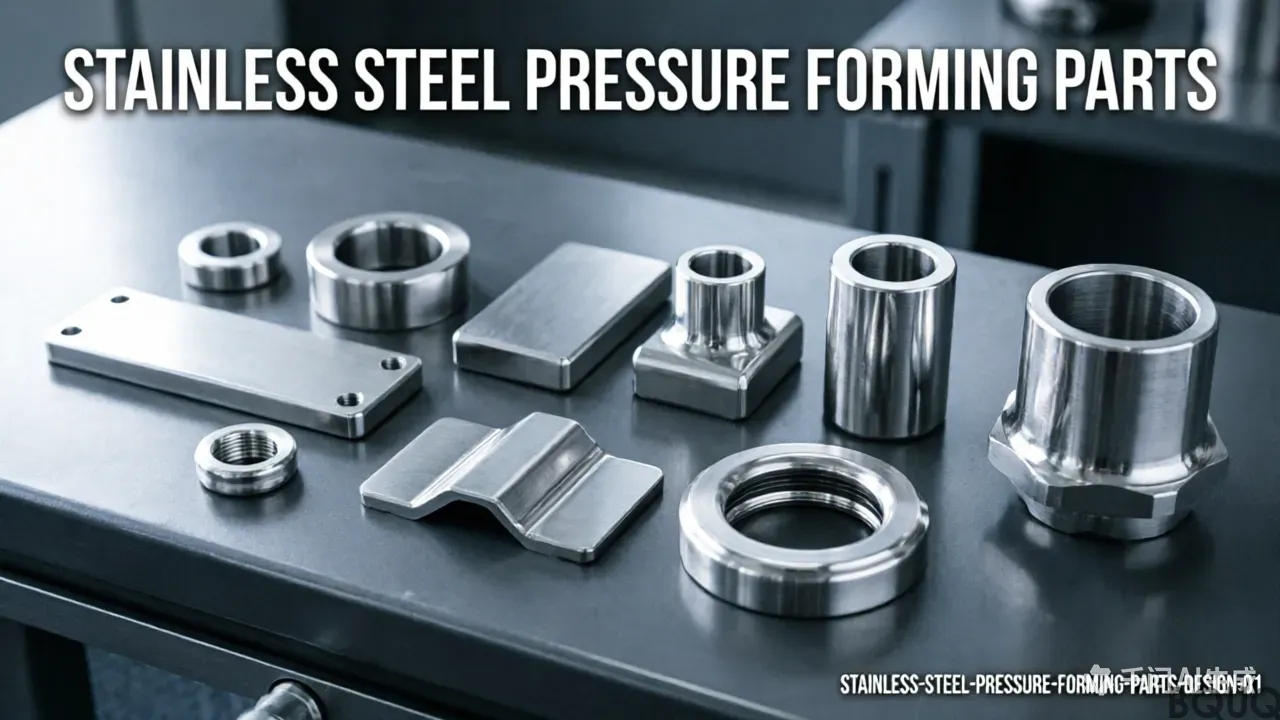
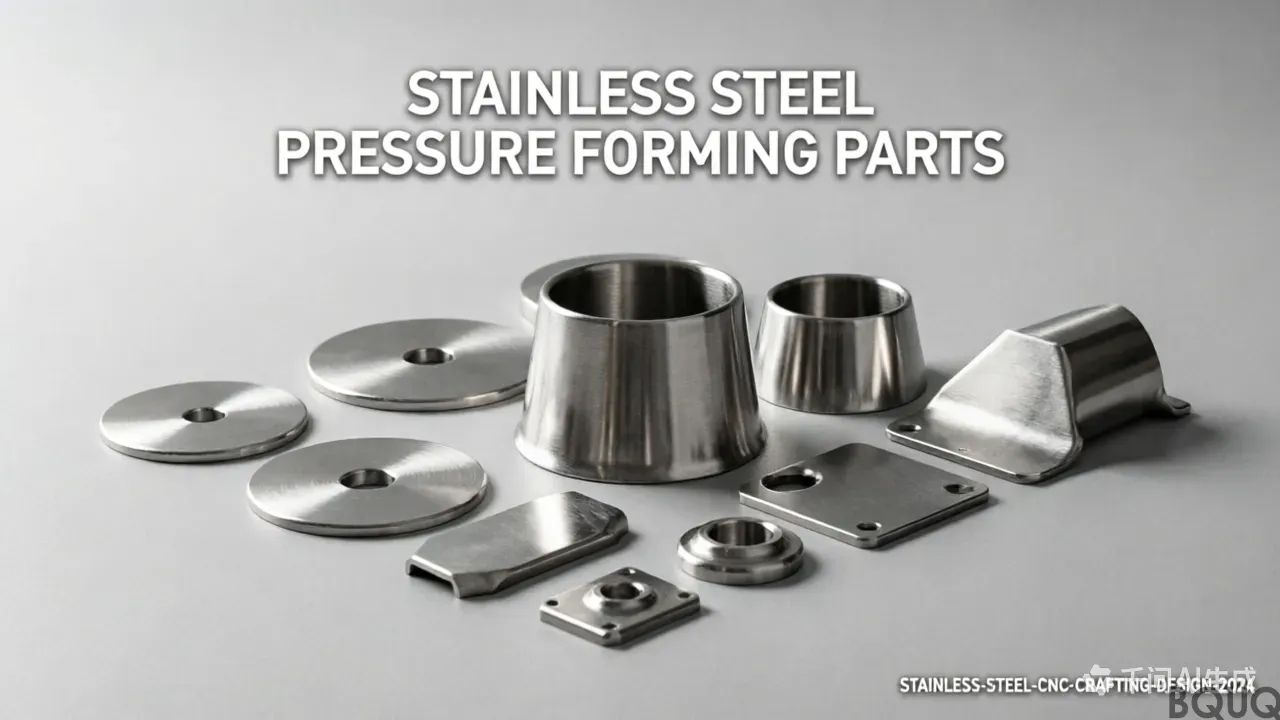
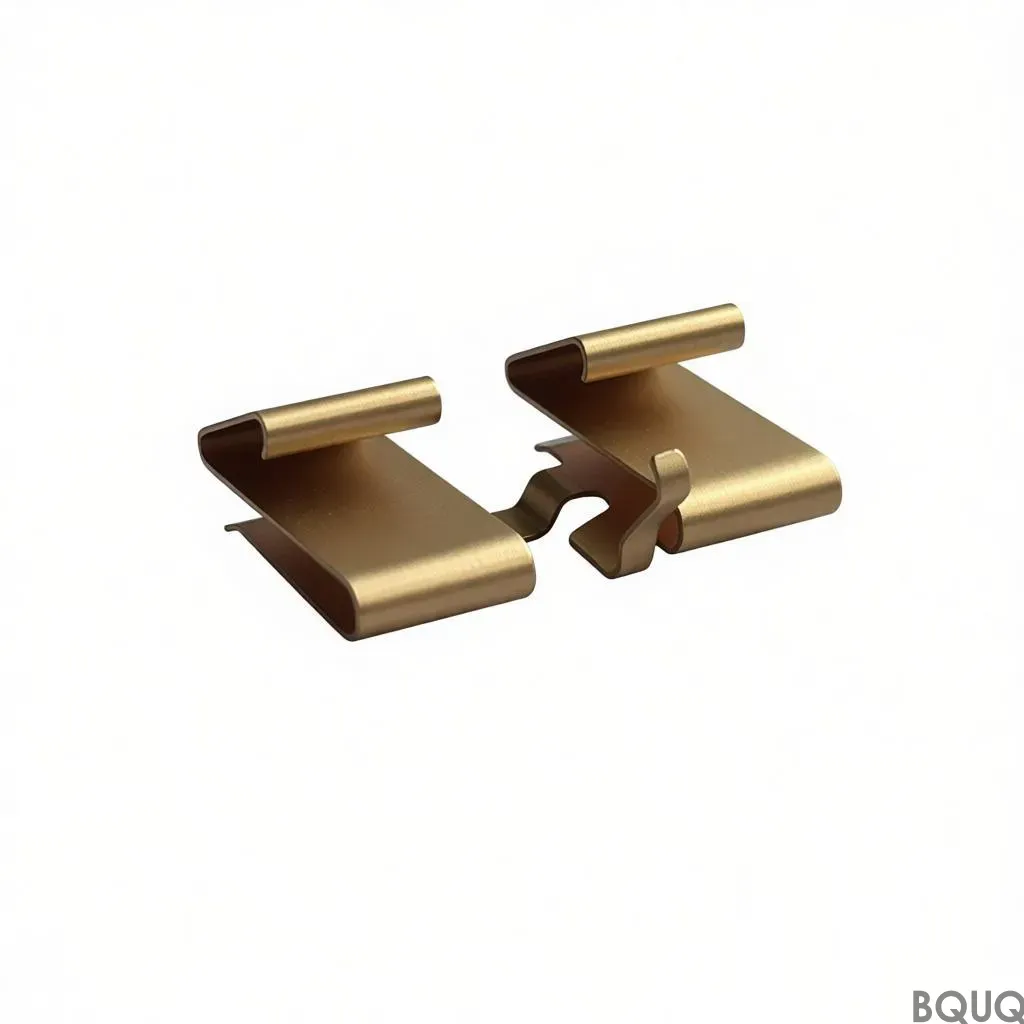
Part geometry is the deciding factor when volume is moderate. Stamping excels at 2D shapes with bends, flanges, embosses, and holes on a single plane, such as brackets, clips, heat sink fins, and spring steel components. CNC machining is preferred for parts with undercuts, threads, deep pockets, complex 3D contours, or features on multiple sides, such as housings, manifolds, and precision shafts. A simple rule: if the part can be unfolded into a flat pattern, stamping is viable. If the part requires material removal from a solid block to create internal cavities or angled surfaces, CNC machining is required. Some parts use both: a stamped body with CNC-machined critical features, which balances cost and precision.
When Should You Choose CNC Machining Despite Higher Per-Part Cost?
Choose CNC machining when your part has low volume (under 1,000 units), requires tight tolerances (below +/- 0.05 mm), uses material thicker than 6 mm, or needs quick design changes. CNC machining also wins for prototypes because you can iterate designs without paying for a new die each time; a stamping die modification costs $500 to $2,000 per change, while a CNC program change is free. Additionally, CNC machining is better for parts requiring certification (e.g., aerospace or medical) where material traceability and process documentation are mandatory. At BQUQ, we often advise customers to start with CNC machining for pre-production, then transition to stamping once the design is frozen and volume justifies tooling investment.
How Much Does Tooling Cost and What Is the Lead Time for Each Process?
Tooling cost and lead time are major factors in the decision matrix. A simple stamping die (blanking or forming) costs $2,500 to $8,000 and takes 3 to 4 weeks to build. A progressive die for complex parts costs $10,000 to $40,000 and takes 6 to 10 weeks. CNC machining requires no tooling beyond a simple fixture ($100 to $500) and can start production within 24 to 48 hours of receiving the CAD file. However, CNC per-part costs are higher because each part consumes 5 to 30 minutes of machine time, versus 0.5 to 2 seconds per stroke in stamping. For a production run of 50,000 parts, stamping tooling amortizes to $0.10 to $0.80 per part, while CNC setup plus machining remains at $8 to $20 per part.
| Factor | Metal Stamping | CNC Machining |
| Tooling Cost (simple part) | $2,500 - $8,000 | $100 - $500 (fixture only) |
| Tooling Cost (complex part) | $10,000 - $40,000 | $500 - $2,000 (vise + probing) |
| Tooling Lead Time | 3 - 10 weeks | 24 - 48 hours |
| Per-Part Cost (10,000 pcs) | $0.15 - $0.80 | $8.00 - $25.00 |
| Achievable Tolerance | +/- 0.05 mm (precision: +/- 0.013 mm) | +/- 0.005 mm to +/- 0.025 mm |
| Max Material Thickness | 0.1 mm - 6.0 mm (steel) | Up to 200 mm block |
| Production Speed | 100 - 800 parts/min | 1 part per 5 - 30 min |
| Minimum Economic Quantity | 5,000 pieces | 1 - 500 pieces |
| Design Change Cost | $500 - $2,000 per die modification | Free (program change) |
What Are the Hidden Costs That Affect the Final Price?
Beyond direct machining or stamping costs, three hidden costs often tip the balance. First, secondary operations: stamped parts frequently need deburring (adds $0.02 to $0.10 per part), tapping, or heat treatment, while CNC parts are often complete after machining. Second, scrap rate: stamping scrap (skeleton) can be recycled, recovering 10% to 20% of material cost, whereas CNC machining generates chips that are less valuable and represent up to 50% material loss for complex parts. Third, logistics and inspection: stamping runs produce thousands of identical parts, allowing statistical process control (SPC) with sampling every 50 parts, while CNC parts often require 100% inspection for critical dimensions, adding $0.50 to $2.00 per part for CMM measurement. At BQUQ, we recommend factoring in these costs when comparing quotes; a lower per-part price from stamping can be negated by secondary tapping costs if your part needs many threaded holes.
What Are the Best Practices for Selecting the Right Process?
For engineers, the practical decision framework is straightforward. If your annual volume is below 2,000 pieces, use CNC machining without hesitation. If volume is between 2,000 and 10,000 pieces, evaluate part geometry: flat parts with bends and holes under 3mm thick should go to stamping; any 3D complexity or tight tolerance below +/- 0.025 mm should stay with CNC. Above 10,000 pieces, stamping is almost always the answer, but confirm that your design is "design for manufacturing" (DFM) compliant: avoid sharp internal corners (minimum radius 0.5x material thickness), keep hole diameters at least 1.5x material thickness, and maintain bend radii of at least 1x material thickness. We also advise requesting both quotes from BQUQ simultaneously; our engineers will provide a side-by-side cost breakdown within 24 hours, including tooling amortization and secondary operations, so you can make a data-driven decision.
Conclusion
Metal stamping is cheaper for high-volume, thin, flat parts, while CNC machining is cheaper for low-volume, thick, or complex 3D parts. The break-even point typically lies between 1,000 and 5,000 units, but geometry and tolerance requirements can shift this significantly. Always calculate total cost including tooling, secondary operations, and scrap before deciding.
FAQ
How Long Does a Stamping Die Last?
A typical stamping die lasts 100,000 to 500,000 strokes for steel parts, and up to 1,000,000 strokes for aluminum or brass. Progressive dies with carbide inserts can exceed 2,000,000 strokes. At BQUQ, we recommend die maintenance every 50,000 strokes to maintain tolerance and surface finish.
Can CNC Machining Achieve the Same Surface Finish as Stamping?
Yes, CNC machining can achieve better surface finishes, typically Ra 0.4 to 1.6 micrometers, while stamping typically yields Ra 1.6 to 6.3 micrometers depending on die polish. If you need a mirror finish or specific texture, CNC with polishing or secondary grinding is the safer choice.
Is There a Minimum Order Quantity for Metal Stamping?
At BQUQ, our minimum order quantity for stamping is 1,000 pieces, but the cost per part becomes competitive only above 5,000 pieces. For orders below 1,000, we strongly recommend CNC machining to avoid excessive tooling amortization.
Which Process Is Better for Stainless Steel Parts?
For stainless steel 304 or 316, CNC machining is better for volumes under 5,000 pieces because stainless steel work-hardens during stamping, causing die wear and edge cracking. Above 10,000 pieces, precision stamping is viable but requires specialized die coatings like TiN, which adds 15% to tooling cost.
Can You Combine Stamping and CNC Machining for One Part?
Yes, hybrid manufacturing is common. We stamp the blank and form features, then CNC machine critical holes or mating surfaces to achieve tolerances below +/- 0.025 mm. This approach can reduce total cost by 30% to 50% compared to full CNC machining for volumes above 2,000 pieces.
How Does Part Size Affect the Cost Comparison?
For parts larger than 300mm x 300mm, CNC machining becomes less competitive because large stamping presses (above 250 tons) can produce large panels quickly, while CNC requires large, expensive machines ($150+ per hour). Conversely, for micro parts under 5mm, CNC machining is often cheaper because micro-stamping dies are extremely fragile and expensive.
What Is the Typical Delivery Time for Each Process?
CNC machining orders at BQUQ ship in 5 to 10 working days for prototypes and 3 to 4 weeks for production runs. Stamping orders take 4 to 6 weeks including die fabrication, but once the die is proven, production runs of 50,000 parts ship in 1 to 2 weeks. For urgent orders, we offer 24-hour CNC prototyping and 2-week stamping tooling with simplified die designs.
For a detailed cost comparison on your specific part, send your CAD file and annual volume to our engineering team. We provide 12-hour quoting with full DFM feedback. Contact us at sc@bquq.com or WhatsApp +86 13713157787. Visit www.bquq.com to download our design guidelines and tolerance charts.