Progressive Die Stamping vs Deep Draw Stamping: Key Differences Explained
Progressive die stamping and deep draw stamping are both high-volume metal forming processes, but they serve fundamentally different purposes. Progressive die stamping cuts and forms flat sheet metal into finished parts through a series of stations in a single press stroke, while deep draw stamping uses tensile and compressive forces to pull sheet metal into a three-dimensional hollow shape, such as a cup or cylinder. The primary difference is geometric outcome: progressive dies produce flat or bent components, whereas deep draw dies produce seamless, hollow parts with depth exceeding half their diameter.
Process Mechanics and Material Flow
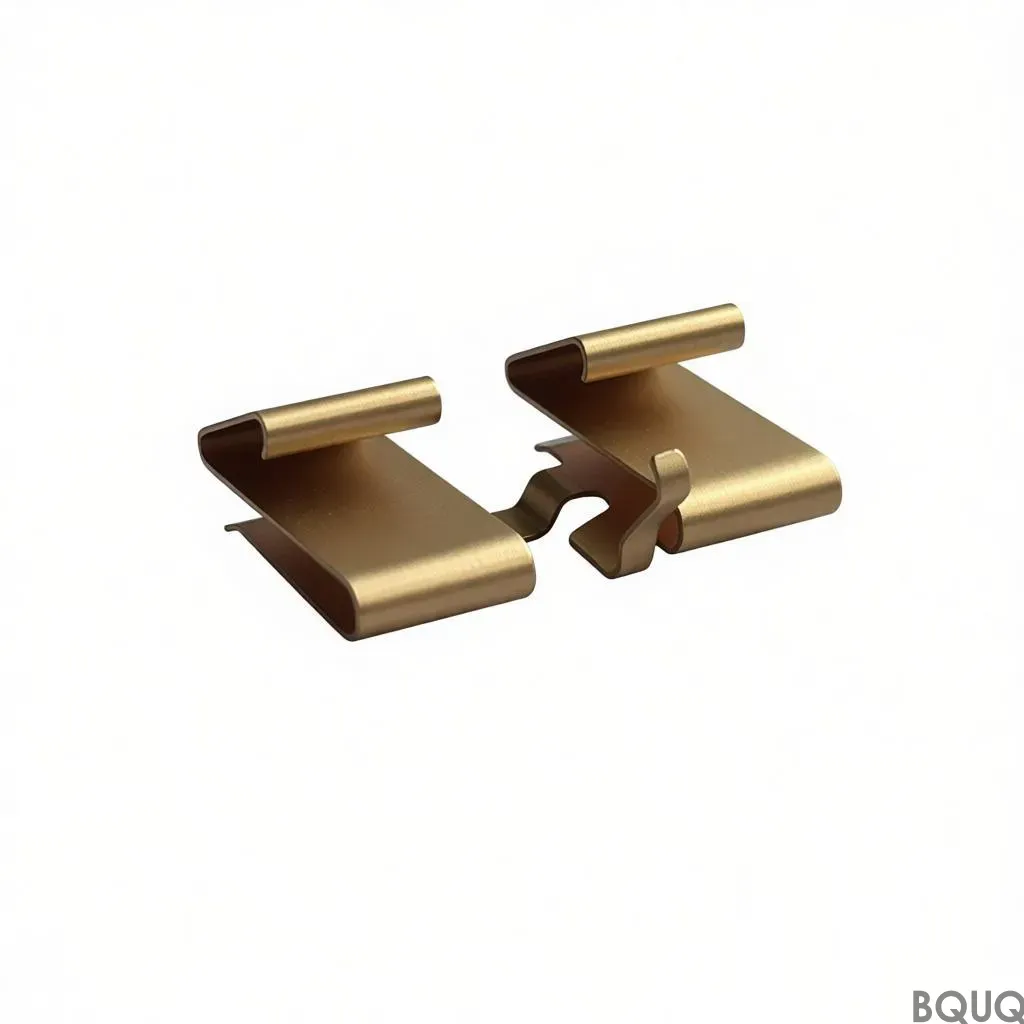
In progressive die stamping, a coil of flat metal strip feeds through a die with multiple stations. Each station performs a distinct operation—piercing, notching, bending, coining, or cutting off—on the advancing strip. The part remains attached to the carrier strip until the final station separates it. Material flow is primarily in-plane, with minimal stretching or thinning. Typical material thickness ranges from 0.1 mm to 6.0 mm, and the process excels at producing parts with tight flatness tolerances of ±0.05 mm.
Deep draw stamping, conversely, forces a flat blank into a die cavity using a punch. The material flows radially inward from the flange region while the punch stretches the bottom section. This creates significant thickness variation, usually 10-15% thinning at the sidewalls, which must be accounted for in design. Draw ratios (blank diameter divided by punch diameter) of 1.5 to 2.0 are common for single-stage draws, while multi-stage draws can achieve ratios up to 3.5. Maximum draw depth depends on material ductility; for stainless steel 304, a single draw can achieve depths up to 1.5 times the diameter without annealing.
Tooling Design and Cost Comparison
Tooling complexity differs substantially between the two processes. A progressive die for a simple bracket may have 8-12 stations, while a complex progressive die for an automotive connector can have 30-40 stations. Deep draw tooling, however, often requires multiple dies for a single part—one for each draw stage, plus trimming and ironing dies. A typical deep drawn battery housing may require 5-7 individual dies.
| Parameter | Progressive Die Stamping | Deep Draw Stamping |
| Tooling cost range | $8,000 - $150,000 | $15,000 - $300,000 |
| Tooling lead time | 4-10 weeks | 8-16 weeks |
| Part tolerance | ±0.05 mm | ±0.10 mm |
| Material thickness | 0.1 - 6.0 mm | 0.3 - 3.0 mm |
| Maximum part size | 400 mm x 400 mm | 300 mm diameter x 200 mm depth |
| Production speed | 400 - 1,200 strokes/min | 10 - 60 strokes/min |
| Scrap rate | 20-30% | 15-25% |
| Typical unit cost (100k pcs) | $0.03 - $0.50 | $0.08 - $1.20 |
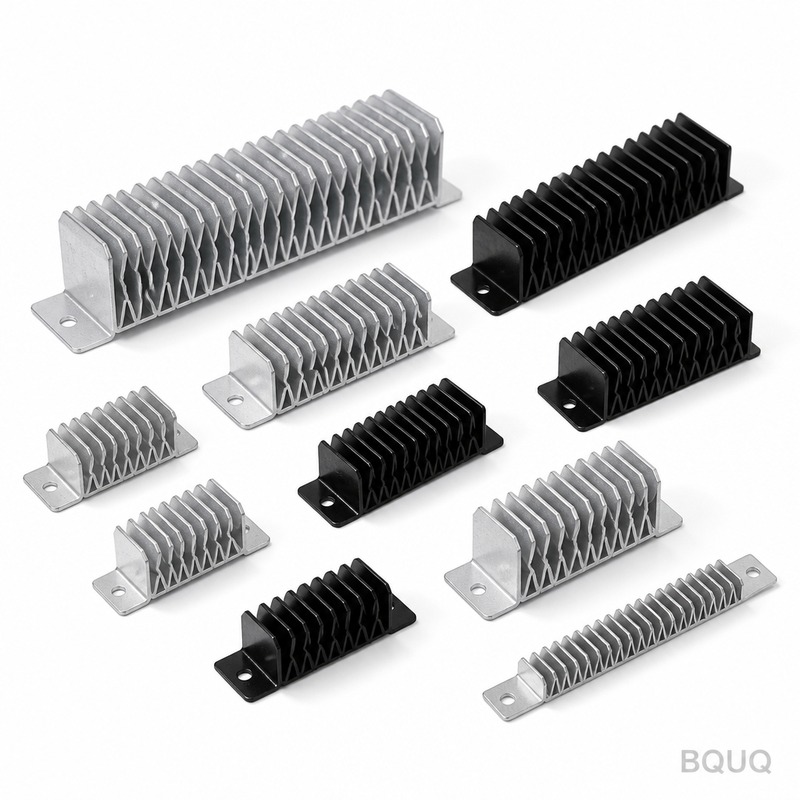
The table above shows that progressive dies are generally less expensive and faster to produce, but deep draw tooling costs escalate quickly with depth and material hardness. For a 2.0 mm thick aluminum deep drawn housing, tooling costs can reach $250,000, whereas a comparable progressive die for a flat heat sink base costs around $40,000.
Material Suitability and Temperatures
Progressive die stamping handles a wide range of materials including cold-rolled steel, galvanized steel, brass, copper, and aluminum alloys 5052 and 6061. The process generates frictional heat at the cutting edges, typically reaching 150-200°C at the shear zone, requiring proper lubrication to prevent galling. High-speed stamping of 0.5 mm stainless steel can produce edge temperatures up to 250°C, which is managed with water-soluble coolants.
Deep draw stamping demands materials with high elongation and low work hardening. Common materials include aluminum 3003, stainless steel 304, brass 260, and low-carbon steel. The process generates more heat due to severe plastic deformation; die temperatures can reach 120-180°C during continuous production. For deep drawing stainless steel, the material undergoes 40-60% thickness reduction, requiring annealing between stages to restore ductility and prevent cracking. Annealing temperatures for stainless steel 304 are 1010-1120°C, while aluminum 3003 requires annealing at 410°C.
Production Volume and Cycle Time
Progressive die stamping is the clear winner for extremely high volumes. A well-designed progressive die running at 800 strokes per minute produces 48,000 parts per hour, making it ideal for terminals, clips, and heat sink fins. However, setup time between jobs ranges from 30-90 minutes, and changeover complexity increases with the number of stations.
Deep draw stamping operates at much lower speeds, typically 15-30 strokes per minute for single-action presses, though transfer presses with multiple stations can reach 60 strokes per minute. A deep drawn pressure vessel with a 100 mm depth requires three draw stages plus trimming and sizing, resulting in a cycle time of 4-8 seconds per part. This means a single deep draw line produces 450-900 parts per hour, which is 50-100 times slower than progressive stamping. For production volumes below 50,000 parts, deep draw stamping may become cost-prohibitive compared to spinning or hydroforming.
Design Constraints and Part Complexity
Progressive die stamping is limited to parts that can be laid flat and folded. Features such as louvers, embosses, and lance-and-form tabs are easily achieved. The minimum bend radius is typically 1.0 times the material thickness for steel and 1.5 times for aluminum. Holes must be spaced at least 1.5 times the material thickness from any edge, and the minimum hole diameter is 0.8 times the material thickness.
Deep draw stamping allows for seamless, leak-proof parts with wall thickness as thin as 0.15 mm in aluminum. The maximum draw depth is limited by the material's LDR (limiting draw ratio). For brass 260, the LDR is 2.2 for a single draw, meaning a 50 mm diameter cup can be drawn to 110 mm depth in one stroke. However, deep drawn parts require draft angles of 1-2 degrees for easy ejection, and the corner radius at the bottom must be at least 4 times the material thickness to prevent tearing. Internal features such as threads or undercuts are difficult to achieve and often require secondary operations.
Practical Recommendations for Part Selection
Choose progressive die stamping when your part has a flat or bendable geometry, requires extremely tight tolerances below ±0.05 mm, or demands production rates above 1,000 parts per minute. This process is optimal for heat sink bases, EMI shields, and electrical connectors. For deep draw stamping, select it when you need a seamless, leak-proof enclosure such as a battery case, fuel filter housing, or pressure sensor body. The process is justified when the part depth exceeds half its diameter and when wall thickness uniformity is less critical than structural integrity.
For mixed geometries, consider a hybrid approach. Some manufacturers use progressive dies for the blanking operation, then transfer the blank to a deep draw die for forming. This combines the high-speed blanking capability with deep draw forming, but increases handling complexity and cost. At BQUQ, we recommend evaluating total system cost—including tooling amortization, material utilization, and secondary operations—before choosing a process. For a part requiring both flat features and a deep cup, our engineers often suggest redesigning to split the part into two components, one progressive-stamped and one deep-drawn, then joining them with laser welding.
FAQ-Style Tips for Engineering Teams
When comparing quotes for these processes, always request a DFM (Design for Manufacturability) review. Progressive die stamping quotes should specify the number of stations, expected die life (typically 5-10 million strokes), and maintenance intervals. Deep draw quotes should specify the draw ratio per stage, annealing requirements, and lubrication type. Always verify the press tonnage: progressive dies for 2 mm steel require 50-200 tons, while deep draw dies for the same material may require 300-800 tons due to the high forces needed for plastic flow.
Material cost also differs. Progressive stamping uses standard coil widths, minimizing waste, but the 20-30% scrap rate from the carrier strip is unavoidable. Deep drawing produces less scrap (15-25%), but the blank preparation and multi-stage tooling add cost. For aluminum parts, anodizing after deep drawing requires careful control of surface roughness (Ra 0.4-0.8 µm), which is easier to achieve with progressive stamping due to better surface finish on cut edges.
Conclusion
Progressive die stamping and deep draw stamping are complementary, not competing, processes. Progressive die stamping dominates flat and bent part production with unmatched speed and precision, while deep draw stamping is irreplaceable for seamless, hollow components. Your choice depends on part geometry, volume, and tolerance requirements. For volumes above 100,000 parts and flat geometries, progressive stamping will always be more economical. For hollow parts with depth-to-diameter ratios above 0.5, deep draw stamping is the only viable stamping method. Consider secondary operations—threading, welding, or surface finishing—which often represent 30-50% of total part cost and can influence the primary process selection.
At BQUQ, we operate 45 progressive die presses and 12 deep draw presses in our Dongguan facility, giving us direct experience with both technologies. Our engineers provide free DFM feedback within 12 hours of receiving your CAD files. Send your drawings to sc@bquq.com or contact us on WhatsApp at +86 13713157787 for a detailed cost comparison. Visit www.bquq.com to review our capabilities and case studies. We will recommend the most cost-effective process for your specific part geometry, not just the one we happen to have available.
Related Articles
- Metal Parts Finishing Guide After Stamping | Complete
- Stamping digital factory and simulation-driven design: from virtual prototype to digital twin operation
- High-speed precision stamping and in-die microforming technology: from electronic connections to micromotor cores
Frequently Asked Questions
What is the main difference between progressive die stamping and deep draw stamping?
Progressive die stamping cuts and forms flat sheet metal into flat or bent parts through multiple stations in one press stroke, while deep draw stamping pulls sheet metal into seamless, hollow 3D shapes like cups or cylinders. The key difference is geometric outcome: progressive dies produce flat components, deep draw dies produce parts with depth exceeding half their diameter.
What tolerances can I expect from progressive die stamping versus deep draw stamping?
Progressive die stamping achieves tighter tolerances of ±0.05 mm, while deep draw stamping offers ±0.10 mm. Material thickness ranges from 0.1-6.0 mm for progressive dies and 0.3-3.0 mm for deep draw. These values are typical for high-volume production and depend on part design and material.
How do tooling costs and lead times compare between the two processes?
Progressive die tooling costs range from $8,000 to $150,000 with 4-10 week lead times, while deep draw tooling costs $15,000 to $300,000 with 8-16 week lead times. Deep draw often requires multiple dies per part—for example, a battery housing may need 5-7 dies—whereas progressive dies use 8-40 stations in one tool.
What are the production speed and scrap rate differences for these stamping methods?
Progressive die stamping runs at 400-1,200 strokes per minute with a 20-30% scrap rate, while deep draw stamping operates at 10-60 strokes per minute with a 15-25% scrap rate. For 100,000 parts, typical unit costs are $0.03-$0.50 for progressive dies and $0.08-$1.20 for deep draw, reflecting speed and tooling complexity.