Progressive Die Stamping vs Deep Draw Stamping: What Is the Difference?
Progressive die stamping and deep draw stamping are both high-volume metal forming processes, but they differ fundamentally in method and outcome: progressive die stamping uses a single die with multiple stations to perform cutting, bending, and coining in a linear strip, while deep draw stamping uses a punch and die to radially draw a flat blank into a three-dimensional, cup-like or hollow shape. Progressive stamping is ideal for flat or moderately formed parts with tight tolerances, whereas deep drawing is for seamless, deep-walled enclosures where material flow and thickness distribution are critical. The choice determines your tooling cost, cycle time, dimensional capability, and part geometry feasibility.
What Are the Core Process Differences Between Progressive Die and Deep Draw Stamping?
Progressive die stamping feeds a continuous metal strip through a single die set with multiple stations. Each station performs a sequential operation—piercing, notching, bending, trimming—until the final station cuts the finished part free from the strip. The strip advances by a fixed pitch per press stroke, enabling production rates of 400 to 1,200 parts per minute for small components. In contrast, deep draw stamping starts with a flat blank that is forced into a die cavity by a punch, pulling the metal radially inward to form a hollow shape. The draw ratio (blank diameter divided by punch diameter) determines whether a single draw or multiple redraws are needed; typical single-draw ratios are 1.6 to 2.0 for steel and 1.8 to 2.2 for aluminum. Deep drawing is exclusively for axisymmetric or box-like parts with depth greater than half their diameter, while progressive dies excel at flat parts with bends, tabs, and holes.
How Do Tolerances and Dimensional Accuracy Compare?
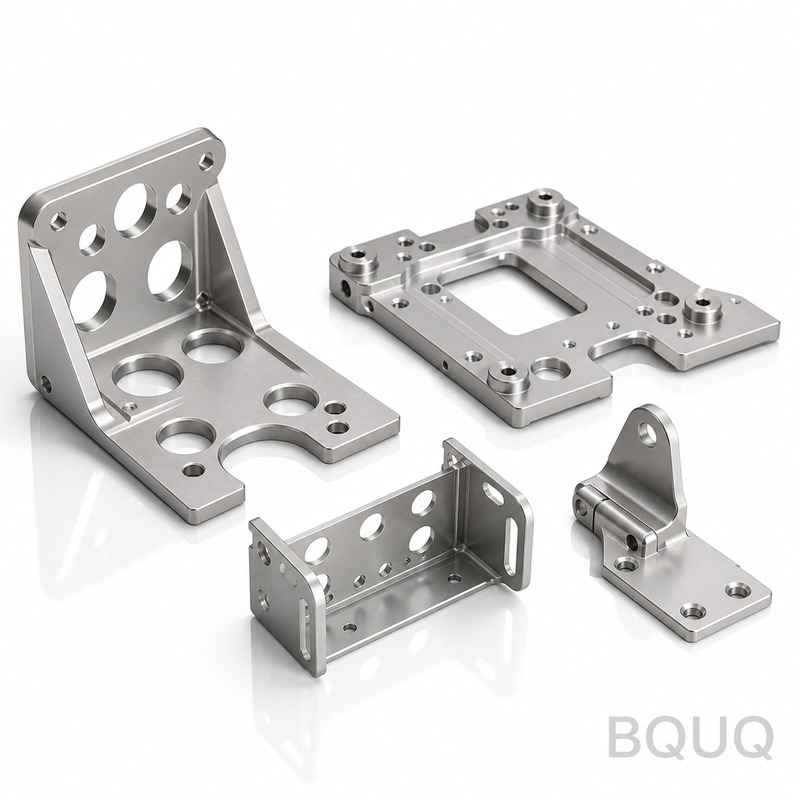
Progressive die stamping achieves the tightest tolerances among stamping processes due to the rigid strip guidance and fixed station alignment. Standard progressive stamping holds ±0.05 mm for hole positions and ±0.025 mm for blanked edges, with precision dies reaching ±0.013 mm on critical dimensions. Deep draw stamping has looser tolerances because the material thins and thickens unpredictably during flow. Wall thickness variation in deep drawing is typically ±10% of nominal, and dimensional tolerances on diameters are ±0.1 mm for small parts, widening to ±0.25 mm for deeper draws. The bottom of a deep-drawn part maintains good flatness (±0.05 mm), but the flange and wall junctions show the most deviation due to springback and thinning. For parts requiring both deep hollow sections and tight perimeter features, consider combining deep drawing with a secondary trimming or piercing operation rather than expecting deep draw tolerances to match progressive stamping.
Which Materials Are Suitable for Each Process?
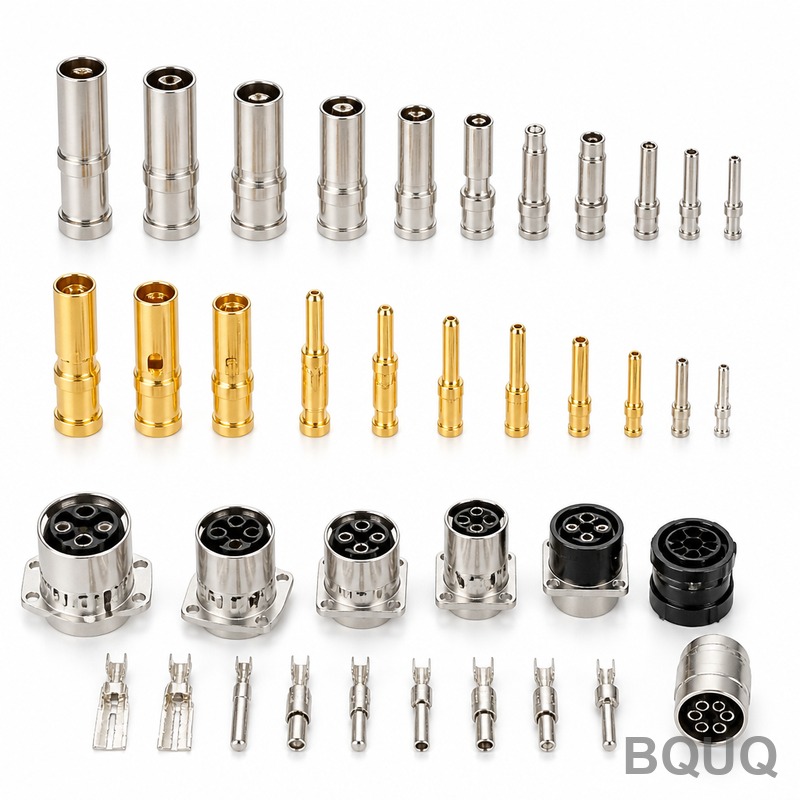
Progressive die stamping handles virtually any ductile metal, including cold-rolled steel (SPCC, DC01), stainless steel (304, 316, 430), brass, copper, phosphor bronze, and aluminum alloys (5052, 6061). The process works best with materials from 0.1 mm to 6 mm thick, though thin materials below 0.3 mm require careful die clearance to prevent burring. Deep draw stamping demands higher formability because the material must flow without tearing. Ideal deep draw materials include low-carbon steels (DC04, SPCE), aluminum alloys (3003, 5052), copper, brass, and austenitic stainless steels like 304. Aluminum 6061 is poor for deep drawing due to its low elongation; use 5052 or 5754 instead. Material hardness is critical: for deep drawing, maximum yield strength should be below 250 MPa, and elongation should exceed 30% in a 50 mm gauge length. Progressive stamping can handle materials up to 400 MPa yield strength, but dies must be designed with correspondingly larger clearances and stronger die steels.
How Do Tooling Costs and Lead Times Differ?
Progressive die tooling is typically 30-50% more expensive than deep draw tooling for comparable part size because of the increased number of stations, precision guide pins, and complex stripper systems. A simple progressive die for a small bracket costs $5,000 to $15,000, while a multi-station progressive die for a complex connector part can cost $30,000 to $80,000. Deep draw tooling for a simple cylindrical shell starts around $8,000 to $20,000, but complex rectangular deep-drawn housings with multiple redraws can exceed $50,000. Lead times follow a similar pattern: progressive dies take 4 to 8 weeks for design and fabrication, while deep draw tooling takes 3 to 6 weeks because the tooling geometry is simpler. However, deep drawing often requires additional tooling for trimming, piercing, and flanging, which can add 2 to 4 weeks and $5,000 to $15,000 to the total. If you need multiple part variations, progressive dies are more cost-effective because you can change only specific stations; deep draw dies require complete new punch and die sets.
What Are the Production Speed and Volume Differences?
Progressive die stamping is the fastest metal forming process in manufacturing. A well-designed progressive die running in a high-speed press (200 to 800 strokes per minute) produces 12,000 to 48,000 parts per hour. Small parts like terminals, clips, and washers routinely achieve 1,000 pieces per minute. Deep draw stamping is slower because each stroke must allow sufficient time for material flow and lubrication. Typical deep draw speeds are 20 to 60 strokes per minute, yielding 1,200 to 3,600 parts per hour. For very deep draws requiring multiple redraw operations, production drops to 300 to 800 parts per hour because of additional handling and intermediate annealing. For annual volumes above 1 million parts, progressive die stamping is almost always the lower-cost choice. Deep drawing becomes competitive for volumes from 50,000 to 500,000 parts per year, especially when the part geometry is impossible to achieve by progressive forming. Below 50,000 parts, consider CNC machining or hydroforming to avoid high tooling amortization.
Why Does Part Geometry Determine the Process Selection?
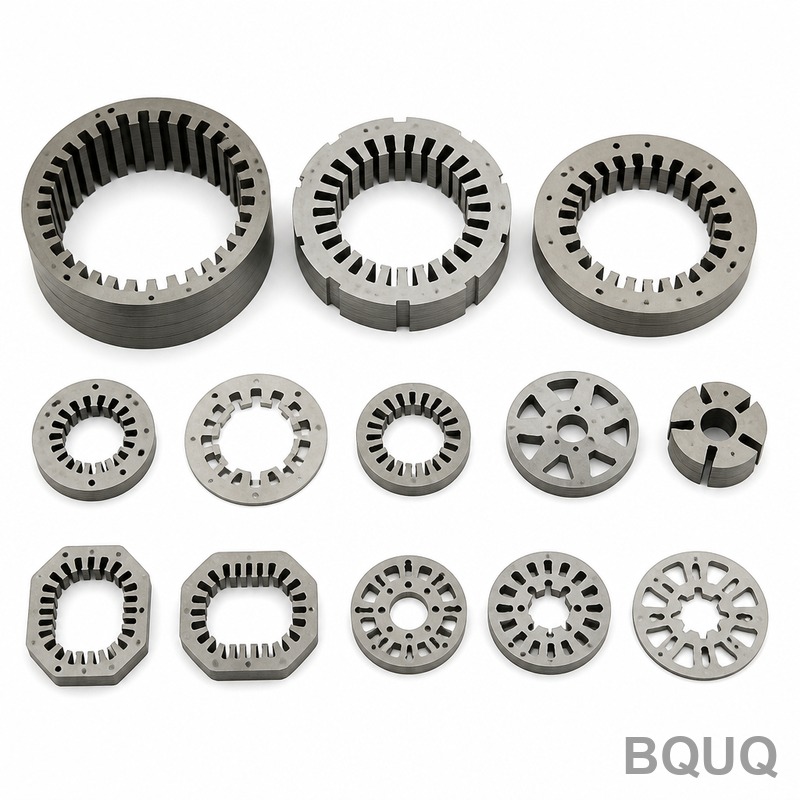
Part geometry is the single decisive factor. If your part is essentially flat with formed bends, lanced tabs, holes, and embosses—like a heat sink base, bracket, or electrical contact—progressive die stamping is the only cost-effective method. The process cannot create closed hollow shapes or deep cups because the strip material is confined to a single plane. Deep draw stamping is mandatory for parts like battery cases, fuel filters, motor housings, cookware, and aerosol can bodies. The maximum draw depth is limited by the draw ratio and material properties; a 100 mm diameter cup can typically be drawn to 60-80 mm depth in one operation, and up to 150 mm with redrawing and annealing. Progressive stamping can produce shallow drawn features (up to 3-4 times material thickness) by coining or embossing, but these are not true draws—they are localized deformation without significant material flow. If your part has both deep walls and flat precision features, plan for two separate processes: deep draw the shell, then use a progressive die for trimming and piercing.
What Are the Typical Cost per Part and Minimum Order Quantities?
Cost per part depends on material, tolerance, and volume, but we can provide realistic benchmarks based on 2024 pricing at BQUQ factory in Dongguan. For a 25 mm x 15 mm x 1.5 mm steel bracket, progressive die stamping costs $0.02 to $0.08 per part at 500,000 annual volume, plus a one-time tooling cost of $12,000 to $25,000. For a 50 mm diameter, 40 mm deep steel cup, deep draw stamping costs $0.15 to $0.45 per part at 200,000 annual volume, plus tooling of $18,000 to $35,000. Deep drawing has higher per-part cost because of slower cycle times and more frequent lubrication and cleaning steps. Minimum order quantities (MOQ) for progressive stamping are typically 50,000 to 100,000 pieces to amortize tooling, while deep drawing MOQs are lower at 20,000 to 50,000 pieces because tooling is cheaper relative to part cost. For prototyping, both processes are impractical; use 3D printing or CNC machining for initial samples before committing to production tooling.
| Parameter | Progressive Die Stamping | Deep Draw Stamping |
| Typical part geometry | Flat parts, bends, holes, tabs | Hollow, cup-like, deep-walled shells |
| Production speed | 400-1,200 parts/min | 20-60 parts/min |
| Tolerance (critical dims) | ±0.013 to ±0.05 mm | ±0.1 to ±0.25 mm |
| Material thickness range | 0.1 to 6.0 mm | 0.3 to 3.0 mm |
| Tooling cost (typical) | $12,000 - $80,000 | $8,000 - $50,000 |
| Tooling lead time | 4-8 weeks | 3-6 weeks |
| Cost per part (mid-volume) | $0.02 - $0.08 | $0.15 - $0.45 |
| Maximum draw depth | N/A (shallow emboss only) | 1.5-2.0x punch diameter per draw |
| Best annual volume | >1,000,000 pieces | 50,000 - 500,000 pieces |
How Do You Decide Between Progressive Die and Deep Draw Stamping?
Start by answering three questions: Is your part hollow or closed on one end? If yes, deep drawing is required. Does your part have tight tolerances under ±0.05 mm on multiple features? If yes, progressive stamping is better unless you can accept secondary machining. What is your annual volume? Above 1 million, progressive stamping wins on cost; below 100,000, deep drawing or alternative processes may be more economical. For mixed parts—like a deep-drawn housing with a stamped mounting bracket—we recommend producing the housing by deep drawing and the bracket by progressive stamping, then joining them by welding or riveting. This dual-process approach is common in automotive fuel pump assemblies and electric motor end caps. Always request a design-for-manufacturing (DFM) review from your stamping partner before finalizing tooling, as minor geometry changes can reduce tooling cost by 20-30% and improve achievable tolerances.
What Are the Common Quality Issues in Each Process?
Progressive die stamping defects include burrs on cut edges (caused by excessive die clearance), springback in bent areas (mitigated by over-bending or coining), and strip distortion from uneven material feed. Deep draw stamping defects are more severe: wrinkling on the flange (due to insufficient blank holder force), tearing at the cup wall (caused by excessive draw ratio or poor lubrication), and thinning at the punch nose radius (which can reduce wall strength by 20-30%). For deep drawing, use drawing compound (chlorinated paraffin or water-soluble emulsions) and maintain blank holder pressure between 10-30% of the material yield strength. For progressive stamping, use fine-blanking for edges requiring perpendicularity better than 0.02 mm and no breakage zone. Both processes require regular die maintenance every 50,000 to 100,000 strokes, including re-sharpening cutting edges by 0.1-0.3 mm and polishing draw radii.
FAQ
Can Deep Draw Stamping Achieve the Same Tolerances as Progressive Die Stamping?
No, deep draw stamping cannot match progressive die tolerances. Progressive dies achieve ±0.013 mm on critical dimensions, while deep drawing typically holds ±0.1 mm due to material flow variations and springback. If your part needs tight tolerances on a deep-drawn shell, plan for secondary machining operations like turning or reaming.
Which Process Is Cheaper for Low-Volume Production?
Deep draw stamping is generally cheaper for low-volume production because tooling costs are 30-50% lower. For volumes below 50,000 parts, deep draw tooling of $8,000 to $20,000 amortizes better than progressive dies costing $12,000 to $80,000. However, for flat parts under 50,000 units, consider CNC punching or laser cutting instead of any stamping process.
How Many Stations Does a Progressive Die Typically Have?
A typical progressive die has 8 to 15 stations, but complex parts may use up to 30 stations. Each station performs one operation such as piloting, piercing, forming, or trimming. The number of stations directly affects tooling cost and press tonnage, so simplify part features to reduce station count.
Is Deep Drawing Suitable for Stainless Steel?
Yes, austenitic stainless steels like 304 and 316 are excellent for deep drawing due to their high elongation (40-50%) and work-hardening characteristics. However, they require stronger presses and more robust tooling because of higher flow stress. Ferritic stainless steel (430) is also formable but may require intermediate annealing for draws deeper than one diameter.
Can One Progressive Die Produce Multiple Different Parts?
Yes, a progressive die can produce multiple parts from a single strip by using different stations to create separate components. This is called a family die or multiple-part die. It is cost-effective for producing matched sets like a bracket and its fastener, reducing total tooling cost by 20-40% compared to separate dies.
What Lubrication Is Required for Deep Draw Stamping?
Deep drawing requires heavy-duty drawing lubricants with extreme pressure additives, such as chlorinated or sulfurized oils. Apply uniformly at 5-10 g/m² of blank surface. Inadequate lubrication causes galling and tearing. Progressive stamping uses lighter oils or dry film lubricants for cutting and bending, which are easier to clean before downstream plating or welding.
How Long Does a Stamping Die Last?
Progressive die tooling made from D2 or M2 tool steel lasts 1 to 5 million strokes before needing major rebuilding, with carbide inserts extending life to 10-20 million strokes. Deep draw dies made from tool steel or cast iron last 500,000 to 2 million draws. Regular maintenance and proper lubrication are the biggest factors in die longevity.
Conclusion
Choose progressive die stamping for flat, tight-tolerance parts at high volumes above 1 million pieces, and deep draw stamping for hollow, seamless shells at volumes between 50,000 and 500,000 pieces. At BQUQ, we have operated both process lines for over 20 years in Dongguan, China, serving clients in automotive, electronics, and appliance industries. Our engineering team provides free DFM review within 48 hours, and our average response time for quotations is 12 hours. Send your drawings to sc@bquq.com or message us on WhatsApp at +86 13713157787. Visit www.bquq.com to download our stamping design guidelines and tolerance charts. We will recommend the most cost-effective process for your specific part geometry and volume.