Progressive Die vs Single Hit Stamping: Which Is Cheaper for Your Volume?
Direct Answer: It Depends Entirely on Your Annual Quantity
For volumes below 10,000 pieces per year, single hit stamping is unequivocally cheaper due to lower tooling costs, typically saving 60-70% on upfront investment. For volumes above 50,000 pieces annually, progressive die stamping becomes the clear economic winner, delivering per-piece costs that are 40-80% lower despite higher initial die construction expenses. The crossover point where progressive tooling becomes advantageous usually falls between 15,000 and 30,000 parts, depending on part complexity, material thickness, and tolerance requirements.
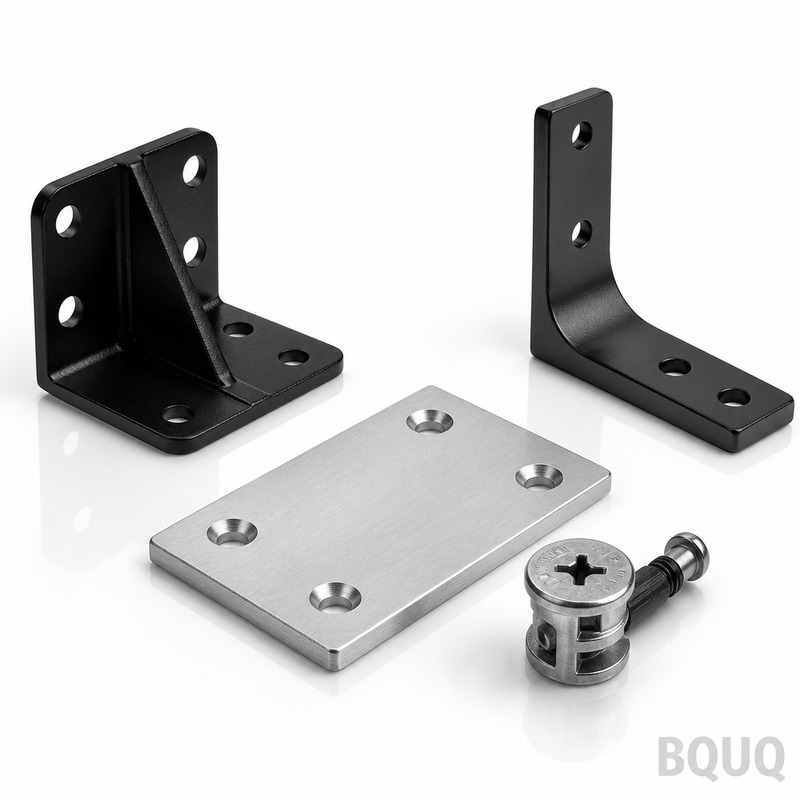
Tooling Cost and Complexity Comparison
The fundamental cost driver in stamping is the die itself. A single hit die for a simple bracket may cost USD 3,000-8,000, while a comparable progressive die for the same part ranges from USD 12,000-35,000. This five-fold difference stems from the number of stations, precision guiding systems, and the need for cam actions or lancing operations in progressive tooling.
Single hit tooling uses one station per operation. Each subsequent operation (piercing, forming, trimming) requires a separate die and a separate press run. This multiplies setup hours and introduces cumulative tolerance drift. For a part requiring three operations, single hit tolerances typically hold at plus/minus 0.10 mm, whereas progressive dies maintain plus/minus 0.05 mm because all features are registered from a single strip pilot system.
Progressive dies also demand higher-grade tool steel. Our BQUQ factory uses D2 or M2 high-speed steel for progressive punches, hardened to 58-62 HRC, versus O1 tool steel at 54-58 HRC for single hit tooling. The material cost difference alone is approximately 25-30%. Additionally, progressive die maintenance requires precision grinding every 50,000-80,000 hits, while single hit dies may run 100,000+ hits between sharpenings.
Per-Piece Cost Analysis at Different Volumes
The economic equation shifts dramatically when you calculate total cost of ownership. At 5,000 pieces, a simple part with 1.2 mm thick aluminum (5052-H32) will cost approximately USD 1.85 per piece with single hit stamping and USD 4.30 per piece with progressive stamping. The tooling amortization alone makes progressive uneconomical at this scale.
At 100,000 pieces, the same part costs USD 0.42 per piece with single hit and USD 0.18 per piece with progressive. The progressive die's ability to complete all operations in one press stroke, running at 80-120 strokes per minute versus 15-25 strokes per minute for single hit, reduces labor and machine time by roughly 75%. Scrap rates also improve: progressive stamping typically yields 92-95% material utilization versus 85-88% for single hit due to better nesting and reduced handling damage.
For high-volume production above 500,000 parts annually, progressive stamping becomes mandatory for most competitive quoting. At this scale, even a 0.05 mm tolerance improvement and 7% material savings translate to tens of thousands of dollars annually. Progressive presses also enable in-die tapping, countersinking, and even assembly operations, eliminating secondary processing entirely.
| Production Volume | Single Hit Cost per Part | Progressive Cost per Part | Tooling Cost Single Hit | Tooling Cost Progressive | Recommended Process |
| 1,000 pcs | USD 4.80 | USD 12.50 | USD 4,500 | USD 18,000 | Single Hit |
| 5,000 pcs | USD 1.85 | USD 4.30 | USD 4,500 | USD 18,000 | Single Hit |
| 10,000 pcs | USD 1.10 | USD 1.95 | USD 4,500 | USD 18,000 | Single Hit |
| 25,000 pcs | USD 0.68 | USD 0.55 | USD 4,500 | USD 18,000 | Progressive |
| 50,000 pcs | USD 0.51 | USD 0.30 | USD 4,500 | USD 18,000 | Progressive |
| 100,000 pcs | USD 0.42 | USD 0.18 | USD 4,500 | USD 18,000 | Progressive |
| 500,000 pcs | USD 0.38 | USD 0.12 | USD 4,500 | USD 22,000 | Progressive |
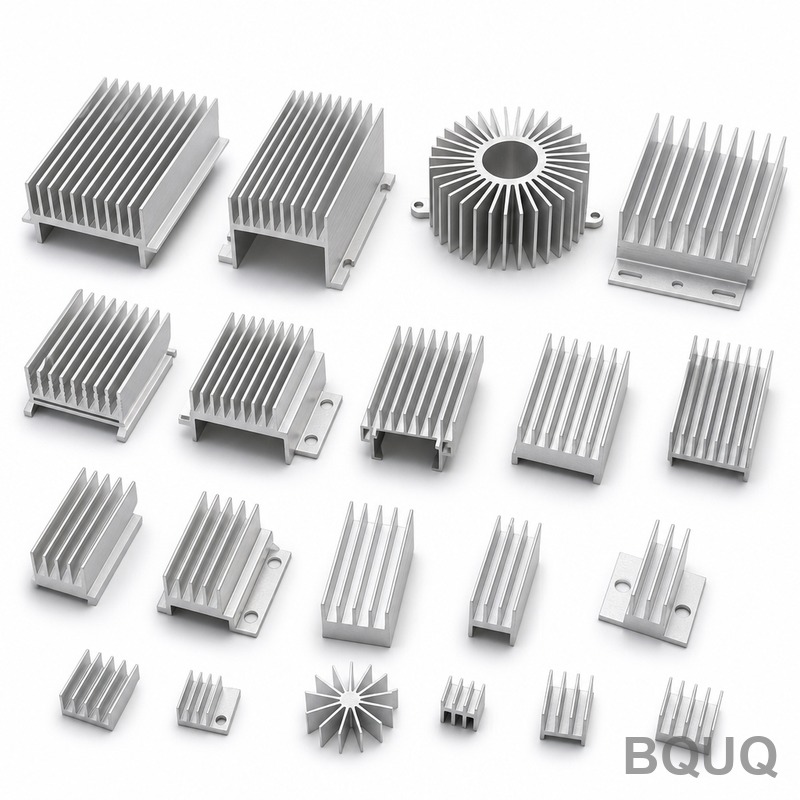
Lead Time and Production Speed Differences
Single hit stamping offers a shorter path to first article. A simple die can be manufactured in 10-15 working days, whereas a progressive die requires 20-35 working days due to the complexity of station alignment and pilot testing. This makes single hit attractive for prototypes, emergency batches, or product iterations where speed to market outweighs unit economics.
Production speed favors progressive overwhelmingly. A 60-ton press running progressive tooling produces 70-90 parts per minute for small brackets. The same press with a single hit die and manual part transfer produces 8-12 parts per minute. For a 50,000-piece order, single hit requires approximately 70 hours of press time versus 10 hours for progressive. This difference impacts not only labor cost but also machine availability and scheduling flexibility.
However, single hit stamping excels in flexibility. Changing between five different part designs requires only swapping dies, each weighing 200-500 kg and changed in 30-45 minutes. Progressive dies, weighing 800-2,500 kg, require 2-4 hours for changeover plus strip feed adjustment. For manufacturers running mixed low-volume production, single hit reduces changeover downtime by 60-70%.
Material and Tolerance Considerations
Material thickness and formability directly affect which process is more economical. For thin materials below 0.8 mm (such as 0.5 mm stainless steel 301), progressive stamping is almost always preferred because strip handling is easier and reduces distortion. For thick materials above 3.0 mm (like 6 mm steel plates), single hit stamping is often the only viable option because progressive dies face excessive stripping forces and punch breakage risks.
Tolerance requirements also dictate process choice. Progressive stamping achieves consistent hole-to-hole spacing of plus/minus 0.03 mm because all features are punched in one strip advancement. Single hit stamping, with separate operations, accumulates positioning errors of plus/minus 0.08-0.12 mm. For parts requiring coaxiality under 0.05 mm, progressive tooling is mandatory regardless of volume.
Temperature effects matter for heat sink applications. Our BQUQ heat sink stamping for aluminum 6061-T6 requires progressive dies for volumes above 30,000 units to maintain flatness within 0.10 mm over a 150 mm length. The single hit process induces more residual stress due to repeated clamping, causing warpage of 0.20-0.30 mm that requires costly straightening operations.
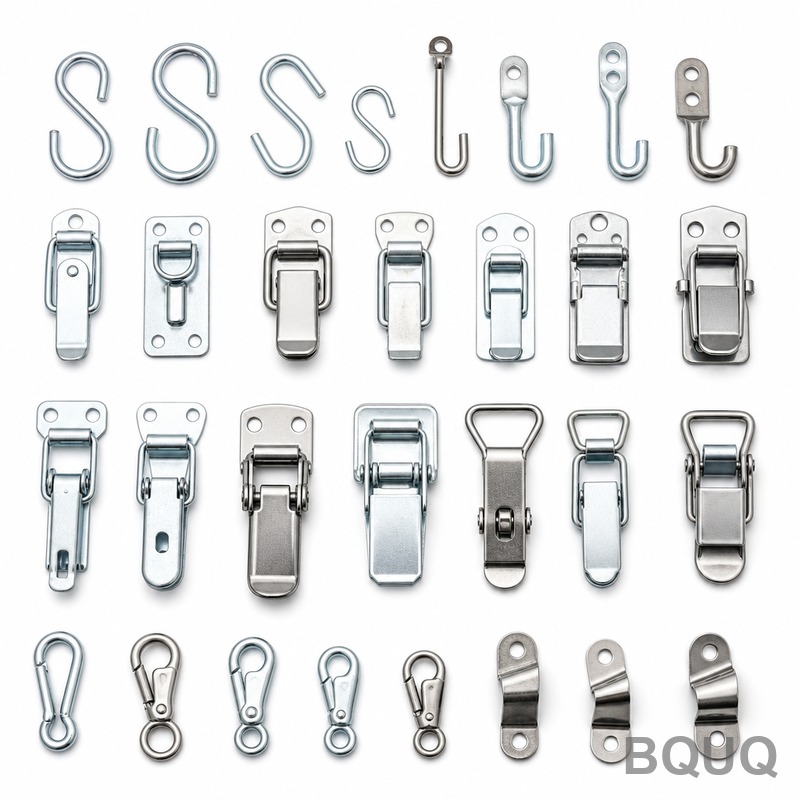
Practical Recommendations for Sourcing Decisions
Engineers should request quotes for both processes whenever annual volume exceeds 10,000 pieces. A reputable stamping supplier will provide a break-even analysis. At BQUQ, we calculate the crossover point using actual tooling costs, material prices, and our CNC machining center rates. For most simple parts, the break-even is 12,000-18,000 pieces; for complex parts with 5+ operations, it drops to 8,000-12,000 pieces.
Consider total lifecycle cost, not just initial unit price. Progressive tooling lasts 1-2 million hits before major rebuild, while single hit dies last 300,000-500,000 hits. If your product has a multi-year life with steady demand, progressive stamping provides better long-term price stability. For seasonal or one-off production, single hit avoids the risk of unused tooling capacity.
Evaluate secondary operations. Progressive stamping can integrate tapping (up to M6), counterboring, and even assembly of two materials in-die. Each integrated operation eliminates a separate machine setup and inspection point. For parts requiring more than three secondary operations, progressive becomes economical even at 5,000-8,000 pieces annually.
FAQ-Style Tips for Volume Decisions
What if my volume fluctuates between 20,000 and 40,000 pieces per year? Choose progressive stamping if the lower bound is guaranteed. The tooling premium is recovered within two years, and you gain tolerance consistency. If volume might drop below 10,000, negotiate a single hit tool with modular inserts that can later be converted to progressive.
How do I know if my part is too complex for single hit? If the part requires more than four distinct operations (piercing, forming, bending, embossing, drawing) or has tight positional tolerances below 0.05 mm, single hit will require multiple dies and extensive inspection. The cumulative cost of quality rejects usually exceeds the progressive tooling premium.
Can I start with single hit and migrate to progressive later? Yes, but expect to pay for a new die. The single hit tool cannot be economically converted. However, starting single hit validates the design and allows design changes before committing to expensive progressive tooling. Many BQUQ customers use single hit for pilot runs of 500-2,000 pieces, then order progressive tooling after design freeze.
Conclusion and Next Steps
Selecting between progressive and single hit stamping is a data-driven decision based on annual quantity, part complexity, tolerance requirements, and total cost of ownership. For low volume under 10,000 pieces, single hit reduces financial risk. For high volume above 50,000 pieces, progressive stamping reduces per-unit cost by 40-80% and improves quality consistency. The crossover zone between 15,000 and 30,000 pieces requires careful analysis of your specific drawing and production forecast.
At BQUQ, we have built progressive dies and single hit tooling for over 20 years across CNC machining, metal stamping, springs, and heat sinks. Our engineering team will review your 2D or 3D CAD file, calculate the break-even point for both processes, and provide a transparent cost comparison within 12 hours. Email your drawings to sc@bquq.com or message us on WhatsApp at +86 13713157787. Visit www.bquq.com to request a formal quotation with tooling breakdown and per-piece pricing at your projected volumes.