Progressive Stamping vs Transfer Stamping: Choosing the Right Process
For high-volume metal part production, the choice between progressive stamping and transfer stamping hinges on part geometry, material utilization, and annual volume. If your part is small, has a high production volume exceeding 100,000 units annually, and requires tight tolerances of ±0.05 mm, progressive stamping is generally the optimal and more cost-effective choice. Conversely, if your part is large, deep-drawn, or requires significant in-die cooling or secondary operations, transfer stamping offers superior flexibility and lower tooling complexity, despite higher per-part costs at lower volumes.
Process Fundamentals and Material Flow
Progressive stamping uses a single continuous strip of metal fed through a series of stations in one press stroke. Each station performs a specific operation—piercing, notching, forming, and cutting off—while the strip advances by a fixed pitch. The part remains attached to the carrier strip until the final station, ensuring precise alignment and eliminating the need for external part handling between operations. Typical feed accuracy ranges from ±0.01 mm to ±0.03 mm, with press speeds reaching 800 to 1,200 strokes per minute for thin materials like 0.2 mm stainless steel.
Transfer stamping, by contrast, uses individual blanks that are mechanically transferred from station to station within the press or between multiple presses. The blank is cut from the coil in a separate first stage, then moved using fingers, rails, or robotic arms. This process allows for deeper draws because the blank can be repositioned and reoriented between stations. Transfer presses operate at lower speeds, typically 20 to 60 strokes per minute, because the transfer mechanism requires time to grip, lift, and relocate the part. Critical geometric differences include the scrap web: progressive dies waste 30% to 45% of the strip material, while transfer dies reduce scrap to 15% to 25% because blanks can be nested more efficiently.
Tolerance and Dimensional Capability
The carrier strip in progressive stamping acts as a built-in locating mechanism, which is why this process achieves superior flatness and hole-to-hole positional accuracy. For parts under 100 mm in length, progressive stamping holds hole diameter tolerances of ±0.025 mm and edge-to-hole tolerances of ±0.05 mm. Material thickness variations are controlled to ±0.01 mm when using precision-rolled strip. Surface finishes reach Ra 0.8 μm without secondary grinding.
Transfer stamping relies on mechanical fingers that grip the part edges, introducing potential for micro-slippage during high-speed transfer. Achievable tolerances are typically ±0.075 mm for hole positions and ±0.10 mm for formed features. However, transfer stamping excels in controlling wall thickness distribution during deep drawing. For a cylindrical cup with a 50 mm diameter and 40 mm depth, transfer stamping maintains wall thickness variation below 0.08 mm, while progressive stamping would show thinning at the cup corners exceeding 0.15 mm. Temperature management also differs: transfer stamping allows natural cooling between stations, preventing heat buildup in high-strength steels, whereas progressive stamping at high speeds can raise die temperature by 40°C to 60°C, affecting dimensional stability.
Cost Structure and Economic Analysis
Tooling costs dominate the initial investment decision. A progressive die for a simple bracket costs between $18,000 and $45,000, while a transfer die for the same part runs $25,000 to $60,000 due to additional transfer mechanisms and blanking stations. However, for deep-drawn parts exceeding 40 mm depth, progressive tooling becomes extraordinarily complex, with costs rising to $80,000 or more, while transfer tooling remains in the $45,000 to $70,000 range because forming can occur in simpler, individual dies.
Per-part pricing follows volume curves. At 50,000 units annually, progressive stamping yields a unit cost of $0.85 for a 5-gram steel component, while transfer stamping costs $1.20. At 500,000 units, progressive stamping drops to $0.42 per part, and transfer stamping to $0.68. The break-even point for progressive stamping versus transfer stamping typically occurs between 150,000 and 250,000 parts per year for parts under 150 mm in size. Above 300,000 parts, progressive stamping is almost always more economical. Below 50,000 parts, neither process is optimal; consider CNC machining or metal stamping with simpler dies.
| Parameter | Progressive Stamping | Transfer Stamping |
| Annual Volume (optimal) | 150,000 - 10,000,000+ | 50,000 - 2,000,000 |
| Tooling Cost (simple part) | $18,000 - $45,000 | $25,000 - $60,000 |
| Tooling Cost (deep draw >40mm) | $60,000 - $120,000 | $45,000 - $70,000 |
| Tolerance (hole position) | ±0.025 mm | ±0.075 mm |
| Tolerance (formed features) | ±0.05 mm | ±0.10 mm |
| Press Speed | 300 - 1,200 SPM | 20 - 60 SPM |
| Material Utilization | 55% - 70% | 75% - 85% |
| Maximum Part Size | 300 mm x 300 mm | 600 mm x 600 mm |
| Maximum Draw Depth | 40 mm (limited) | 200 mm (unlimited with transfer) |
| Scrap Rate | 30% - 45% | 15% - 25% |
| Lead Time (tooling) | 6 - 10 weeks | 8 - 14 weeks |
Material Suitability and Springback Control
Progressive stamping performs best with materials that have consistent thickness and low springback characteristics. Copper alloys, brass, low-carbon steel (SPCC, DC01), and aluminum 5052 in thicknesses from 0.1 mm to 3.0 mm are ideal. The continuous strip provides natural tension that helps control springback in bending operations. For high-strength steels like DP780 or DP980, progressive stamping requires additional calibration stations, increasing tool cost by 15% to 20% and reducing press speed by 30% to 40% to manage elastic recovery.
Transfer stamping handles high-strength steels and thick materials (up to 8 mm) more effectively because each forming station can incorporate springback compensation features independently. For a 2.0 mm thick DP980 bracket, transfer stamping achieves a final bend angle of 90°±0.5°, while progressive stamping yields 90°±1.5° without secondary coining. Transfer stamping also permits in-process heat treatment. For example, forming at 650°C using induction heating is possible in a transfer press, enabling hot stamping of boron steel (22MnB5) to achieve tensile strengths of 1,500 MPa. Progressive stamping cannot incorporate such thermal steps due to the continuous strip feed.
Practical Recommendations for Process Selection
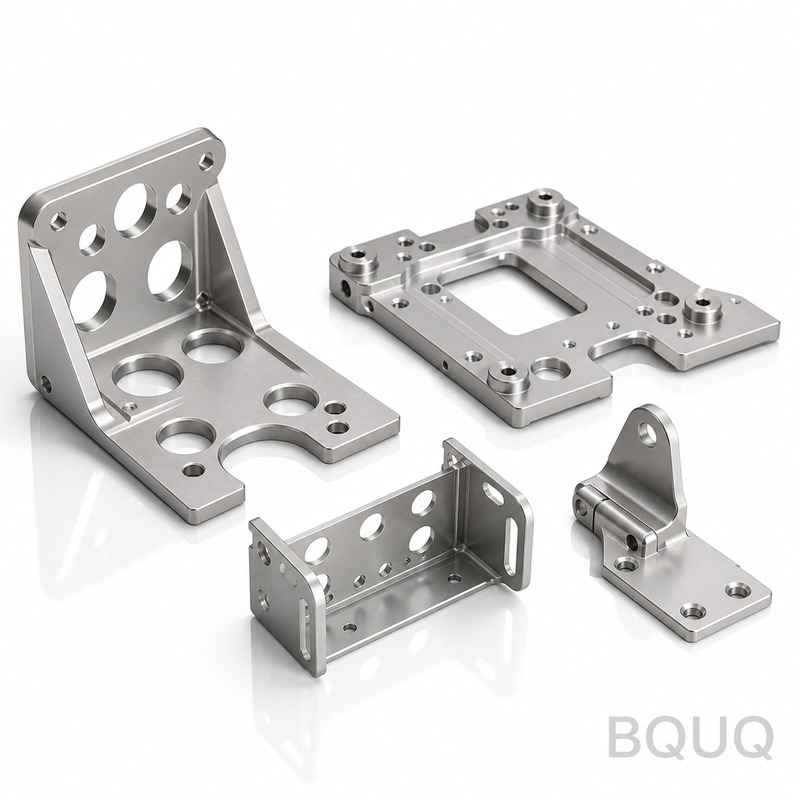
Choose progressive stamping when your part has a projected annual volume above 200,000 units, the part fits within a 300 mm by 300 mm envelope, and the maximum draw depth is under 40 mm. This includes connectors, terminals, heat sink fins, EMI shields, and small brackets. Also select progressive stamping when hole-to-hole tolerances below ±0.05 mm are mandatory. The hidden cost advantage is that progressive stamping produces a complete part per press stroke, requiring no secondary deburring if the die is designed with fine-blanking edges.
Select transfer stamping when part depth exceeds 50 mm, the part has large surface area over 400 cm², or you require material thickness above 3.0 mm. Transfer stamping is mandatory for automotive structural components, pressure vessel end caps, and deep motor housings. Also choose transfer when you need to combine stamping with welding, threading, or assembly operations in the same production line, since the individual blank orientation allows for robotic handling between stations. For mixed low-volume production runs with frequent design changes, transfer dies are easier to modify because changing one station does not require rebalancing the entire strip.
If you are uncertain, request a feasibility study that includes a scrap layout analysis and a cost-per-part simulation at multiple volumes. BQUQ provides this analysis free of charge for parts with drawings. We have operated both progressive and transfer lines for 20 years in Dongguan, manufacturing heat sink clips, spring housings, and automotive brackets with tolerances down to ±0.02 mm.
Conclusion and Engineering Decision Framework
The final decision matrix depends on three numbers: part depth, production volume, and tolerance requirement. If depth is under 40 mm and volume exceeds 150,000, progressive stamping reduces unit cost by 20% to 35% compared to transfer. If depth exceeds 50 mm or tolerance exceeds ±0.1 mm, transfer stamping is the only viable process. For parts between 40 mm and 50 mm depth, evaluate the material: aluminum and brass favor progressive, while steel favors transfer due to springback characteristics. Always specify the material grade and temper, as a 10% variation in yield strength can shift the optimal process choice.
BQUQ offers 12-hour quoting on both progressive and transfer stamping projects. Our engineers will review your 2D or 3D CAD files, calculate the break-even volume, and recommend the lower-cost process without compromising tolerances. Email your drawings to sc@bquq.com or contact our engineering team directly via WhatsApp at +86 13713157787. Visit www.bquq.com to download our stamping design guidelines and tolerance reference charts. We reply within one business day with a detailed quotation including tooling cost, unit price, and lead time.
Related Articles
- Springback Compensation in Metal Stamping: Design & Simulation Guide
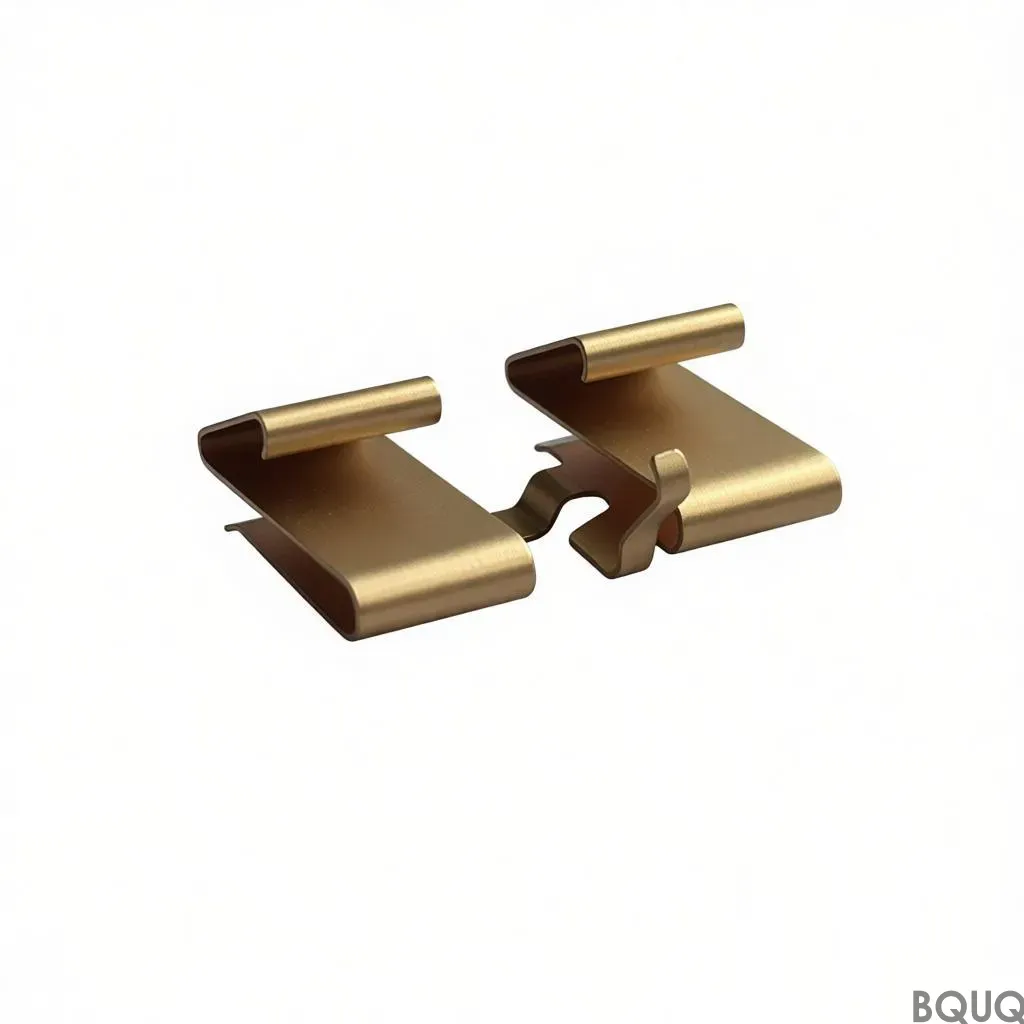
- custom stamped metal power contact spring battery clip factory
- Stamping digital factory and simulation-driven design: from virtual prototype to digital twin operation
Frequently Asked Questions
When should I choose progressive stamping over transfer stamping for my metal parts?
Choose progressive stamping for small parts with annual volumes exceeding 100,000 units and tight tolerances of ±0.05 mm, as it is more cost-effective. Choose transfer stamping for large, deep-drawn parts or those requiring significant in-die cooling or secondary operations, where flexibility and lower tooling complexity matter more.
What tolerances can I expect with progressive stamping for parts under 100 mm?
For parts under 100 mm in length, progressive stamping holds hole diameter tolerances of ±0.025 mm and edge-to-hole tolerances of ±0.05 mm. Material thickness variations are controlled to ±0.01 mm with precision-rolled strip, and surface finishes reach Ra 0.8 μm without secondary grinding.
How does material scrap compare between progressive and transfer stamping?
Progressive stamping wastes 30% to 45% of the strip material due to the scrap web, while transfer stamping reduces scrap to 15% to 25% because blanks can be nested more efficiently. This makes transfer stamping more material-efficient, especially for larger parts.
What are the typical press speeds for progressive and transfer stamping?
Progressive stamping operates at 800 to 1,200 strokes per minute for thin materials like 0.2 mm stainless steel, with feed accuracy of ±0.01 mm to ±0.03 mm. Transfer stamping runs slower at 20 to 60 strokes per minute because the transfer mechanism needs time to grip, lift, and relocate parts.