Spring Specification Standards: ASTM, SMI, and JIS Reference for Engineers
Selecting the correct spring specification standard is critical for ensuring mechanical performance, dimensional accuracy, and regulatory compliance in precision manufacturing. For global sourcing, the three most referenced frameworks are ASTM (American Society for Testing and Materials), SMI (Spring Manufacturers Institute), and JIS (Japanese Industrial Standards), each governing different material grades, tolerance classes, and testing protocols. This article provides a direct engineering comparison of these standards, including real tolerance data, material equivalencies, and practical selection criteria for CNC-machined, stamped, and coiled springs.
Scope and Governance of Each Standard
ASTM is a voluntary consensus standard widely adopted in North America, covering material chemistry (e.g., ASTM A228 for music wire, ASTM A313 for stainless steel) and mechanical testing methods. SMI is not a standalone specification body but a trade association that publishes design handbooks and tolerance tables (SMI Handbook) used in conjunction with ASTM materials. JIS is a mandatory national standard in Japan, with spring-specific norms such as JIS G 4314 (stainless steel wire for springs) and JIS B 2704 (helical compression springs).
The critical difference lies in tolerance classification. ASTM uses a "grade" system based on spring index and number of coils, while JIS defines precise numerical tolerances for wire diameter, free length, and load deflection. SMI provides practical manufacturing tolerances that are often tighter than ASTM's general tables but looser than JIS's rigid categories. For cross-border projects, engineers must map equivalent material grades (e.g., ASTM A228 music wire vs. JIS SWP-A) and adjust tolerance expectations accordingly.
Material Equivalency and Chemical Composition
Material selection is the first step where standards diverge. ASTM A228 specifies high-carbon steel wire with a carbon content of 0.70-1.00%, tensile strength ranging from 2300 to 2800 MPa for 0.5 mm diameter. JIS G 4314 for SUS 304-WPB (stainless) requires 0.08% max carbon, 18.00-20.00% chromium, and 8.00-10.50% nickel, with tensile strength of 1700 MPa minimum for 1.0 mm wire. SMI does not set chemistry but references ASTM and SAE grades, offering cross-reference tables for equivalent JIS and DIN materials.
A common mistake is assuming interchangeability without verifying surface finish and decarburization limits. ASTM A313 specifies maximum decarburization depth of 0.05 mm for 1.5 mm wire, while JIS G 4314 mandates a surface defect depth not exceeding 0.03 mm. For springs operating above 120°C, ASTM A313 (alloy 17-7PH) offers better stress relaxation resistance than JIS SUS 304, but JIS SUS 631 (equivalent to 17-7PH) provides similar performance with tighter diameter tolerance of ±0.01 mm for 1.0 mm wire.
Tolerance Classes and Dimensional Accuracy
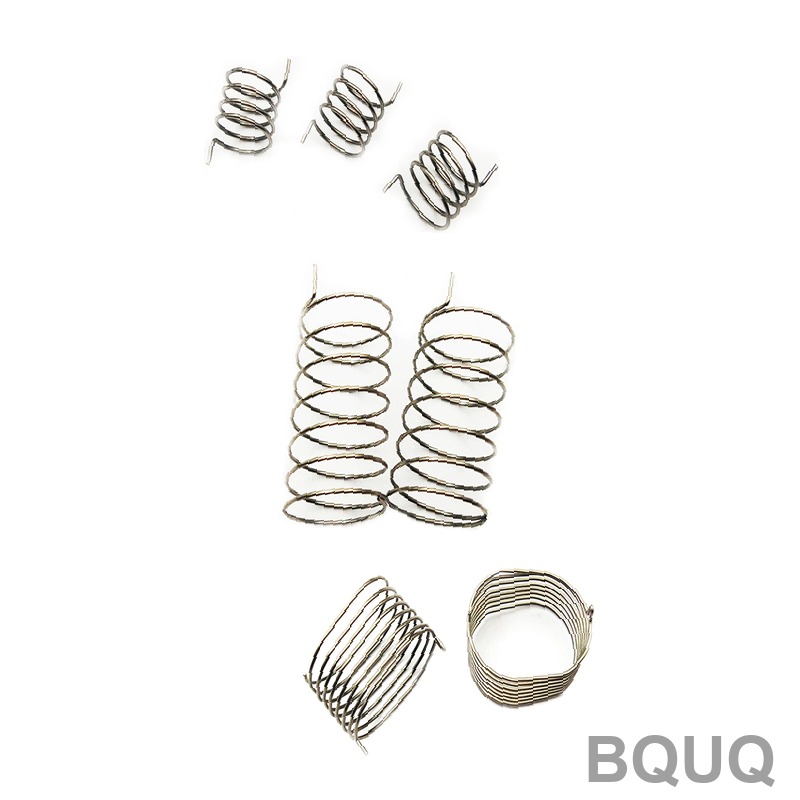
Tolerance tables are the most cited reference in production. ASTM B 267 and SMI Handbook define three grades: Grade 1 (precision), Grade 2 (commercial), and Grade 3 (general). For a 10 mm free length compression spring with 5 active coils and 1.0 mm wire, Grade 1 allows ±0.15 mm free length, while Grade 3 allows ±0.60 mm. JIS B 2704 uses Class 1, 2, and 3, where Class 1 for the same spring permits ±0.10 mm free length and ±0.04 mm wire diameter. SMI's precision class matches JIS Class 2 for load tolerance but is slightly looser on free length.
The table below summarizes key tolerance values for a typical compression spring (wire diameter 1.0 mm, OD 10 mm, free length 25 mm, 6 active coils):
| Parameter | ASTM A228 Grade 1 | SMI Precision | JIS B 2704 Class 1 | JIS B 2704 Class 2 |
| Wire diameter (mm) | ±0.010 | ±0.008 | ±0.006 | ±0.010 |
| Free length (mm) | ±0.25 | ±0.20 | ±0.15 | ±0.30 |
| Outer diameter (mm) | ±0.20 | ±0.15 | ±0.10 | ±0.20 |
| Load at spec height (N) | ±5% | ±4% | ±3% | ±5% |
| Total coils tolerance | ±0.25 | ±0.20 | ±0.15 | ±0.25 |
| Initial tension (only for extension) | ±10% | ±8% | ±5% | ±10% |
For high-volume stamped springs, JIS Class 1 typically adds 8-12% to unit cost compared to ASTM Grade 2, due to additional inspection and tighter tooling. In contrast, SMI precision tolerances are achievable with CNC grinding and cost only 5-7% more than commercial grade.
Testing Protocols and Environmental Limits
Each standard mandates distinct verification methods. ASTM A228 requires a tensile test on a straight wire sample, with a minimum tensile strength of 2300 MPa for 0.5 mm diameter, and a torsion test for ductility. JIS G 4314 specifies a bending test (180 degrees without cracking) and a stress relaxation test at 150°C for 48 hours, with a maximum load loss of 3%. SMI recommends proof loading to 100% of maximum solid height and a fatigue test of 10^6 cycles for critical applications, though it does not enforce a fixed test frequency.
Temperature ratings are another differentiator. ASTM A228 music wire is rated for continuous service up to 120°C, above which stress relaxation accelerates. JIS SUS 304-WPB can operate up to 200°C, but its fatigue strength drops by 20% at that temperature. For cryogenic applications down to -40°C, JIS SUS 631 (precipitation-hardened) retains 95% of its room-temperature modulus, while ASTM 17-7PH retains 92%, making JIS slightly more conservative for aerospace and LNG systems.
Cost and Lead Time Comparison for Precision Springs
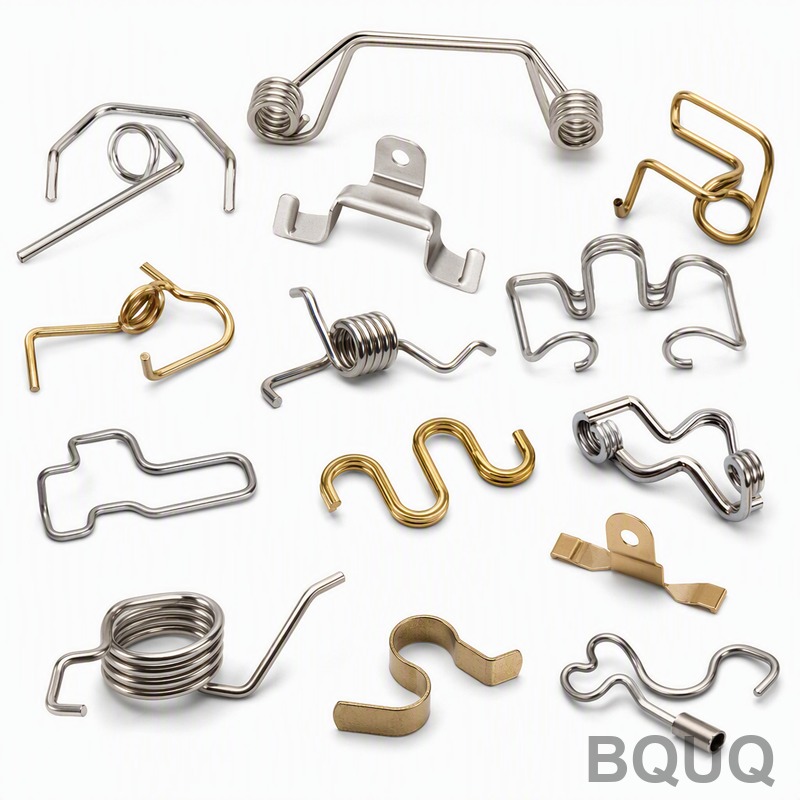
Pricing varies significantly based on tolerance class and material certification. A 10,000-piece order of 1.0 mm music wire compression springs (10 mm OD, 25 mm free length) with ASTM Grade 2 tolerance costs approximately $0.12 per piece in Dongguan, with a 7-day lead time. Upgrading to JIS Class 1 adds 15% to unit cost ($0.14) and extends lead time to 10 days due to 100% inspection. SMI precision grade sits in between at $0.13 per piece with an 8-day lead time.
For stainless steel springs (SUS 304-WPB), the JIS certification requires material traceability certificates (Mill Test Report), adding $50-100 per batch regardless of quantity. ASTM-certified materials are often 5% cheaper than JIS equivalents due to wider availability of domestic US steel, but ocean freight and duty offset this advantage for Asian buyers. A practical rule: choose ASTM for prototype and low-volume runs, switch to JIS for high-volume production requiring tight statistical process control, and use SMI as a middle ground for mid-volume orders with balanced cost and accuracy.
Practical Recommendations for Engineering Procurement
For mission-critical springs in automotive safety systems or medical devices, always specify JIS Class 1 or SMI precision, as the 3% load tolerance directly impacts actuation force repeatability. For general industrial springs (latches, valves, counterbalances), ASTM Grade 2 is cost-effective and widely available. If your design involves high cyclic loading (above 10^5 cycles), request fatigue testing per SMI Handbook Section 4, even if ASTM does not mandate it, as this prevents premature fracture.
When sourcing from a Chinese factory, verify that the supplier holds both ASTM and JIS certifications, as many local mills only provide one. Ask for a material certificate stating the exact standard and grade, and request a dimensional report showing tolerance compliance per your chosen class. For springs with wire diameter below 0.5 mm, JIS tolerance is generally tighter (e.g., ±0.003 mm for Class 1), so prioritize JIS if your design uses micro-springs. Always specify the service temperature and load direction in your drawing, as this determines whether you need ASTM A313 (high-temp) or JIS SUS 631 (cryogenic).
FAQ-Style Tips for Cross-Standard Compliance
Can I mix ASTM material with JIS tolerance? Yes, but the part will only be certified to the stricter of the two standards. Use JIS B 2704 for dimensions and ASTM A228 for material, then note both on the drawing to avoid inspection conflicts.
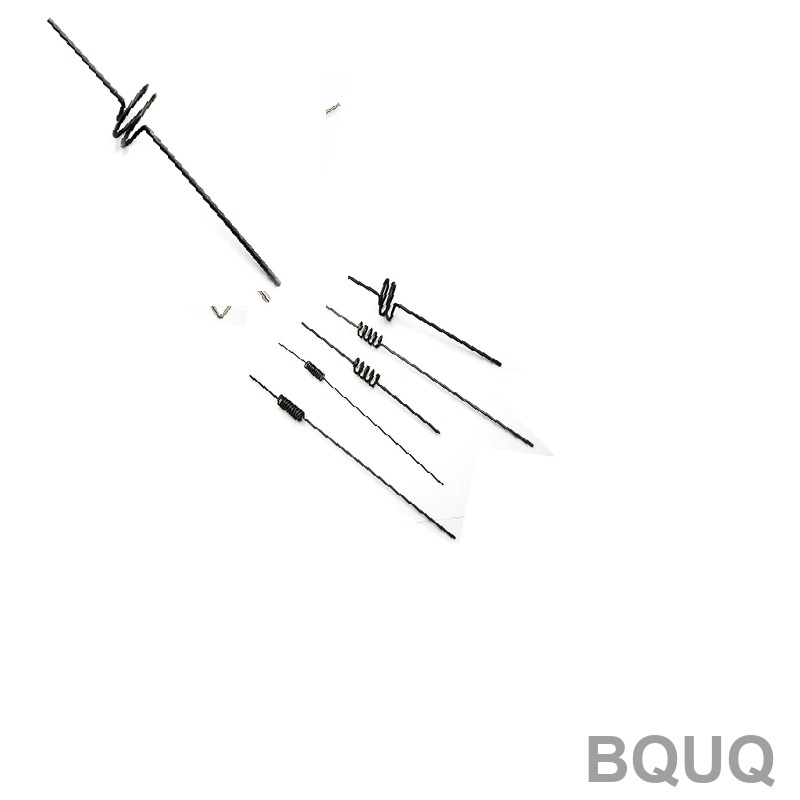
How do I convert ASTM tensile strength to JIS hardness? For music wire, a tensile strength of 2300 MPa correlates to a Vickers hardness of approximately 700 HV, which JIS G 4314 does not directly specify but accepts as an alternative test. Request both values on the certificate for international acceptance.
What is the maximum spring index for SMI precision tolerance? SMI precision is validated for spring index (D/d) between 4 and 12. Outside this range, either ASTM Grade 1 or JIS Class 1 must be referenced, as SMI tables lose statistical validity.
Is JIS mandatory for exporting to Japan? Yes, for automotive and electronics components, Japanese OEMs typically require JIS compliance. However, for aftermarket parts, ASTM with a JIS equivalency letter from a certified lab is often accepted.
Conclusion and Engineering Guidance
Selecting between ASTM, SMI, and JIS is not about which is superior but which matches your functional requirements, budget, and target market. ASTM offers broad material coverage and lower cost for general use; SMI provides practical manufacturing tolerances for mid-range accuracy; JIS delivers the tightest dimensional control and explicit test protocols for high-reliability applications. For a factory like BQUQ with 20 years of CNC machining and spring production experience, we recommend specifying JIS Class 1 for any spring that experiences dynamic loading or tight assembly interfaces, and ASTM Grade 2 for static or low-cycle applications where cost reduction matters. Always request a full material certificate and dimensional inspection report to eliminate ambiguity.
For your next spring project, send your 2D drawing or 3D model with your target standard and quantity. Our engineering team will provide a detailed tolerance analysis and cost breakdown within 12 hours. Contact us at Email: sc@bquq.com, WhatsApp: +86 13713157787, or visit www.bquq.com for immediate assistance.
Related Articles
- Smart Spring Inventory Management Strategies for OEMs
- Hardware spring fatigue failure analysis and life prediction technology
- In-depth analysis of technology and process in the hardware spring industry in 2026: a full-dimensional interpretation of high stress, functional integration and engineering certification
Frequently Asked Questions
What are the main differences between ASTM, SMI, and JIS spring standards?
ASTM is a voluntary consensus standard for material chemistry and testing, widely used in North America. SMI is a trade association providing practical manufacturing tolerances, often tighter than ASTM but looser than JIS. JIS is a mandatory Japanese national standard with precise numerical tolerances for wire diameter, free length, and load deflection. Engineers must map equivalent material grades and adjust tolerance expectations for cross-border projects.
How do material grades compare between ASTM A228 and JIS SWP-A for music wire?
ASTM A228 specifies high-carbon steel wire with 0.70-1.00% carbon and tensile strength of 2300-2800 MPa for 0.5 mm diameter. JIS SWP-A is the equivalent grade, but exact chemical composition and tensile requirements may differ. Always verify surface finish and decarburization limits, as ASTM A313 allows max decarburization depth of 0.05 mm for 1.5 mm wire, while JIS G 4314 limits surface defects to 0.03 mm.
Which standard should I choose for springs operating above 120°C?
For high-temperature applications above 120°C, ASTM A313 (alloy 17-7PH) offers better stress relaxation resistance than JIS SUS 304. However, JIS SUS 631 (equivalent to 17-7PH) provides similar performance with tighter diameter tolerance of ±0.01 mm for 1.0 mm wire. Your choice depends on whether you prioritize relaxation resistance or dimensional precision.
Are SMI tolerances tighter or looser than ASTM and JIS?
SMI provides practical manufacturing tolerances that are often tighter than ASTM's general tables but looser than JIS's rigid categories. ASTM uses a grade system based on spring index and number of coils, while JIS defines precise numerical tolerances. For projects requiring maximum dimensional accuracy, JIS is the strictest, but SMI offers a balanced approach for manufacturability.