Spring Surface Treatment Options: Zinc, Nickel, Powder Coating and More
Introduction
The most direct answer to the question of spring surface treatment selection is this: zinc plating is the default choice for 70% of industrial compression, extension, and torsion springs due to its cost-to-corrosion performance ratio, while nickel plating is specified when electrical conductivity or higher temperature resistance is required, and powder coating is reserved for large-diameter springs exposed to abrasive environments. The remaining options—including zinc-nickel alloy, black oxide, and phosphate—each occupy a specific niche defined by corrosion resistance thresholds, hydrogen embrittlement risk, and operating temperature limits. For a spring manufacturer with 20 years of CNC and stamping experience, the decision matrix always begins with three variables: the spring's working environment, its dimensional tolerances, and the acceptable cost per unit.
Corrosion Resistance and Coating Thickness Specifications
The primary function of any spring surface treatment is to delay the onset of red rust, which is the visible failure of steel under oxidation. The corrosion resistance of a coating is measured in hours of neutral salt spray (NSS) testing per ASTM B117. Clear zinc plating offers 72 to 120 hours to white rust, while yellow or gold zinc (chromate passivated) extends this to 120 to 240 hours. For comparison, nickel plating provides 200 to 500 hours depending on the nickel layer thickness, which typically ranges from 5 to 25 micrometers. Powder coating, when applied at 60 to 120 micrometers, can exceed 500 hours, but the coating thickness often interferes with spring coil spacing and free length. Zinc-nickel alloy (12 to 15 percent nickel) is the premium option, delivering 720 to 1000 hours to red rust, which is why it is mandatory in automotive brake systems and heavy-duty outdoor equipment. The base steel condition matters equally; a spring with surface decarburization will fail under the coating regardless of the treatment quality.
Hydrogen Embrittlement Risk and Baking Procedures
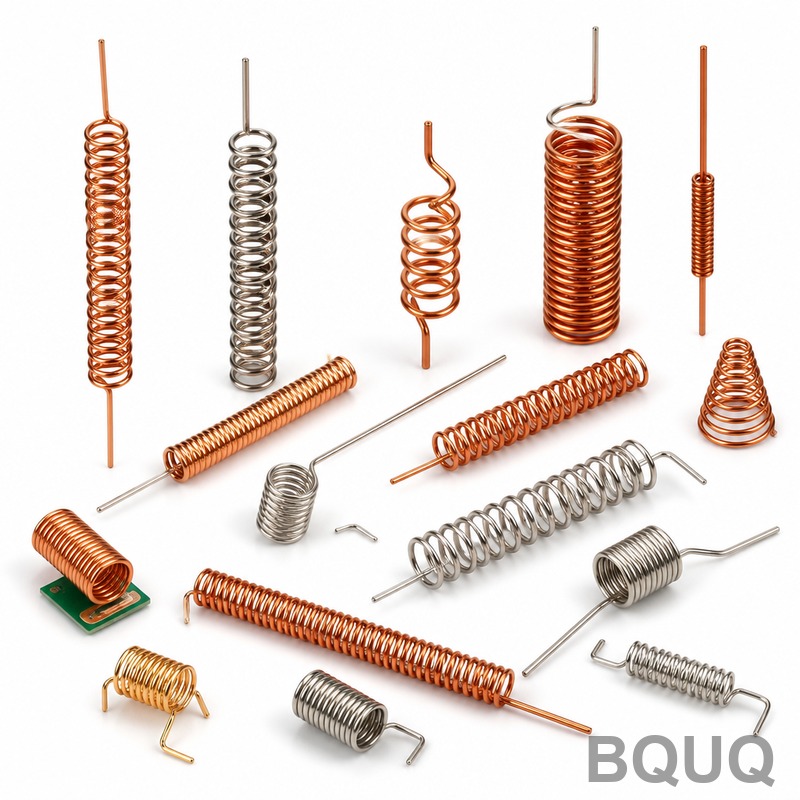
High-carbon spring steel (SAE 1070, 1080, or 1095) and alloy steels (SAE 5160, 6150) are susceptible to hydrogen embrittlement during acid pickling and electroplating processes. The hydrogen atoms diffuse into the crystal lattice and cause delayed fracture under sustained load. The standard mitigation is a post-plating bake at 190 to 220 degrees Celsius for 4 to 8 hours, performed within 1 hour of the plating process. For springs with a wire diameter above 6.0 mm or tensile strength above 1800 MPa, the baking duration must be extended to 8 to 24 hours. This baking step adds 8 to 15 percent to the total coating cost. Mechanical plating (zinc flakes applied by tumbling) eliminates hydrogen embrittlement entirely because the process uses no electrolytic solution. A practical rule: if your spring is designed to operate at 90 percent of its maximum allowable stress, use mechanical zinc plating or specify a hydrogen bake certificate. We routinely test batch samples for embrittlement using a 200-hour sustained load test per ASTM F519.
Cost Breakdown and Lead Time Comparison
The cost of surface treatment is calculated per kilogram of spring weight, not per piece, because the plating bath consumption depends on total surface area. For a typical compression spring weighing 50 grams with 8 mm outer diameter, the per-unit coating cost at a volume of 10,000 pieces is as follows: clear zinc at 0.05 to 0.08 USD per piece, yellow zinc at 0.06 to 0.10 USD, nickel plating at 0.15 to 0.25 USD, zinc-nickel alloy at 0.20 to 0.35 USD, powder coating at 0.30 to 0.50 USD, and black oxide at 0.03 to 0.05 USD. Lead times for in-house plating are 2 to 3 business days for zinc and black oxide, 4 to 5 days for nickel, and 5 to 7 days for zinc-nickel and powder coating because of the multiple pre-treatment stages. For high-volume orders above 100,000 pieces, we recommend scheduling the treatment as a continuous batch to avoid setup fees, which typically range from 80 to 150 USD per lot.
| Treatment Type | NSS Hours to Red Rust | Thickness (micrometers) | Max Continuous Temp (Celsius) | Relative Cost Factor |
| Clear Zinc | 72-120 | 5-12 | 120 | 1.0 |
| Yellow Zinc (Chromate) | 120-240 | 8-15 | 120 | 1.2 |
| Nickel (Electroless) | 200-500 | 5-25 | 300 | 3.0 |
| Zinc-Nickel Alloy | 720-1000 | 8-20 | 200 | 4.0 |
| Powder Coating (Epoxy) | 400-600 | 60-120 | 150 | 5.0 |
| Black Oxide | 24-48 | 0.5-2.0 | 250 | 0.6 |
| Phosphate + Oil | 48-72 | 3-8 | 100 | 0.8 |
Temperature Limits and Friction Characteristics
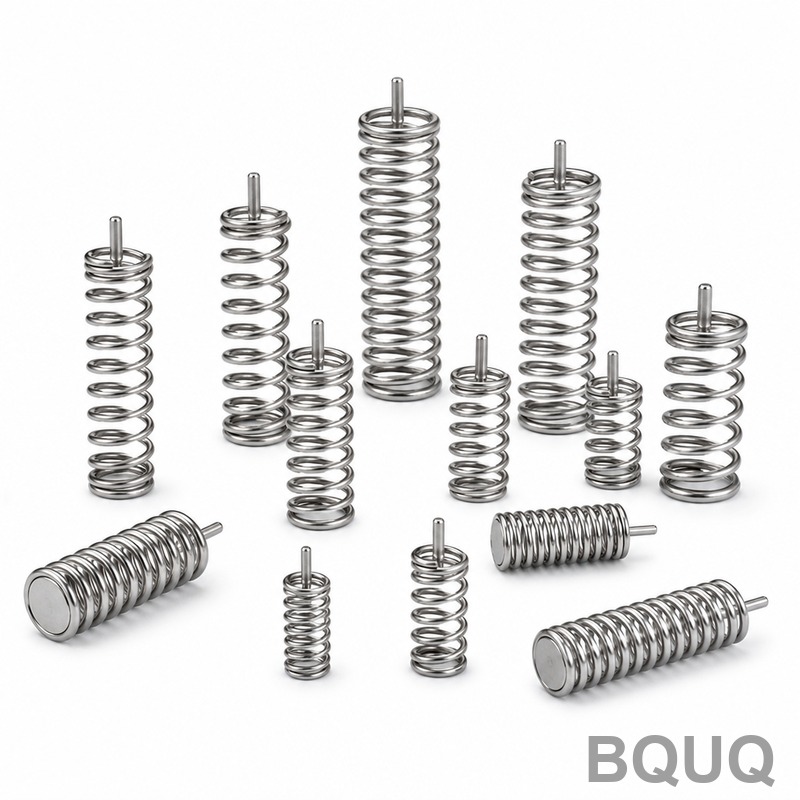
Operating temperature is the second most critical factor after corrosion. Zinc plating degrades rapidly above 120 degrees Celsius, where it loses adhesion and forms a brittle oxide layer. Nickel plating, especially the electroless (chemical) variant, remains stable up to 300 degrees Celsius, making it suitable for engine valve springs and exhaust components. Zinc-nickel alloy performs well up to 200 degrees Celsius. Powder coating, typically a thermoset epoxy or polyester, fails above 150 degrees Celsius due to cracking and loss of adhesion. Black oxide is stable up to 250 degrees Celsius but offers almost no corrosion protection without a supplemental oil or wax film. For springs that slide against a mating component, such as clutch springs or suspension springs, the coefficient of friction matters. Powder coating has the highest coefficient (0.6 to 0.8), which can cause binding. Zinc and nickel have a coefficient of 0.15 to 0.25, which is preferable for dynamic applications. If the spring is used as a conductive path (e.g., in a battery contact), only nickel plating or gold flash over nickel provides acceptable contact resistance below 50 milliohms.
Dimensional Tolerances and Coating Build-Up
Springs are manufactured to tight tolerances, typically plus or minus 0.05 mm on wire diameter and plus or minus 0.10 mm on free length for a 50 mm long spring. Every coating adds a thickness that changes the effective wire diameter and the outer diameter. Zinc plating adds 5 to 12 micrometers per side, which is negligible for most designs. However, powder coating at 60 to 120 micrometers per side will reduce the inner diameter by 0.12 to 0.24 mm, which can cause interference with a guide rod or mandrel. For this reason, we always recommend machining the spring's inner diameter with an undersize allowance of 0.15 mm when powder coating is specified. Nickel plating is used on precision springs where a uniform coating thickness is required, as electroless nickel deposits evenly on all surfaces, including the inside of the coil. Electrolytic zinc tends to build up more on the outer edges and less at the coil interior. For springs with a wire diameter under 0.5 mm, we recommend avoiding powder coating entirely because the coating will bridge the gaps between adjacent coils and effectively render the spring solid.
Practical Recommendations for Spring Engineers
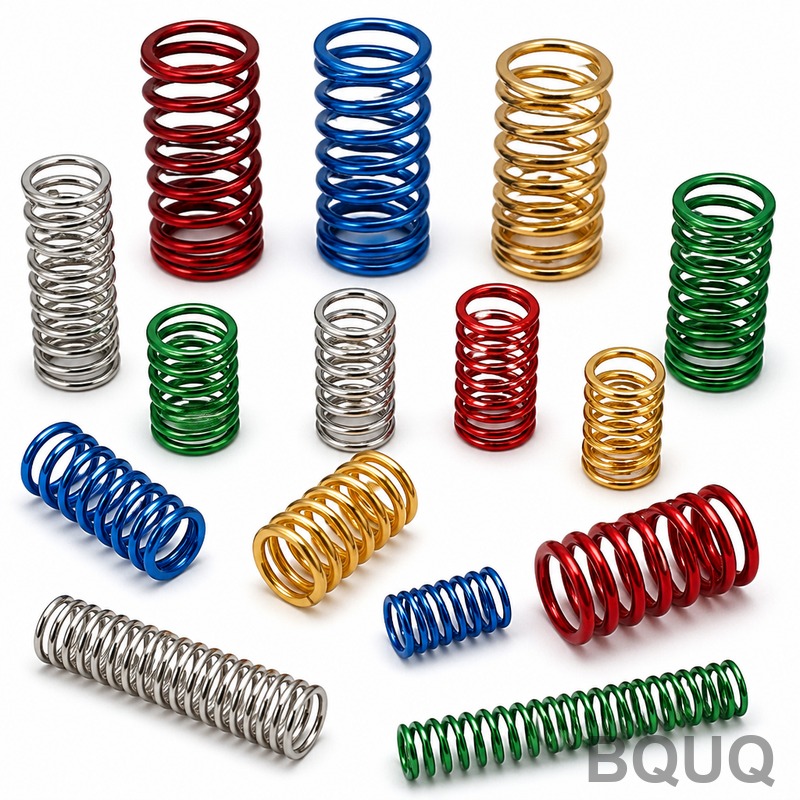
For 80 percent of spring applications, clear or yellow zinc plating is the most cost-effective solution, provided the operating temperature is below 120 degrees Celsius and the environment is not continuously wet with chlorides. For springs that must survive 500 hours of salt spray, specify zinc-nickel alloy rather than nickel plating, because zinc-nickel is sacrificial (it corrodes in place of the steel) while nickel is only a barrier coating, and once a pinhole reaches the steel, corrosion spreads rapidly beneath the nickel. For high-temperature springs (over 200 degrees Celsius) in dry environments, choose black oxide with a high-temperature grease instead of plating. For springs that will be exposed to abrasive particles, such as those in a shredder or conveyor system, powder coating is the correct choice because the thick layer provides wear resistance, but you must increase the spring's free length and outer diameter to compensate for the coating thickness. Always request a hydrogen embrittlement certificate for any electroplated spring that will be preloaded in assembly. In our factory, we maintain a 12-hour quoting policy, so if you send us the spring drawing with the working environment and required NSS hours, we will return a detailed treatment specification with the cost per thousand pieces and the guaranteed lead time.
Conclusion and Engineering Summary
The selection of a spring surface treatment is a trade-off among corrosion resistance, temperature capability, dimensional control, and cost. Zinc plating is the baseline for general use, nickel is for conductivity and moderate heat, zinc-nickel alloy is for aggressive salt environments, and powder coating is for abrasive or outdoor static applications. The table in this article provides the key threshold values: 120 hours of salt spray for clear zinc, 300 degrees Celsius for nickel, and a relative cost factor of 5.0 for powder coating over clear zinc. For any custom spring project, the fastest path to a correct specification is to provide the material grade, wire diameter, coil count, operating stress, and the required NSS hours. With 20 years of precision manufacturing experience, we can recommend the optimum treatment based on your exact service conditions. For a free engineering review and a 12-hour quotation, email your spring drawing to sc@bquq.com or send a message on WhatsApp to +86 13713157787. Visit www.bquq.com to view our capability matrix and previous case studies on spring surface treatments.
Related Articles
- Size control and online intelligent detection technology of precision spring
- In-depth analysis of technology and process in the hardware spring industry in 2026: a full-dimensional interpretation of high stress, functional integration and engineering certification
- From "standard parts" to "functional parts": 2026 hardware spring industry technology trends and functional innovation engineering direction
Frequently Asked Questions
What is the default spring surface treatment and why?
Zinc plating is the default choice for 70% of industrial springs due to its cost-to-corrosion performance ratio. Clear zinc offers 72-120 hours to white rust, while yellow zinc extends this to 120-240 hours per ASTM B117 testing.
When should I specify nickel plating over zinc for my springs?
Nickel plating is specified when electrical conductivity or higher temperature resistance is required. It provides 200-500 hours of salt spray resistance depending on layer thickness (5-25 micrometers), outperforming standard zinc but below zinc-nickel alloy's 720-1000 hours.
How does hydrogen embrittlement affect my spring order and what is the mitigation?
High-carbon and alloy steels are susceptible to hydrogen embrittlement during electroplating. The standard mitigation is a post-plating bake at 190-220°C for 4-8 hours within 1 hour of plating. For wire above 6.0mm or tensile strength above 1800 MPa, extend baking to 8-24 hours. This adds 8-15% to coating cost.
What coating option is best for springs operating at high stress levels?
For springs operating at 90% of maximum allowable stress, use mechanical zinc plating (zinc flakes by tumbling) as it eliminates hydrogen embrittlement entirely since no electrolytic solution is used. Alternatively, specify a hydrogen bake certificate with electroplated springs.