Stamping vs Laser Cutting: Which Sheet Metal Process Should You Choose?
For production volumes above 1,000 units, stamping is the lower-cost and higher-speed option, while laser cutting is superior for prototyping, complex geometries, and volumes below 500 units. Stamping offers a cost per part that drops to $0.15-$0.50 at high volumes but requires tooling investments of $3,000-$50,000, whereas laser cutting has no tooling cost but maintains a steady $2-$15 per part expense. The decision hinges on your annual quantity, required tolerances, material thickness, and part complexity, not on a universal "best" method.
What Are the Core Differences Between Stamping and Laser Cutting?
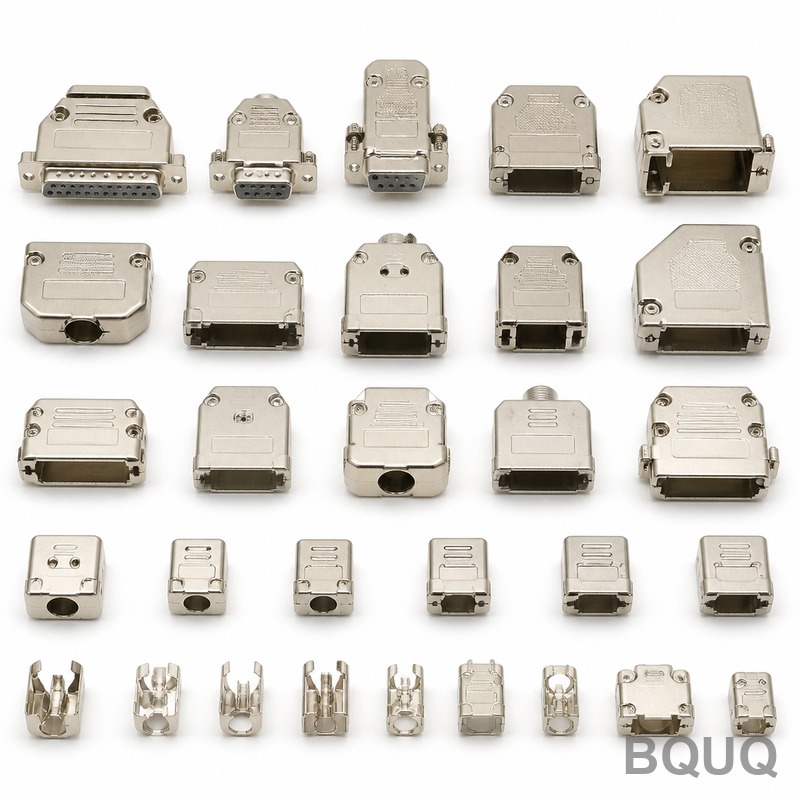
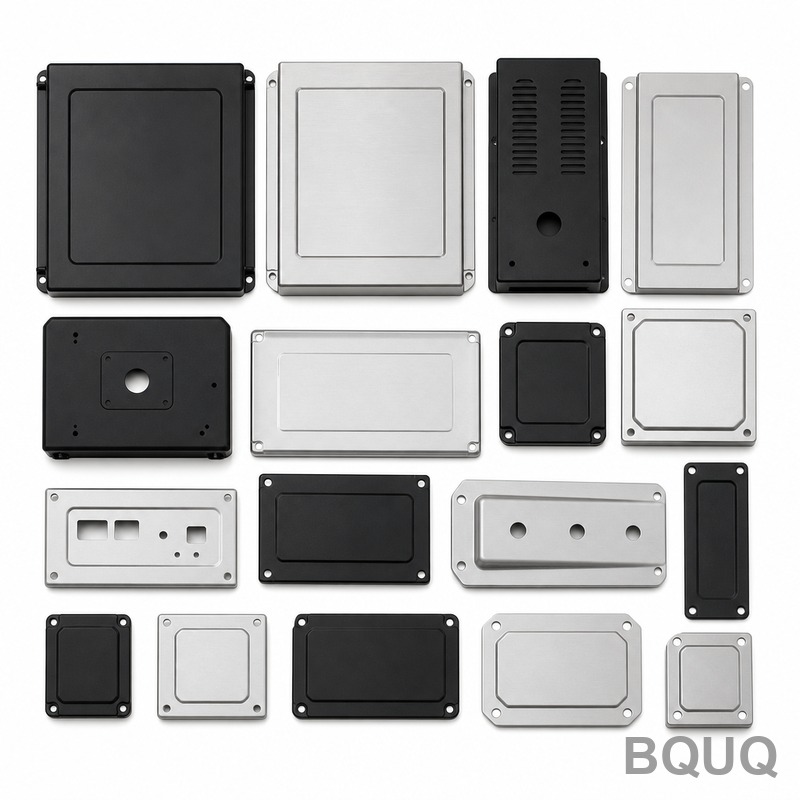
Stamping is a mechanical process that uses a die and press to deform, cut, or form sheet metal, with cycle times as fast as 30-60 strokes per minute. Laser cutting is a thermal process that melts and vaporizes material along a programmed path, with typical cutting speeds of 100-300 inches per minute for 1 mm mild steel. Stamping is ideal for high-volume, repeatable parts like brackets and enclosures, while laser cutting excels at low-volume, custom shapes without dedicated tooling. The fundamental trade-off is upfront tooling cost versus per-part cost, with stamping amortizing its die investment over thousands of parts.
How Do Production Volumes Affect the Cost Per Part?
At 100 units, laser cutting is dramatically cheaper because stamping requires a $10,000 die, adding $100 per part in tooling alone. At 10,000 units, stamping's per-part cost drops to $0.25 while laser cutting remains around $5-$10, making stamping 20-40 times more economical. The break-even point typically falls between 500 and 1,500 parts, depending on part size and material thickness. For example, a simple 100 mm x 50 mm bracket in 1.5 mm steel: laser cutting costs about $4.50 per part at 500 units, while stamping costs $2.80 per part including die amortization at the same quantity.
| Process | Tooling Cost | Per-Part Cost at 100 Units | Per-Part Cost at 1,000 Units | Per-Part Cost at 10,000 Units | Typical Lead Time for First Article |
| Stamping | $3,000-$50,000 | $50-$500 | $3-$20 | $0.15-$0.50 | 3-6 weeks |
| Laser Cutting | $0 | $3-$15 | $2-$10 | $2-$8 | 1-3 days |
What Tolerances Can Each Process Achieve?
Stamping achieves tighter tolerances of +/-0.05 mm for hole positions and +/-0.10 mm for overall dimensions, with consistent repeatability across millions of parts. Laser cutting achieves +/-0.10 mm to +/-0.20 mm tolerance, but thermal effects such as heat-affected zones (HAZ) can cause edge roughness of Ra 3.2-6.3 micrometers. If your design requires tight fit-up with mating components, stamping is superior; for cosmetic or non-critical features, laser cutting is acceptable. Stamping also produces a shear edge with a burnish zone that can be controlled, whereas laser edges are slightly tapered (0.1-0.2 mm) and may require secondary deburring.
Which Materials Are Better Suited for Each Process?
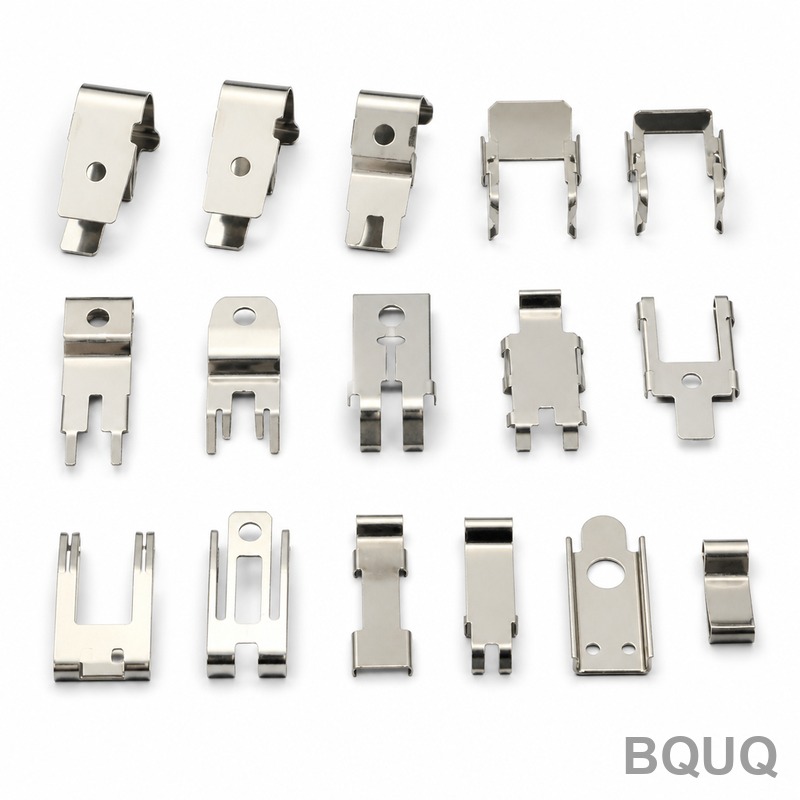
Stamping works best with ductile materials that can withstand deformation without cracking, including low-carbon steel (DC01, SPCC), aluminum 5052, brass, and copper. Laser cutting handles a wider range of materials, including stainless steel 304/316, galvanized steel, and even reflective metals like copper and brass up to 8 mm thickness. For high-strength steels above 590 MPa tensile strength, stamping may require specialized dies and lubrication, while laser cutting becomes challenging above 12 mm thickness due to dross formation. Aluminum above 3 mm reflects CO2 lasers but is manageable with fiber lasers at 1-6 kW power.
How Do Design Complexity and Part Geometry Influence the Choice?
Laser cutting allows unlimited geometric freedom, including sharp internal corners (down to 0.2 mm radius), intricate slots, and nested patterns with no extra cost. Stamping requires draft angles for formed features, minimum bend radii of 0.5-1.0 times material thickness, and limits internal cutouts to avoid die weakness. If your part has deep drawn features, embossing, or coining, stamping is the only viable process because laser cutting cannot create three-dimensional forms. For flat parts with complex 2D profiles, laser cutting is faster to iterate and modify without tooling changes.
When Does Stamping Become the Only Feasible Option?
Stamping is the sole choice for parts requiring forming operations such as deep drawing (e.g., battery casings, cups), bending with tight radii, or coining for surface texturing. For volumes exceeding 50,000 parts per year, stamping's cycle time of 1-2 seconds per part versus laser cutting's 15-60 seconds per part makes it the only economically viable method. Additionally, stamping can integrate multiple operations—blanking, piercing, bending, and embossing—into a single progressive die, reducing handling and secondary operations. If your part needs thickness greater than 6 mm in aluminum or 3 mm in steel, laser cutting may struggle with edge quality, pushing you toward stamping or alternative processes.
Which Process Offers Faster Lead Times and Lower Risk for New Products?
Laser cutting offers first-article delivery in 1-3 days, enabling rapid design validation and functional testing before committing to mass production. Stamping requires 3-6 weeks for die design, fabrication, and tryout, which delays product launch and increases upfront financial risk. For engineering teams evaluating multiple design iterations, laser cutting allows low-cost changes overnight, whereas a stamping die modification costs $500-$5,000 per change. However, once a design is frozen and volumes confirmed, stamping's 30-60 strokes per minute output far exceeds laser cutting's throughput, making it the lower-risk choice for steady-state production.
What Is the Real Cost of Ownership Including Maintenance and Secondary Operations?
Laser cutting has low maintenance costs of $2,000-$5,000 per year for optics, nozzles, and consumables, but requires compressed air and nitrogen gas for certain materials. Stamping dies require periodic sharpening every 50,000-100,000 strokes, costing $300-$1,000 per maintenance cycle, plus press maintenance of $5,000-$15,000 annually. Stamping typically produces burrs on the cut edge that require tumbling or hand deburring, adding $0.05-$0.20 per part, while laser cutting may need secondary sanding to remove dross on thicker materials. For high-volume parts, these secondary costs can negate stamping's per-part advantage if your design has tight edge requirements.
How Should You Decide for Your Specific Application?
Calculate your annual volume, part complexity, and required tolerances using the break-even formula: total cost = tooling cost + (per-part cost x quantity). If your quantity exceeds 1,000 parts and the design is stable, stamping will save 40-60% in total cost over a 3-year production run. If you are prototyping, producing spare parts, or have frequent design changes, laser cutting is the pragmatic choice despite higher per-part costs. For parts with both flat and formed features, consider a hybrid approach: laser cut the blank, then use a simple bending jig or press brake for forming, avoiding full stamping tooling.
What Are Common Mistakes Engineers Make When Choosing Between These Processes?
The most common mistake is assuming laser cutting is cheaper for all volumes because it has zero tooling cost, ignoring the 10-50x higher per-part cost at scale. Another error is designing for stamping without considering minimum bend radii or draft angles, leading to die modifications and delays. Engineers also overlook material thickness limits: laser cutting becomes uneconomical above 10 mm steel, and stamping struggles with materials thinner than 0.3 mm due to tearing. Finally, many fail to account for secondary operations like deburring or surface finishing, which can add 20-30% to the total cost of either process.
FAQ
Can Laser Cutting Replace Stamping for High-Volume Production?
No, laser cutting cannot economically replace stamping above 1,000-5,000 parts per year because its per-part cost remains flat while stamping amortizes tooling costs to fractions of a cent. Laser cutting also lacks the ability to form, draw, or coin materials, limiting it to flat or simple bent parts. For volumes above 10,000 parts, stamping is 20-40 times cheaper per part.
What Is the Maximum Thickness for Each Process?
Stamping can handle up to 6-10 mm steel and 3-6 mm aluminum depending on press tonnage, while laser cutting can process up to 20 mm mild steel and 15 mm stainless steel with high-power fiber lasers. Beyond these limits, both processes face quality issues such as cracking or excessive dross. For thicker materials, consider waterjet cutting or plasma cutting instead.
How Long Does Stamping Tooling Take to Manufacture?
Simple blanking dies take 2-3 weeks, while progressive dies with multiple stations require 4-8 weeks including design, machining, heat treatment, and tryout. Tryout alone can take 3-5 days to fine-tune clearances and springback compensation. Rushing this process often leads to dimensional issues in production.
Does Laser Cutting Affect Material Properties?
Yes, laser cutting creates a heat-affected zone (HAZ) of 0.1-0.5 mm where the material's hardness and microstructure change, which can reduce fatigue life by 10-20%. Stainless steel can experience sensitization and reduced corrosion resistance at the cut edge. Stamping, being a cold process, preserves the original material properties throughout the part.
Which Process Is Better for Stainless Steel Parts?
For stainless steel, laser cutting is often preferred because it produces clean, oxide-free edges on 304 and 316 grades without the die wear issues of stamping. Stamping stainless steel requires higher press tonnage (20-30% more than mild steel) and specialized lubrication to prevent galling. However, for high-volume stainless parts like washers or brackets, stamping remains cost-effective despite these challenges.
Can I Get a Hybrid Quote for Both Processes?
Yes, BQUQ provides hybrid solutions where we laser cut prototypes and then transition to stamping for mass production, or combine laser-cut blanks with press brake forming for mid-volume parts. This approach minimizes tooling risk while optimizing per-part cost. Send your drawing and annual volume to get a comparative quote within 12 hours.
What Is the Minimum Order Quantity for Stamping at BQUQ?
Our minimum order quantity for stamping is 500 pieces for simple parts, but the economic break-even typically occurs at 1,000-2,000 pieces. For laser cutting, we accept orders as low as 1 piece with no tooling charge. This flexibility allows you to test the market before committing to full-scale stamping production.
Conclusion
Choosing between stamping and laser cutting is not a matter of which process is superior, but which aligns with your volume, tolerance, material, and timeline requirements. Stamping wins on high-volume economics and forming capabilities, while laser cutting wins on flexibility, speed, and zero tooling risk. For most engineering projects, the decision matrix is straightforward: under 500 parts, use laser cutting; between 500 and 5,000 parts, calculate the break-even; above 5,000 parts with stable design, choose stamping. For a definitive recommendation, send your 2D or 3D drawings with annual quantities, and BQUQ will provide a stamped and laser-cut quote within 12 hours. Contact us at sc@bquq.com, WhatsApp +86 13713157787, or visit www.bquq.com to start your comparison today.