What Is a Compound Die and When Should You Use One?
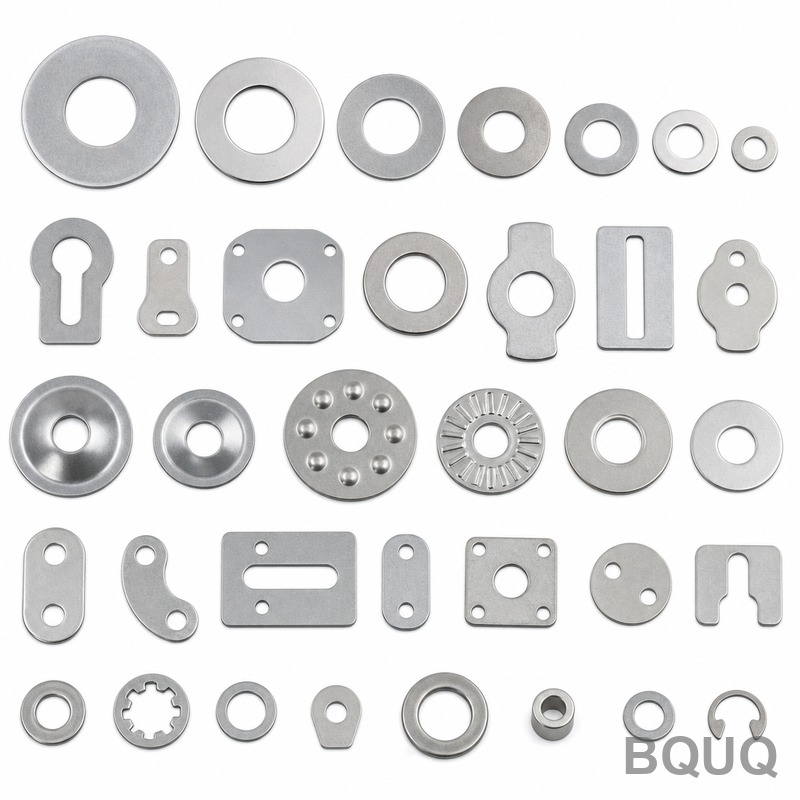
A compound die is a stamping tool that performs multiple operations, such as blanking and piercing, in a single press stroke within one station. You should use one when your part requires precise flatness, tight dimensional tolerances, and high-volume production, typically above 50,000 parts, where the higher tooling cost is justified by per-part savings. This die design is ideal for flat parts with holes or simple forms under 3 mm thickness, offering production rates of 30 to 80 strokes per minute with tolerances held to ±0.025 mm.
How Does a Compound Die Differ from a Progressive Die?
The fundamental difference lies in the sequence of operations. A compound die performs all cutting actions simultaneously in a single station, meaning the strip is not advanced between operations. In contrast, a progressive die moves the strip through multiple stations, each performing one or more operations like piercing, trimming, or forming, with the part completed at the final station. Compound dies produce a completely flat part with a high degree of accuracy since the strip is held firmly in place during the entire operation, whereas progressive dies are better suited for complex parts requiring bending or forming, as those operations require the material to move sequentially. For a compound die, the scrap skeleton is removed around the part, while the finished part is pushed down through the die; for a progressive die, the part is stamped out at the last station and falls freely.
What Are the Key Components and Specifications of a Compound Die?
A compound die consists of several critical components that work together in one stroke. The upper shoe holds the punch and the stripper, while the lower shoe contains the die button and the piercing punch. The blanking punch, which is typically the outer cutting edge, and the piercing punch, which is the inner cutting edge, are mounted in the same plane. The strip is positioned between the blanking punch and the blanking die, and during the stroke, the piercing punch cuts the holes first, followed by the blanking punch cutting the outer profile. The stripped material is then ejected from the die.
Key specifications include a cutting clearance of 4% to 8% of material thickness per side for mild steel, a die plate hardness of HRC 58-62, and a punch hardness of HRC 60-63. The die life for a compound die made of D2 or M2 tool steel is typically 1,000,000 to 3,000,000 strokes before resharpening is required. The maximum part size for a compound die is generally limited to 300 mm by 300 mm due to press tonnage and die structural rigidity, and the recommended material thickness range is 0.05 mm to 3.0 mm.
When Is a Compound Die the Most Economical Choice?
A compound die becomes the most economical choice under three specific conditions. First, when the annual production volume exceeds 50,000 pieces, the higher initial tooling cost of USD 5,000 to USD 15,000 is amortized over a larger batch, bringing the per-part cost below that of a progressive die or a simple blanking die with secondary operations. Second, when the part requires tight flatness of 0.05 mm or less, a compound die eliminates the need for a separate flattening operation, saving both time and handling costs. Third, when the part design has multiple holes or internal features with center-to-center tolerances of ±0.05 mm, the simultaneous cutting action ensures these features are positioned relative to each other with absolute consistency, which is impossible to achieve with sequential operations.
For low-volume runs under 5,000 parts, a simple blanking die or laser cutting is more cost-effective, as the compound die tooling cost cannot be justified. For parts requiring bending, drawing, or coining, a progressive die or a transfer press is necessary, as a compound die cannot perform these operations.
What Tolerances and Quality Can a Compound Die Achieve?
The compound die process offers the highest precision among stamping methods for flat parts. The achievable tolerances depend on material thickness and part size, with typical values shown in the table below.
| Operation | Tolerance (mm) | Repeatability (mm) | Surface Finish (Ra) | Burr Height (mm) |
| Blanking (outer profile) | ±0.025 | ±0.013 | 1.6 to 3.2 | 0.05 to 0.10 |
| Piercing (holes) | ±0.013 | ±0.008 | 1.6 to 3.2 | 0.03 to 0.08 |
| Hole center-to-center | ±0.025 | ±0.015 | N/A | N/A |
| Part flatness | 0.05 mm per 100 mm | 0.02 mm per 100 mm | N/A | N/A |
These tolerances are achievable with a properly maintained die and a rigid press. The cutting process leaves a characteristic burnish zone of 20% to 30% of material thickness and a fracture zone of 70% to 80%, which is normal for conventional stamping. The burr height is controlled by maintaining sharp cutting edges; resharpening is recommended when burr height exceeds 10% of material thickness. The dimensional accuracy is influenced by press stiffness, with a press deflection of less than 0.025 mm under full tonnage being necessary for consistent results.
Why Does Die Clearance Affect Part Quality and Tool Life?
Die clearance is the gap between the punch and the die button, and it directly determines the quality of the cut edge and the longevity of the tool. For carbon steel, the recommended clearance is 5% to 7% of material thickness per side; for stainless steel, it is 7% to 9%; and for aluminum, it is 4% to 6%. Insufficient clearance causes excessive wear on the cutting edges, leading to premature tool failure and increased burr formation. Excessive clearance produces a poor fracture surface with a large roll-over zone and a rough, torn edge, which may fail dimensional inspection.
Correct clearance also reduces the stamping force required. The cutting force is calculated as F = L × t × S, where L is the cutting perimeter in mm, t is material thickness in mm, and S is the shear strength in N/mm² (for mild steel, S = 350 N/mm²). For a 50 mm diameter blank in 2 mm thick mild steel, the force is approximately 110 kN. Proper clearance can reduce this force by 15% to 20%, which lowers press tonnage requirements, reduces energy consumption, and extends the press and die life.
Which Materials Are Suitable for Compound Die Stamping?
Compound dies are suitable for a wide range of materials, but the material properties directly affect die wear and part quality. The most common materials include low-carbon steel (DC01, SPCC) up to 3 mm thick, stainless steel (301, 304) up to 2 mm thick, aluminum alloys (5052, 6061) up to 3 mm thick, copper and brass (C1100, C2600) up to 2.5 mm thick, and various spring steels (C75, 65Mn) up to 1.5 mm thick. For materials harder than HRB 90 or with a tensile strength above 450 MPa, the cutting clearance should be increased by 1% to 2% per side, and tool steel grades should be upgraded from D2 to M2 or powdered metal grades like ASP23 for extended die life.
Material thickness is the most critical limit. Above 3 mm, the required press tonnage increases significantly, and the cutting edge tends to chip due to the high impact force. For materials thinner than 0.05 mm, the die clearance becomes extremely small (0.002 to 0.004 mm), requiring precision grinding and specialized die construction that increases tooling cost. The recommended maximum part hardness for compound die stamping is HRC 30; softer materials produce cleaner cuts and longer die life.
How Much Does a Compound Die Cost and What Is the Lead Time?
The cost of a compound die is determined by part size, material thickness, hole count, and tolerance requirements. A typical compound die for a part of 50 mm by 50 mm with 4 holes costs between USD 5,000 and USD 12,000. A larger die for a 200 mm by 200 mm part with complex internal features costs between USD 15,000 and USD 30,000. The tooling cost includes design, material (tool steel), machining, heat treatment, grinding, and assembly. The lead time for a compound die is typically 4 to 6 weeks for a standard design, and 6 to 8 weeks for a complex design with multiple piercing punches and tight tolerances.
The per-part cost for compound die stamping in high volume is typically USD 0.02 to USD 0.10, depending on material cost, press rate, and secondary operations. This is significantly lower than CNC machining, which costs USD 1.00 to USD 5.00 per part for similar geometries, and laser cutting, which costs USD 0.50 to USD 2.00 per part. The break-even point is typically 10,000 to 20,000 parts, above which the compound die is the most cost-effective method.
What Are the Limitations of a Compound Die?
The primary limitation is that a compound die can only produce flat parts; any bending, drawing, or forming operation requires a separate die or a progressive die. The maximum part size is limited by the press capacity and die structure, with practical limits of 300 mm by 300 mm and a maximum press tonnage of 250 tons for compound die stamping. Additionally, the scrap skeleton is often larger than that of a progressive die, as the material cannot be nested as tightly, resulting in a material utilization of 50% to 65%, compared to 70% to 80% for a well-designed progressive die.
The die construction is also more complex than a simple blanking die, requiring precise alignment of the piercing punch and the blanking punch within the same stroke. This increases the initial tooling cost and the time required for die tryout. For parts with a large number of holes, the die becomes congested with punches, and the stripping force increases, requiring a more robust stripper mechanism.
Can a Compound Die Be Combined with Other Operations?
Yes, a compound die can be combined with limited forming operations, such as shallow coining, embossing, or lancing, provided these operations do not require significant material flow. Coining depth is limited to 30% of material thickness, and embossing height is limited to 0.5 mm for materials under 1.5 mm thick. These operations are performed in the same stroke as the blanking and piercing, using the same die set, but they require additional space in the die block and increase the required press tonnage. For deeper drawing or bending, a compound die is not suitable, and a progressive die or a transfer press is the correct choice.
FAQ
What Is the Maximum Material Thickness for a Compound Die?
The maximum practical material thickness for a compound die is 3.0 mm for mild steel and 2.0 mm for stainless steel. Beyond this thickness, the cutting force becomes excessive, and the die components are prone to chipping and premature wear, making a progressive die or fine blanking a more suitable alternative.
How Long Does a Compound Die Last?
A compound die made from D2 or M2 tool steel can produce 1,000,000 to 3,000,000 parts before requiring resharpening. With regular maintenance and resharpening every 100,000 to 200,000 strokes, the total die life can exceed 10,000,000 parts before the tool needs to be replaced.
What Is the Difference Between a Compound Die and a Progressive Die?
A compound die performs all cutting operations in one press stroke at a single station, producing a flat part with high accuracy. A progressive die performs operations sequentially at multiple stations as the strip advances, allowing for bending and forming but with slightly lower positional accuracy.
Can a Compound Die Produce Parts with Bent Features?
No, a compound die cannot produce bent features because the part must remain flat during the cutting process. For parts requiring bending, a progressive die or a separate bending die must be used after the compound die operation.
What Is the Typical Press Speed for Compound Die Stamping?
The typical press speed for compound die stamping is 30 to 80 strokes per minute, depending on part size, material thickness, and press capacity. Smaller parts in thin material can run at higher speeds, while larger parts in thicker material require slower speeds to maintain die alignment and part quality.
How Do I Calculate the Required Press Tonnage for a Compound Die?
The required press tonnage is calculated by multiplying the cutting perimeter by the material thickness and the shear strength of the material. For example, a 100 mm perimeter blank in 2 mm thick mild steel (shear strength 350 N/mm²) requires 70 kN, plus an additional 15% for stripping force, resulting in a total of approximately 80 kN or 8 tons.
Does BQUQ Provide Compound Die Design Assistance?
Yes, BQUQ provides full engineering support including compound die design, simulation, and prototyping. Our engineers review your part drawings, recommend the optimal stamping process, and provide a detailed tooling quotation within 12 hours of receiving your inquiry.
At BQUQ, we have 20 years of experience in CNC machining, metal stamping, springs, and heat sink manufacturing. Our in-house tool room builds compound dies to ISO 9001 standards, with full dimensional inspection reports on every shipment. If you have a flat part with tight tolerances and high volume requirements, contact us for a free design review and quotation. We offer 12-hour quoting on all compound die tooling projects. Email us at sc@bquq.com, reach us on WhatsApp at +86 13713157787, or visit www.bquq.com.