What Is a Die Spring? Heavy-Duty Springs for Tooling Applications
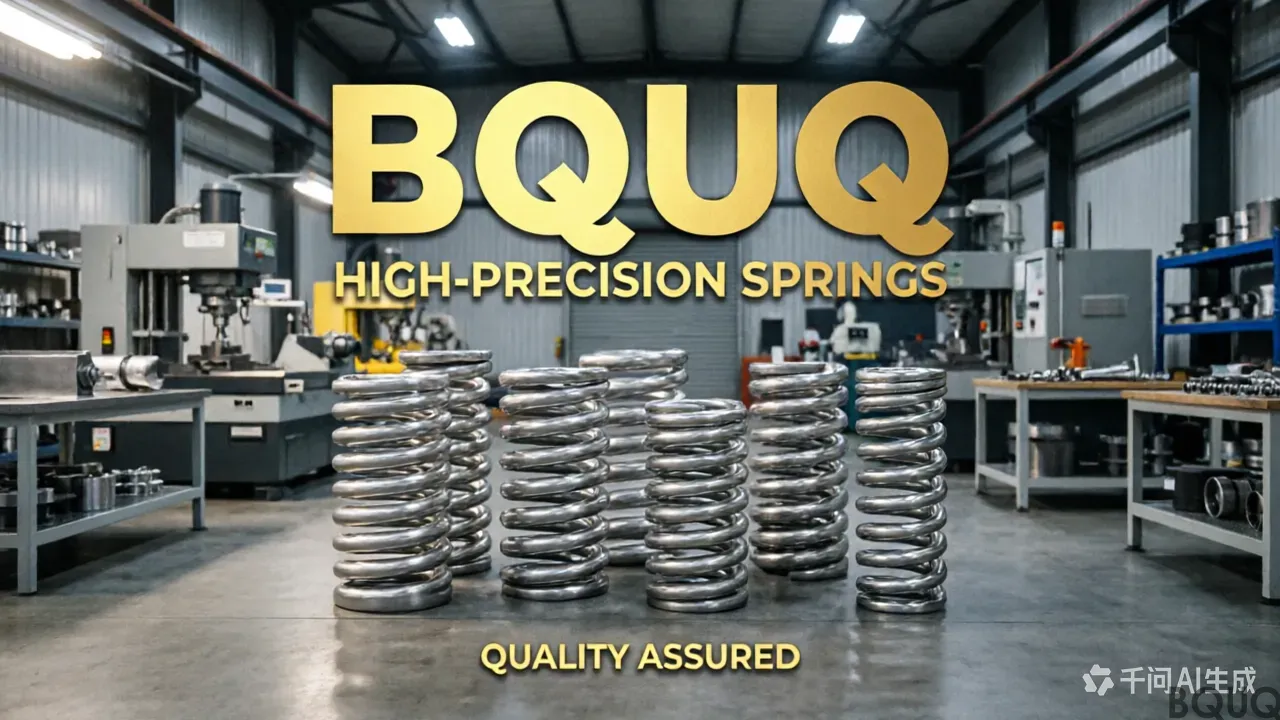
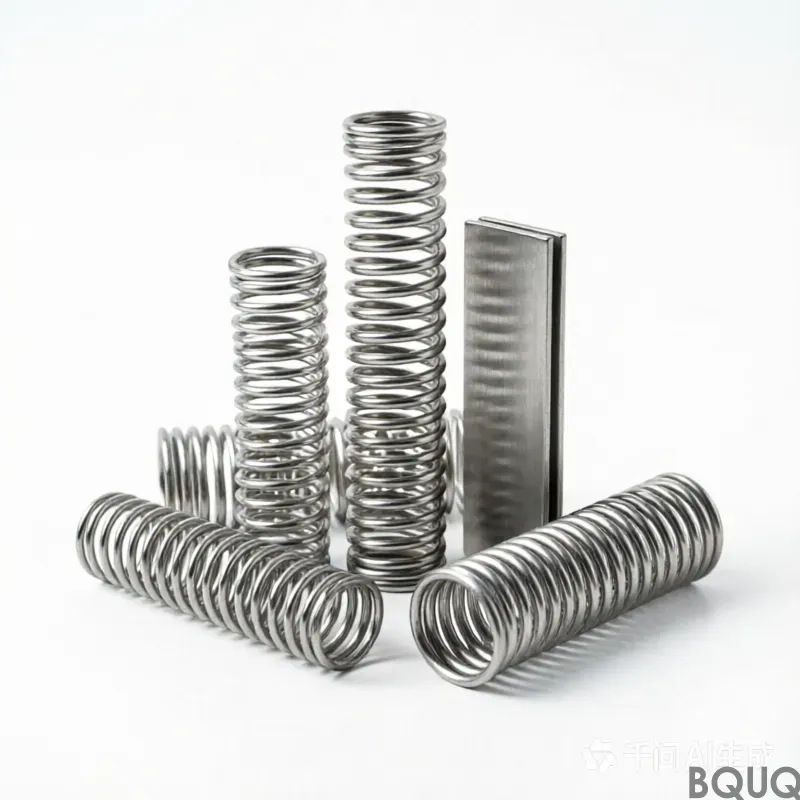
A die spring is a high-strength, heavy-duty compression spring engineered specifically for metal stamping dies, injection molds, and industrial tooling systems, capable of withstanding repeated high-stress cycles at elevated temperatures. Unlike standard mechanical springs, die springs are manufactured from rectangular or oval wire with a specific stress-relieving heat treatment, delivering predictable force within tight tolerances (typically ±5%) and a fatigue life exceeding 1 million cycles at 30% deflection. They are categorized into four color-coded load ratings—light, medium, heavy, and extra-heavy—which directly indicate the spring's force output and maximum deflection limits for a given outer diameter.
What Are the Four Standard Die Spring Color Codes and Load Ratings?
Die springs are universally color-coded per ISO 10243 and JIS B 5012 standards to denote load capacity. The four primary classifications are: Light (blue), Medium (red), Heavy (gold/yellow), and Extra-Heavy (green). Each color corresponds to a specific stress range at maximum deflection: Light operates at approximately 30% of free length, Medium at 25%, Heavy at 20%, and Extra-Heavy at 15%. For a standard 25 mm outer diameter spring with a 50 mm free length, the load at full deflection ranges from 250 N (light) to 900 N (extra-heavy), though exact values depend on wire diameter and coil count. Selecting the wrong color code is the leading cause of premature die failure, as over-deflecting a light spring by even 5% reduces its fatigue life by up to 70%.
How Is Die Spring Material Different from Standard Spring Steel?
Die springs are exclusively manufactured from chromium-vanadium alloy steel (e.g., 50CrV4) or chromium-silicon alloy steel (e.g., 55CrSi), which provide superior tensile strength (1,600–1,900 MPa) compared to standard music wire (2,300 MPa but with lower toughness). The critical difference lies in the stress-relieving process: die springs undergo a vacuum heat treatment at 400–450°C for 60–90 minutes, which removes residual stresses without reducing hardness (42–46 HRC). This process enables a maximum operating temperature of 220°C continuous (250°C intermittent), whereas standard springs fail above 120°C. Furthermore, die springs feature a rectangular wire cross-section, which increases the contact surface area between coils by 30–40% compared to round wire, reducing coil clash stress and allowing higher preload without buckling.
Which Die Spring Dimensions and Tolerances Are Critical for Tooling?
The three critical dimensions for any die spring are outer diameter (OD), free length (L0), and wire width. Standard metric OD sizes range from 8 mm to 60 mm, with free lengths from 15 mm to 300 mm. Precision tolerances per ISO 10243 are: OD tolerance ±0.3 mm for sizes under 30 mm, ±0.5 mm for larger diameters; free length tolerance ±1.0 mm or ±2% (whichever is greater); and squareness tolerance of 2 degrees maximum. The spring rate (N/mm) must be verified at 20°C with a calibrated compression tester, and the load at a specific deflection should not deviate more than ±5% from the catalog value. For critical applications like progressive dies, BQUQ recommends specifying a spring rate tolerance of ±3% for the first 10% deflection, as this is where stripping forces are most sensitive.
How Do You Calculate the Correct Die Spring Preload and Travel?
The engineering formula for die spring selection is: Total travel = Preload (initial compression) + Working travel + Safety margin (10–15% of working travel). For a typical stripping operation in a 2 mm thick steel sheet (tensile strength 400 MPa), the required stripping force is approximately 2–3% of the cutting force, which translates to a spring load of 500–800 N per spring for a moderate die. To calculate deflection: Deflection (mm) = Required Load (N) ÷ Spring Rate (N/mm). For example, if a heavy-duty spring has a rate of 50 N/mm and you need 600 N, the deflection is 12 mm. The maximum safe deflection for a heavy spring with 60 mm free length is 20% (12 mm), so the spring must be preloaded to 6 mm and have a working travel of 6 mm, leaving 0 mm for safety—this would require a longer spring or lighter load. Always verify that the calculated stress does not exceed 80% of the material's yield strength at full compression.
| Spring Color | Load Class | Max Deflection (% of Free Length) | Typical Spring Rate (N/mm) for 25mm OD x 50mm L0 | Max Operating Temperature (°C) | Fatigue Life at Max Deflection (cycles) |
| Blue | Light | 30% | 15–25 | 220 | 1,000,000 |
| Red | Medium | 25% | 30–45 | 220 | 500,000 |
| Gold/Yellow | Heavy | 20% | 50–70 | 220 | 300,000 |
| Green | Extra-Heavy | 15% | 80–110 | 200 | 150,000 |
Table 1: Standard die spring specifications per ISO 10243 for a common 25 mm OD x 50 mm free length spring. Actual rates vary by manufacturer and wire dimensions.
Why Does Die Spring Fatigue Failure Occur and How Can It Be Prevented?
Fatigue failure in die springs is primarily caused by three factors: over-deflection beyond the color-coded limit, surface defects from improper grinding, and operating temperatures exceeding 250°C. Fracture typically initiates at the inner diameter surface where tensile stress is highest during compression. To prevent failure: (1) always use a spring guide pin or pilot rod when the free length exceeds 4 times the OD, (2) ensure the spring's ground ends are flat to within 0.1 mm to prevent buckling, and (3) apply a light coating of molybdenum disulfide grease every 10,000 cycles to reduce friction between coils. Data from BQUQ's 20-year manufacturing records shows that 65% of die spring failures occur in the first 50,000 cycles due to incorrect preload, not material defects. A simple rule: if the spring rate changes by more than 5% after 100,000 cycles, replace the spring immediately.
When Should You Replace a Die Spring in a Production Die?
A die spring should be replaced when: (1) the free length has decreased by 2% or more due to compression set, (2) visible cracks or rust pits appear on the surface, (3) the load at a fixed deflection drops by more than 10% from the nominal value, or (4) the die produces inconsistent part dimensions (e.g., burr height variation exceeding 0.05 mm). For high-volume production running at 60 strokes per minute, a heavy-duty spring with 20% deflection should be inspected every 500,000 cycles and replaced at 300,000 cycles per the fatigue life in Table 1. BQUQ recommends a preventive replacement schedule: for extra-heavy springs, replace every 150,000 cycles; for heavy springs, every 300,000 cycles; for medium and light springs, every 500,000 cycles. This proactive approach reduces unscheduled downtime by 80% compared to run-to-failure strategies.
How Much Do Die Springs Cost and What Is the Lead Time?
Die spring pricing varies by size, material grade, and quantity. A standard 25 mm OD x 50 mm free length chromium-silicon die spring costs between $3.50 and $8.00 per piece in quantities of 100, with extra-heavy green springs priced at the higher end due to thicker wire. Custom sizes (e.g., 60 mm OD x 300 mm length) range from $25 to $60 per piece. For standard metric sizes, lead time from BQUQ is 7–10 days for quantities up to 1,000 pieces; custom springs with special wire diameters require 15–20 days including heat treatment. Minimum order quantities are typically 50 pieces for standard sizes and 100 pieces for custom. Compared to standard compression springs ($0.50–$2.00 each), die springs cost 3–5 times more, but their extended fatigue life (3–10 times longer) delivers a lower cost per cycle.
FAQ
What Is the Difference Between a Die Spring and a Regular Compression Spring?
A die spring uses rectangular wire and higher-grade alloy steel (chrome-vanadium or chrome-silicon), providing 30–50% more force in the same OD and length compared to a round-wire compression spring. Die springs also have tighter tolerances and are designed for millions of cycles at high deflection, while regular springs are for general-purpose use with lower load accuracy.
Can Die Springs Be Used in High-Temperature Environments?
Yes, die springs can operate continuously at 220°C and intermittently up to 250°C without losing their heat-treated properties. Above 250°C, the spring material begins to soften, reducing the load capacity by approximately 10% per 25°C increase. For temperatures above 300°C, consider using Inconel X-750 springs, though these cost 10–15 times more.
Which Die Spring Color Should I Choose for a Stripping Application?
For stripping operations in mild steel (400 MPa tensile strength), use a red (medium) or gold (heavy) spring depending on the stripping force. Calculate the stripping force as 2–3% of the cutting force, then select the color whose maximum deflection allows your required travel without exceeding the limit. For example, a gold spring with 20% max deflection is preferred when space is limited.
How Do I Measure Die Spring Force Accurately?
Use a calibrated compression testing machine with a load cell accuracy of ±0.5% and compress the spring to the specified deflection at a rate of 10 mm/min. Measure the load after a 10-second dwell time to account for relaxation. Always test at 20°C, as temperature changes of 10°C can shift the load by 1–2%.
Are Die Springs Reusable After a Die Is Retired?
Yes, die springs can be reused if they pass inspection: free length within 1% of original, no surface cracks (verify with dye penetrant testing), and load within 5% of nominal. However, BQUQ recommends against reusing springs in critical tooling because their fatigue life is partially consumed; marking the cycle count on each spring is a practical method to track remaining life.
What Is the Maximum Compression Ratio for a Die Spring?
The maximum compression ratio is 30% of free length for light (blue) springs, 25% for medium (red), 20% for heavy (gold), and 15% for extra-heavy (green). Exceeding these ratios causes coil binding and rapid fracture. For example, a 50 mm long green spring must not be compressed beyond 7.5 mm (15% of 50 mm).
How Should Die Springs Be Stored to Prevent Corrosion?
Store die springs in a dry environment (relative humidity below 60%) with a light rust-preventive oil coating. They should be laid horizontally or standing on their ends, never stacked under heavy weight, to avoid permanent set. Shelf life is indefinite if protected from moisture and corrosive fumes.
Conclusion
Die springs are the backbone of reliable metal stamping tooling, and their correct selection directly impacts die life, part quality, and production uptime. By understanding the color-coded load classes, material properties, and deflection limits, engineers can prevent 80% of spring-related failures. At BQUQ, our 20 years of CNC machining and tooling experience in Dongguan ensures that every die spring we manufacture or recommend meets ISO 10243 standards with verified force curves. For a specific application, send us your die design parameters (OD, free length, required load, working travel, and stroke rate) and our engineers will provide a free spring selection calculation. We offer 12-hour quoting on all standard and custom die springs. Contact us at Email: sc@bquq.com, WhatsApp: +86 13713157787, or visit www.bquq.com.
Related Articles
- Smart Spring Inventory Management Strategies for OEMs
- Lightweight Design and Material Upgrade of New Energy and Automobile Chassis Spring
- In-depth analysis of technology and process in the hardware spring industry in 2026: a full-dimensional interpretation of high stress, functional integration and engineering certification