What Is Spring Free Length and Why Does It Matter in Spring Design?
Spring free length is the overall axial length of an unloaded spring, measured from end to end with no external force applied. It is the critical baseline dimension from which all spring deflection, load, and stress calculations begin—if this value is incorrect, the spring will not perform to its specified force at a given working height, regardless of material quality. In precision manufacturing, free length tolerance directly impacts assembly stack-up, fatigue life, and compliance with end-use safety standards.
What Is the Exact Definition of Spring Free Length in Engineering Terms?
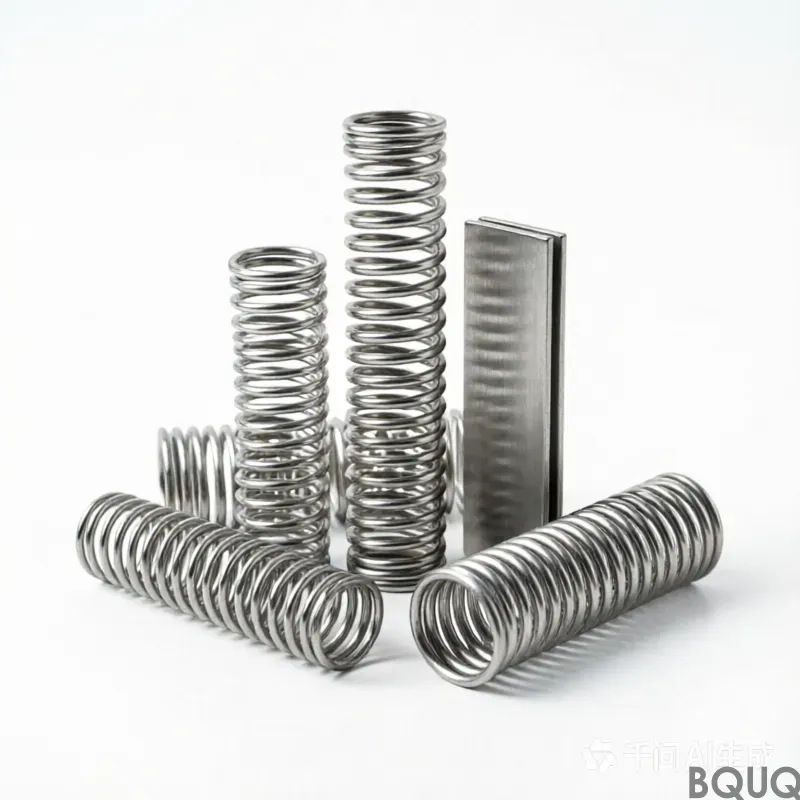
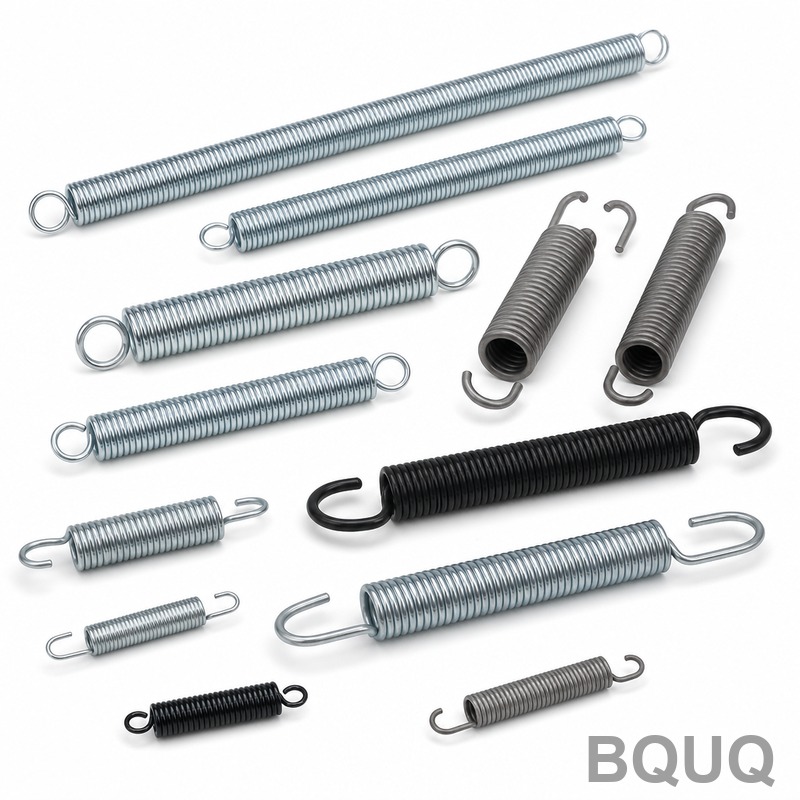
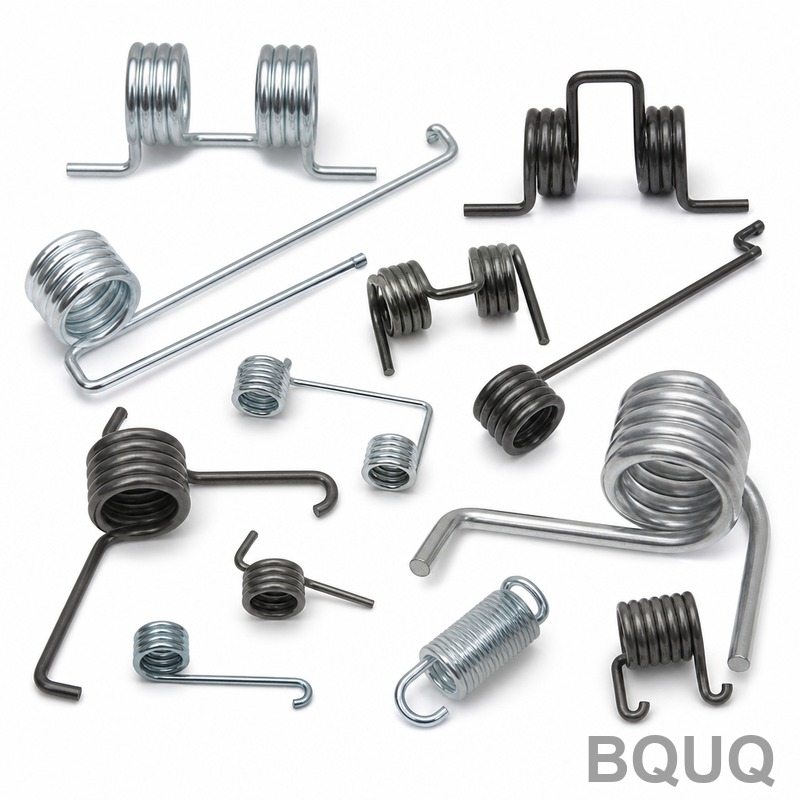
Free length (often denoted as L0 or Lf) is the total length of a compression, extension, or torsion spring when it is in its natural, unloaded state. For compression springs, this is measured between the outer planes of the end coils; for extension springs, it is measured between the inner hooks or loops; for torsion springs, it is the length of the coil body alone. The free length is distinct from solid height (the length when all coils are compressed together) and from installed length (the length when the spring is mounted in an assembly with preload). Engineers specify free length on drawings with a tolerance, commonly ±0.5 mm for commercial springs and ±0.1 mm for precision springs in automotive or medical applications. In CNC-coiled springs, free length is set by controlling wire feed rate, coiling pitch, and the number of active coils during the forming process.
How Does Free Length Affect Spring Rate and Load at a Given Height?
Spring rate (k) is defined as load per unit deflection, typically expressed in N/mm or lbf/in. The relationship is linear for most helical springs: Load = k × (Free Length – Working Height). If the free length is 50 mm, the spring rate is 5 N/mm, and the working height is 40 mm, the load is 5 × (50 – 40) = 50 N. A free length error of +1 mm will increase the load by 5 N (10% error) at the same working height, which can cause premature wear, noise, or failure in a mechanism. Conversely, a free length that is too short reduces preload, leading to loose assemblies, rattling, or insufficient return force in valve systems. For critical applications, engineers must calculate the allowable free length tolerance based on the acceptable load variation, not just the manufacturing capability. At BQUQ, we routinely hold free length to ±0.2 mm for compression springs with wire diameters from 0.3 mm to 12 mm, using optical measuring systems with 0.01 mm resolution.
Why Is Free Length Critical for Fatigue Life and Stress Distribution?
Fatigue life in springs is governed by the stress range experienced during cyclic loading, which is directly proportional to deflection. A spring with a longer free length than designed will experience a larger deflection at the same installed height, increasing the maximum shear stress on the wire surface. For example, a music wire spring (ASTM A228) with a free length of 60 mm, working height of 40 mm, and wire diameter of 2 mm will see a stress of approximately 750 MPa at full deflection. If the free length is erroneously 65 mm, the deflection increases by 8.3%, pushing stress to roughly 810 MPa—near the endurance limit of 825 MPa for this material. This reduces fatigue life from over 1 million cycles to under 100,000 cycles, a catastrophic drop. Additionally, free length variations alter the pitch between adjacent coils, creating uneven stress distribution and potential coil clash at solid height. For high-cycle applications (e.g., engine valve springs at 3000 rpm), free length must be verified on 100% of parts using automated sorting machines.
Which Spring Types Require the Strictest Free Length Control?
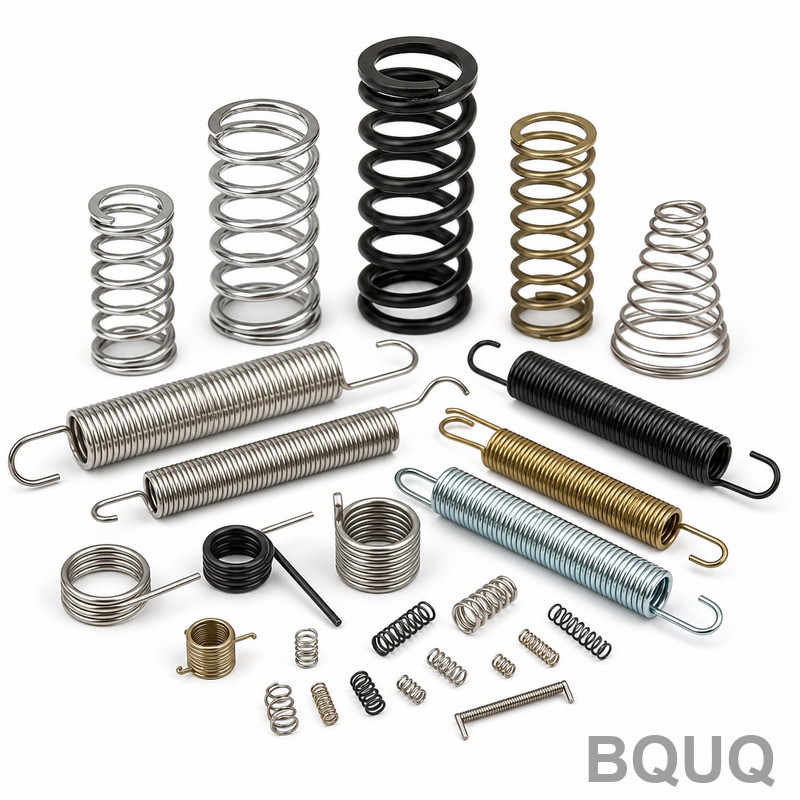
Compression springs demand the strictest free length control because they are almost always used in confined spaces where working height is fixed by the assembly. Extension springs also require tight control, but their free length includes hook or loop geometry, which adds variability; a common tolerance is ±1.0 mm on the hook span. Torsion springs are less sensitive to free length because their primary function is torque, not axial load, but free length still affects the axial force on the arbor. Flat spiral springs (power springs) and conical springs have unique free length definitions—conical springs have a free height that determines when the coils telescope, so a 0.5 mm error can cause early coil binding. In practice, the strictest control is needed for springs with low spring rates (below 1 N/mm), where a 0.1 mm free length error alters the load by less than 0.1 N but proportionally more in percentage terms. For micro springs (wire diameter under 0.5 mm), free length is measured under a microscope with a calibrated stage, and tolerances of ±0.05 mm are achievable.
How Do Manufacturing Processes Like Coiling and Grinding Affect Free Length?
In CNC coiling, free length is primarily set by the pitch of the coiling tool; a 0.01 mm increase in pitch across 10 active coils adds 0.1 mm to free length. After coiling, stress-relieving heat treatment (typically 300°C to 450°C for 30 minutes for steel) can cause slight relaxation, changing free length by 0.1% to 0.5% depending on residual stress. End grinding, performed on compression springs to create flat ends, removes material from the end coils, reducing free length by 0.2 to 0.5 mm depending on the grinding allowance. Shot peening (for high-fatigue springs) can increase free length by up to 0.3% due to surface compressive stresses. Therefore, the manufacturing process must account for these cumulative changes by setting the coiling pitch slightly longer than the final target. At BQUQ, we use a three-step process: initial coiling with +0.5 mm over-length, heat treatment, then precision grinding and final measurement. This yields free length consistency of ±0.1 mm on batches of 50,000 parts.
What Are the Standard Tolerances and Measurement Methods for Free Length?
The standard tolerance for free length follows ISO 2768-m for general dimensions, but spring-specific standards (DIN 2095, DIN 2096, and JIS B 2704) provide more precise guidance. For compression springs with wire diameter under 3 mm, DIN 2095 allows free length tolerance of ±1.5% of free length or ±0.3 mm, whichever is greater. For precision springs, a tolerance of ±0.1 mm is common, requiring measurement with a digital caliper or a dedicated spring testing machine with a load cell. Measurement must be performed on a flat surface with the spring standing vertically, and the measuring force must be minimal (less than 0.01 N) to avoid compressing the spring. For automated inspection, laser scanning systems can measure free length at 100 parts per minute with accuracy of ±0.02 mm. Temperature also affects free length: steel springs expand by about 12 ppm/°C, so a 100 mm spring at 20°C becomes 100.12 mm at 100°C—significant for precision mechanisms.
| Spring Type | Typical Free Length Range | Standard Tolerance (DIN 2095) | Precision Tolerance | Measurement Tool | Typical Lead Time (BQUQ) |
| Compression (wire < 3 mm) | 5 mm – 200 mm | ±1.5% or ±0.3 mm | ±0.1 mm | Digital caliper / laser scanner | 3-5 business days |
| Compression (wire 3-10 mm) | 20 mm – 500 mm | ±1.0% or ±0.5 mm | ±0.2 mm | Height gauge / CMM | 5-10 business days |
| Extension (with hooks) | 10 mm – 300 mm | ±2.0% or ±0.5 mm | ±0.2 mm | Caliper with hook fixtures | 5-7 business days |
| Torsion | 5 mm – 150 mm | ±1.5% or ±0.4 mm | ±0.15 mm | Optical comparator | 5-7 business days |
| Micro spring (wire < 0.5 mm) | 1 mm – 20 mm | ±0.1 mm absolute | ±0.05 mm | Microscope with stage | 7-10 business days |
How Should Engineers Specify Free Length on a Drawing to Avoid Errors?
Engineers should always specify free length with a clear tolerance, a reference to the measurement condition (unloaded, at room temperature), and the number of active coils. It is also recommended to specify a load tolerance at a working height, not just free length, because load is the functional requirement. For example, instead of writing "Free length: 50 mm ± 0.5 mm," write "Free length: 50 mm ± 0.3 mm; Load at 40 mm height: 50 N ± 5 N." This dual specification allows the manufacturer to adjust pitch or wire diameter to meet the load requirement even if free length drifts slightly. Additionally, specify whether the ends are closed and ground (for compression springs) because grinding changes free length. Include a note on the maximum solid height to prevent coil binding. For springs used in high-temperature environments (above 150°C), specify the free length at operating temperature or provide the thermal expansion coefficient. At BQUQ, our engineering team reviews every drawing and flags ambiguous free length specifications before quoting, preventing costly rework.
Can Free Length Be Adjusted After Manufacturing to Meet Tight Tolerances?
Yes, free length can be adjusted post-manufacturing through a process called "presetting" or "hot setting." Presetting involves compressing the spring to solid height for several cycles, which creates residual stress and can reduce free length by 1% to 3% depending on the material and stress level. This is a common technique for compression springs to improve load stability. However, presetting cannot increase free length—if a spring is too short, it must be re-coiled or scrapped. For small adjustments (up to 0.5 mm), grinding the end coils can reduce free length slightly, but this changes the end condition and may affect load. For extension springs, adjusting hook angles can change the overall free length but not the coil body length. The best practice is to design the coiling process with a +0.2 mm target above nominal, then use presetting or light grinding to dial in the exact value. In high-volume production, statistical process control (SPC) charts on free length allow real-time adjustments to the coiling machine, keeping the process within ±0.1 mm over 100% of parts.
FAQ: Common Questions About Spring Free Length
What Is the Difference Between Free Length and Solid Height?
Free length is the natural, unloaded length of a spring, while solid height is the minimum length when all coils are fully compressed and touching each other. Solid height is always shorter than free length and is calculated as the number of coils multiplied by the wire diameter. The difference between free length and solid height represents the maximum possible deflection of the spring.
How Do I Calculate Free Length From Spring Rate and Working Load?
Use the formula: Free Length = Working Height + (Load / Spring Rate). For example, if the working height is 40 mm, the required load is 50 N, and the spring rate is 5 N/mm, then free length = 40 + (50 / 5) = 50 mm. Always account for the tolerance on both spring rate and working height to determine the acceptable free length range.
Does Free Length Change With Temperature?
Yes, free length changes slightly with temperature due to thermal expansion of the wire material. For carbon steel, the coefficient is about 12 ppm/°C, meaning a 100 mm spring will expand by 0.12 mm when heated from 20°C to 100°C. For high-temperature applications, specify free length at the operating temperature or use materials with lower expansion coefficients like Inconel.
What Happens if Free Length Is Too Long in an Assembly?
If free length is too long, the spring will exert a higher load at the installed working height, potentially overloading adjacent components, causing noise, or exceeding the design stress. In extreme cases, the spring may reach solid height prematurely, causing coil clash and rapid failure. The assembly may also not fit within the designed envelope, leading to interference.
What Happens if Free Length Is Too Short?
A free length that is too short reduces the preload on the spring, which can result in loose parts, rattling, or insufficient return force in mechanisms like valves or switches. In safety-critical applications, such as brake springs, a short free length can cause complete system failure. The spring may also have insufficient deflection range, limiting its functional travel.
Which Material Has the Least Free Length Variation After Manufacturing?
Stainless steel (e.g., 302 or 316) and music wire (ASTM A228) have minimal relaxation after stress relieving, typically less than 0.2% free length change. Oil-tempered chrome silicon steel (ASTM A401) is also stable but requires a higher tempering temperature (about 400°C) to prevent drift. Beryllium copper and other non-ferrous alloys have higher variation and require tighter process control.
How Can I Verify Free Length Without Expensive Equipment?
A digital caliper with a flat anvil is sufficient for springs with free length above 10 mm, but you must apply minimal measuring force (under 0.1 N) to avoid compression. For smaller springs, use a surface plate and a height gauge with a dial indicator. For production verification, a simple Go/No-Go gauge machined to the free length tolerance limits is cost-effective and fast for 100% inspection.
Conclusion
Spring free length is not just a dimensional callout—it is the controlling parameter that determines load, stress, fatigue life, and assembly fit. A deviation of even 0.5 mm can shift a spring from reliable performance to premature failure, especially in high-cycle or high-precision applications. Engineers must specify free length with appropriate tolerances, dual load-based requirements, and clear measurement conditions, while manufacturers must control coiling, heat treatment, and grinding processes to hold those values. At BQUQ, our 20 years of spring manufacturing experience ensures that free length is measured and verified on every batch, with tolerances down to ±0.05 mm for micro springs. If you have a spring design that demands precision free length control, send us your drawing for a free engineering review and quotation within 12 hours. Contact our team at sc@bquq.com or WhatsApp +86 13713157787, or visit www.bquq.com to start your project today.
Related Articles
- Smart Spring Inventory Management Strategies for OEMs
- Size control and online intelligent detection technology of precision spring
- In-depth analysis of technology and process in the hardware spring industry in 2026: a full-dimensional interpretation of high stress, functional integration and engineering certification