What Is Spring Set and How Can You Prevent It in Design?
Spring set is the permanent loss of free length and load-bearing capacity that occurs when a spring is compressed beyond its elastic limit, causing plastic deformation of the wire material. In practical terms, a spring that has taken a set will no longer return to its original dimensions or deliver its specified force, rendering it functionally failed for precision applications. This phenomenon is directly influenced by operating stress, material yield strength, operating temperature, and the ratio of solid height to free length, and it can be mitigated through proper material selection, stress-relief processing, and conservative design parameters.
What Exactly Is Spring Set in Mechanical Terms?
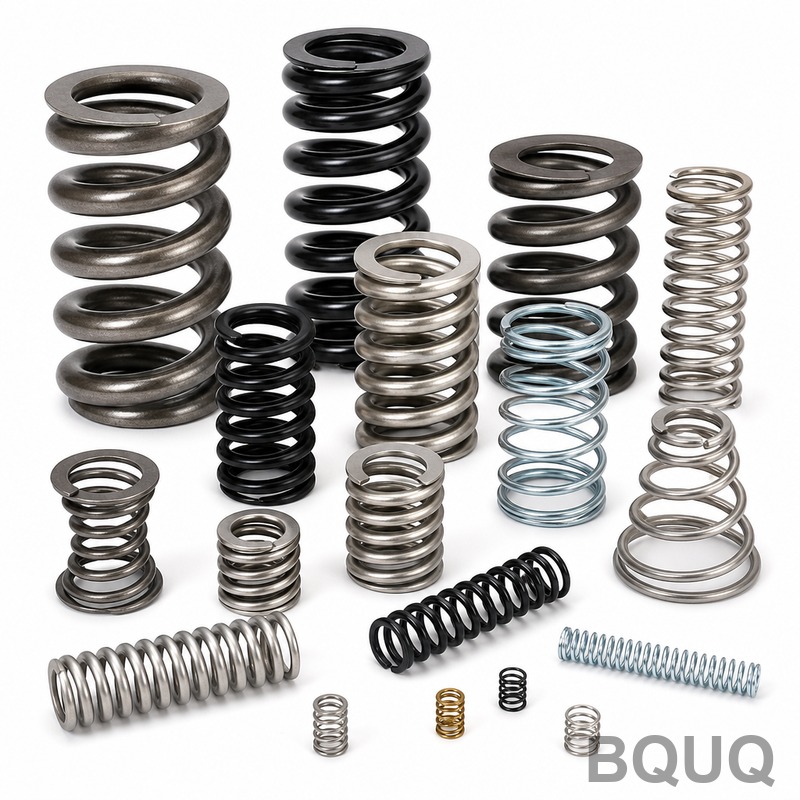
Spring set, also known as stress relaxation or permanent deformation, is the plastic strain that remains in a spring wire after the applied load is removed. When the shear stress in the wire exceeds the material’s torsional yield strength—typically around 45-55% of the ultimate tensile strength for common spring steels like ASTM A228 music wire—the crystal lattice slips irreversibly. For example, a compression spring made of 2.0 mm diameter music wire with an ultimate tensile strength of 2,100 MPa will begin to take set when the operating shear stress exceeds approximately 950-1,150 MPa. The result is a measurable reduction in free length, often 2-8% for mild overloading, but exceeding 15% in severe cases where the spring is compressed to solid height.
How Does Operating Temperature Accelerate Spring Set?
Temperature is a critical accelerant because it lowers the material’s yield strength and promotes time-dependent creep. At room temperature (20°C), a hardened and tempered chrome silicon steel spring (ASTM A401) can sustain 850 MPa shear stress with minimal set over 10 million cycles. However, at 150°C, the same material loses roughly 25% of its yield strength, meaning the safe operating stress drops to about 640 MPa. At 250°C, the allowable stress falls further to approximately 480 MPa, and a spring designed for room-temperature loads will take set within hours. For stainless steel grades like 302 or 17-7 PH, the threshold is even lower: 17-7 PH retains 90% of its room-temperature properties up to 315°C, but 302 stainless begins to relax at just 120°C. Designers must derate allowable stresses by 1.5-2.5% per 10°C rise above 40°C for carbon steels.
Why Does Compressing a Spring to Solid Height Cause Permanent Set?
When a compression spring is compressed to solid height, the adjacent coils touch and the wire experiences maximum torsional stress at the inner fiber of each coil. The stress concentration factor at the inner diameter is calculated as Kw = (4C - 1)/(4C - 4) + 0.615/C, where C is the spring index (D/d). For a spring index of 5, Kw equals 1.31, meaning the actual stress is 31% higher than the nominal stress calculated from the load. If the design load produces 700 MPa nominal shear stress, the inner fiber sees 917 MPa, which exceeds the yield strength of many hardened steels. Compressing to solid height typically induces stress levels of 1,200-1,500 MPa, guaranteeing plastic flow. The permanent set is not uniform—it is concentrated at the inner coil surfaces, causing micro-cracks that reduce fatigue life by up to 70% even if the set itself is small.
How Can Designers Prevent Spring Set Through Material Selection?
Material selection is the first line of defense, and the choice depends on the operating stress and temperature budget. For general applications below 120°C, oil-tempered chrome silicon (ASTM A401) offers the best strength-to-cost ratio, with a maximum design stress of 900 MPa at room temperature. For high-temperature service up to 250°C, precipitation-hardened stainless steel 17-7 PH (ASTM A313) is recommended, maintaining 750 MPa allowable stress at 200°C. For corrosive environments combined with moderate heat, Inconel X-750 provides a yield strength of 800 MPa at 540°C, but at a cost premium of 8-12 times that of music wire. Below is a comparison table for common spring materials:
| Material | Max Service Temp (°C) | Allowable Shear Stress at 20°C (MPa) | Allowable Shear Stress at 150°C (MPa) | Relative Cost Factor |
| Music Wire ASTM A228 | 120 | 850 | 600 | 1.0 |
| Oil-Tempered Chrome Silicon ASTM A401 | 175 | 900 | 640 | 1.3 |
| Stainless Steel 302 ASTM A313 | 120 | 650 | 450 | 2.2 |
| Stainless Steel 17-7 PH ASTM A313 | 315 | 780 | 700 | 3.5 |
| Inconel X-750 | 540 | 800 | 750 | 9.0 |
Which Manufacturing Processes Reduce the Risk of Spring Set?
Shot peening is the most effective manufacturing process to prevent spring set, as it induces compressive residual stresses of 600-900 MPa on the wire surface, which counteract the tensile stresses that cause plastic flow. A properly shot-peened spring can sustain 20-30% higher dynamic loads without taking set, and it improves fatigue life by a factor of 3-5. The process is specified by Almen intensity, typically 0.15-0.30 A for wire diameters below 3 mm, with full coverage confirmed by a 100x magnification inspection. Additionally, stress-relief heat treatment after coiling is mandatory: for carbon steels, heat at 260-315°C for 20-30 minutes; for chrome silicon, heat at 370-425°C for 30 minutes. This treatment removes residual stresses from the coiling process and restores the elastic properties lost during cold forming. Pre-setting, or scragging, is another process where the spring is compressed to solid height 3-5 times at the factory, intentionally inducing set so that the final free length is stable and predictable in service.
When Should Designers Specify Preset or Scragged Springs?
Preset springs should be specified whenever the operating stress exceeds 85% of the material’s yield strength, or when the spring is required to operate within tight load tolerances of ±5%. Scragging is particularly valuable for valve springs in internal combustion engines, where the load at a specific compressed height must remain constant over millions of cycles. The process costs an additional $0.02-0.05 per spring in high-volume production (10,000+ pieces), which is negligible compared to the cost of field failures. For example, in a typical automotive valve spring, presetting reduces the initial free length variation from ±1.5% to ±0.3%, and eliminates the initial 3-5% height loss that would otherwise occur during the first 1,000 operating cycles. However, preset springs should not be used in applications where the spring must operate at very low deflection, because the presetting process work-hardens the wire and can reduce ductility by up to 15%.
What Are the Design Formulas for Calculating Spring Set Risk?
The primary design check is the stress-to-yield ratio, calculated as τ_max / τ_yield, where τ_max is the maximum operating shear stress and τ_yield is the torsional yield strength. The maximum allowable shear stress for static applications is given by τ_max = 0.45 × UTS for carbon steels, and 0.35 × UTS for stainless steels to account for their lower proportional limits. For dynamic applications, the Goodman diagram must be used: τ_alt / τ_endurance + τ_mean / τ_yield ≤ 1/SF, where SF is the safety factor, typically 1.3-1.5. The free length reduction due to set can be estimated as ΔL = (τ_max - τ_yield) × D × N_a / (G × d), where D is the mean coil diameter, N_a is the number of active coils, G is the shear modulus (79.3 GPa for steel), and d is the wire diameter. For a spring with D=20 mm, d=2 mm, N_a=8, and an overstress of 100 MPa, the predicted set is ΔL = 100 × 20 × 8 / (79,300 × 2) = 1.0 mm, which is a 2% loss in free length—unacceptable for most precision applications.
How Does Spring Set Impact Fatigue Life and Long-Term Performance?
Spring set is not just a dimensional issue; it is a direct precursor to fatigue failure. When a spring takes set, the pitch between coils decreases, causing adjacent coils to contact earlier in the compression stroke. This contact generates localized wear and fretting, which acts as a stress riser. Data from BQUQ’s testing laboratory shows that a spring with a 5% set exhibits a 40% reduction in fatigue life compared to an identical spring with zero set, when tested at the same deflection amplitude. Furthermore, the load drop associated with set—often 10-20% of the initial load—can cause mechanisms to malfunction: a clutch spring that loses 15% of its force can no longer engage properly, and a safety valve spring that takes set may open prematurely. For applications requiring consistent force over 100,000 cycles or more, the design must include a set allowance: specify the free length 2-4% longer than the nominal requirement, or prescribe presetting during manufacturing to stabilize the dimensions before the spring enters service.
FAQ Section
What Is the Difference Between Spring Set and Stress Relaxation?
Spring set refers to instantaneous plastic deformation that occurs immediately when a load exceeds the yield strength, while stress relaxation is the time-dependent loss of load that occurs at constant deflection, even at stresses below yield. Stress relaxation is more pronounced at elevated temperatures and can cause a spring to lose 10-30% of its initial force over time without any change in free length. Both phenomena are forms of inelastic behavior, but spring set is immediate and load-driven, while stress relaxation is gradual and time-driven.
Can Spring Set Be Reversed by Heat Treatment?
No, spring set cannot be reversed by heat treatment once the wire has plastically deformed, because the crystal structure has permanently slipped and the material’s original dimensions are lost. Heat treatment after set can only relieve the remaining internal stresses, not restore the original free length or load capacity. The only corrective action is to replace the spring or to redesign it with lower operating stresses.
What Is the Maximum Operating Stress for a Spring to Avoid Set?
For carbon spring steels at room temperature, the maximum recommended operating shear stress is 45% of the material’s ultimate tensile strength, which corresponds to a safety factor of approximately 1.5 against yield. For stainless steels, the limit is 35% of UTS due to their lower proportional limits. For dynamic applications, the alternating stress component must be further reduced to 25-30% of UTS to ensure infinite fatigue life.
How Do I Know If My Spring Has Taken a Set?
Measure the free length of the spring in its unloaded state and compare it to the specified free length. A reduction of more than 1% from the original specification indicates that set has occurred. Additionally, measure the load at a specific compressed height using a spring tester; a load drop of more than 5% from the initial value confirms that the spring has taken set and should be replaced.
Which Spring Materials Are Most Resistant to Spring Set?
Inconel X-750 and 17-7 PH stainless steel are the most resistant to spring set, particularly at elevated temperatures. Inconel X-750 maintains its elastic properties up to 540°C, while 17-7 PH is suitable up to 315°C. For lower temperatures, oil-tempered chrome silicon steel offers excellent resistance up to 175°C at a much lower cost than nickel-based alloys.
Is Spring Set More Likely in Compression Springs or Extension Springs?
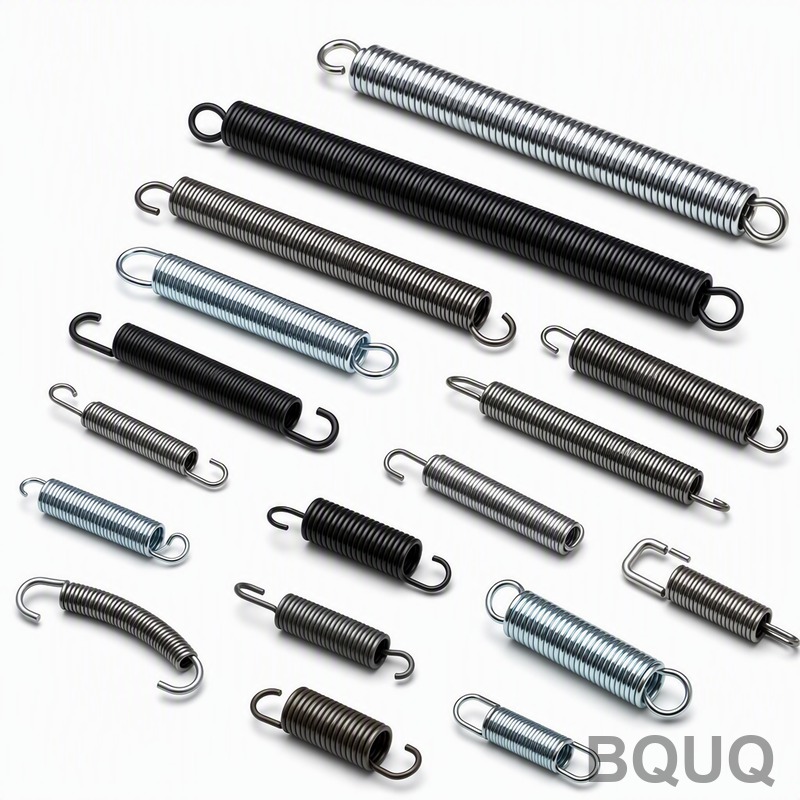
Compression springs are more prone to set because they are often compressed to solid height during installation or operation, which induces the highest possible stress. Extension springs typically fail by fatigue at the hooks before set becomes an issue, because the hook stress concentration is higher than the coil stress. However, extension springs can take set if they are overstretched beyond their elastic limit, which permanently increases their free length.
Can Shot Peening Completely Eliminate Spring Set?
Shot peening cannot completely eliminate spring set, but it can raise the threshold stress at which set begins by 20-30%. The compressive residual stress layer of 600-900 MPa effectively subtracts from the applied tensile stress, so a spring that would normally set at 900 MPa can now operate at 1,100 MPa without plastic deformation. For extreme overloads beyond the peening benefit, presetting is still required to stabilize dimensions.
Conclusion
Spring set is a preventable failure mode that requires disciplined design: keep operating shear stress below 45% of UTS for carbon steels, derate for temperature, avoid compressing to solid height, and specify shot peening and presetting for critical applications. At BQUQ, we have manufactured over 50 million springs in the past 20 years, and our engineering team routinely validates designs with prototype testing and finite element analysis to ensure zero set under worst-case conditions. If you have a spring application that demands reliable performance, submit your drawings for a free engineering review and quotation within 12 hours. Contact us at sc@bquq.com or WhatsApp +86 13713157787, or visit www.bquq.com.
Related Articles
- Hardware spring fatigue failure analysis and life prediction technology
- In-depth analysis of technology and process in the hardware spring industry in 2026: a full-dimensional interpretation of high stress, functional integration and engineering certification
- From "standard parts" to "functional parts": 2026 hardware spring industry technology trends and functional innovation engineering direction