What Is the Difference Between Stamping and Bending? Forming Processes Compared
Stamping and bending are both sheet metal forming processes, but they differ fundamentally in mechanics, tooling, and application. Stamping is a broad category that includes blanking, punching, embossing, and coining, using a die to cut or form the material, while bending is a specific subset that deforms material along a straight axis. In short, bending is one type of stamping operation, but stamping encompasses many more processes that involve cutting, drawing, or stretching.
What Is the Core Difference Between Stamping and Bending?
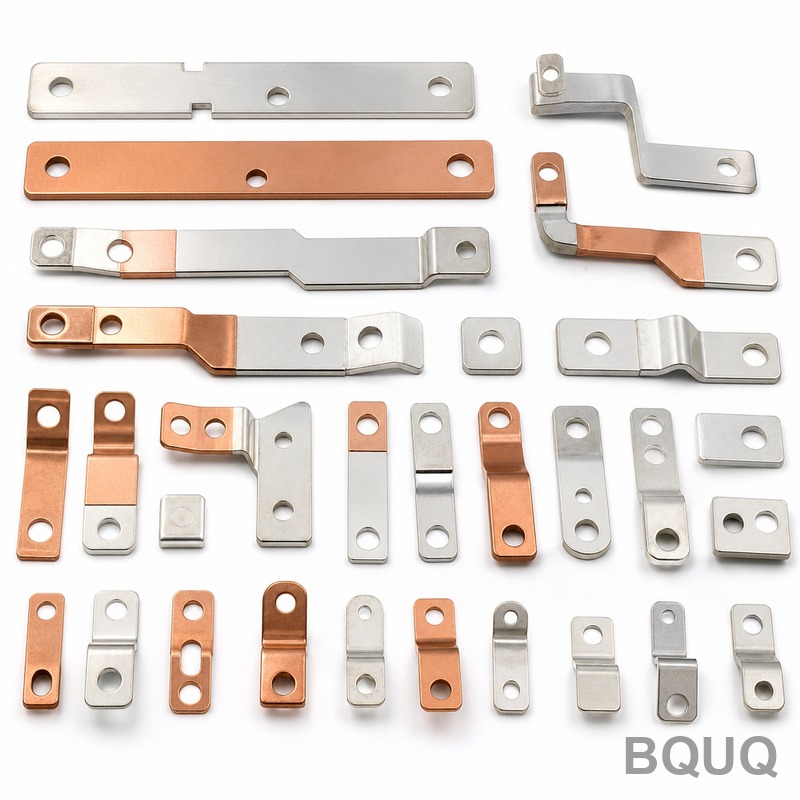
The primary difference is the deformation mechanism. Bending applies a force to create a plastic hinge along a single linear axis, changing the angle of the sheet without altering its thickness significantly. Stamping, however, uses a matched punch-and-die set to perform cutting (shearing), deep drawing, or localized forming, which can change both the shape and thickness profile of the material. For example, a simple bracket may require only bending, while a complex electronic shield may require blanking, piercing, and embossing—all within one stamping die.
How Does Tooling Cost Differ Between Stamping and Bending?
Tooling cost is the most significant economic differentiator. A dedicated bending tool (a press brake die set) typically costs between USD 300 and USD 1,500 per setup, depending on length and material. In contrast, a progressive stamping die for a multi-stage part costs between USD 5,000 and USD 50,000, with complex transfer dies reaching USD 100,000 or more. For low-volume production under 1,000 parts, bending with a press brake is always more economical; for high-volume runs exceeding 50,000 parts, stamping amortizes tooling cost to pennies per part.
Which Materials Are Suitable for Stamping Versus Bending?
Both processes work with common sheet metals, but material behavior differs. Bending is ideal for ductile materials like low-carbon steel (yield strength 250 MPa), aluminum 5052, and brass, which can withstand a 0.5t inside bend radius without cracking. Stamping, particularly deep drawing, requires materials with high elongation, such as stainless steel 304 (elongation 40%) or cold-rolled steel DC04. Materials with high springback, like high-strength steel (HSS) or titanium, are difficult to bend accurately but can be stamped with specialized dies that incorporate over-bend compensation up to 5 degrees.
What Tolerance Can Each Process Achieve Per Part?
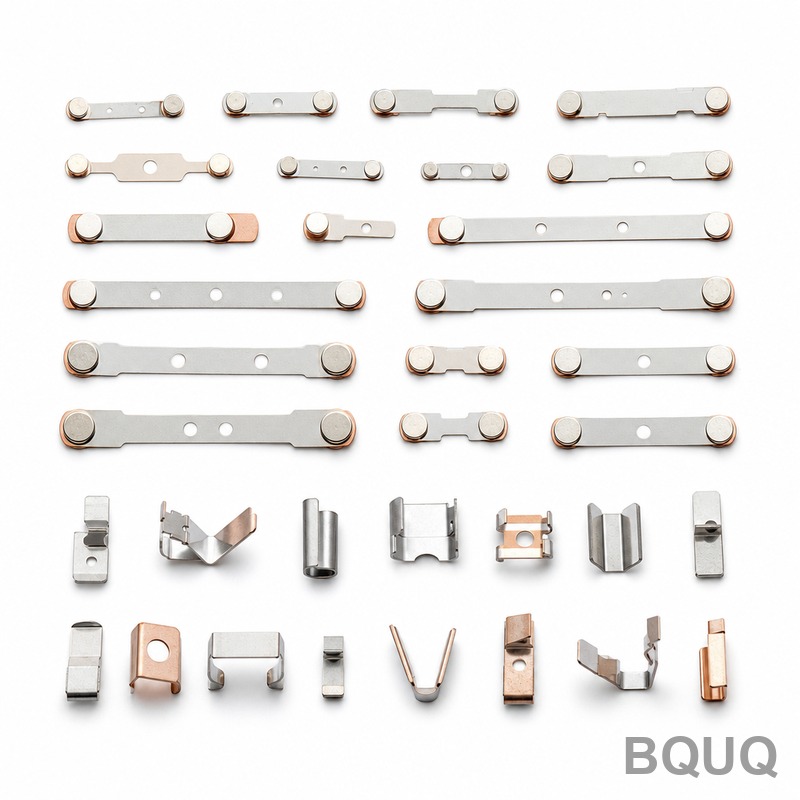
Bending tolerances are inherently less precise than stamping due to springback and material variance. A standard air-bend on a press brake holds +/- 0.5 mm along the bend line and +/- 1 degree angular tolerance. Precision bending with coining can reach +/- 0.1 mm and +/- 0.5 degrees. Stamping, however, achieves tighter dimensional control: blanking holds +/- 0.05 mm, and fine blanking reaches +/- 0.01 mm. For hole-to-hole spacing in a progressive die, stamping maintains +/- 0.03 mm, which is critical for electronics and automotive connectors.
When Should an Engineer Choose Bending Over Stamping?
Choose bending when you have low to medium volume (1 to 10,000 parts), large part sizes (over 500 mm), or frequent design changes. Bending is also preferred for prototype validation because lead time is 2 to 5 days versus 3 to 6 weeks for stamping dies. Choose stamping when annual volume exceeds 20,000 parts, when part geometry includes multiple features (holes, forms, louvers) that can be combined in one stroke, or when material thickness is below 0.5 mm where press brake bending becomes unstable.
How Does Production Speed Compare Between the Two Processes?
Stamping is dramatically faster in production. A mechanical stamping press runs at 50 to 120 strokes per minute (SPM) for progressive dies, meaning one part per stroke. A hydraulic press for deep drawing runs at 10 to 30 SPM. In contrast, a press brake bending operation takes 15 to 60 seconds per bend, and a typical part with four bends takes 1 to 4 minutes. For a production run of 10,000 parts with four bends, stamping takes 1.5 hours (at 60 SPM) while bending takes over 400 hours of machine time.
Why Does Part Design Dictate Which Process Is More Cost-Effective?
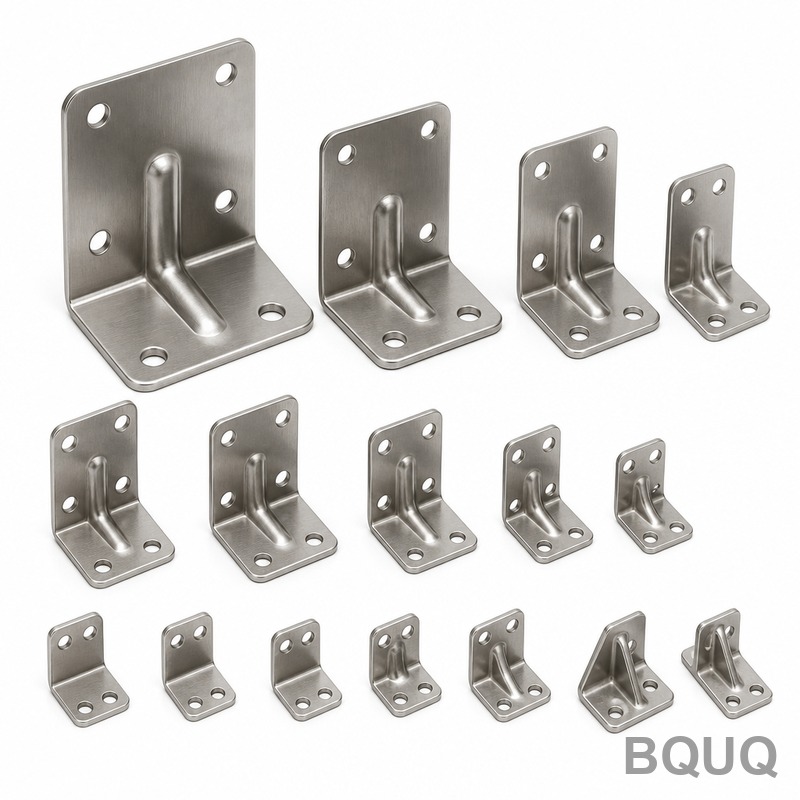
Part geometry determines the process. If your part is a simple L-bracket, U-channel, or box with straight bends, bending is the only rational choice—tooling is cheap and setup is fast. If your part requires internal cutouts, flanges, embossments, or a 3D shape, stamping consolidates multiple operations into one die. A clear rule: if the part has more than three distinct features (bends, holes, forms), stamping cost per part drops below bending cost at approximately 8,000 to 15,000 units, based on our 2024 BQUQ cost model.
| Process Parameter | Bending (Press Brake) | Stamping (Progressive Die) |
| Tooling Cost (USD) | 300 – 1,500 | 5,000 – 50,000 |
| Lead Time (days) | 2 – 5 | 15 – 45 |
| Production Speed | 15 – 60 sec/bend | 50 – 120 parts/min |
| Tolerance (mm) | +/- 0.5 | +/- 0.05 |
| Angular Tolerance (deg) | +/- 1.0 | +/- 0.3 |
| Min Bend Radius | 0.5t (t = thickness) | 0.2t (with coining) |
| Max Part Size (mm) | 4,000 | 600 |
| Optimal Volume (pcs) | 1 – 10,000 | 10,000+ |
What Are the Common Defects in Each Process and How to Avoid Them?
Bending defects include springback (angular recovery of 2 to 5 degrees for steel), cracking on the outer surface when the bend radius is less than 0.5t, and distortion at the bend line. Mitigation includes using bottoming or coining dies, increasing the bend radius, and performing stress-relief annealing for aluminum. Stamping defects include burr height (typically 10% of material thickness), tearing in deep drawing when the draw ratio exceeds 2:1, and die roll on sheared edges. Use fine blanking for burr-free edges and adjust blank holder pressure to prevent wrinkling in drawn cups.
Which Industries Rely More on Stamping Versus Bending?
The automotive industry uses stamping heavily for body panels, chassis brackets, and seat components—a single car contains over 300 stamped parts. The electronics industry relies on stamping for heat sinks, EMI shields, and connector terminals with tolerances of +/- 0.02 mm. Bending dominates the architectural, furniture, and heavy equipment sectors where large beams, enclosures, and frames are made from 2 mm to 6 mm thick plate. Medical device manufacturers use both: stamping for precision surgical instruments and bending for tubing and guidewires.
What Are the Cost Per Part Differences at Different Volumes?
At 100 parts, bending cost is USD 2.50 to 8.00 per part (including setup labor), while stamping is USD 50 to 150 per part due to die amortization. At 10,000 parts, bending drops to USD 0.80 to 2.00, and stamping falls to USD 0.15 to 0.60. At 100,000 parts, stamping cost is USD 0.05 to 0.20 per part, which is 10 to 20 times cheaper than bending. This crossover point is critical for make-or-buy decisions, and our engineering team at BQUQ always runs this calculation before recommending a process.
Can a Single Part Use Both Stamping and Bending?
Yes, and this is common practice. Many parts are first stamped (blanked and pierced) and then bent on a separate press brake or within the same progressive die. For example, a server chassis bracket is stamped to create holes and slots, then bent to form flanges. In a progressive die, the strip moves through stations: station 1 pierces, station 2 blanks, station 3 bends, and station 4 cuts off. This hybrid approach balances tooling cost and production speed, especially for medium volumes of 10,000 to 50,000 parts.
What Is the Maximum Thickness Each Process Can Handle?
Bending is more versatile for thick materials. A standard press brake can bend steel up to 20 mm thick (with a V-die opening of 8t), and heavy-duty brakes handle 40 mm plate. Stamping is typically limited to 6 mm for blanking and 3 mm for deep drawing, because the press tonnage and die wear increase exponentially with thickness. For 8 mm or thicker, stamping requires a hydraulic press with 500 tons or more, which is only economical for very high volumes.
FAQ Section
How Do I Calculate the Minimum Bend Radius for My Material?
The minimum bend radius is typically 0.5 to 1.0 times the material thickness for soft steel and aluminum, and 1.5 to 2.0 times for harder materials like stainless steel 301 full-hard. Use the formula Rmin = t x (50 / elongation percentage). For example, with 304 stainless (elongation 40%), Rmin is 1.25t.
Does Stamping Always Produce Burrs?
Yes, standard stamping produces burrs on the sheared edge, typically 5% to 10% of material thickness. For burr-free edges, specify fine blanking, which holds burr height under 0.05 mm but adds 15% to 30% to tooling cost.
What Is the Difference Between Air Bending and Coining?
Air bending leaves the material unsupported under the punch, using 60% of the die opening for springback control, and is faster but less accurate. Coining presses the material fully into the die under high tonnage (3 to 5 times more force), eliminating springback and achieving +/- 0.1 degree accuracy.
Which Process Is Greener for the Environment?
Bending is more energy-efficient per part because press brakes use only 10 to 20 tons of force versus 50 to 200 tons for stamping presses. However, stamping produces less scrap per part when using a progressive die with tight nesting, achieving material utilization of 70% to 85% versus 60% to 75% for bending.
Can I Bend Aluminum Without Cracking?
Aluminum 5052 and 6061 can be bent if the bend radius is at least 1.0t and the bend line is perpendicular to the rolling direction. For 7075-T6, avoid bending entirely—it cracks at any radius below 4t. Use temper O or T4 for bending, then heat-treat after forming.
How Long Does a Stamping Die Last?
A carbide progressive die lasts 1 million to 5 million strokes, while a tool-steel die lasts 100,000 to 500,000 strokes. Bending dies last longer at 2 million bends if you resurface the V-die every 50,000 cycles. Die maintenance cost is typically 5% to 10% of the initial tooling cost per year.
What Is the Minimum Hole Size in Stamping?
The minimum hole diameter in stamping is 1.0 times material thickness for standard punching, but can be reduced to 0.5t with fine blanking. For example, a 1.0 mm thick sheet can have a 1.0 mm hole with standard tooling and a 0.5 mm hole with fine blanking.
Conclusion
The choice between stamping and bending is not a matter of superiority but of matching process capability to part geometry, volume, and tolerance requirements. Bending offers rapid turnaround, low tooling cost, and flexibility for large or thick parts, while stamping delivers unmatched speed, precision, and per-part economy at scale. Always evaluate total cost including tooling amortization, scrap rate, and secondary operations before deciding.
At BQUQ, we have 20 years of experience in CNC machining, metal stamping, springs, and heat sinks in Dongguan, China. Our engineers will analyze your drawings, recommend the optimal forming process, and provide a firm quote within 12 hours. Email your files to sc@bquq.com or message us on WhatsApp at +86 13713157787. Visit www.bquq.com to request a design-for-manufacturability review today.