What Is the Minimum Order Quantity for Metal Stamping? MOQ Explained
The minimum order quantity (MOQ) for metal stamping is typically 500 to 1,000 pieces for progressive die production, 1,000 to 5,000 pieces for transfer stamping, and as low as 100 pieces for prototype or short-run stamping using simplified tooling. However, at BQUQ in Dongguan, we routinely accommodate MOQs of 300 pieces for simple flat blanks and 2,000 pieces for complex deep-drawn parts, depending on material thickness, tooling cost amortization, and part geometry. The true MOQ is not a fixed number but a function of your budget per part, the die construction method, and the stamping press tonnage required.
What Factors Determine the Actual MOQ for a Metal Stamping Project?
The MOQ is driven by three primary variables: tooling amortization, material procurement minimums, and press setup costs. For a progressive die costing USD 8,000 to USD 30,000, the tooling cost per part drops significantly as volume increases, so a 500-piece order would carry a tooling surcharge of USD 16 to USD 60 per part, while a 10,000-piece order reduces that to USD 0.80 to USD 3.00 per part. Material minimums from mills like Baosteel or Nippon Steel typically range from 500 kg to 2,000 kg per coil for stainless steel (304 or 316) and aluminum (5052 or 6061), which translates to roughly 1,000 to 5,000 parts for a small bracket weighing 50 grams. Press setup time, which averages 45 to 90 minutes on a 60-ton press at a cost of USD 45 per hour, makes runs under 300 parts economically inefficient unless you accept a higher unit price.
How Does Tooling Type Change the Minimum Order Quantity?
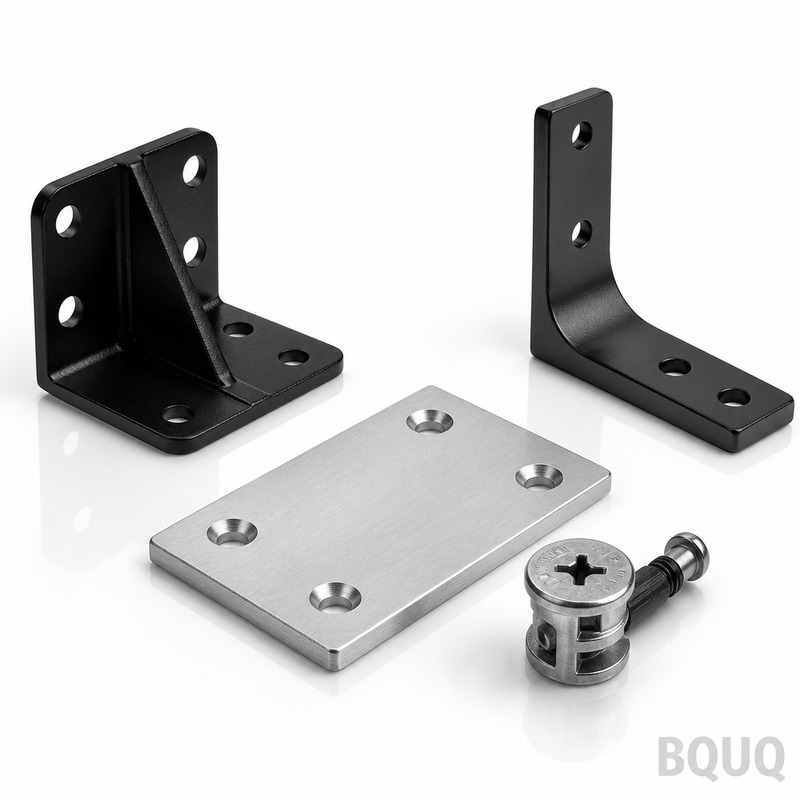
The die type directly sets the practical MOQ floor. For a single-station blanking die costing USD 1,500 to USD 4,000, a run of 200 to 500 parts is feasible because the die is simple and changeover takes only 20 minutes. For a progressive die with 5 to 10 stations, priced at USD 12,000 to USD 35,000, the MOQ jumps to 2,000 to 5,000 pieces to justify the engineering and machining time of 3 to 6 weeks. Transfer stamping dies, used for deep-drawn housings, start at USD 20,000 and require a minimum of 5,000 parts to amortize the cost over a reasonable production span. At BQUQ, we recommend a simplified hard tool (USD 2,500 to USD 6,000) for customers needing 500 to 1,500 parts, which uses the same press but fewer stations, reducing the MOQ without sacrificing dimensional accuracy.
Which Stamping Process Allows the Lowest MOQ Without Custom Die Costs?
Prototype stamping using wire EDM or laser cutting followed by a small forming die allows an MOQ as low as 50 to 200 pieces, with per-part costs of USD 3 to USD 10 depending on material thickness (0.5 mm to 3.0 mm). This method, called soft tooling or low-volume stamping, uses die inserts made of aluminum or low-carbon steel that last for 5,000 to 20,000 hits, sufficient for pilot runs and field testing. For example, a 1.2 mm thick cold-rolled steel bracket with a tolerance of plus/minus 0.05 mm can be produced at 150 pieces with a soft die for USD 4.50 per part, versus USD 0.90 per part at a 10,000-piece volume with a hardened D2 steel die. If your design is still evolving, this approach avoids the risk of scrapping a USD 25,000 die, and we can transition to a production die once the geometry is frozen.
How Much Does Tooling Cost Affect the MOQ Price per Part?
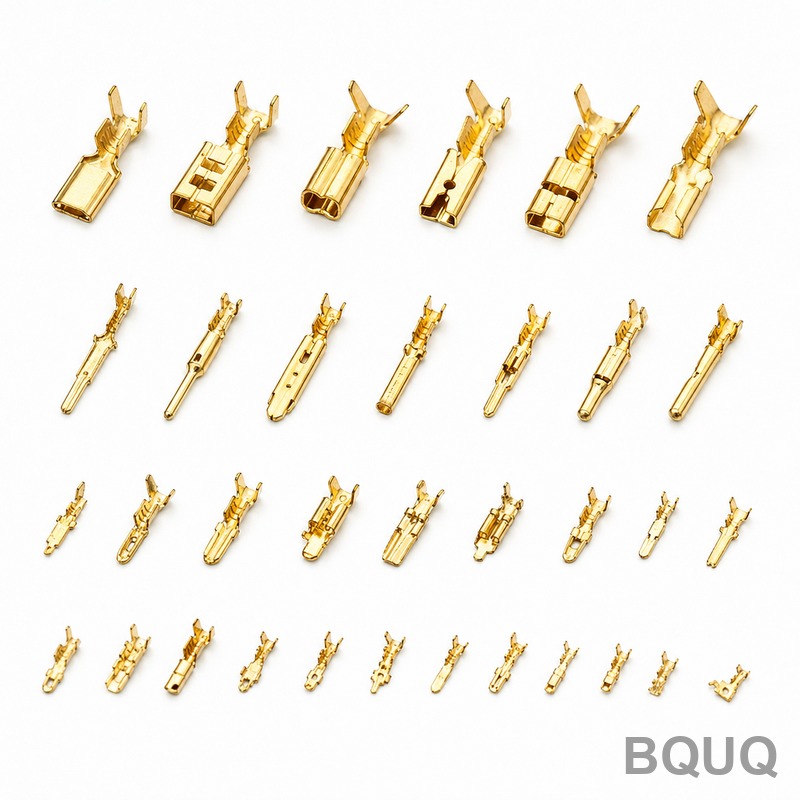
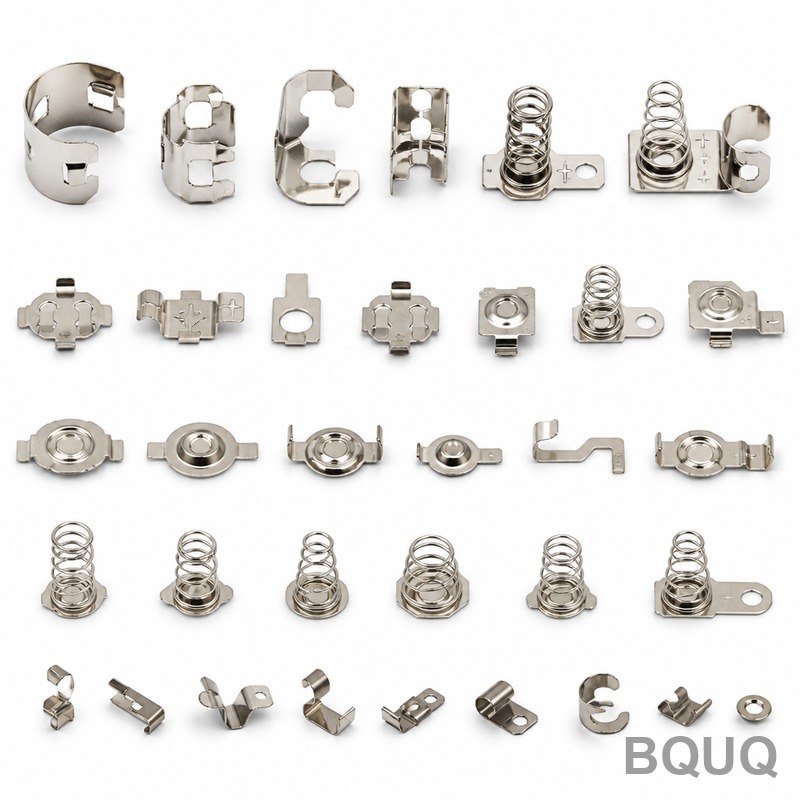
Tooling cost is the dominant factor in low-volume stamping, often representing 40% to 70% of the total project cost for orders under 2,000 pieces. Consider a 2.5 mm thick brass terminal (C2600) with a tolerance of plus/minus 0.03 mm: a progressive die costs USD 18,000, and at a 1,000-piece MOQ the tooling adds USD 18 per part, while at a 10,000-piece MOQ it adds only USD 1.80 per part. The material cost for this terminal is roughly USD 0.12 per piece, and stamping labor plus overhead is USD 0.08 per piece, so the final price at 1,000 pieces is USD 18.20 versus USD 2.00 at 10,000 pieces. To lower your effective MOQ, BQUQ offers a tooling buyout option where you pay the full die cost upfront (no amortization), enabling a 200-piece order at a unit price of just USD 0.35 plus material and setup fees.
What Are the Typical MOQ Ranges by Material Type and Thickness?
Material thickness and hardness dictate press speed and die wear, which in turn influence the minimum economic run length. Soft materials like aluminum 1100 (0.8 mm thick) can be stamped at 400 strokes per minute, allowing a 1,000-piece MOQ to be completed in 2.5 minutes of press time, so the MOQ can drop to 500 pieces. Harder materials like stainless steel 301 full-hard (1.5 mm thick) reduce press speed to 120 strokes per minute and increase die wear by 30%, pushing the practical MOQ to 3,000 pieces to avoid frequent die sharpening costs. Below is a reference table based on BQUQ production data for typical parts (brackets, clips, and heat sink fins) at standard tolerances of plus/minus 0.05 mm.
| Material | Thickness Range (mm) | Recommended MOQ (pieces) | Unit Price at MOQ (USD) | Tooling Cost (USD) |
| Aluminum 5052 | 0.5 to 2.0 | 500 | 0.85 | 4,500 |
| Cold-rolled steel SPCC | 0.8 to 3.0 | 1,000 | 0.65 | 6,000 |
| Stainless steel 304 | 0.5 to 1.5 | 2,000 | 1.20 | 9,500 |
| Brass C2680 | 0.3 to 1.2 | 1,500 | 0.95 | 7,800 |
| Copper C1100 | 0.4 to 2.0 | 800 | 1.45 | 5,200 |
| Spring steel 65Mn | 0.2 to 1.0 | 3,000 | 1.80 | 12,000 |
How Can You Reduce the MOQ for a Custom Stamping Part?
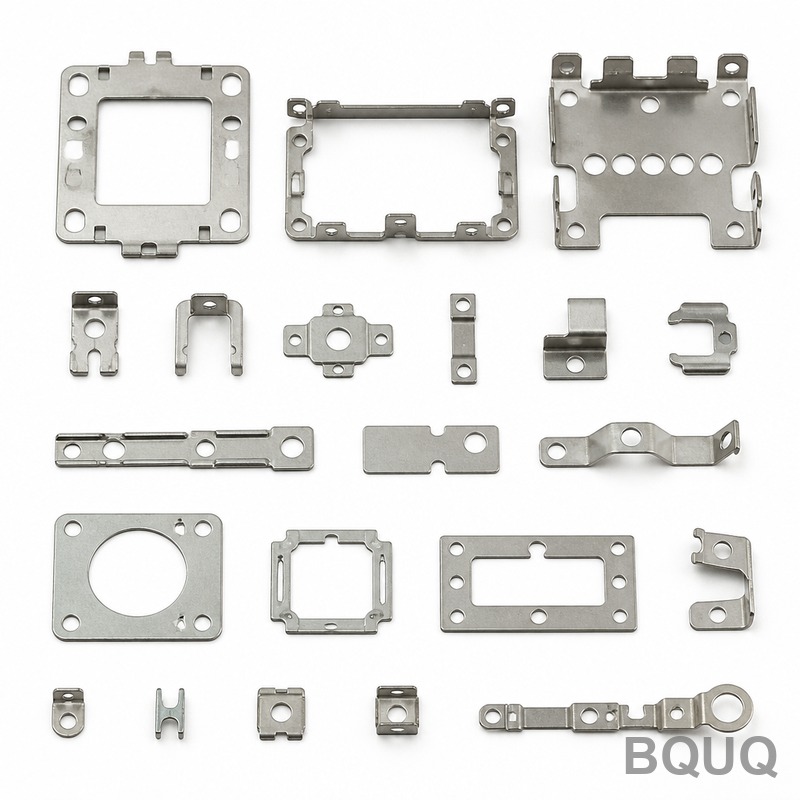
You can reduce the MOQ by using standard coil widths and minimizing custom features that require secondary operations. For instance, if your part uses a standard 100 mm wide coil of SPCC steel, the material minimum is only 250 kg (about 1,200 parts at 200 grams each), but if you require a custom 135 mm width, the mill minimum jumps to 1,500 kg, raising the effective MOQ to 7,500 parts. Another strategy is to combine multiple part numbers into one progressive die with a family tool, which allows you to run three different brackets in a single 2,000-piece batch, effectively lowering each part's MOQ to 667 pieces. Additionally, BQUQ can use a multi-hit approach on a single die with interchangeable inserts, reducing tooling cost by 35% and allowing a 600-piece MOQ for mixed variants at a unit price increase of only USD 0.20.
Why Do Some Stamping Suppliers Quote MOQs of 5,000 or 10,000 Pieces?
Suppliers with high overhead or outdated equipment often quote high MOQs because their press utilization rate is below 60%, so they need longer runs to cover idle machine time and administrative costs. A 110-ton press running at USD 70 per hour with a setup time of 2 hours requires a minimum of 3,000 parts to break even on a simple part, but a modern factory with quick-change tooling and automated feeds can break even at 800 parts. At BQUQ, our 25 presses (from 10 to 250 tons) have a utilization rate of 85%, and we use quick die-change systems that reduce setup to 15 minutes, which is why we can offer MOQs as low as 300 pieces for simple geometries. When you receive a high MOQ quote, ask the supplier for a breakdown of setup time and tooling amortization; if they cannot provide it, they are likely padding the MOQ to offset inefficiencies.
When Should You Choose a Higher MOQ to Save Money?
You should choose a higher MOQ of 10,000 to 50,000 pieces when your annual demand is stable and the part design is frozen, as the per-unit cost can drop by 60% to 80% compared to a 1,000-piece order. For a heat sink fin made of aluminum 6061 (0.6 mm thick), a 2,000-piece order costs USD 1.10 per part, but a 20,000-piece order costs USD 0.38 per part, saving USD 14,400 over the year. However, if your product has a lifecycle under 12 months or you anticipate design revisions, a higher MOQ risks excess inventory and obsolete tooling, so a 1,000-piece MOQ with a tooling buyout is financially safer.
FAQ
What Is the Absolute Lowest MOQ BQUQ Can Accept for a Simple Part?
For a flat blank or simple bend with no tight tolerances (plus/minus 0.10 mm), BQUQ can accept an MOQ of 100 pieces using a simplified single-hit die. The unit price will be higher, typically USD 2.50 to USD 5.00, but this allows you to validate fit and function before committing to production tooling.
How Long Does It Take to Produce a Low-MOQ Stamping Order?
A low-MOQ order of 300 to 500 pieces typically takes 5 to 7 working days, including soft tooling fabrication (3 to 4 days) and stamping plus quality inspection (1 to 2 days). For a 2,000-piece order with an existing die, production takes 2 to 3 days after material receipt.
Can I Get a Custom MOQ That Matches My Exact Demand Forecast?
Yes, BQUQ offers flexible MOQ agreements based on your annual forecast, allowing you to split a 12,000-piece commitment into four quarterly releases of 3,000 pieces. This locks in a lower unit price while reducing inventory carrying costs.
Do You Charge Extra for Small Orders Below the Standard MOQ?
Yes, a small-order surcharge of USD 100 to USD 300 is applied to orders below 500 pieces to cover setup, inspection, and documentation. This surcharge is waived if you pay for the tooling in full upfront.
What Quality Certifications Apply to Low-MOQ Metal Stamping Orders?
All low-MOQ orders are inspected with a CMM (coordinate measuring machine) for dimensional accuracy, and we provide a full material certificate (EN 10204 3.1) and a dimensional report. For orders above 1,000 pieces, we include SPC data on key characteristics at no extra cost.
How Does Material Cost Fluctuation Affect My Quoted MOQ Price?
Material cost is quoted at the current market price for the coil, and we hold the price for 30 days for confirmed orders. If the material price changes by more than 5% at the time of your order, we will notify you before production.
Which Industries Commonly Use Low-MOQ Metal Stamping?
Low-MOQ stamping is common in medical devices (surgical instrument components), aerospace (brackets and clips), and electronics (heat sink shields), where parts are specialized and volumes are moderate. These industries value the ability to iterate quickly without large capital commitments.
At BQUQ, we understand that not every project starts with a 50,000-piece order. With 20 years of experience in CNC machining, metal stamping, springs, and heat sinks, we offer MOQs tailored to your engineering stage, from 100-piece prototypes to million-part production runs. Our engineers will review your drawings within 24 hours and recommend the most cost-effective tooling and MOQ strategy. For a firm quote within 12 hours, email your CAD files to sc@bquq.com or contact us on WhatsApp at +86 13713157787. Visit www.bquq.com to download our stamping design guidelines and start your project today.