What Is the Minimum Order Quantity for Metal Stamping? MOQ Explained
The minimum order quantity (MOQ) for metal stamping typically ranges from 500 to 5,000 pieces for progressive die production, but can be as low as 100 pieces for prototype or short-run stamping using simplified tooling. For high-volume continuous stamping, MOQs often exceed 50,000 pieces per year to justify the tooling amortization. Your actual MOQ depends on part complexity, material thickness, stamping method, and whether you use existing tooling or new custom dies.
How Does the Stamping Method Affect the MOQ?
The stamping process you choose has the largest impact on MOQ because it determines tooling cost and setup time. Progressive die stamping, which performs multiple operations (blanking, punching, bending) in a single pass, requires complex multi-station tooling that costs between $5,000 and $80,000, so suppliers typically require 5,000 to 100,000 pieces to amortize this investment. In contrast, short-run stamping using a simple blanking die (single-operation tooling) costs only $800 to $3,000, allowing MOQs as low as 200 pieces. For prototyping, you can use wire EDM or laser-cut blanks with minimal tooling, where MOQs drop to 50 to 100 pieces, but per-unit costs increase by 3 to 5 times compared to production stamping.
What Is the Typical MOQ for Progressive Die Metal Stamping?
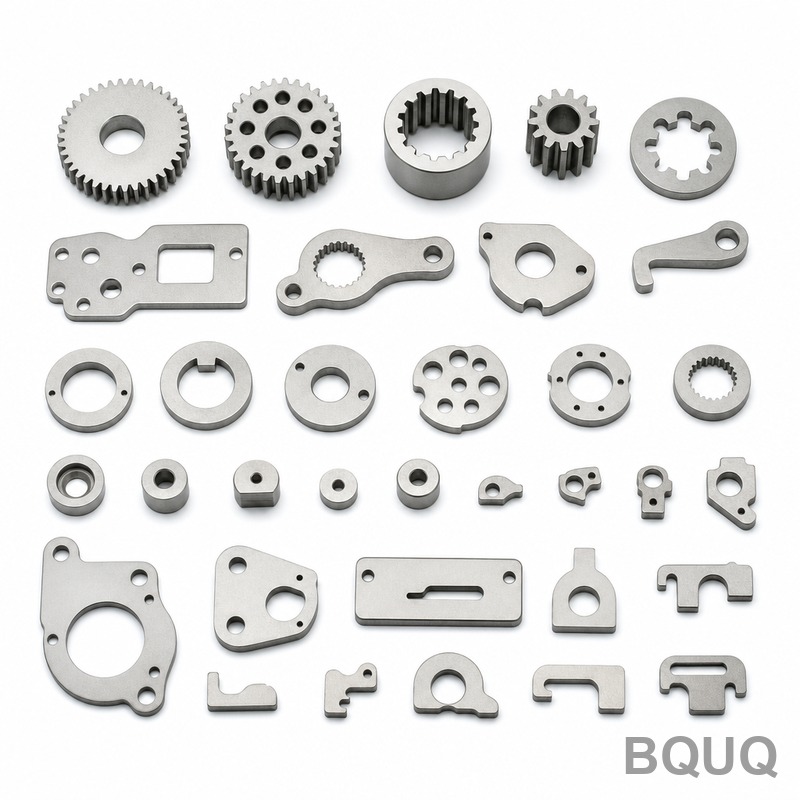
For progressive die stamping, which is the dominant method for high-volume production of parts like heat sinks, connector terminals, and spring clips, the typical MOQ ranges from 10,000 to 100,000 pieces. This range exists because a progressive die costs $20,000 to $80,000 and requires a setup time of 2 to 4 hours per run; a 10,000-piece order at 400 parts per minute takes only 25 minutes of press time, making the tooling cost the dominant factor. In our Dongguan factory, we set a standard MOQ of 5,000 pieces for progressive die parts under 50 mm in size, but we reduce this to 3,000 pieces if the customer pays a 30% tooling contribution fee. If your part has tight tolerances (below ±0.05 mm) or requires secondary operations like tapping or heat treating, expect the MOQ to rise to 20,000 pieces because these steps add fixed costs that cannot be spread over small batches.
Which Factors Determine Whether a Supplier Lowers the MOQ?
Three primary factors allow us to lower MOQs: material availability, tooling standardization, and part family grouping. First, if your part uses standard material like SPCC steel (0.5 mm to 3.0 mm thick) or 5052 aluminum, we can order coil stock from local mills with a minimum purchase of 500 kg, which covers roughly 10,000 small parts; for specialty alloys like beryllium copper or Inconel, the material minimum is 2,000 kg, forcing the MOQ up to 50,000 pieces. Second, if your part fits into an existing tooling family (e.g., a standard heat sink base profile), we can run it with a simple insert change costing $500 to $1,500, allowing an MOQ of just 1,000 pieces. Third, if you have multiple similar parts, we can group them into one production run, where the combined MOQ of 5,000 pieces is split across 3 to 5 different part numbers, effectively lowering each part's MOQ to 1,000 to 1,700 pieces.
How Much Does Tooling Cost and How Does It Set the MOQ?
Tooling cost is the primary driver of MOQ because it is a fixed cost that must be amortized over the order quantity. A simple blanking die for a flat washer costs $800 to $2,000, which at an MOQ of 1,000 pieces adds $0.80 to $2.00 per part; a progressive die for a complex bracket with 12 stations costs $25,000 to $60,000, which at an MOQ of 50,000 pieces adds $0.50 to $1.20 per part. The table below shows typical tooling costs and corresponding MOQs for common stamping scenarios.
| Stamping Type | Tooling Cost (USD) | Typical MOQ (pieces) | Setup Time (hours) | Per-Part Tooling Amortization (USD) |
| Prototype (laser cut or EDM) | $200 - $800 | 50 - 200 | 1 - 2 | $1.00 - $4.00 |
| Short-run blanking die | $800 - $3,000 | 500 - 2,000 | 1 - 3 | $0.40 - $1.50 |
| Progressive die (simple, 4-6 stations) | $5,000 - $15,000 | 5,000 - 20,000 | 2 - 4 | $0.25 - $1.00 |
| Progressive die (complex, 10+ stations) | $25,000 - $80,000 | 20,000 - 100,000 | 3 - 6 | $0.30 - $1.20 |
| Transfer die (large parts) | $40,000 - $120,000 | 50,000 - 200,000 | 4 - 8 | $0.20 - $0.80 |
Why Do Tight Tolerances Increase the MOQ?
Tight tolerances increase MOQ because they require additional quality inspection steps, more frequent tool maintenance, and slower press speeds, all of which add fixed costs per production run. For example, a part with a tolerance of ±0.10 mm can be stamped at 300 strokes per minute with a Cpk (process capability index) of 1.33, requiring only a first-article inspection and a mid-run check; a part with ±0.02 mm tolerance must run at 100 strokes per minute, requires in-process inspection every 50 pieces, and needs tool polishing after every 5,000 strokes. At our factory, we set a minimum of 10,000 pieces for parts with tolerances below ±0.05 mm because the inspection cost of $0.03 per part (using a CMM or optical comparator) becomes prohibitive on smaller batches. If your design allows a tolerance of ±0.15 mm or wider, you can expect the MOQ to drop by 40% to 60% because standard press operation and sampling plans (per ISO 2859-1, inspection level II) become feasible.
When Can You Get a Low MOQ of 100 to 500 Pieces?
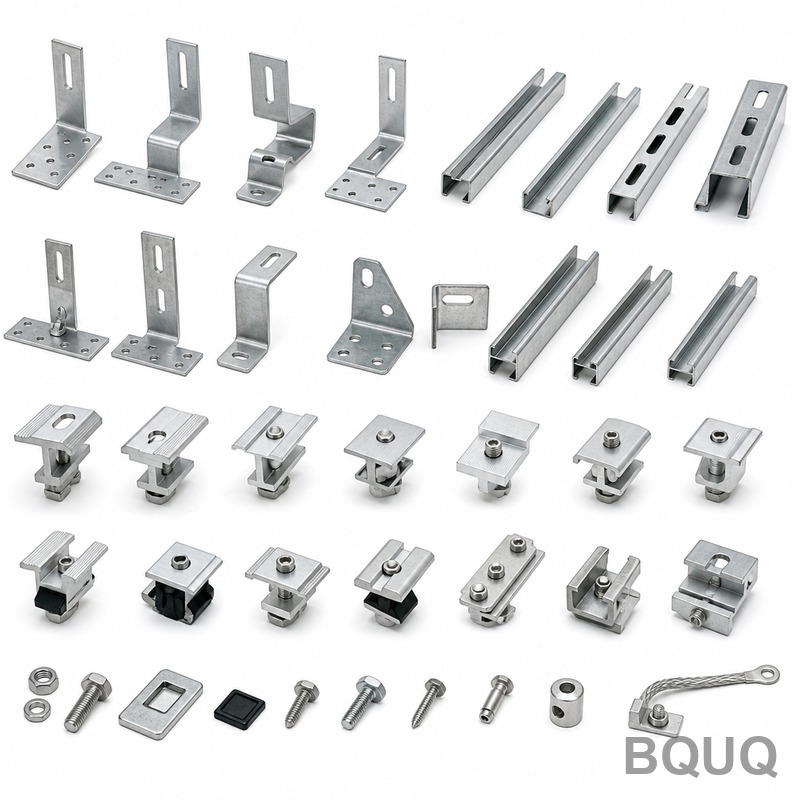
You can get a low MOQ of 100 to 500 pieces under three specific conditions: prototype validation, existing tooling, or simple flat parts. For prototypes, we use wire EDM or laser cutting to produce 50 to 200 pieces without any stamping die, with lead times of 3 to 5 days and per-part costs of $0.50 to $5.00 depending on material and size. If you have an existing die from a previous project (either your own or a transferred tool from another supplier), we can run an MOQ of 500 pieces, provided the die is in good condition and the material is in stock. For simple flat parts like shims, washers, or flat springs under 30 mm in diameter, a single-operation blanking die costs under $1,500, allowing an MOQ of 200 to 500 pieces, but the per-part price will be 2 to 3 times higher than a 5,000-piece order due to setup and inspection fixed costs.
What Is the MOQ for Metal Stamping of Heat Sinks and Springs?
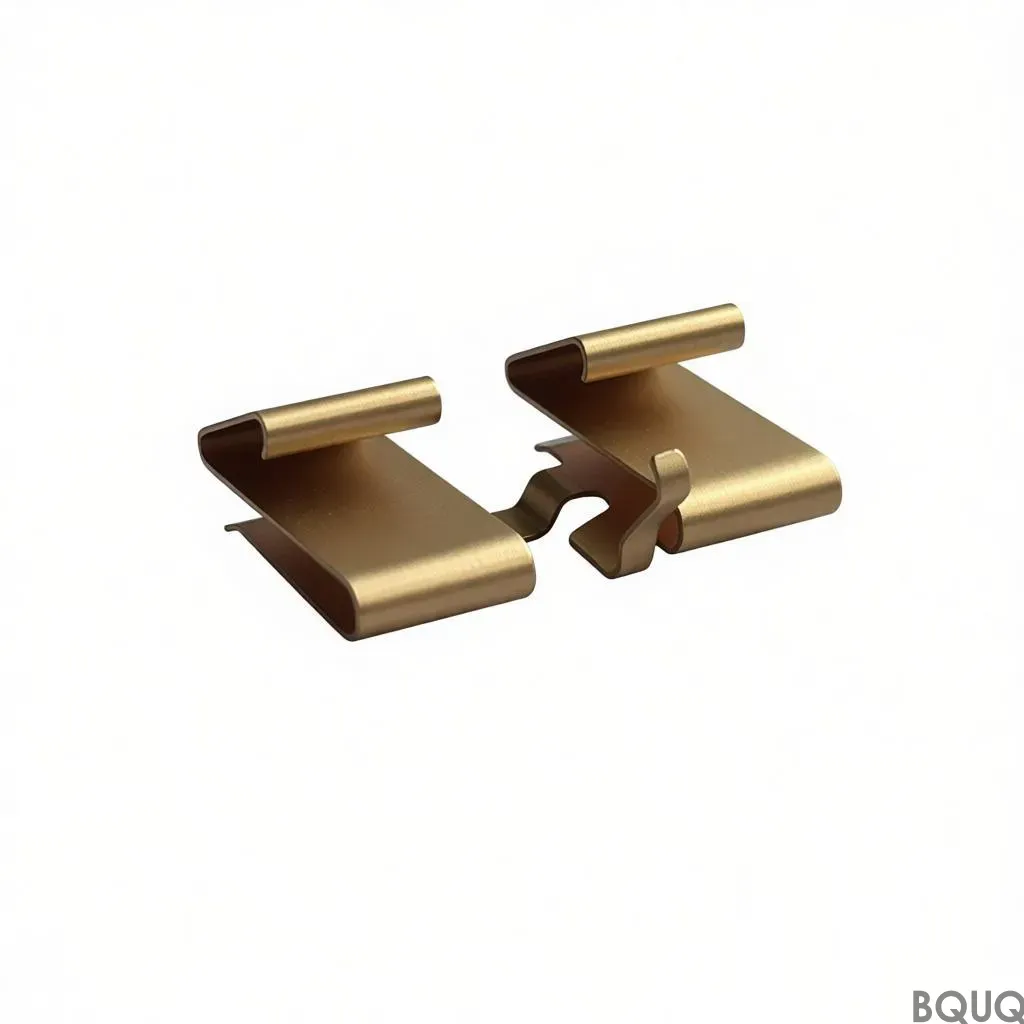
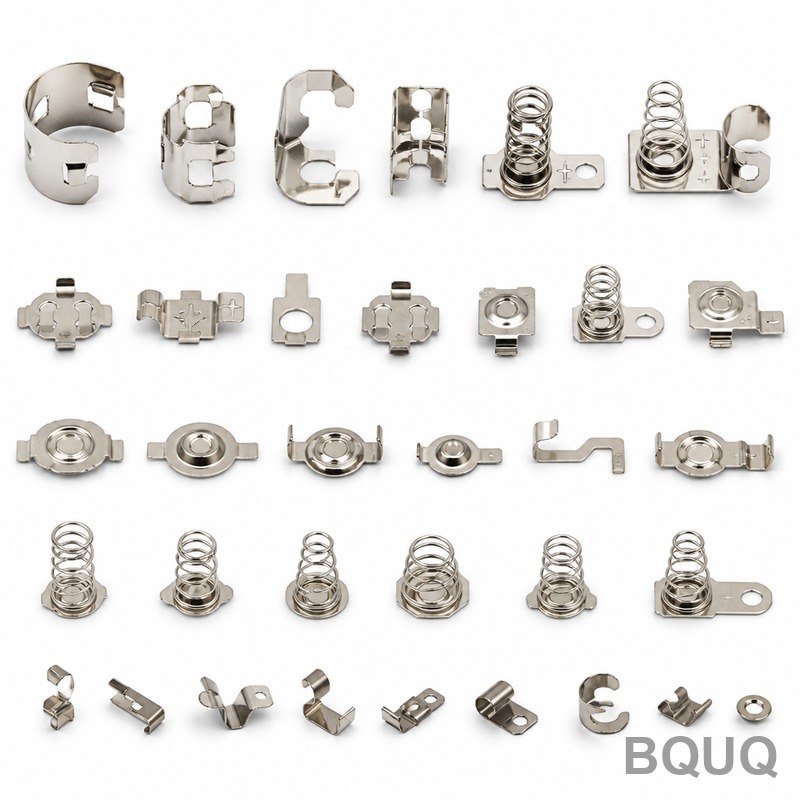
For heat sinks and springs, which are two of our core products, the MOQs differ significantly due to material and process constraints. Extruded and stamped heat sinks (aluminum 6063-T5 or 5052) typically require an MOQ of 3,000 to 10,000 pieces because the aluminum coil material has a minimum order of 500 kg, and the stamping process for fin arrays requires a progressive die costing $15,000 to $40,000. Compression springs and torsion springs made from music wire (SWP-B) or stainless steel (SUS304) can have lower MOQs of 1,000 to 5,000 pieces because spring coiling machines have minimal tooling costs ($200 to $1,000 for collet changes) and setup times under 30 minutes. For stamped spring clips and contact springs using beryllium copper (C17200), the material cost of $15 to $25 per kg forces the MOQ to 5,000 pieces minimum to keep material procurement economical.
How Can You Reduce the MOQ Without Increasing Unit Cost?
You can reduce the MOQ by using a tiered pricing agreement, sharing tooling costs, or redesigning for manufacturability. The most effective approach is to negotiate a tooling contribution where you pay 30% to 50% of the die cost upfront (e.g., $7,500 on a $25,000 progressive die), which allows the supplier to lower the MOQ from 50,000 to 10,000 pieces while keeping per-part pricing within 10% of the high-volume rate. Alternatively, you can combine multiple part numbers into a single die family (e.g., a heat sink base and its mounting clip) so that the total quantity of 5,000 pieces is split across two parts, each effectively having an MOQ of 2,500 pieces. A third option is to relax non-critical tolerances from ±0.05 mm to ±0.15 mm, which reduces inspection time by 70% and allows the supplier to run at 3 times the press speed, making an MOQ of 2,000 pieces economically viable.
FAQ: Minimum Order Quantity for Metal Stamping
What Is the Absolute Lowest MOQ a Metal Stamping Supplier Will Accept?
The absolute lowest MOQ is 50 to 100 pieces for prototype parts made by laser cutting or wire EDM, with no stamping die involved. This is suitable for design verification and functional testing, but per-unit costs will be $3 to $10 higher than production stamping.
How Long Does It Take to Get a Quote for a Low MOQ Order?
A quote for a low MOQ order (under 1,000 pieces) typically takes 4 to 8 hours if you provide a 3D model (STEP or IGES) and material specification. For complex parts requiring tooling design, allow 1 to 2 business days for the tooling cost estimate and production feasibility review.
Can I Order 1,000 Pieces of a Metal Stamped Part With a Custom Design?
Yes, you can order 1,000 pieces of a custom design if the part is relatively simple (flat blank, single bend, or basic form) and uses standard material like SPCC or 5052 aluminum. The tooling will be a simple blanking or forming die costing $1,000 to $3,000, and the per-part price will be approximately $0.30 to $1.50 depending on size and thickness.
Does the MOQ Change If I Use My Own Material?
Using your own material can lower the MOQ by 20% to 40% because the supplier avoids material procurement minimums and inventory costs. However, you must provide material certificates and ensure the coil or strip dimensions match the press specifications, which typically require a minimum width of 20 mm and a maximum of 300 mm.
What Is the MOQ for Metal Stamping With Secondary Operations Like Tapping or Riveting?
The MOQ for stamping with secondary operations is usually 5,000 to 10,000 pieces because tapping, riveting, or heat treatment add fixed setup costs of $200 to $500 per run. These operations also require additional inspection, so per-part costs increase by $0.05 to $0.20, making small batches uneconomical.
How Does the MOQ Affect the Unit Price of a Stamped Part?
A lower MOQ increases the unit price by 30% to 100% because tooling amortization and setup costs are spread over fewer pieces. For example, a part that costs $0.15 at 50,000 pieces will cost $0.25 to $0.30 at 5,000 pieces and $0.45 to $0.60 at 500 pieces.
Can a Supplier Reduce the MOQ for a Repeat Order?
Yes, a supplier can reduce the MOQ for repeat orders to 50% of the initial MOQ because the tooling is already paid for and amortized. For example, if the initial MOQ was 10,000 pieces, a repeat order of 5,000 pieces is typically accepted, provided the tool is maintained and the material is available.
At BQUQ, we understand that every project has unique volume requirements, and we are committed to finding the most economical MOQ for your specific part design and budget. Our engineering team will review your drawings, suggest design-for-manufacturing improvements, and provide a transparent breakdown of tooling and per-part costs. For a detailed quote within 12 hours, email your 2D or 3D files to sc@bquq.com, or contact us on WhatsApp at +86 13713157787. Visit our website at www.bquq.com to learn more about our 20 years of precision stamping, CNC machining, and spring manufacturing capabilities.