What Is the Minimum Order Quantity (MOQ) for Custom Metal Stamping Parts?
The minimum order quantity (MOQ) for custom metal stamping parts typically ranges from 500 to 5,000 pieces for simple flat blanks, while progressive die stamping projects usually require 10,000 to 50,000 pieces to amortize tooling costs effectively. At BQUQ, we set our standard MOQ at 1,000 pieces for parts under 50 mm in diameter, but we accept as low as 500 pieces for prototype validation using soft tooling. Your actual MOQ depends on material thickness, part complexity, die type (single-hit vs. progressive), and whether you choose a temporary steel die or a carbide production die.
What Factors Determine the MOQ for a Metal Stamping Project?
The primary driver of MOQ is tooling cost amortization. A simple blanking die for a flat washer costs between USD 800 and USD 2,500, while a multi-station progressive die for a complex bracket can cost USD 8,000 to USD 30,000. If your per-part target price is USD 0.10 and the die costs USD 10,000, you need at least 100,000 parts to absorb the tooling at USD 0.10 per part. Material thickness above 3.0 mm increases die wear, which raises the MOQ because carbide inserts and regular maintenance become necessary. Secondary operations like tapping, countersinking, or heat treatment also push the MOQ higher because setup time per batch must be justified against machine hourly rates of USD 60 to USD 120.
How Does Die Type Change the Minimum Order Quantity?
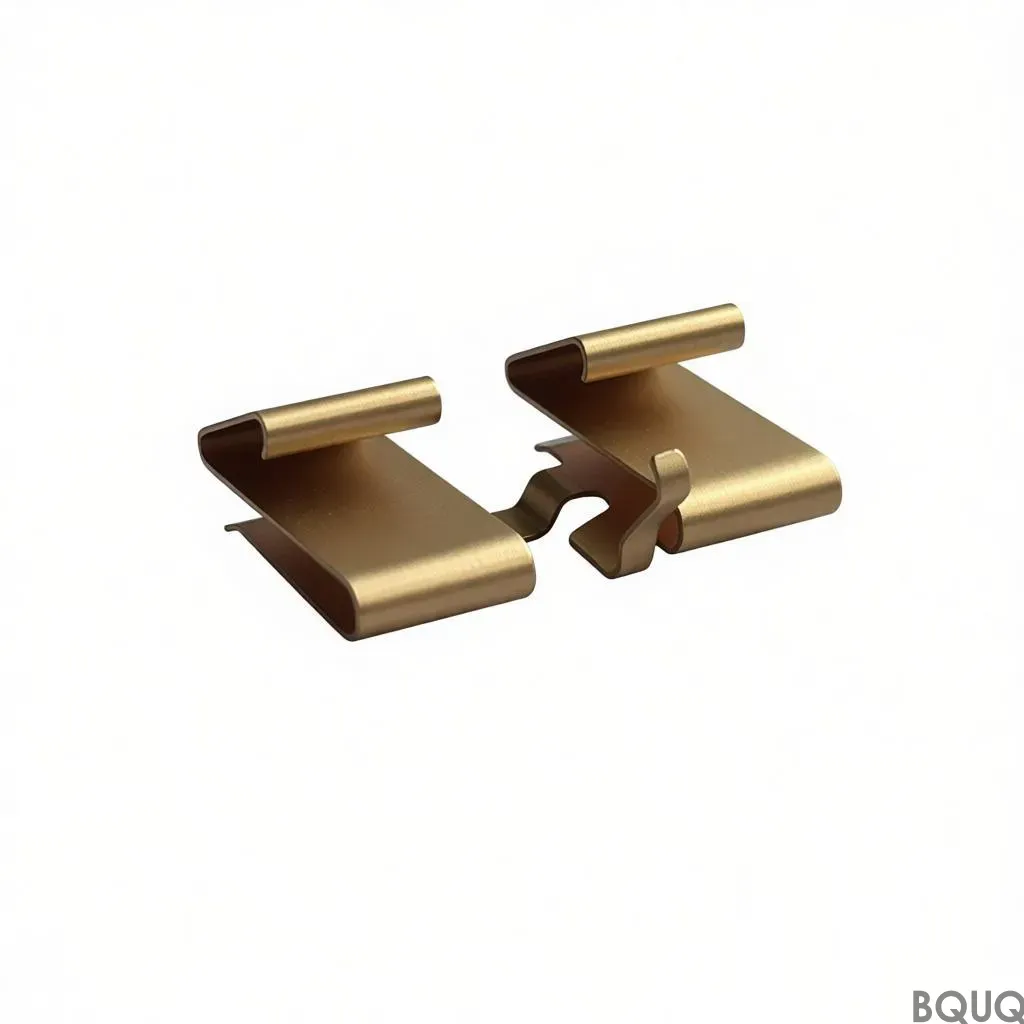
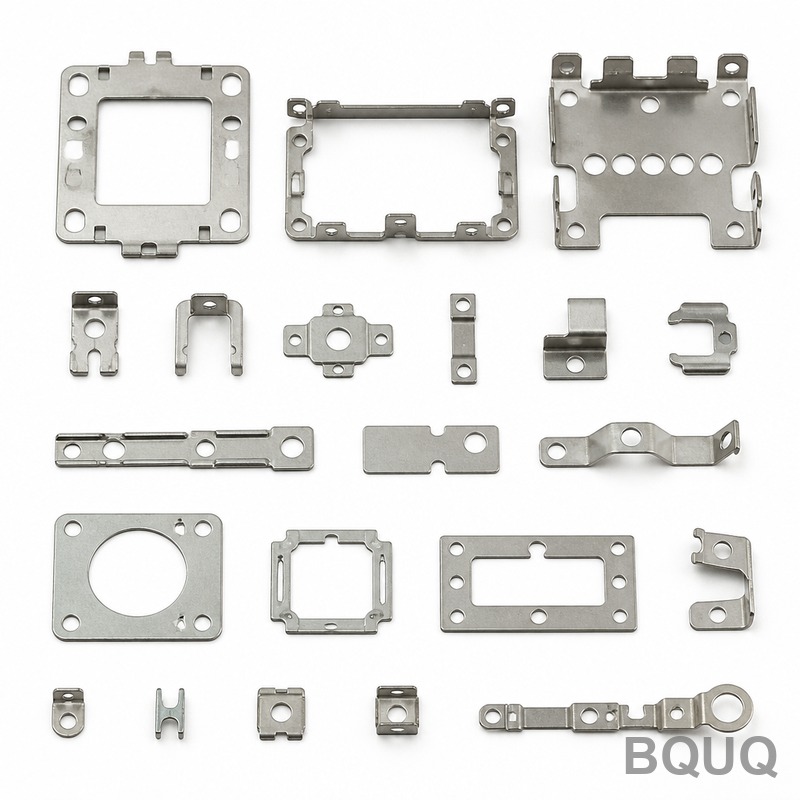
Progressive dies, which perform multiple operations in a single press stroke, require the highest MOQs—typically 20,000 to 100,000 pieces—because the die cost is high but the per-part cost drops dramatically at volume. Single-hit (line) dies, where one operation is done per stroke, allow lower MOQs of 500 to 5,000 pieces because the tooling is simpler and cheaper. For example, a simple forming die for a sheet metal clip at BQUQ costs USD 1,200 and supports an MOQ of 1,000 pieces, whereas a progressive die for the same clip costs USD 9,500 and requires an MOQ of 15,000 pieces to make economic sense. If you need only 200 pieces for a field trial, we recommend using 3D-printed polymer dies or soft aluminum dies, which cost USD 300 to USD 700 and have a life of 500 to 2,000 hits.
What Is the MOQ for Prototype vs. Production Runs?
Prototype runs in metal stamping typically have an MOQ of 100 to 500 pieces when using soft tooling or laser cutting followed by light forming. Laser-cut prototypes cost USD 0.50 to USD 2.00 per part for 1.0 mm steel, with no dedicated tooling, so you can order as few as 50 pieces for fitment testing. Production runs, however, require hard tooling (D2 steel or carbide) with a die life of 1,000,000 hits, and the MOQ is set by the point where the tooling cost per part becomes negligible—usually 10,000 pieces or more. For a mid-volume requirement of 5,000 pieces, BQUQ can use a temporary die made of P20 steel, which costs USD 2,800 and lasts for 50,000 hits, allowing an MOQ of 3,000 pieces.
How Much Does Tooling Cost Affect the MOQ?
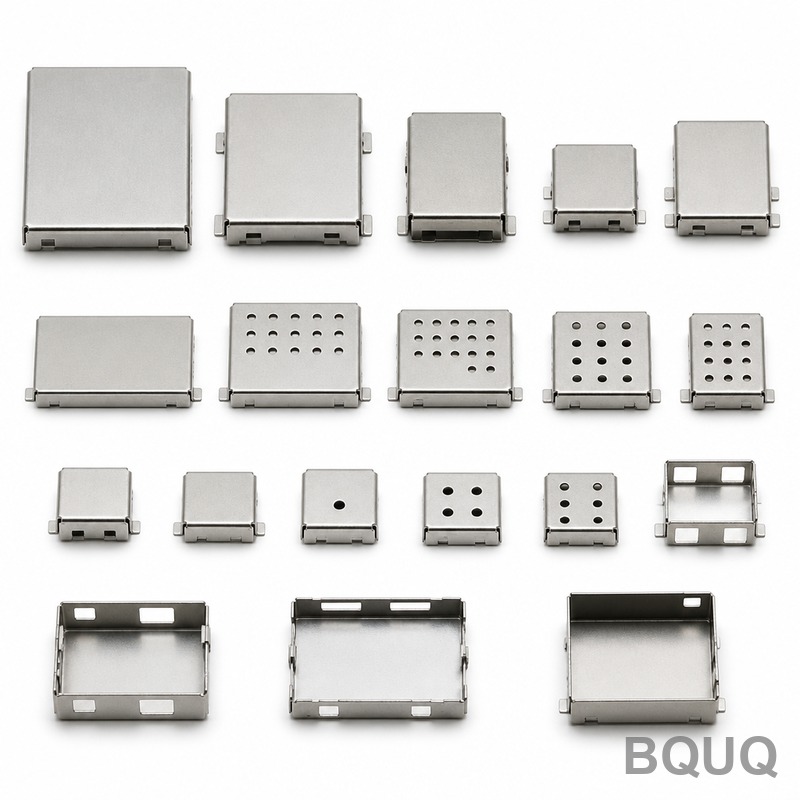
Tooling cost is the single largest factor in MOQ because it is a fixed expense spread across your order quantity. A progressive die for a heat sink with 12 stations costs USD 18,000 to USD 25,000; at an MOQ of 10,000 pieces, the tooling adds USD 1.80 to USD 2.50 per part, which is often 40% of the total part price. Lowering the MOQ to 2,000 pieces would make the tooling cost per part USD 9.00 to USD 12.50, which is usually unacceptable for production budgets. Therefore, we advise customers to calculate the break-even point using this formula: MOQ = Tooling Cost / (Maximum Acceptable Tooling Cost per Part). If you accept USD 0.50 per part for tooling, a USD 10,000 die requires an MOQ of 20,000 pieces.
Which Materials Allow Lower MOQs in Metal Stamping?
Soft materials like aluminum 5052, brass C26000, and low-carbon steel (SPCC, DC01) allow lower MOQs because they cause less die wear and allow higher stamping speeds of 50 to 200 strokes per minute. Stainless steel 304 and 316, with hardness up to 200 HB, require reduced speeds and more frequent die polishing, so the MOQ is typically 30% higher than for aluminum. For example, a 1.5 mm thick aluminum bracket can be stamped at 120 SPM with a die life of 500,000 hits, supporting an MOQ of 5,000 pieces; the same bracket in 1.5 mm stainless steel 301 full-hard would require a die with carbide inserts and an MOQ of 8,000 pieces. Material thickness above 4.0 mm, such as for busbars or heavy brackets, increases the MOQ to 15,000 pieces because the press tonnage (up to 400 tons) and die maintenance costs are higher.
Can You Order Less Than the MOQ for Custom Metal Stamping?
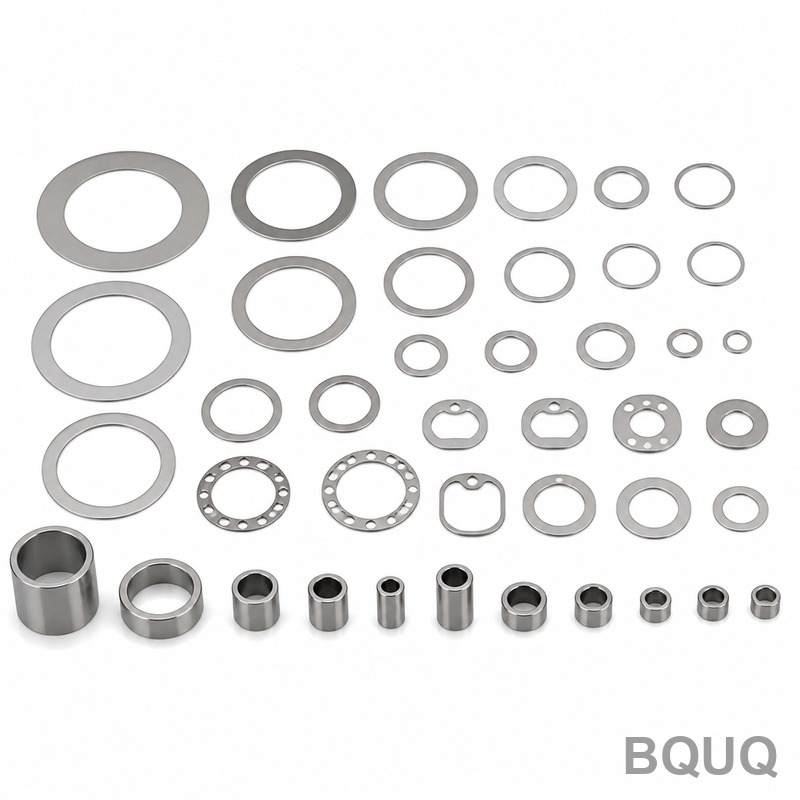
Yes, you can order below the MOQ if you pay a setup fee or a higher per-part price. At BQUQ, we offer a low-volume program where orders of 500 to 999 pieces incur a USD 250 setup charge and a per-part price increase of 15% to 25% to cover the shorter production run. For orders below 500 pieces, we recommend switching to laser cutting or CNC machining, which have no tooling cost but a per-part cost of USD 3.00 to USD 8.00 for small batches. Another option is to combine multiple part numbers on one die using a family die, where five different brackets share one tool base; this allows an effective MOQ of 1,000 pieces per part number, totaling 5,000 pieces on one production run.
What Are the Typical MOQ and Price Ranges for Metal Stamping Parts?
The table below shows typical MOQs and unit prices for various stamping scenarios at BQUQ, based on a 1.0 mm thick SPCC steel part with a surface area of 20 cm², assuming a standard tolerance of +/- 0.1 mm.
| Scenario | Die Type | Tooling Cost (USD) | MOQ (pieces) | Unit Price at MOQ (USD) | Lead Time (weeks) |
| Prototype (laser cut + form) | None | 0 | 100 | 2.50 | 1 |
| Low volume | Soft aluminum die | 700 | 500 | 0.85 | 2 |
| Medium volume | P20 temporary die | 2,800 | 3,000 | 0.32 | 3 |
| High volume | D2 progressive die | 9,500 | 15,000 | 0.18 | 4 |
| Ultra-high volume | Carbide progressive die | 22,000 | 50,000 | 0.09 | 6 |
Unit prices include material, stamping, and deburring but exclude surface finishing (e.g., zinc plating at USD 0.05 per part) and secondary machining (e.g., tapping at USD 0.08 per hole). For stainless steel 304, add 40% to the unit price and increase the MOQ by 30% due to reduced die life. Parts with tighter tolerances of +/- 0.05 mm require additional die tryout time and increase the unit price by 12% to 18%.
What Is the Best Strategy to Reduce the MOQ for Your Project?
The most effective strategy is to design for stampability: use a minimum bend radius of 1.0 times material thickness, avoid tight tolerances below +/- 0.1 mm unless absolutely necessary, and specify standard material gauges like 1.0 mm, 1.5 mm, or 2.0 mm instead of custom thicknesses. If your annual volume is below 10,000 pieces, consider using a modular die system with interchangeable inserts, which reduces tooling cost by 30% and allows an MOQ of 1,500 pieces. Another practical approach is to run a pilot production of 1,000 parts using a temporary die, validate the design, and then commit to a progressive die only after the design is frozen; this avoids expensive die revisions that increase the effective MOQ.
How Should You Calculate the Total Cost at a Given MOQ?
You must add the tooling cost per part, the piece price, and the logistics cost to get the total landed cost. For example, with a USD 9,500 die and an MOQ of 15,000 pieces, the tooling cost per part is USD 0.63. If the piece price is USD 0.18, the subtotal is USD 0.81 per part. Add freight from Dongguan to Los Angeles at approximately USD 1,200 for a 500 kg pallet (about 40,000 parts), which adds USD 0.03 per part, giving a total of USD 0.84 per part. Never compare unit prices alone; always compare the total cost at your specific order quantity. If your requirement is only 8,000 pieces per year, the high-volume progressive die is uneconomical, and the medium-volume option with a P20 die (USD 2,800 tooling, USD 0.32 per part) gives a total cost of USD 0.67 per part, which is 20% lower.
FAQ
What Is the Absolute Lowest MOQ for Custom Metal Stamping Parts?
The absolute lowest MOQ we accept is 100 pieces for prototype parts using laser cutting and manual forming, with no dedicated die. This costs USD 2.50 to USD 5.00 per part depending on material and thickness. For actual stamping with a die, the lowest is 500 pieces using a soft aluminum die.
Does a Higher MOQ Always Give a Lower Unit Price?
Yes, generally a higher MOQ lowers the unit price because the fixed tooling cost is spread over more parts. At BQUQ, increasing the order from 1,000 to 10,000 pieces typically reduces the unit price by 40% to 60%. However, the reduction diminishes beyond 50,000 pieces because material and labor become the dominant costs.
Can I Combine Multiple Stamped Parts to Meet the MOQ?
Yes, you can combine different part numbers on one die using a family die or a modular tool, which allows each part to have a lower individual MOQ. For example, five different small brackets can share one die base, and the total order of 5,000 pieces meets the MOQ while each part number can be as low as 1,000 pieces. This reduces tooling cost by 20% to 30% compared to separate dies.
What Is the MOQ for Metal Stamping Parts with Secondary Operations?
Secondary operations like tapping, riveting, or heat treatment typically increase the MOQ by 20% to 50% because each operation requires separate setup time and inspection. For example, a stamped bracket with two tapped holes has an MOQ of 6,000 pieces versus 4,000 for the same bracket without tapping. We recommend scheduling secondary operations in the same production run to minimize setup costs.
How Long Does It Take to Receive Parts After Ordering?
For stamping parts at the MOQ, the lead time is 2 to 4 weeks for tooling fabrication and 1 to 2 weeks for production and inspection. Prototype orders with no die can ship in 5 to 7 working days. We provide a detailed production schedule within 48 hours of receiving your drawings.
What Tolerances Can Be Achieved for Stamped Parts at the MOQ?
Standard stamping tolerances are +/- 0.1 mm for dimensions up to 50 mm and +/- 0.2 mm for larger dimensions. With precision dies and additional tryout work, we can achieve +/- 0.05 mm on critical features, but this increases the tooling cost by 15% and may raise the MOQ by 10%. For tighter tolerances below +/- 0.02 mm, we recommend CNC machining instead of stamping.
Do You Offer Free Samples Before Placing a Full MOQ Order?
Yes, we provide up to 5 free samples for evaluation, but the customer pays for shipping (USD 30 to USD 60 via DHL or FedEx). These samples are produced from the actual production die, so they are representative of the final parts. For complex parts, we may charge a nominal sample fee of USD 50 to USD 100, which is credited back on the first full order.
CONCLUSION
The MOQ for custom metal stamping parts is not a fixed number but a function of tooling cost, material, die type, and your target unit price. For most projects, planning for 3,000 to 15,000 pieces gives you the best balance between tooling amortization and inventory risk. If your volume is lower, use soft tooling or prototyping methods; if higher, invest in a carbide progressive die to minimize per-part cost. At BQUQ, with 20 years of experience in stamping, springs, and heat sinks, we help you optimize the MOQ for your specific geometry and budget. Send your 2D or 3D drawings for a free engineering review and a firm quote within 12 hours. Contact us at sc@bquq.com or WhatsApp +86 13713157787, or visit www.bquq.com for more details.