What Materials Can Be Metal Stamped? A Complete Guide
Metal stamping can process over 40 distinct ferrous and non-ferrous alloys, but the most common materials are low-carbon steel, stainless steel (grades 304 and 301), aluminum (5000 and 6000 series), brass, and copper. The selection depends on required tensile strength, corrosion resistance, electrical conductivity, and cost per kilogram, with raw material prices ranging from $1.20/kg for hot-rolled steel to $8.50/kg for 316 stainless steel. At BQUQ, we have stamped parts from 0.05 mm foil to 6.0 mm plate, achieving tolerances of +/-0.05 mm in progressive dies.
What Are the Primary Material Categories for Metal Stamping?
The stamping industry classifies materials into four families: carbon steels, stainless steels, non-ferrous metals, and specialty alloys. Low-carbon steel (SAE 1008/1010) dominates roughly 60% of all stamping volume due to its formability and low cost. Stainless steel grades 301 and 304 provide corrosion resistance and are used in medical devices and food equipment. Non-ferrous materials like aluminum 5052 and C26000 brass offer lightweight or antimicrobial properties. Specialty alloys such as Inconel 625 and titanium Grade 2 are reserved for aerospace and chemical processing, where temperature resistance exceeds 600 degrees Celsius.
How Does Material Thickness Affect Stamping Feasibility and Tolerances?
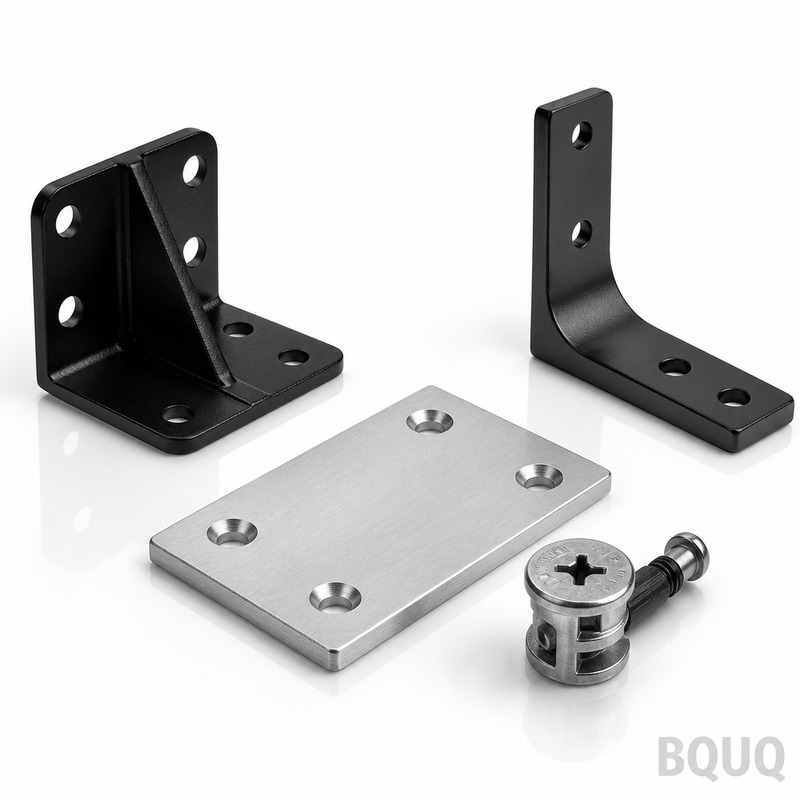
Thickness directly determines press tonnage, die clearance, and achievable dimensional accuracy. For sheets under 1.5 mm thick, standard tolerances are +/-0.05 mm; for 1.5 to 3.0 mm, tolerances widen to +/-0.10 mm; and for 3.0 to 6.0 mm, expect +/-0.15 mm. A 0.5 mm thick aluminum part requires only 15 tons of force for a 50 mm diameter blank, whereas a 3.0 mm thick steel part of the same size needs 60 tons. Laser-cut or wire-EDM prototype dies achieve tighter tolerances, but production progressive dies typically hold +/-0.03 mm on critical dimensions for materials under 2.0 mm.
Which Aluminum Alloys Are Best Suited for Metal Stamping?
Aluminum alloys 5052, 6061, and 1100 are the most stamping-friendly, each serving different purposes. Alloy 5052 offers excellent fatigue strength (195 MPa yield) and corrosion resistance, making it ideal for electronics enclosures and automotive brackets. Alloy 6061 provides higher strength (276 MPa yield) but requires more careful bending radii to avoid cracking; use a minimum bend radius of 1.5 times material thickness. Alloy 1100 is nearly pure aluminum (99% minimum), offering exceptional ductility for deep-drawn parts like battery casings, though its yield strength is only 105 MPa. For stamped heat sinks, we recommend 6061-T6 for CNC finishing or 5052-H32 for as-stamped parts.
Why Is Stainless Steel Challenging to Stamp and How Is It Managed?
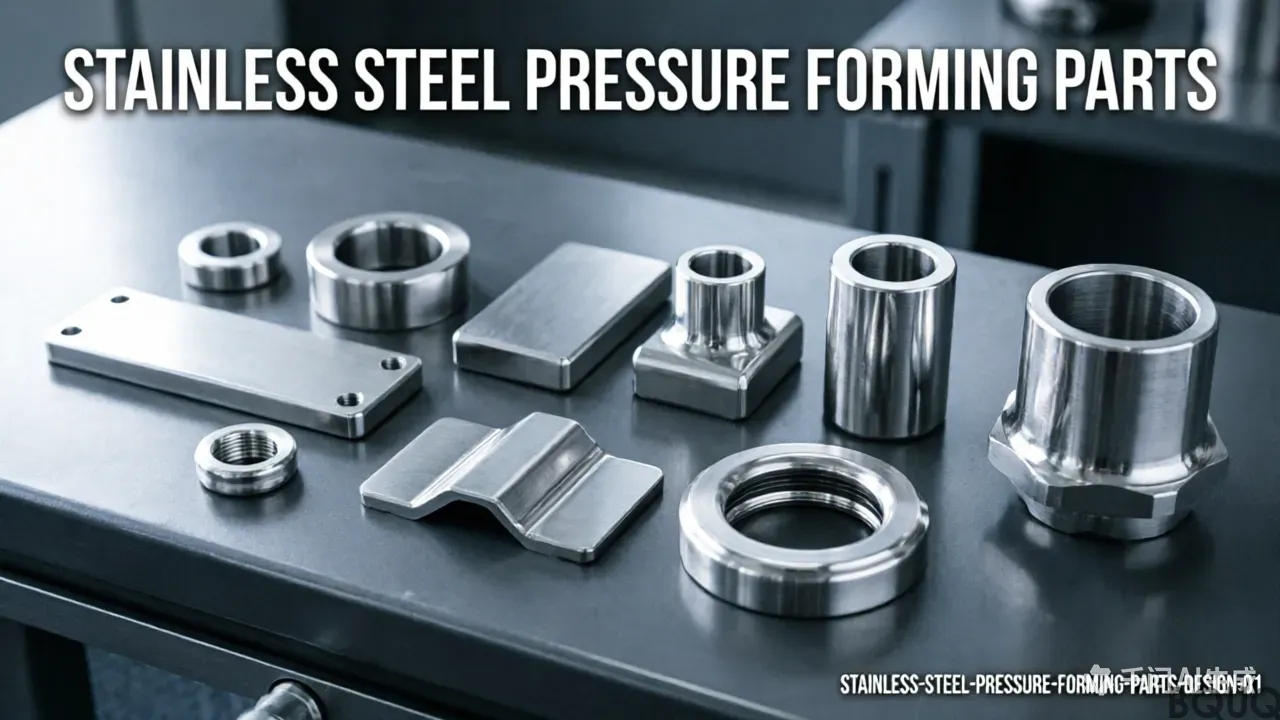
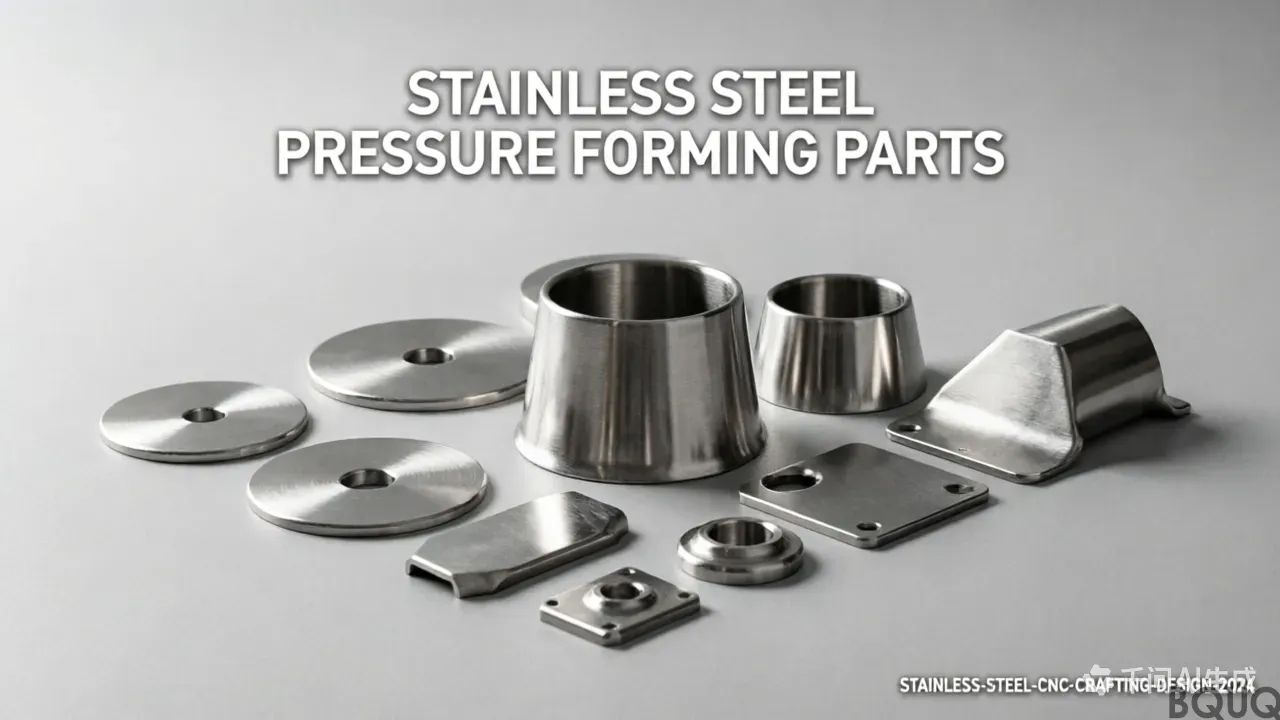
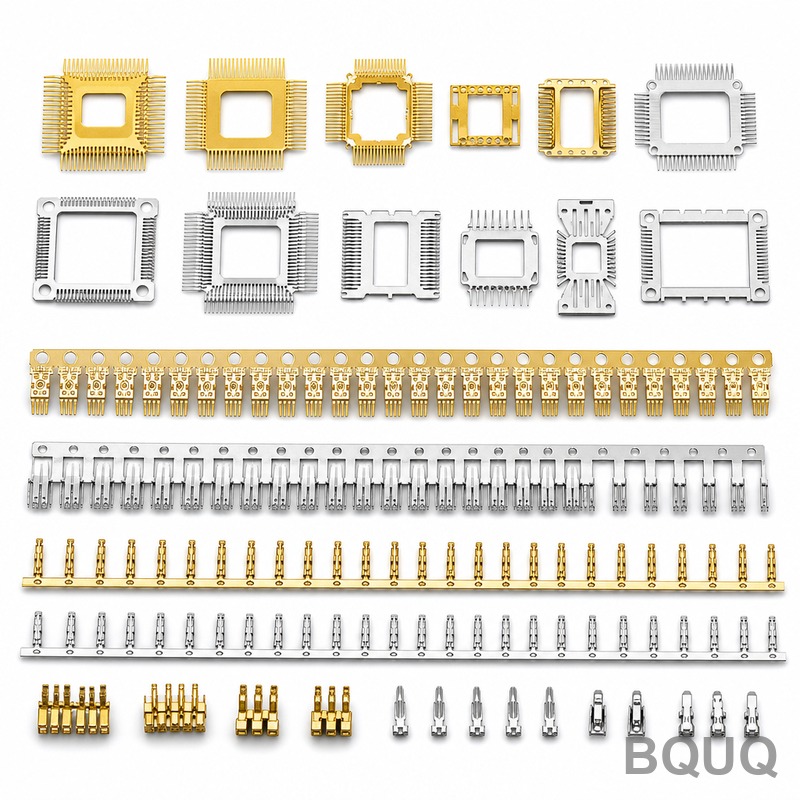
Stainless steel work-hardens rapidly, which increases springback and die wear during stamping. Grade 304 has a work-hardening exponent (n-value) of 0.45, versus 0.20 for low-carbon steel, causing dimensional drift if not compensated. To manage this, we use die radii 20-30% larger than for carbon steel, apply high-pressure lubricants with chlorine additives, and employ CNC-ground punches with nitride coating. Stamping 304 stainless at 1.0 mm thickness typically requires 25% more press tonnage than the same part in 1008 steel. For high-volume production, grade 301 full-hard stainless is often preferred because it provides 1,240 MPa tensile strength with predictable springback.
What Are the Cost Differences Between Common Stamping Materials?
Material cost accounts for 30-50% of the total stamped part price, so selection is critical. Hot-rolled steel costs $1.20-$1.50/kg, while cold-rolled steel is $1.60-$2.00/kg. Stainless steel 304 runs $3.80-$4.50/kg, and 316 adds 30% more. Aluminum 5052 is $3.20-$3.80/kg, brass C26000 is $7.50-$9.00/kg, and copper C11000 is $8.00-$10.00/kg. Tooling wear also varies: stamping stainless steel wears dies 3 times faster than carbon steel, adding $0.01-$0.03 per part in maintenance. For a 10,000-piece order of a 20 g part, the material cost difference between steel and stainless is approximately $0.06 per part.
Which Materials Can Be Deep Drawn Without Cracking?
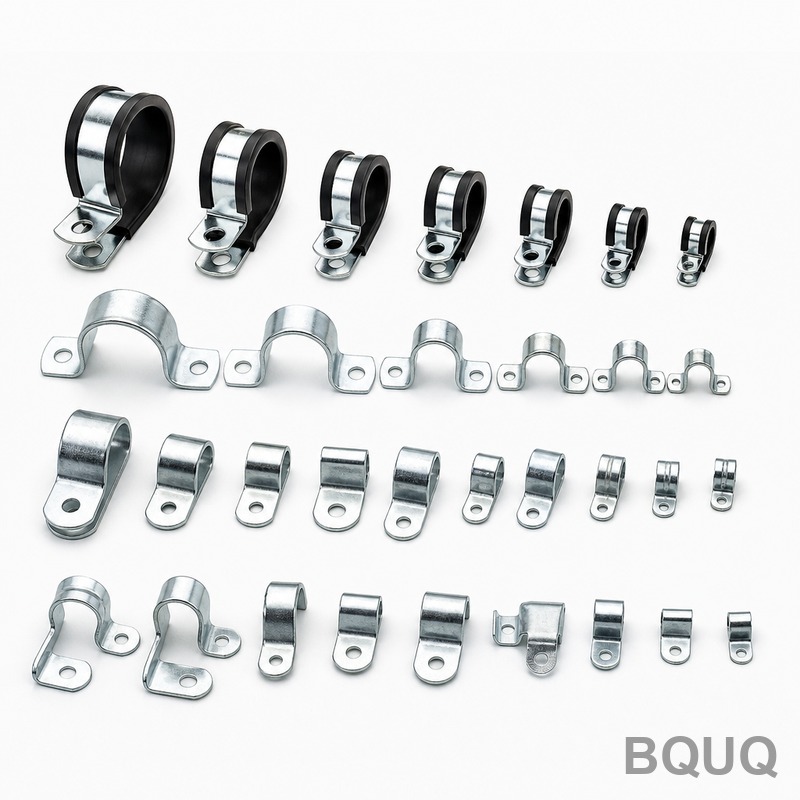
Deep drawing requires materials with high elongation (greater than 35%) and a low yield-to-tensile ratio. Aluminum 1100-O, brass C26000 (half-hard), and low-carbon steel (SAE 1006) are the safest choices for draw ratios above 2.0:1. Stainless steel 304 can be deep drawn but requires multiple anneal stages for ratios exceeding 1.8:1, increasing cycle time by 15-20%. The Limiting Drawing Ratio (LDR) for aluminum 5052 is 2.1, for brass C26000 is 2.3, and for low-carbon steel is 2.5. We recommend using a draw radius of 6-10 times material thickness and blank holder pressure of 2-3 MPa for these materials.
How Does Temperature Affect Stamping Material Selection?
Room-temperature stamping is standard for most alloys, but elevated temperature stamping (warm or hot) is used for specific cases. Magnesium alloys like AZ31B require heating to 200-300 degrees Celsius to prevent cracking, increasing energy costs by 15%. Titanium Grade 2 must be hot-stamped at 600-700 degrees Celsius for complex geometries, which requires specialized die materials like H13 tool steel. Conversely, copper and aluminum can be stamped at sub-zero temperatures for improved edge quality, though this is rare in production. For standard production, we recommend staying below 150 degrees Celsius at the die-workpiece interface; above this, lubricants degrade and die hardness drops.
| Material | Yield Strength (MPa) | Tensile Strength (MPa) | Max Thickness for Stamping (mm) | Relative Cost (per kg) | Typical Tolerance (mm) | Best Application |
| Low-Carbon Steel 1008 | 285 | 340 | 6.0 | $1.40 | +/-0.05 | Brackets, chassis |
| Stainless Steel 304 | 215 | 505 | 4.0 | $4.20 | +/-0.08 | Medical, food |
| Aluminum 5052 | 195 | 230 | 5.0 | $3.50 | +/-0.06 | Electronics, heat sinks |
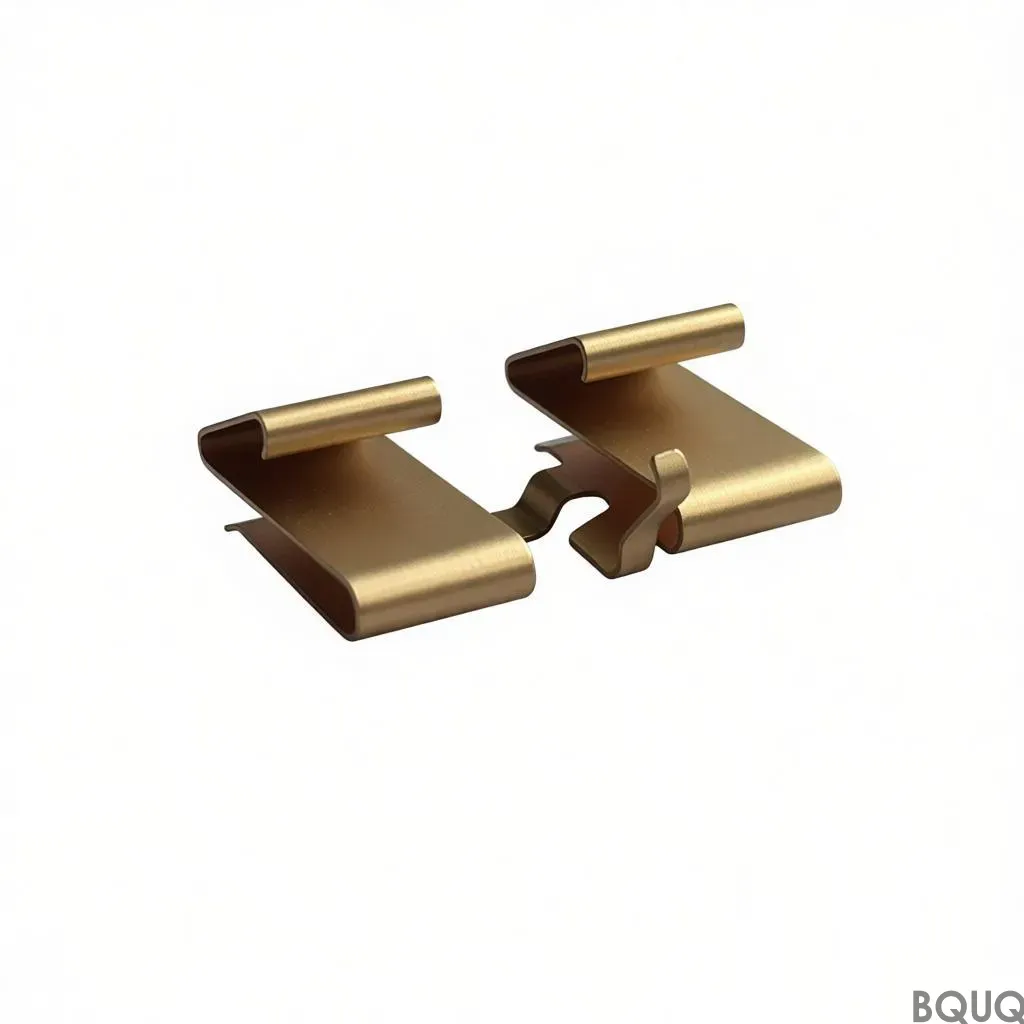
| Brass C26000 | 310 | 450 | 3.5 | $8.20 | +/-0.04 | Terminals, connectors |
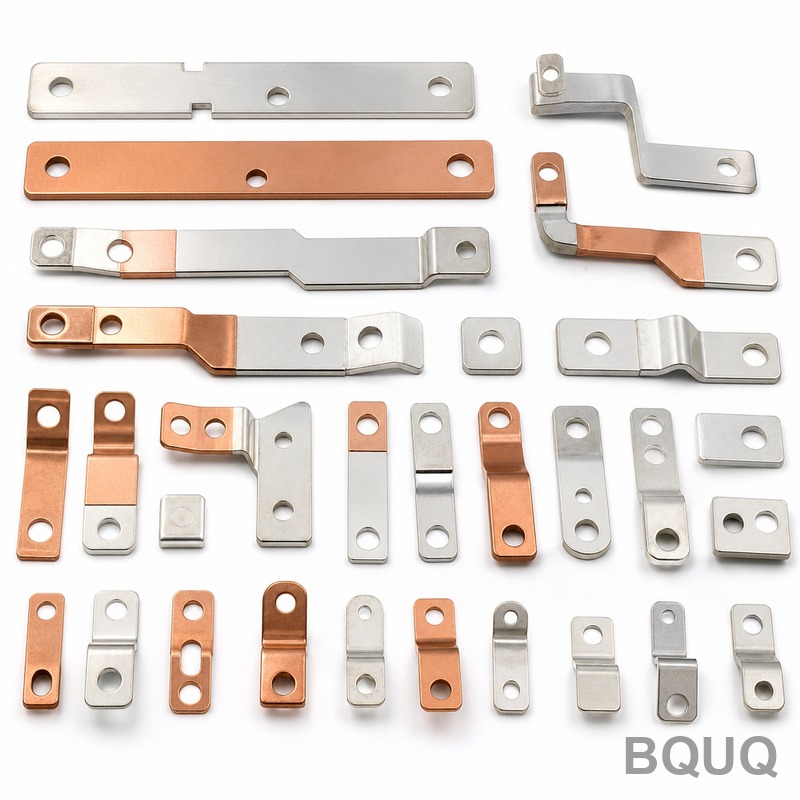
| Copper C11000 | 69 | 220 | 3.0 | $9.00 | +/-0.04 | Bus bars, contacts |
| Titanium Grade 2 | 275 | 345 | 2.5 | $45.00 | +/-0.10 | Aerospace, implants |
When Should You Choose Progressive Die vs. Transfer Die for Different Materials?
Progressive dies are optimal for high-volume parts (over 50,000 pieces) made from materials under 3.0 mm thick, especially for small-to-medium components. Transfer dies are preferred for larger parts (over 200 mm) or materials thicker than 3.0 mm, where the sheet must be moved between stations. For aluminum and brass, progressive tooling is cost-effective because these materials reduce die wear by 40% compared to steel. For stainless steel, transfer dies allow better heat management and reduce work-hardening issues. A progressive die for a 10 mm connector costs $12,000-$18,000, while a transfer die for a 200 mm bracket costs $25,000-$40,000.
What Are the Most Common Material Defects in Stamping and How Do You Prevent Them?
The three most common defects are edge burrs, springback, and galling. Edge burrs exceed 0.05 mm when die clearance is wrong; for steel, clearance should be 5-8% of material thickness per side, while for aluminum it is 3-5%. Springback in high-strength materials (yield above 400 MPa) requires over-bending by 2-5 degrees or using coining operations. Galling (material pick-up on the die) occurs with aluminum and stainless; apply PVD coating (TiAlN) on punches and use viscosity-220 lubricant. Regular maintenance, including re-grinding dies every 50,000 strokes for steel and 100,000 strokes for aluminum, prevents most defects.
FAQ
What Is the Minimum Thickness You Can Metal Stamp?
The minimum thickness is 0.05 mm for copper and brass foil, 0.08 mm for stainless steel, and 0.10 mm for aluminum. Below these values, the material tends to tear at the die radius rather than shear cleanly. For production reliability, we recommend a minimum of 0.15 mm for all materials.
Can You Stamp Hardened Steel or Tool Steel?
Hardened steel above 40 HRC is not recommended for stamping because it causes rapid die wear and cracking. Instead, stamp in the annealed condition (under 20 HRC) and then heat-treat the part after forming. This reduces die cost by 50% and extends tool life to over 1 million strokes.
Which Material Is Cheapest for High-Volume Stamping?
Hot-rolled low-carbon steel (SAE 1008) is the cheapest at $1.20-$1.50/kg. For a typical bracket weighing 50 g, material cost is only $0.06-$0.08 per part. However, if corrosion resistance is needed, cold-rolled galvanized steel adds only $0.20/kg and is a cost-effective alternative to stainless.
How Long Does Tooling Last for Different Materials?
Tooling life varies dramatically by material: low-carbon steel gives 1-2 million strokes per die set, while stainless steel gives 300,000-500,000 strokes. Aluminum and brass are gentler, providing 2-3 million strokes. After this, re-grinding restores 90% of the die life at 10-15% of the original tooling cost.
Can You Stamp Parts From Coil Stock or Only Sheets?
Both coil and sheet stock are used; coil is preferred for progressive dies running at 200-600 strokes per minute. Coil widths range from 10 mm to 1,200 mm, and thickness from 0.05 mm to 6.0 mm. Sheet stamping is used for prototype runs under 1,000 pieces or for very thick materials above 6.0 mm.
What Is the Maximum Part Size for Metal Stamping?
With transfer dies and a 500-ton press, the maximum part size is approximately 1,200 mm by 600 mm. For parts smaller than 5 mm, progressive dies with carbide tooling achieve tolerances of +/-0.01 mm. Larger parts require hydraulic presses and thicker materials, increasing cost per stroke.
How Do You Choose Between Aluminum and Steel for a Stamped Part?
Choose aluminum 5052 if weight reduction is critical (density 2.7 g/cm³ vs 7.8 g/cm³ for steel) and the part does not require yield strength above 195 MPa. Choose steel if the part must withstand high loads, require welding, or cost is the primary factor. For heat dissipation, aluminum is 3 times more conductive than steel, making it the default for heat sink applications.
For production-ready metal stamping with material certification and 12-hour quoting, contact BQUQ at sc@bquq.com or WhatsApp +86 13713157787. Visit www.bquq.com to upload your CAD files and receive DFM feedback within one business day. Our 20 years of experience in CNC machining, stamping, springs, and heat sinks ensures the right material for your application.
Related Articles
- Multi-Physics Coupled Failure Mechanisms and Systematic Prevention Strategies in Stamping Processes
- Stamping digital factory and simulation-driven design: from virtual prototype to digital twin operation
- High-speed precision stamping and in-die microforming technology: from electronic connections to micromotor cores