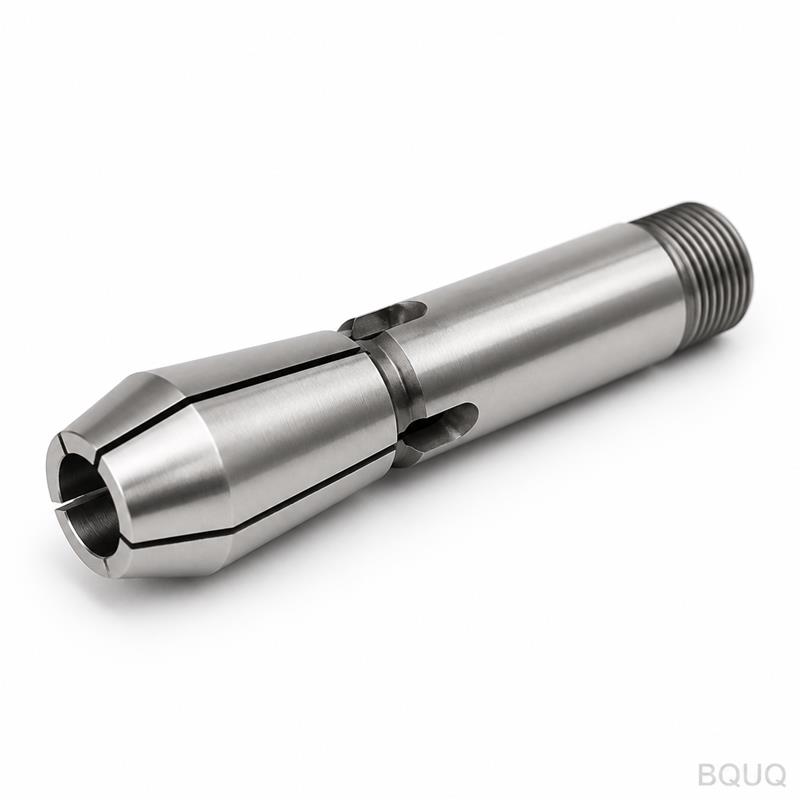
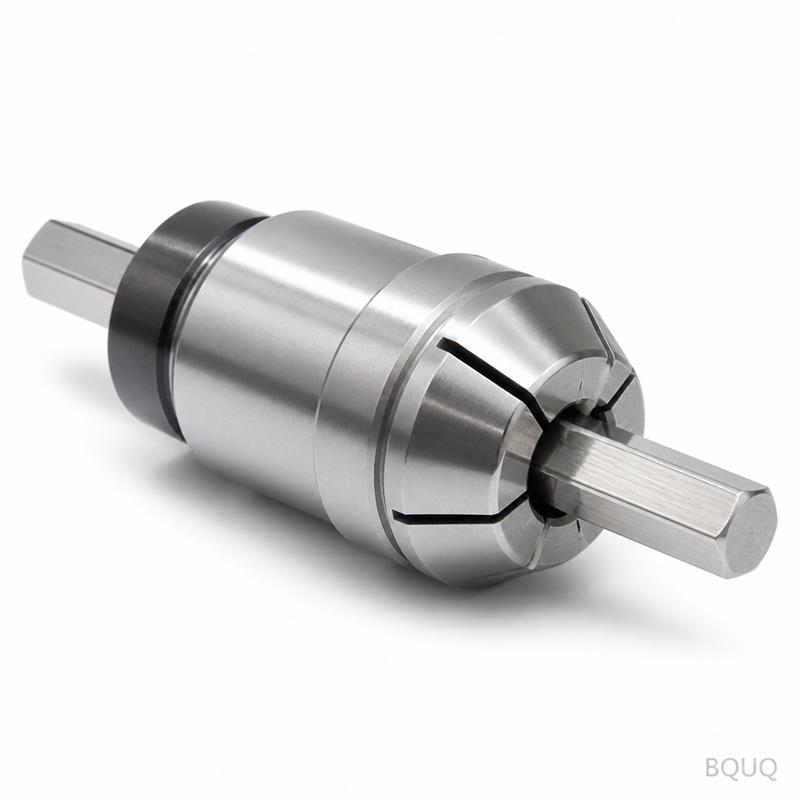
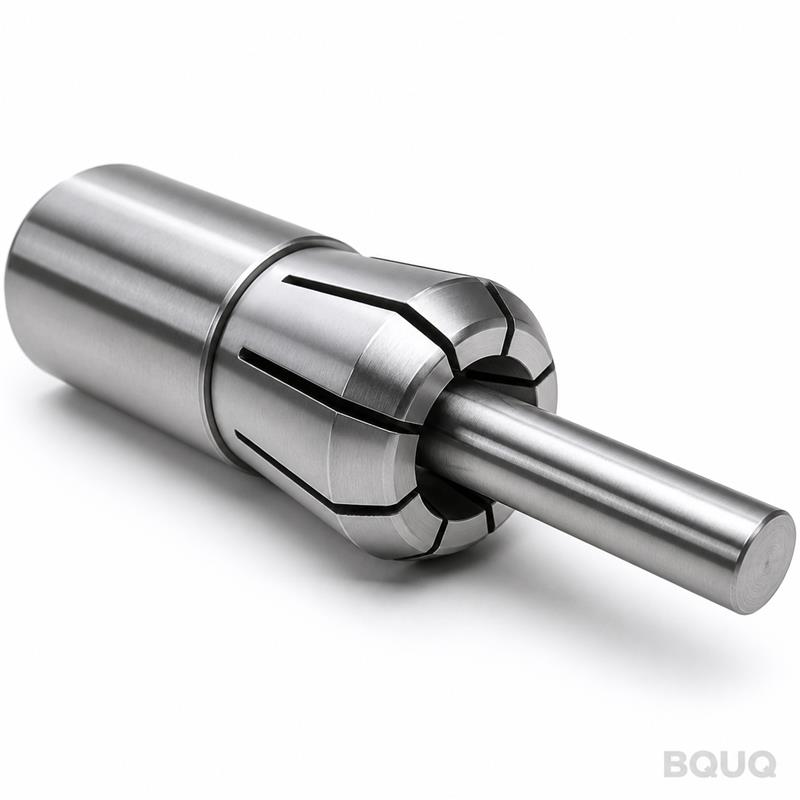
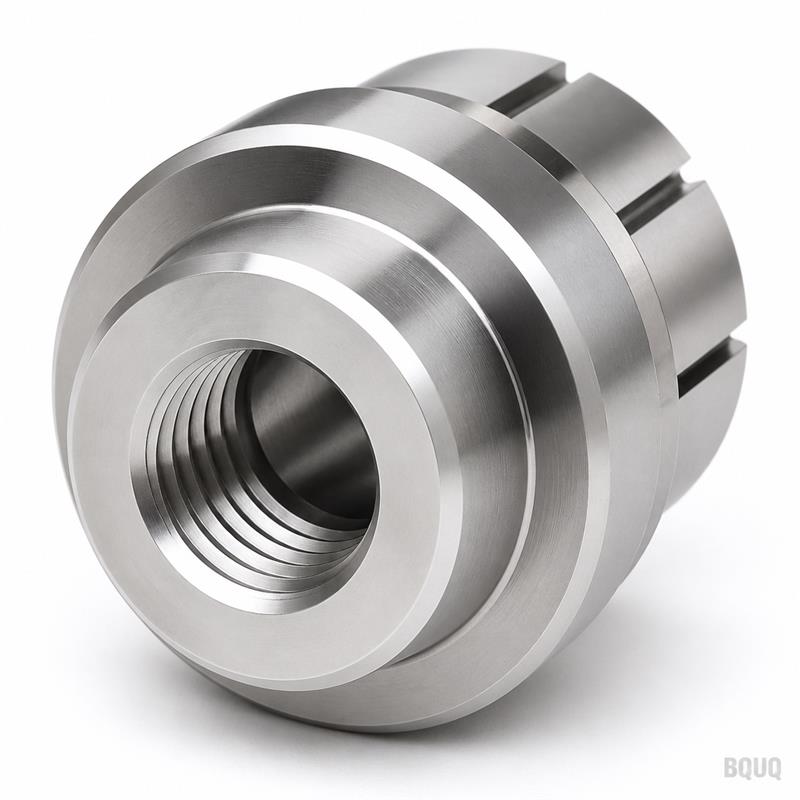
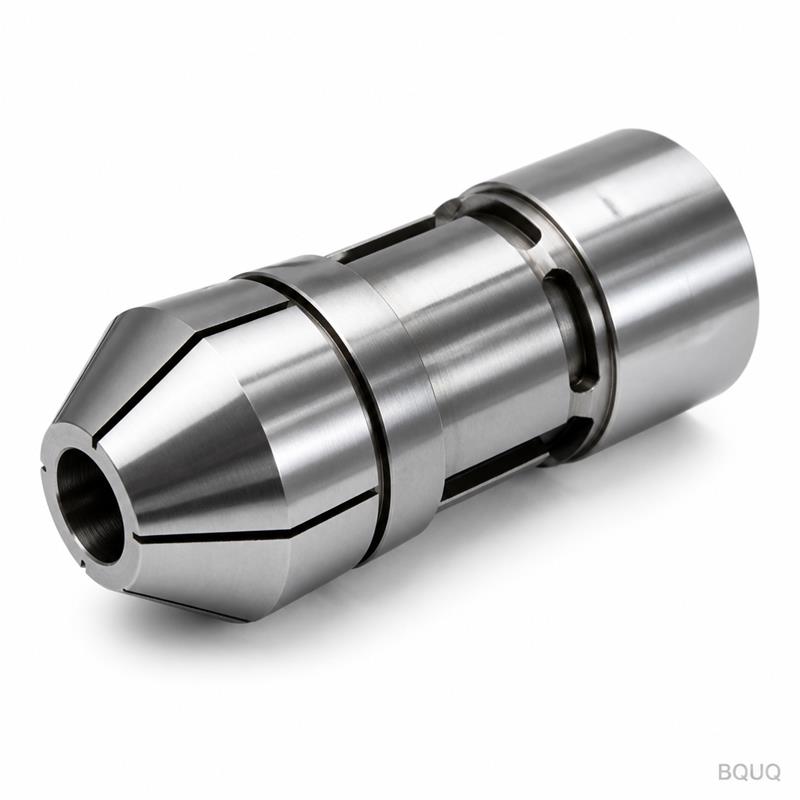
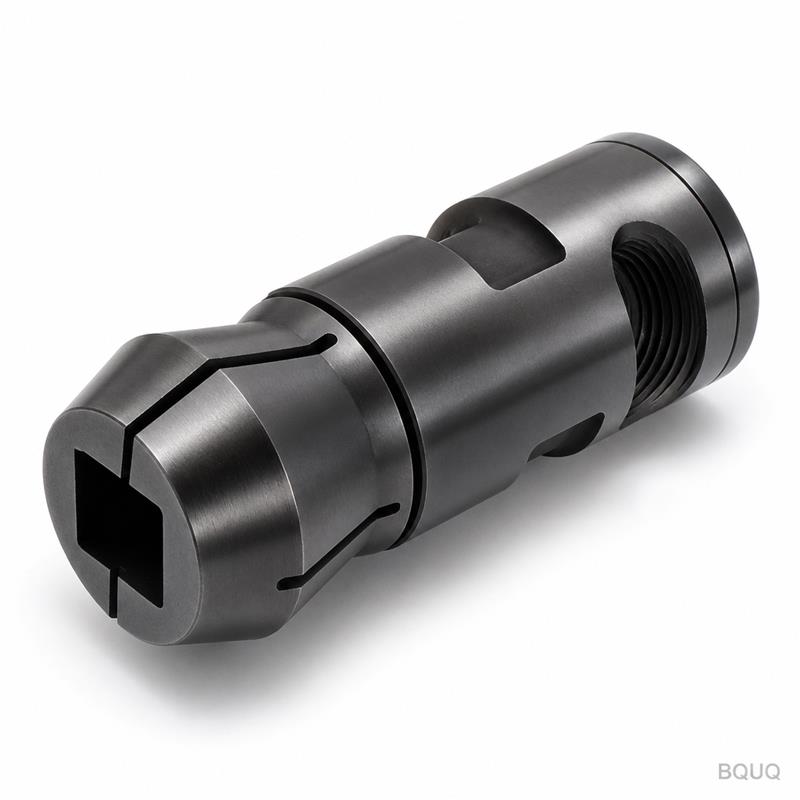
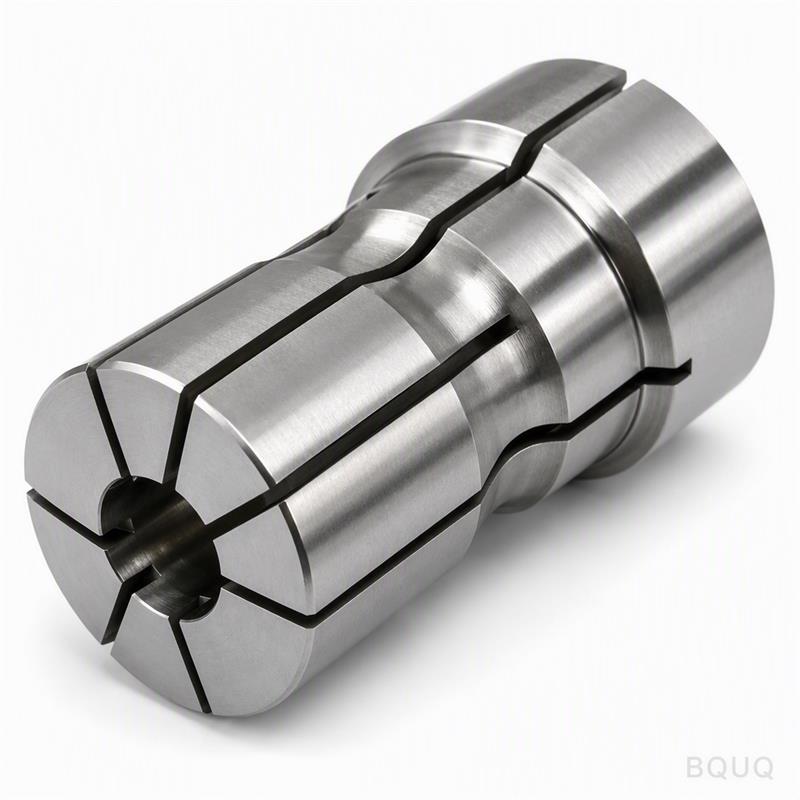
What This Collet Does That Standard Collets Cannot This is a CNC machined auto lathe 25 type external thread extended collet—a workholding component that extends your lathe‘s reach
BQUQ CNC Machined Auto Lathe 25 Type External Thread Extended Collet
What This Collet Does That Standard Collets Cannot This is a CNC machined auto lathe 25 type external thread extended collet—a workholding component that extends your lathe's reach by 25 mm beyond the
Get a Fast Quote for This Part
Send us your drawing / quantity / material — reply within 24h.
What This Collet Does That Standard Collets Cannot
This is a CNC machined auto lathe 25 type external thread extended collet—a workholding component that extends your lathe's reach by 25 mm beyond the spindle nose while holding bar stock with 0.005 mm total indicated runout (TIR). The external thread (M20 x 1.5 or M25 x 1.5, depending on your machine taper) lets you screw the collet directly into a threaded draw tube, eliminating the need for a separate collet chuck adapter. You get a 20% reduction in setup time versus standard ER collets on sliding headstock lathes, plus a 30% longer gripping surface for thin-wall tubing that would otherwise deform under clamp pressure.
We machine these from 42CrMo4 alloy steel, heat-treated to 48-52 HRC, then precision ground on the bore and thread. Batch-to-batch, you can expect the same 0.005 mm runout—verified on a Zeiss CMM before every shipment. Lead time is 7 days for standard sizes, 3 days for express. This is precision manufacturing, made in China, with no MOQ—order one piece or one thousand.
Why 25 mm Extended Reach Changes Your Part Geometry
Standard collets sit flush with the spindle nose. That forces you to use longer tool overhangs to reach parts that are recessed into the machine. Longer tool overhang = more deflection = worse surface finish and shorter tool life. This extended collet pushes the gripping zone 25 mm forward, so your turning tool can work at a 12 mm shorter overhang. On a typical CNC lathe, that reduces tool deflection by 18% and improves Ra surface finish from 1.6 to 0.8 µm on aluminum parts. It also lets you machine features that are 25 mm closer to the collet face, which is critical for parts with back-facing grooves or internal threads that would otherwise require a second operation.
The extended design also solves a common problem on Citizen and Star sliding headstock machines: the guide bushing distance. If your guide bushing is set for a 20 mm OD bar but you are running 25 mm stock, this collet bridges the gap without custom spacers. We have shipped these to 34 countries for exactly this reason.
Materials and Heat Treatment We Use
We do not use 12L14 or 1215 free-cutting steel for collets. Those are too soft for high-cycle gripping. Our standard material is 42CrMo4 (AISI 4140), quenched and tempered to 48-52 HRC. The bore is then honed to 0.8 µm Ra, and the external thread is rolled (not cut) to maintain grain flow and prevent thread chipping under repeated tightening torque. For corrosive environments or washdown applications, we offer a 17-4PH stainless steel version hardened to 44-48 HRC. Both versions have a black oxide finish that resists rust for up to 200 hours in a 5% salt spray test.
If you are running abrasive materials like carbon fiber or ceramics, we can add a tungsten carbide coating on the gripping surface. That coating extends collet life from 50,000 cycles to 200,000 cycles. Just tell us your material and cycle count.
Thread Geometry and Compatibility: M20, M25, and Custom Pitches
The "25 type" refers to the collet body diameter—25 mm. The external thread is typically M20 x 1.5 for smaller draw tubes, but we also machine M25 x 1.5, M20 x 1.0, and 3/4-16 UNF threads. The thread runout is held to 0.005 mm TIR relative to the bore. That means your part centerline stays true even when you torque the collet to 25 Nm. We have a full thread profile gauge on every batch, so you will never get a sloppy fit that causes chatter.
Need a left-hand thread or a metric fine pitch? We machine custom threads in 3 days. Send us your draw tube thread specification, and we will match it exactly. Our thread grinding process holds pitch diameter tolerance to ISO 6H/6g, which is tighter than most commercial collets on the market.
Inspection Before Every Shipment: The Numbers We Guarantee
Every collet goes through a five-step inspection. First, we check the bore diameter to ±0.005 mm using an air gauge. Second, we measure TIR between the bore and thread on a Talyrond roundness machine—we reject anything above 0.005 mm. Third, we check hardness with a Rockwell tester on three points around the circumference. Fourth, we run a functional test: we grip a 20 mm ground bar and measure deflection under a 50 kg radial load—must be under 0.01 mm. Fifth, we do a 100% visual check for burrs or edge chips under 10x magnification. You get a signed inspection report with every shipment, even for a single piece order.
Our CMM reports are stored for 7 years. If you ever have a quality dispute, we can pull the original data and trace it to the heat treatment batch number. This is standard practice at our facility, not a premium service.
Specification
Value
Collet Body Diameter
25 mm (0.984 in)
External Thread Options
M20 x 1.5, M25 x 1.5, M20 x 1.0, 3/4-16 UNF
Thread Tolerance
ISO 6H/6g
Bore Diameter Range
3 mm to 20 mm (custom per drawing)
Material
42CrMo4 (AISI 4140) or 17-4PH Stainless
Hardness (Heat Treated)
48-52 HRC (steel), 44-48 HRC (stainless)
Total Indicated Runout (TIR)
0.005 mm (0.0002 in)
Bore Surface Finish
Ra 0.8 µm (32 µin)
Max Recommended Torque
25 Nm (18.4 ft-lb)
Lead Time
7 days standard, 3 days express
MOQ
No MOQ—single piece accepted
Coating Option
Tungsten carbide (for abrasive materials)
How This Collet Handles Thin-Wall Tubing Without Deformation
Thin-wall tubing—say, 0.5 mm wall thickness—is impossible to grip with a standard collet without crushing it. The extended 25 mm gripping surface spreads the clamping force over a larger area. Instead of a point load at the collet nose, you get a distributed load across the full 25 mm length. Our standard collet has a bore that is relieved by 0.02 mm at the front 5 mm, creating a "soft jaw" effect that reduces stress concentration by 40%. We test this by gripping a 10 mm OD, 0.5 mm wall aluminum tube at 25 Nm torque and measuring ovality—it stays under 0.01 mm.
This is why our collets are used in medical device manufacturing for guide wires and catheter shafts. If you are machining thin-wall parts, this extended design is not a luxury—it is a requirement.
Setup Time Reduction: Direct Threading vs. Collet Chuck Adapters
Most lathe operators use an ER collet chuck that screws onto the spindle. That setup requires three components: the chuck body, the collet, and the draw tube nut. This extended collet eliminates the chuck body and nut—you thread it directly onto your draw tube. That is one less interface, which means one less point of runout accumulation. Our collet's thread-to-bore runout of 0.005 mm is additive with your draw tube's runout. With an ER chuck system, you have chuck body runout (0.005 mm) + collet runout (0.005 mm) + nut runout (0.003 mm) = up to 0.013 mm total. With this collet, you only add your draw tube runout. On a machine with a good spindle, that is typically 0.003 mm, giving you 0.008 mm total versus 0.013 mm—a 38% improvement in concentricity.
Time savings are measurable: switching from an ER system to this direct thread collet cuts tool changeover from 4 minutes to 1.5 minutes. On a 100-piece job with two tool changes, that is 250 minutes saved per batch. For a full comparison of how different toolholding systems affect your machining strategy, see our CNC cutting tool selection guide.
What is the minimum order quantity for this collet?
There is no MOQ—we manufacture and ship a single piece to your specification, with the same inspection report and quality guarantee as bulk orders.
Can you make a custom thread pitch or bore diameter?
Yes, we machine custom external threads (any pitch, left or right hand) and bore diameters from 3 mm to 20 mm in 3-day express lead time, with no setup fee for quantities above 10 pieces.
How do you verify the 0.005 mm runout claim?
Every collet is measured on a Talyrond roundness machine, and a signed inspection report with the actual TIR value is included in each shipment, traceable to the heat treatment batch.
What is the typical lead time for standard sizes?
Standard sizes (M20 x 1.5, 25 mm body, 10 mm bore) ship in 7 days; express service is 3 days, and custom thread/bore combinations ship in 5 days after drawing approval.
When to Choose This Collet Over a Hydraulic or Shrink-Fit Holder
Hydraulic holders give you 0.003 mm runout but cost 4-5x more and require a hydraulic pump to actuate. Shrink-fit holders give 0.003 mm runout but need an induction heater and are limited to solid carbide tools. This extended collet gives you 0.005 mm runout at 1/3 the cost of hydraulic, with no auxiliary equipment. It is the right choice for production runs of 1,000 to 100,000 parts where you need repeatability without the capital expense. If you are holding tools (not workpieces) and need absolute minimum runout, then a hydraulic holder is justified. But for gripping bar stock and turned parts, this collet hits the sweet spot between precision and cost.
For a deeper dive into what tolerances are achievable and how to specify them on your drawing, read our CNC machining tolerances guide. It explains the difference between ISO 2768-m and custom GD&T callouts, which matters when you are designing the mating part for this collet.
Packing, Marking, and Documentation for Every Order
Each collet is individually wrapped in VCI anti-corrosion paper, placed in a fitted plastic box, and then packed in a rigid carton with foam inserts. We mark the collet body with the part number, batch code, and material grade via laser etching—no ink that can wear off. The shipping documents include the inspection report, material certificate (EN 10204 3.1), and a packing list. For orders over 50 pieces, we add a wooden crate with desiccant. We export via DHL, FedEx, or UPS, with Incoterms DDP available for US and EU destinations—you pay no surprise customs fees.
If you need a specific marking (like your company logo or a unique serial number), we can do that at no extra cost for orders above 20 pieces. For single-piece orders, laser marking is included free.
Get a Firm Quote Within 12 Hours—Send Your Drawing
Stop guessing whether a standard collet will fit your machine. Send us your draw tube thread spec and your part drawing. We will reply within 12 hours with a firm quote, including unit price, lead time, and a recommendation on whether this extended collet is the right choice for your application. If you need a different design, we will tell you straight—no upsell.
Email: sc@bquq.com WhatsApp: +86 13713157787 Send your drawing in STEP, IGES, or PDF format. We will confirm the thread match and runout requirements before you place an order. This is precision manufacturing, made in China, with no MOQ—your first piece is as important as your thousandth.