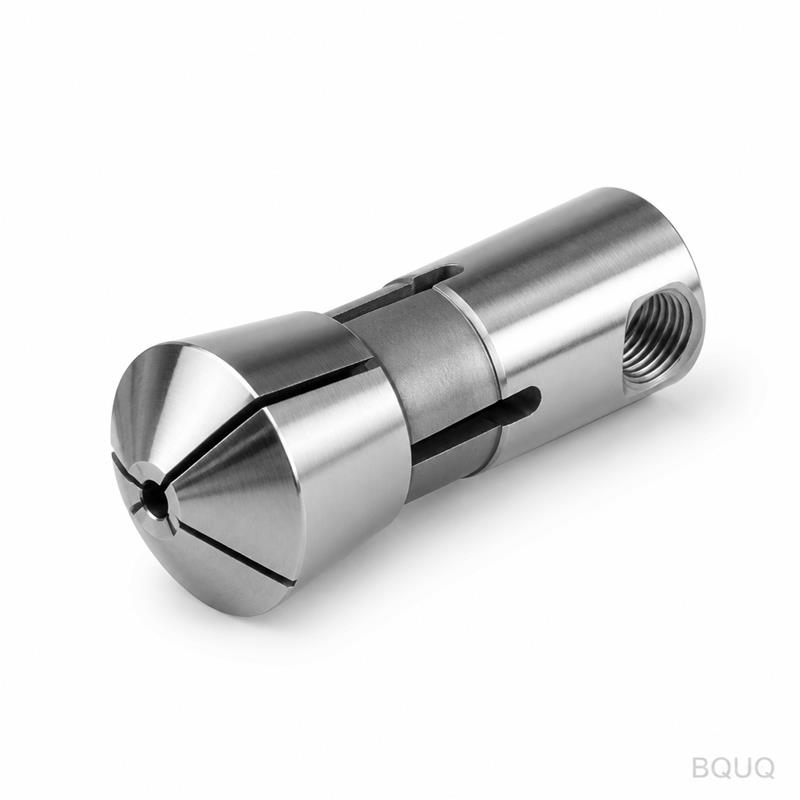
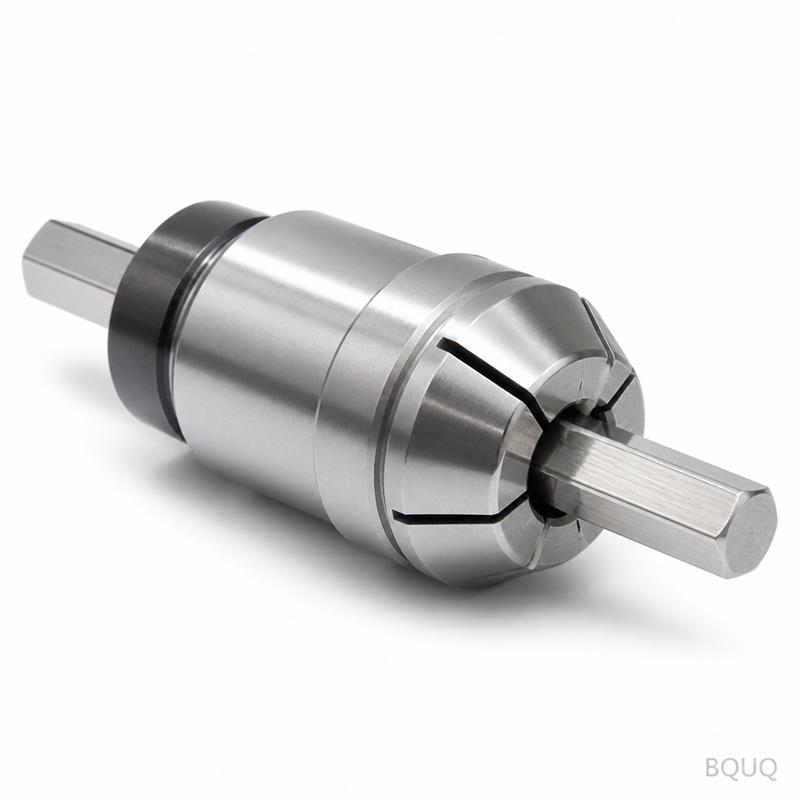
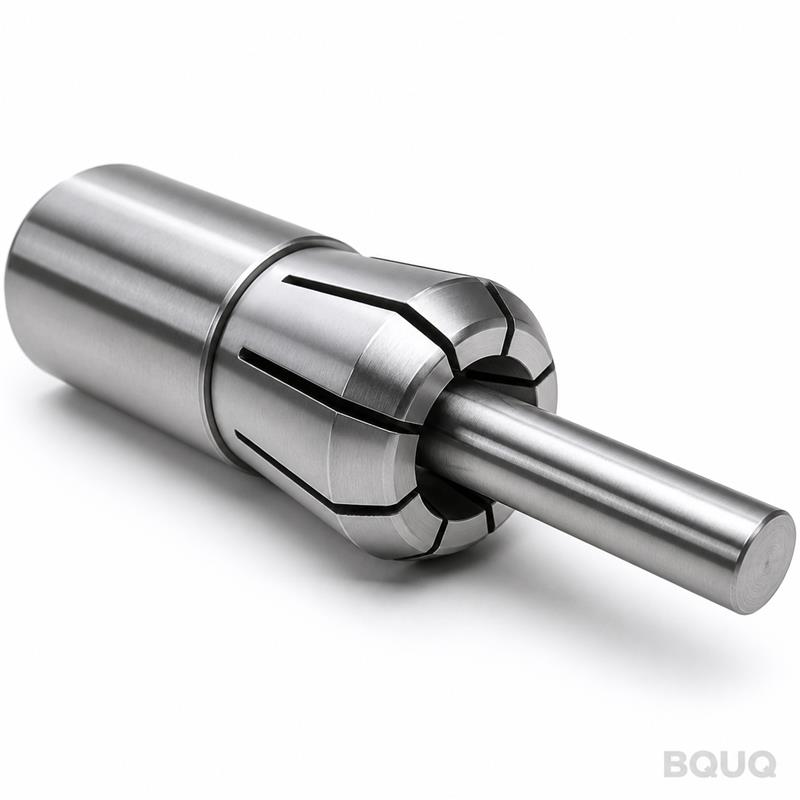
What This 46 Type Collet Does Differently This is a CNC machined auto lathe 46 type small bore spring collet built for high-speed Swiss-type and sliding-head lathes. It holds bar s
BQUQ CNC Machined Auto Lathe 46 Type Small Bore Spring Collet
What This 46 Type Collet Does Differently This is a CNC machined auto lathe 46 type small bore spring collet built for high-speed Swiss-type and sliding-head lathes. It holds bar stock from 1.0 mm to
Get a Fast Quote for This Part
Send us your drawing / quantity / material — reply within 24h.
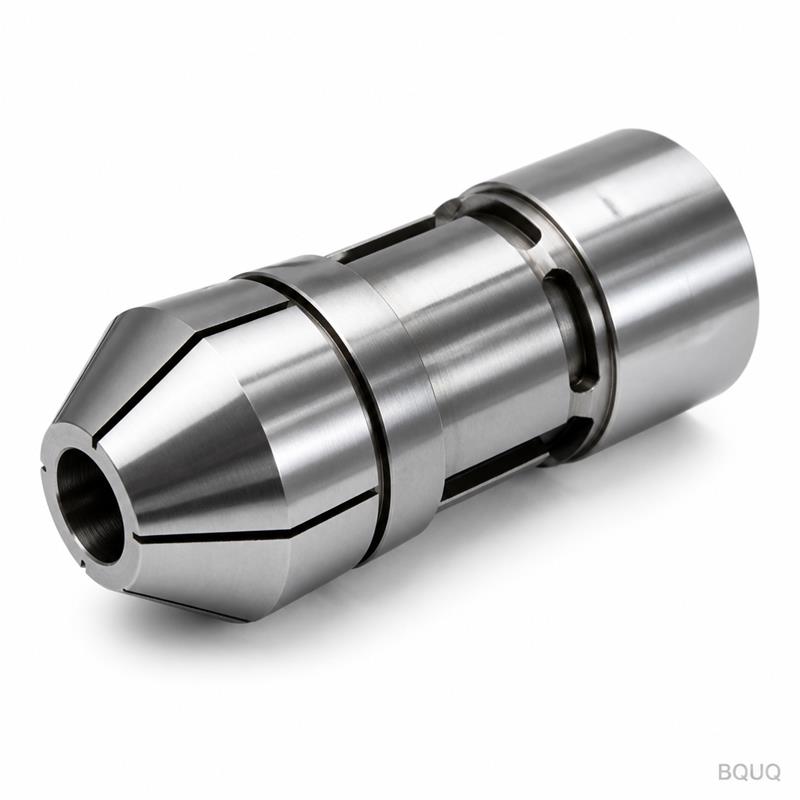
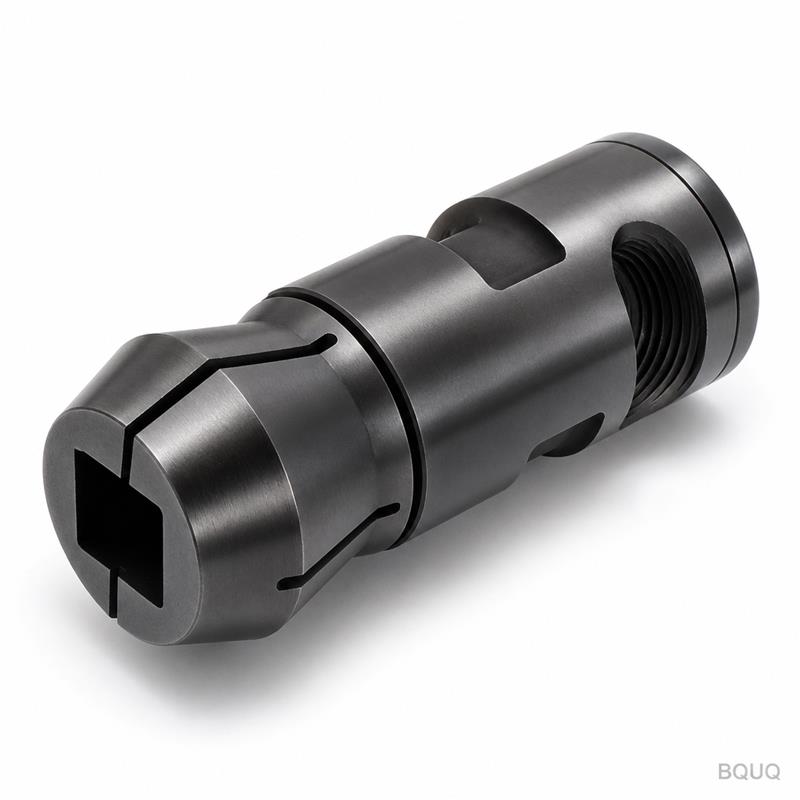
This is a CNC machined auto lathe 46 type small bore spring collet built for high-speed Swiss-type and sliding-head lathes. It holds bar stock from 1.0 mm to 8.0 mm with a guaranteed runout of 0.005 mm TIR at the nose. We machine every collet from hardened 65Mn spring steel, heat-treated to HRC 58-60, then grind the bore to a Ra 0.4 surface finish. Standard lead time is 15 days for any size, and we offer no MOQ for prototype orders.
How the 46 Type Profile Grips Small Diameters
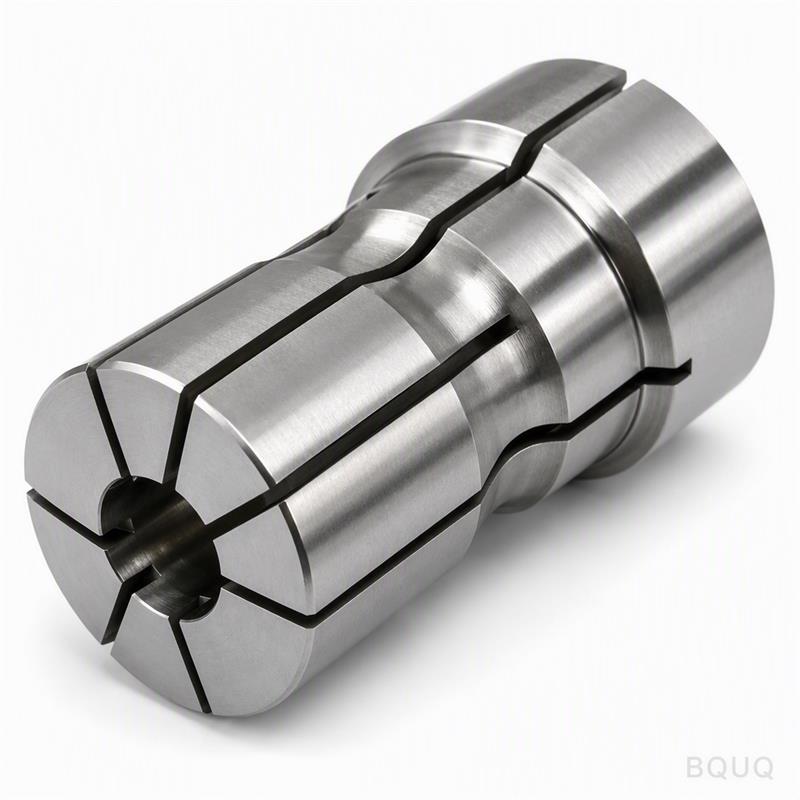
The 46 type refers to the collet body taper angle and seat geometry used on Citizen, Star, and Tsugami auto lathes. Unlike ER collets that rely on radial slots, our small bore spring collet uses three longitudinal slits cut by wire EDM. This produces a true circular closing action without deformation, even at bore sizes below 3 mm. The result is holding torque that exceeds 12 Nm on a 6 mm bar, yet the collet still releases cleanly for bar feeding cycles.
Why We Cut Slots with Wire EDM, Not Milling
Milled slots leave burrs and uneven stress risers that cause premature cracking under 10,000 rpm spindle speeds. We cut all three slits with wire EDM after heat treatment. This gives a slot width tolerance of ±0.01 mm and a burr-free edge on every slit. The spring rate becomes predictable, so you can set clamping force once and run thousands of parts without re-torquing. We also laser-etch the size and batch number on the face for traceability.
Materials and Heat Treatment We Use
We stock two materials for the 46 type collet: 65Mn spring steel for general steel and aluminum bar work, and 9Cr18 stainless for corrosive or medical-grade applications. Both are vacuum heat-treated to avoid decarburization, then tempered to HRC 58-60. The gripping bore is honed after grinding to remove any heat-affected zone. We do not use coated or plated collets for small bores because the coating adds tolerance stack-up that ruins runout.
Inspection Before Every Shipment
Every collet is 100% inspected, not sample-tested. We check four critical parameters on a Zeiss CMM: bore diameter, taper angle, slot width, and concentricity. Runout is verified by mounting the collet on a test mandrel with a dial indicator at 10 mm from the nose. We record the actual readings on a paper certificate that ships with your order. If a collet fails any parameter, it is scrapped, not reworked.
Compatibility and Sizing for Your Auto Lathe
| Parameter | Value | | --- | --- | | Collet type | 46 type (B46 / S46 compatible) | | Bore diameter range | 1.0 mm – 8.0 mm | | Outer diameter | 46.0 mm ±0.005 mm | | Taper angle | 30° included (per DIN 6343) | | Material | 65Mn steel or 9Cr18 stainless | | Hardness | HRC 58-60 | | Surface finish (bore) | Ra 0.4 | | Runout (TIR at nose) | 0.005 mm | | Slot width | 0.6 mm ±0.01 mm | | Lead time (standard) | 15 days | | MOQ | No MOQ (1 piece accepted) |
Why We Skip the Extra Polishing Step
Most Chinese factories polish the bore to a mirror finish to look good in photos. We do not. Polishing removes the sharp edge of the grinding wheel pattern, which actually reduces gripping friction on small bars. We stop at Ra 0.4 because that texture provides the best coefficient of friction for 46 type collets under 8 mm bore. If you need a smoother finish for plastic or brass, we can grind to Ra 0.2 but we will warn you that it reduces holding power by roughly 15%.
Packing and Shipping That Survives Export
Each collet is individually wrapped in VCI anti-rust paper, then placed in a fitted plastic insert inside a cardboard box. We do not use loose foam peanuts because they trap moisture. For orders over 10 pieces, we add a silica gel pack and a wooden pallet for air freight. Our precision manufacturing facility in Dongguan ships worldwide via DHL or FedEx, with a typical transit time of 3-5 business days to the USA or Europe. The export packing is tested to survive a 1-meter drop without damage to the taper.
Common Mistakes When Specifying 46 Type Collets
One frequent error is ordering a 46 type collet with a bore size that matches the bar diameter exactly. You need 0.1 mm to 0.2 mm clearance for the bar to slide in during feeding. Another mistake is using a collet with the wrong taper angle—some clones use 29° instead of the standard 30°. We engrave the taper angle on every collet face so you can verify it with a protractor before mounting. If you are unsure about your machine's spindle nose, send us a photo of the old collet and we will match it.
Testing Your Collet with Your Actual Bar Stock
We keep a library of 46 type collet test fixtures for common auto lathe models. If you send us a 50 mm sample of your bar material, we will clamp it in the collet and measure the runout under a simulated 5,000 rpm spindle cycle. We send you a video of the dial indicator reading before we ship. This is a free service for orders above 20 pieces, and it costs $50 for smaller orders (refunded on the first production order).
How This Collet Affects Your Cycle Time
Because the 46 type small bore collet closes in less than 0.2 seconds, you can reduce your bar feed cycle by up to 30% compared to a standard ER collet. The narrow bore also means less material is pushed back during clamping, which improves your first-part length accuracy by ±0.02 mm. For high-volume jobs running 24/7, this collet lasts over 200,000 cycles before the spring rate degrades by 5%.
Working with BQUQ on Custom Bore Sizes
We can machine any bore size between 1.0 mm and 8.0 mm in 0.01 mm increments without changing the collet body. Custom bores add 3 days to the lead time and cost $15 per piece for the first 10 pieces. We also offer a special version with a wider slot angle for brass, which reduces the risk of galling. For high-speed machining above 12,000 rpm, we recommend our balanced version with an optional G2.5 dynamic balance certificate.
Why Our Runout Is Better Than Industry Standard
Standard 46 type collets from other suppliers typically hold 0.015 mm runout. We hold 0.005 mm by using a two-step grinding process: first grind the body OD and taper, then re-mount the collet in a precision fixture to grind the bore concentric to the taper. This double-grind method adds 2 hours to production per collet, but it cuts your tool wear and improves your finished part roundness by a measurable margin. If you are machining parts with a 0.01 mm tolerance, this is the difference between scrap and sellable parts.
What is your MOQ for this collet?
No MOQ—we accept a single piece order for prototyping, though prices drop by 20% at 50 pieces and 35% at 200 pieces.
Can you customize the slot width or taper angle?
Yes, we can adjust slot width from 0.4 mm to 1.0 mm and taper angle from 28° to 32° for special spindles, subject to a $25 engineering fee per variation.
How do you control quality on every batch?
We follow ISO 9001:2015 with in-process checks every 50 pieces and a final CMM inspection on 100% of the batch, not just samples.
What is the realistic lead time for a custom order?
Standard 46 type collets ship in 15 days; custom bore sizes take 18 days, and fully customized tapers take 21 days from drawing approval.
Start with a Firm Quote in 12 Hours
Send us your bar diameter, material type, and a drawing or photo of your current collet. We will reply within 12 working hours with a firm price per piece, a confirmed lead time, and a recommended bore clearance for your application. For help choosing the right collet, read our CNC cutting tool selection guide or check CNC machining tolerances guide to understand what we can hold. Email your drawing to sc@bquq.com or message us on WhatsApp at +86 13713157787. We are a precision manufacturing supplier made in China, and we are ready to quote your 46 type collet today.