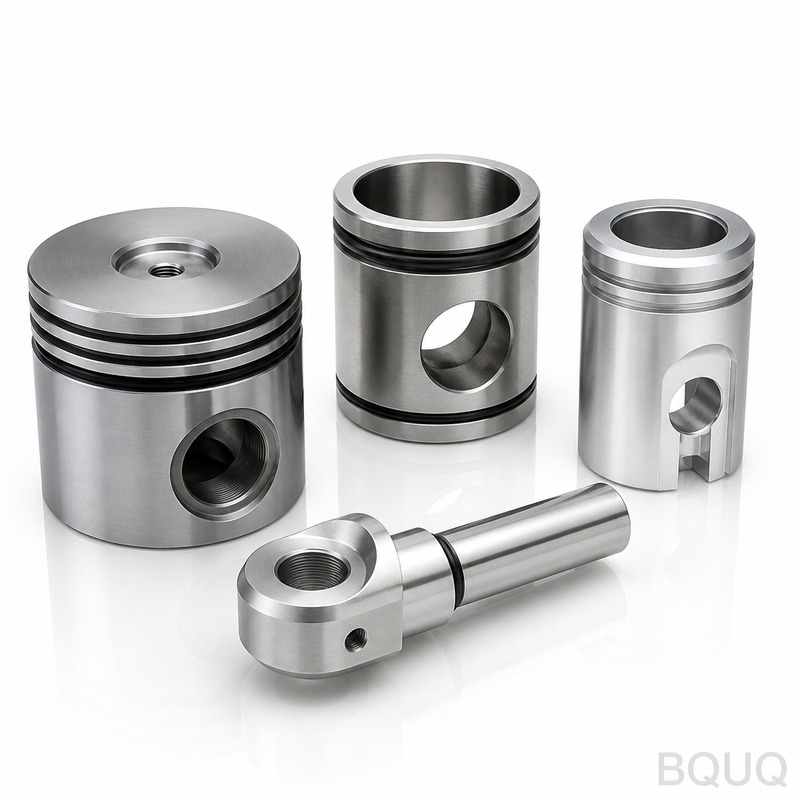
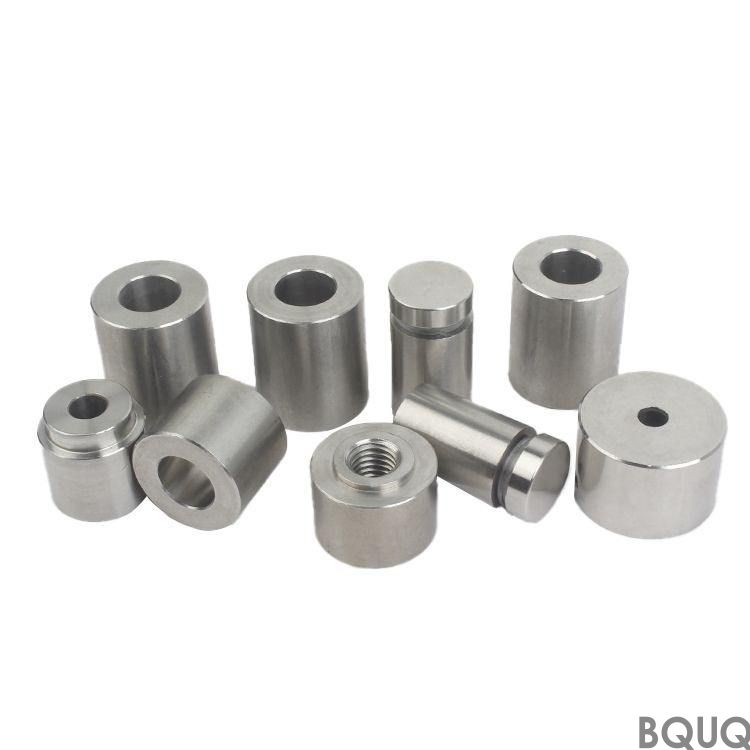
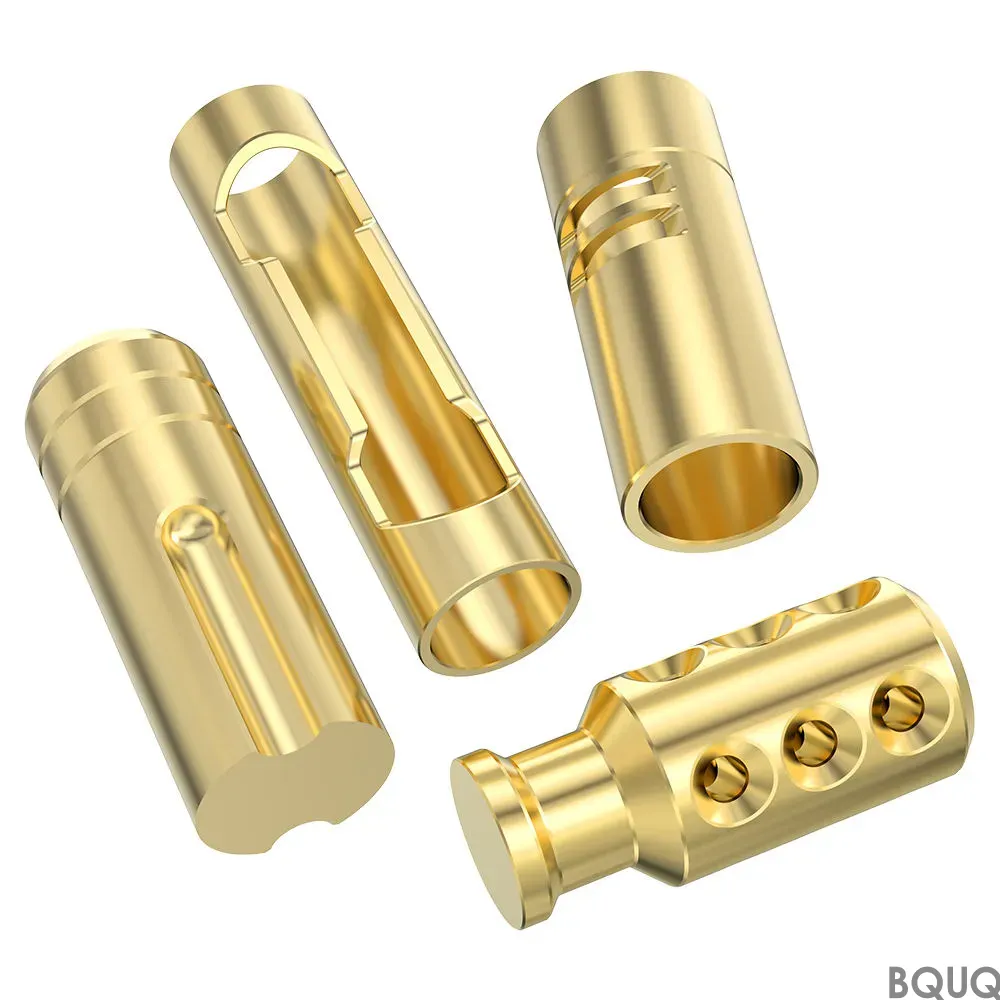
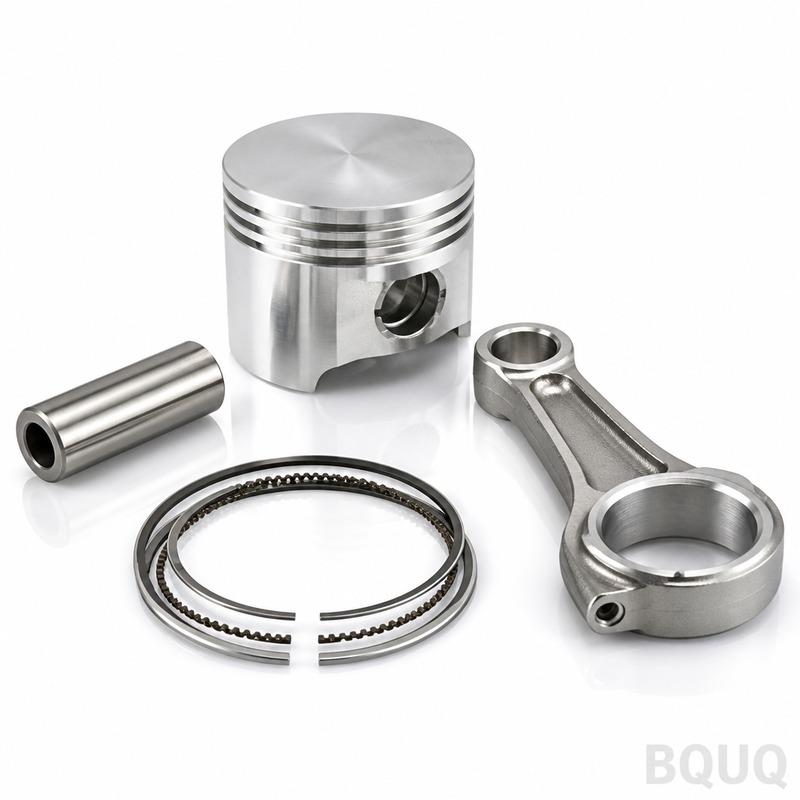
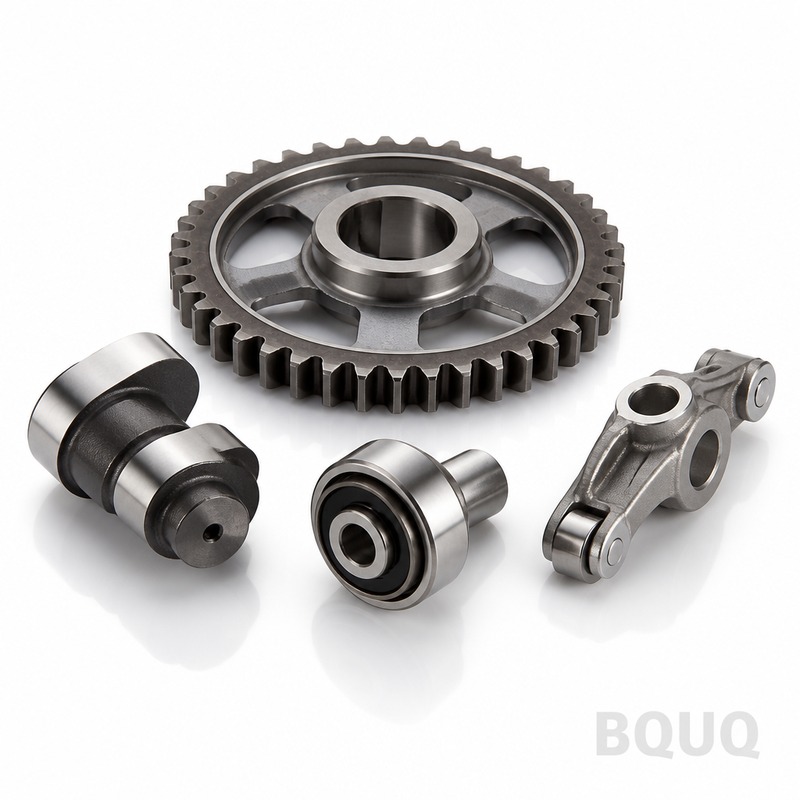
BQUQ manufactures Cnc Machined Hydraulic Pistons from 1045 steel or 17-4PH stainless, holding roundness to 0.005 mm and surface finish to Ra 0.4 µm. Every piston ships with a runou
BQUQ manufactures Cnc Machined Hydraulic Pistons from 1045 steel or 17-4PH stainless, holding roundness to 0.005 mm and surface finish to Ra 0.4 µm. Every piston ships with a runout of 0.01 mm TIR, a
Get a Fast Quote for This Part
Send us your drawing / quantity / material — reply within 24h.
BQUQ manufactures Cnc Machined Hydraulic Pistons from 1045 steel or 17-4PH stainless, holding roundness to 0.005 mm and surface finish to Ra 0.4 µm. Every piston ships with a runout of 0.01 mm TIR, a hardness of 48–58 HRC, and a 15-day lead time from drawing approval. This is precision manufacturing made in China, without a minimum order quantity.
Why Piston Diameter Tolerance Beats Honing Costs
We machine the OD to ±0.005 mm on a single setup, eliminating the need for secondary honing on most cylinders. That tolerance is verified with a digital micrometer and a Talyrond roundness tester. You get a drop-in replacement part, not a blank that needs rework.
Materials and Heat Treatment We Use for Sealing Surfaces
We start with 1045 medium carbon steel for standard hydraulic cylinders, then induction harden the outer surface to 52 HRC. For corrosive or high-pressure applications, we use 17-4PH stainless at 44 HRC, or 4140 chrome-moly steel quenched to 58 HRC. Each material is certified with a mill test certificate, and we keep the hardened case depth at 1.5–2.0 mm so the sealing surface does not deform under pressure.
How We Hold 0.01 mm Runout on Long Pistons
Pistons over 300 mm long tend to flex during machining. We use a steady rest and a live center on the tailstock, then machine the OD in two passes: a rough pass at 0.5 mm depth, followed by a finishing pass at 0.05 mm depth. Between centers, we check runout at three points—both ends and the middle—using a dial indicator with 0.002 mm resolution. If runout exceeds 0.01 mm, we re-chuck and re-cut, no exceptions.
Surface Finish Ra 0.4 for Low Friction Seals
We turn the OD to Ra 0.4 µm using a CBN insert at 180 m/min cutting speed and 0.08 mm/rev feed. That finish reduces seal wear and friction, which is critical for pistons running at 250 bar system pressure. For grooved pistons, we break the edges with a 0.2 mm chamfer to avoid tearing the O-ring during assembly.
Inspection Before Every Shipment
Every piston goes through a 100% inspection, not a sampling plan. We measure OD, ID, groove width, and groove depth with a bore gauge and calipers. Roundness and runout are checked on a Talyrond 73. Hardness is verified with a portable Rockwell tester. The final report includes a CMM printout for any feature with a tolerance tighter than ±0.01 mm. You get a signed inspection sheet with your shipment.
Thread and Groove Machining Without Burrs
Most hydraulic pistons have a threaded end for the rod or a gland nut. We cut threads with a single-point threading tool, then deburr both the thread start and the exit with a hand-held scraper. For internal grooves that hold piston rings, we use a grooving insert with a 0.4 mm nose radius, then inspect the groove width with a go/no-go plug gauge.
Lead Time and MOQ: Made in China, No Minimums
We run a 24/7 CNC shop with 30 machining centers and 15 turning centers. That lets us offer a 15-day lead time for quantities from 1 to 500 pieces. There is no MOQ—order one prototype or 500 production pieces, the setup cost is the same. For rush orders, we can deliver in 7 days for an additional 20% surcharge.
44–58 HRC (depending on material and heat treatment)
OD tolerance
±0.005 mm
Roundness
0.005 mm
Concentricity / runout
0.01 mm TIR
Surface finish
Ra 0.4 µm (0.8 µm standard)
Thread accuracy
ISO 6g / 6H, checked with thread gauges
Lead time
15 days after drawing approval (7-day express available)
MOQ
No MOQ (single piece accepted)
How to Choose the Right Cutting Tool for Your Piston Material
Hardened 4140 at 58 HRC requires CBN inserts, while 1045 steel can be cut with coated carbide. If you are specifying the machining process, see our CNC cutting tool selection guide to match insert grade to your material and hardness.
What Tolerance You Actually Need for a Hydraulic Seal
Not every piston needs ±0.005 mm. For a standard polyurethane seal, ±0.02 mm is enough. For a metal-to-metal seal or a high-speed rod, you need ±0.005 mm. Read our CNC machining tolerances guide to avoid over-specifying and paying extra.
What is the MOQ for Cnc Machined Hydraulic Pistons?
There is no MOQ—we accept a single piece for prototyping or a 500-piece production run at the same unit price.
Can you machine custom grooves or threads on the piston?
Yes, we machine any groove width, depth, and thread pitch per your drawing, and we verify every feature with gauges before shipment.
How do you control quality on a batch of 500 pistons?
We inspect the first piece fully, then check every 10th piece during production, and perform a 100% final inspection on OD, runout, and hardness before packing.
What is the typical lead time for a custom piston?
Standard lead time is 15 days from drawing approval; we can shorten it to 7 days for an extra 20% rush fee.
Send your drawing to sc@bquq.com or WhatsApp +86 13713157787. We reply with a firm quote within 12 hours, including unit price, tooling cost, and delivery date. No MOQ required.