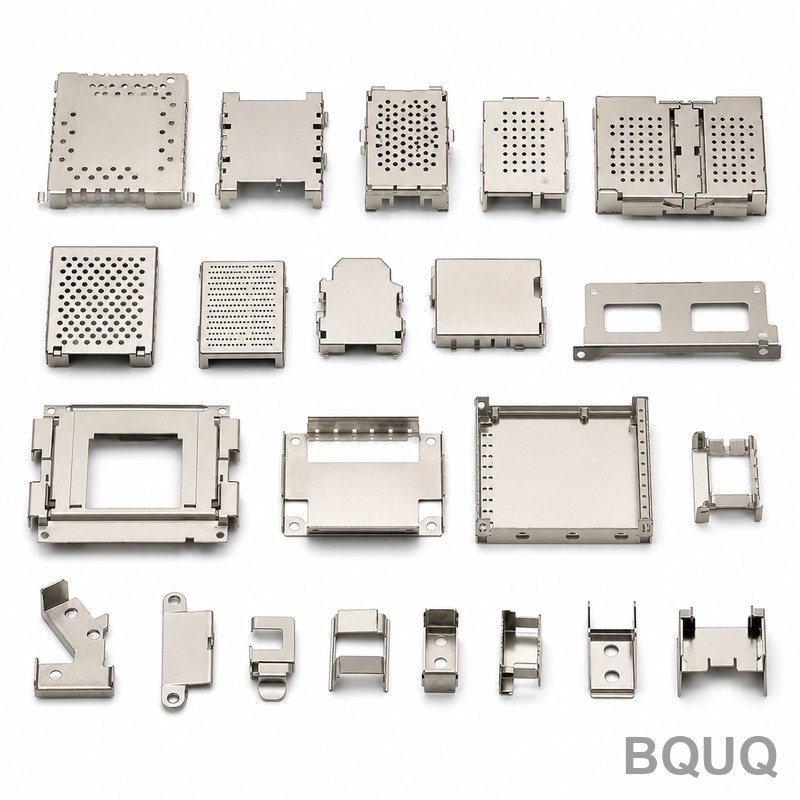
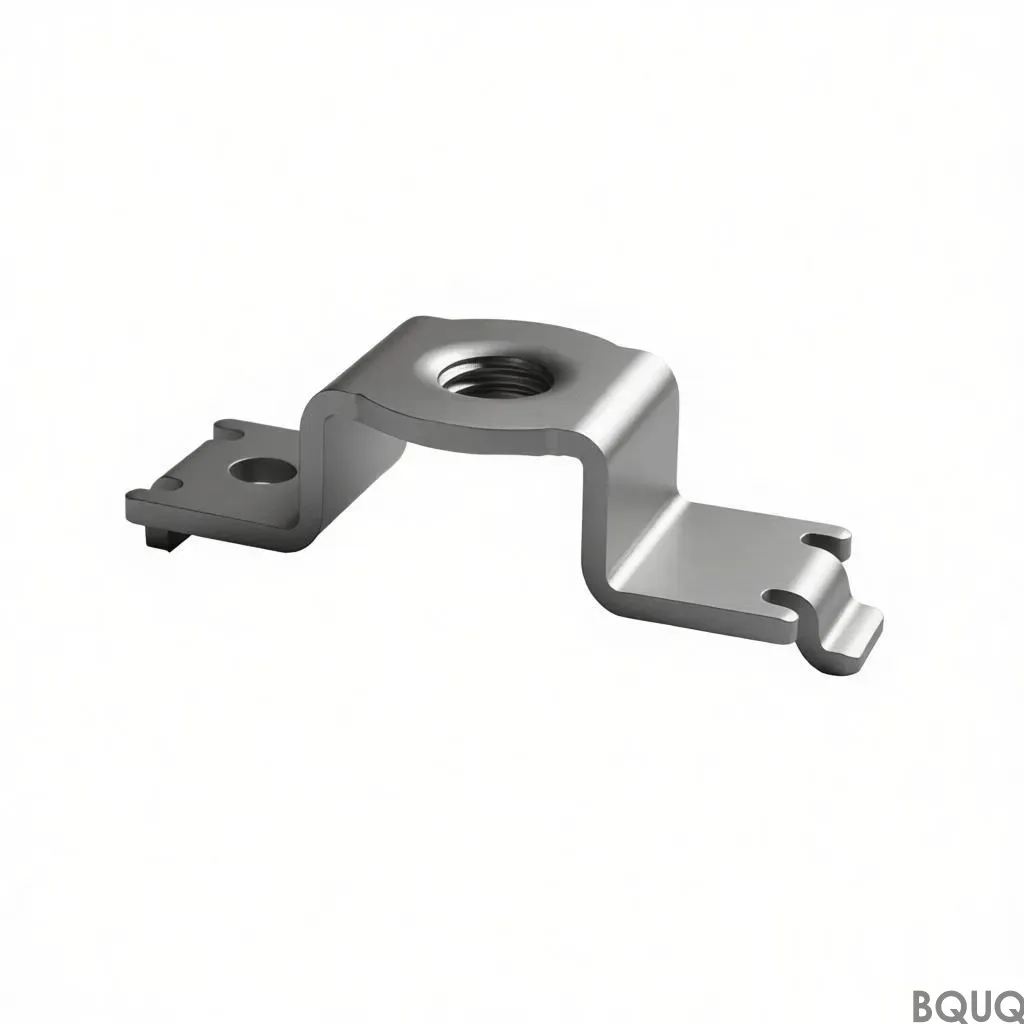
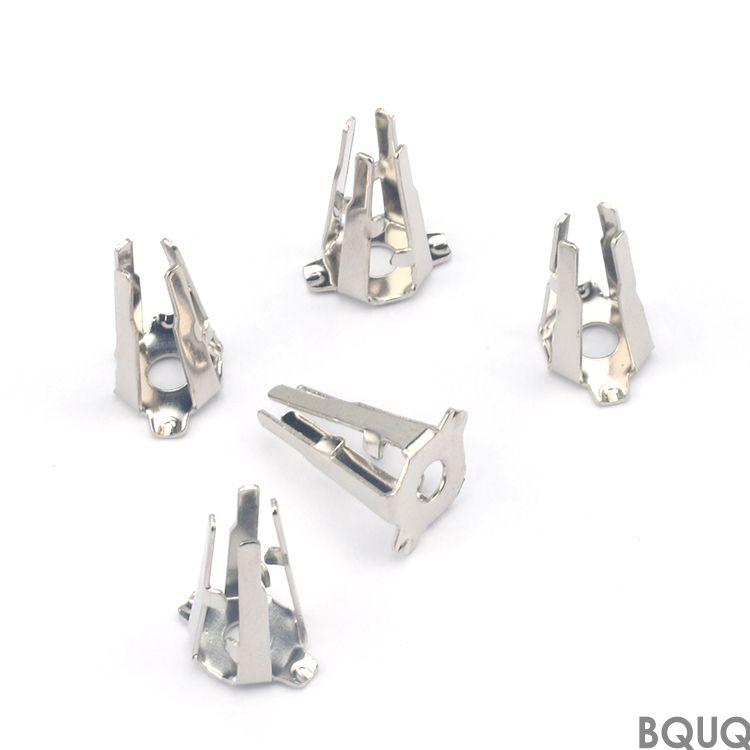
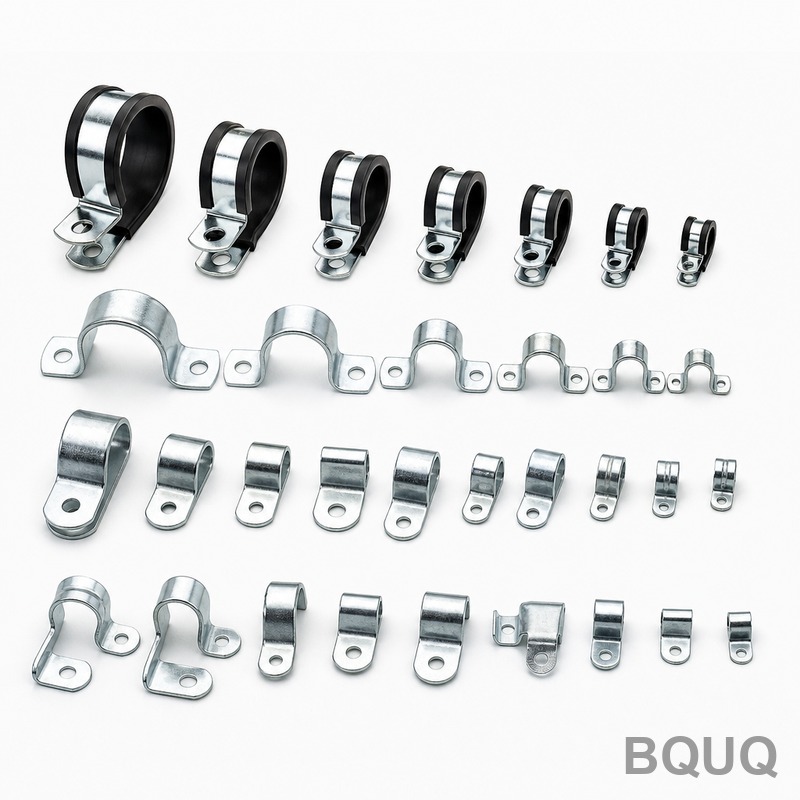
You are looking at a complete stamping line for AI server EMI containment — brackets and shields that clip, screw, or snap into place around GPU cages, NVMe bays, and power modules
BQUQ Ai Server Emi Shields Brackets Collection | Precision Stamping Made in China
You are looking at a complete stamping line for AI server EMI containment — brackets and shields that clip, screw, or snap into place around GPU cages, NVMe bays, and power modules. We hold ±0.02 mm o
Get a Fast Quote for This Part
Send us your drawing / quantity / material — reply within 24h.
You are looking at a complete stamping line for AI server EMI containment — brackets and shields that clip, screw, or snap into place around GPU cages, NVMe bays, and power modules. We hold ±0.02 mm on critical mounting holes, runout under 0.05 mm across the entire formed part, and ship first articles in 7 days from drawing approval. These parts are precision manufacturing made in China, hardened to HRC 40–45 where the spring fingers need to survive 10,000 insertion cycles without losing contact force.
Why Spring Finger Geometry Decides Shielding Performance
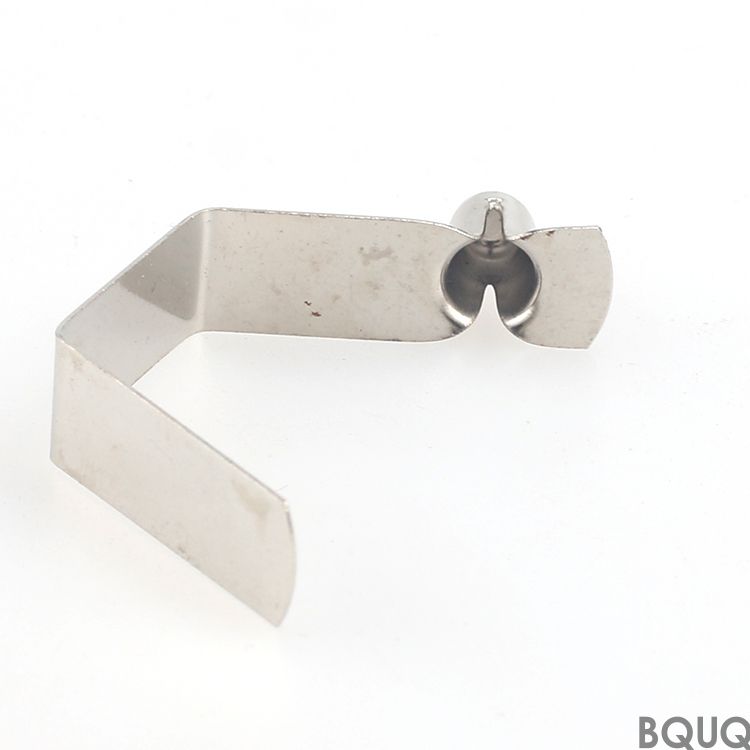
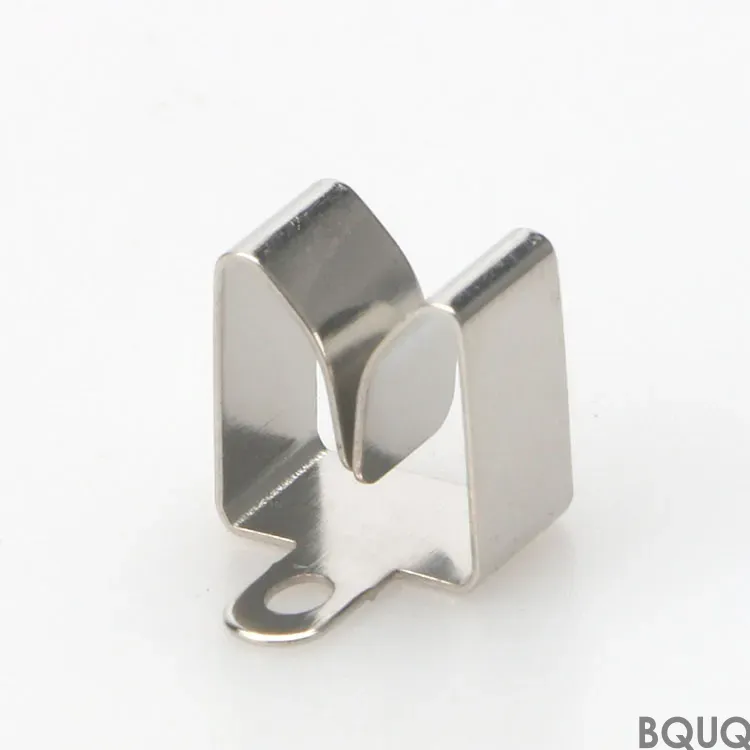
EMI leaks through gaps larger than 0.1 mm at 10 GHz. Our brackets use a 0.15 mm thick beryllium copper or stainless steel strip with formed fingers that create 0.05 mm interference against the server chassis. That is not stamped by accident — we control the bend radius to ±0.03 mm and the finger height to ±0.02 mm. If the finger is too tall, it snaps. Too short, it leaks. We run a 100% optical check on finger height before any plating step.
Materials and Heat Treatment We Use for AI Server Racks
Three material families cover 95% of AI server EMI requests. First, C17200 beryllium copper — we age-harden it to HRC 38–42, giving you 80% of the conductivity of pure copper with 4x the yield strength. Second, SUS301 stainless steel — full-hard temper, HRC 40–45, for brackets that must hold shape under 85°C continuous server heat. Third, C5210 phosphor bronze for cost-sensitive clips where you need good springback but no magnetic interference. We also offer nickel, tin, or gold plating — gold at 0.5 µm minimum for corrosion-critical edge connectors.
How We Hit ±0.02 mm on Hole-to-Hole Centers Across a 200 mm Part
AI server brackets are long and thin — often 180 mm × 20 mm with 12 mounting holes. Thermal expansion alone can shift holes by 0.03 mm. So we do not just punch and hope. We use a progressive die with a fixed pilot system, then a secondary CNC correction step on any hole that must align with a mating connector. Our press speed is 60 strokes per minute, not 200, because slower speed means less die deflection. Before you ask — yes, we can hold ±0.01 mm on a single hole diameter, but on a 12-hole pattern we quote ±0.02 mm realistic, and we prove it with a CMM report on every first article.
Inspection Before Every Shipment — Not Just a Sample Report
Most stamping shops send you a first article report and then ship blind. We do not. Every lot gets a 3-point check: a CMM measurement of 5 critical dimensions per hour, a visual inspection under 10x magnification for burrs over 0.03 mm, and a springback test on 3 random parts per 500-piece batch. The springback test is simple — we compress the shield fingers to full deflection, release, and measure that force returns to within 5% of nominal. If it fails, the entire batch is quarantined. That is how we keep your AI server assembly line from stopping on a bad EMI gasket.
Surface Finish and Plating — Ra 0.8 Is Our Baseline, Not Our Premium
Rough edges cause micro-arcing and signal degradation. Our stamping dies are polished to Ra 0.2, which transfers to a part finish of Ra 0.8 on the formed surfaces and Ra 0.4 on sheared edges after deburring. For plating, we offer bright tin (2–3 µm) for solderability, nickel (3–5 µm) for wear, and gold (0.5–1 µm) for contact points. We do not plate selectively — if you need gold only on the finger tips, we use a tape mask process that adds 1 day to lead time but saves you 30% on plating cost.
Custom Brackets — We Modify Die Inserts, Not The Whole Die
Your AI server chassis changes every 6 months. You do not want to pay for a new die each time. Our tooling is modular — we can change a single punch insert for a different hole pattern in 2 hours, and a full set of finger forming inserts in 1 day. This means customization costs you a one-time insert fee of $80–$200 per feature, not a $5,000 new die. Send us your 3D file and we will tell you within 24 hours which inserts need changing and what the new part cost per unit is.
Lead Time, MOQ, and How We Ship From Dongguan
First article: 7 days after drawing approval. Production: 15 days for 10,000 pieces, 20 days for 100,000. No MOQ — we have shipped 200-piece samples and 500,000-piece production runs in the same month. Shipping from Dongguan to Shenzhen airport is 1 hour, to Hong Kong port 2 hours. We use air freight for urgent 48-hour deliveries, sea freight for cost-sensitive bulk. Every order includes a packing list with material heat number and plating batch traceability.
Specification
Value
Materials
C17200 BeCu, SUS301, C5210
Thickness range
0.10 – 2.00 mm
Max part length
300 mm
Hardness (BeCu)
HRC 38–42
Hardness (SUS301)
HRC 40–45
Critical hole tolerance
±0.02 mm
Runout (formed part)
≤ 0.05 mm
Surface finish Ra
0.8 µm (0.4 µm on sheared edges)
Plating options
Tin 2–3 µm, Nickel 3–5 µm, Gold 0.5–1 µm
Lead time (first article)
7 days
MOQ
No MOQ
Are You Specifying The Right Tool Steel For Your Die?
If you are designing a new AI server shield, the die material matters as much as the part material. Our standard dies use D2 steel for stamping stainless, but for beryllium copper we switch to M2 high-speed steel — it resists adhesive wear better. Read our CNC cutting tool selection guide to see why tool edge geometry changes your part burr height. And if you are pushing tolerances tighter than ±0.02 mm, our CNC machining tolerances guide explains when to switch from stamping to CNC milling.
What is your MOQ for the Ai Server Emi Shields Brackets Collection?
No MOQ — order 200 pieces or 500,000, the unit price only changes by 15% at the lower end.
Can you customize a bracket for a specific GPU card slot?
Yes, send your 3D STEP file and we modify existing die inserts in 2 hours — no full die redesign unless you change the outer contour.
How do you guarantee EMI performance after 10,000 insertions?
We run a springback test on every batch — compress fingers to full deflection, release, and confirm contact force returns within 5% of nominal.
What is the fastest lead time for a prototype run?
Express service ships 100 pieces in 72 hours from drawing approval, using pre-hardened material and simplified tooling.
Get a firm quote within 12 hours — send your drawing to sc@bquq.com or WhatsApp +86 13713157787. We reply with unit price, tooling cost (if any), and a CMM inspection plan attached.