How Are Springs Made? Manufacturing Process from Wire to Finished Spring
Springs are manufactured through a precise sequence of coiling, cutting, and heat-treating operations that transform raw wire into a functional elastic component. The exact process depends on spring type, but the core steps involve feeding wire through a CNC coiling machine, forming the coils at speeds up to 100 meters per minute, then stress-relieving at 250-450°C to remove internal stresses. For a typical compression spring, the entire cycle from wire to finished product takes 3-10 minutes per piece, with tolerances held to ±0.05mm on wire diameter and ±0.5mm on free length.
What Are the Four Main Types of Spring Manufacturing Processes?
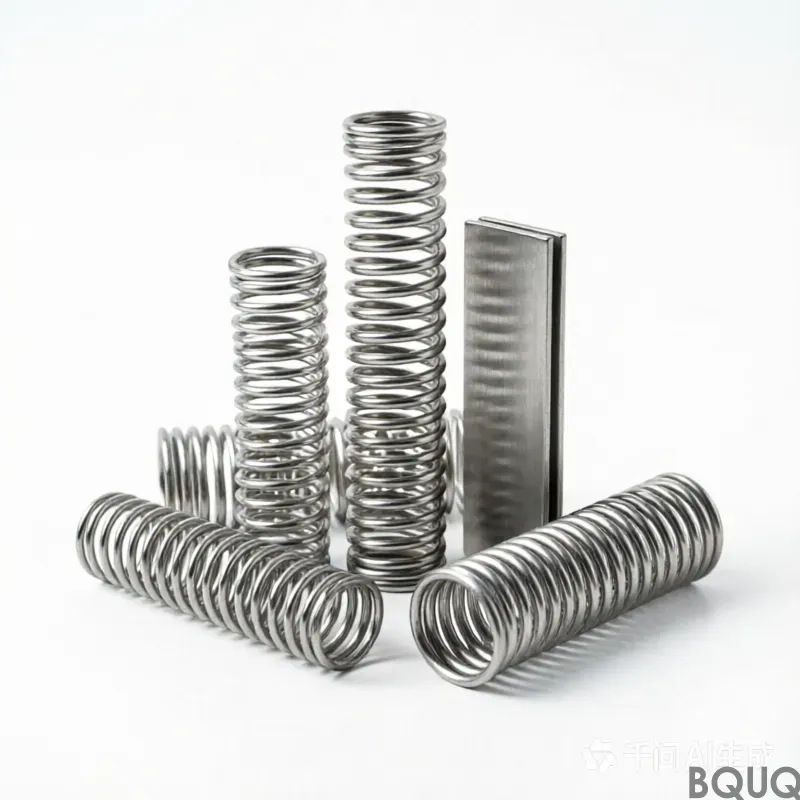
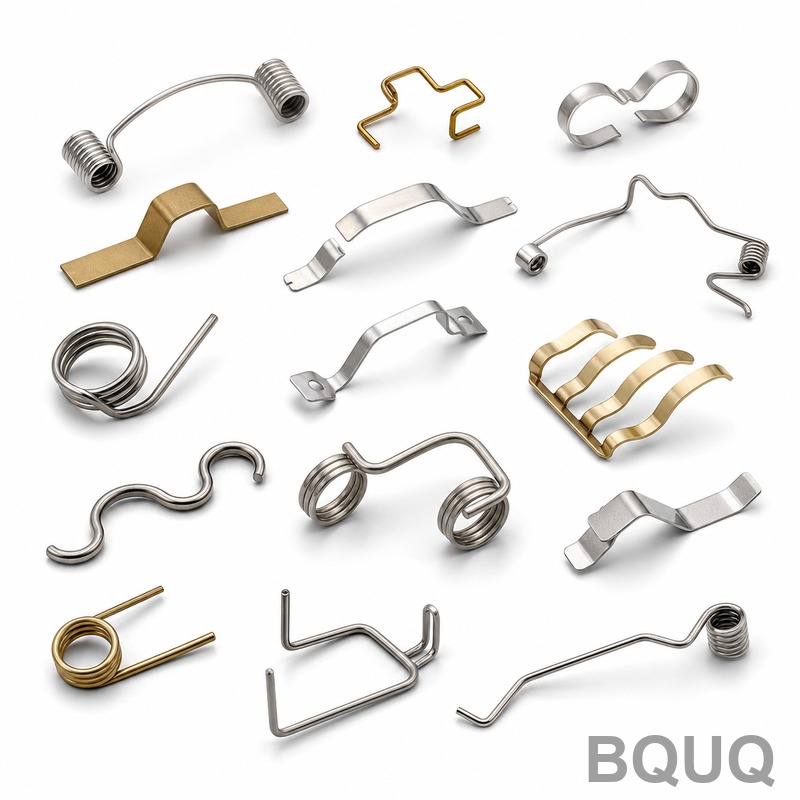
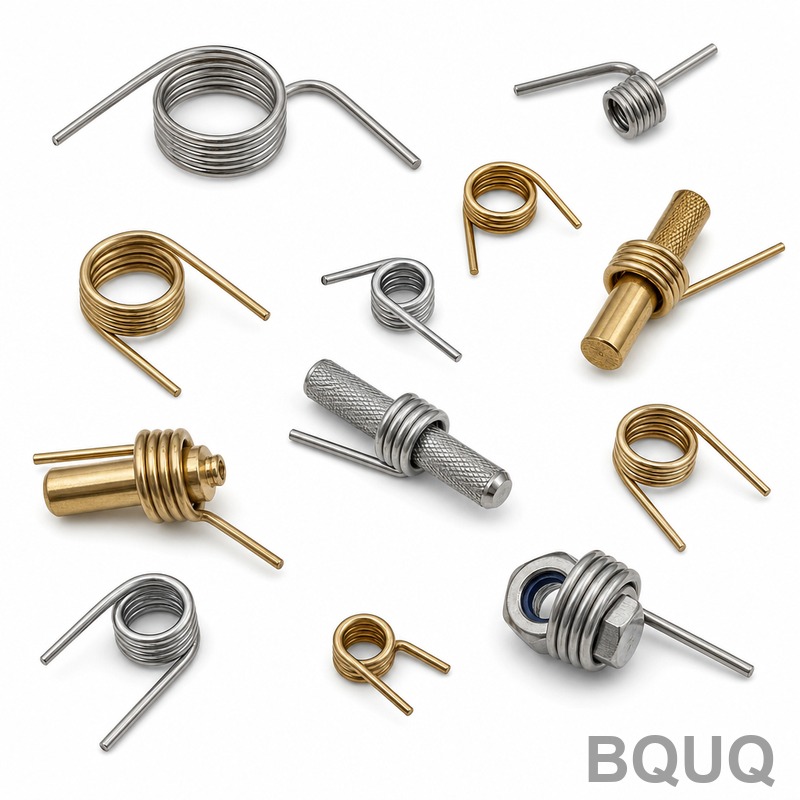
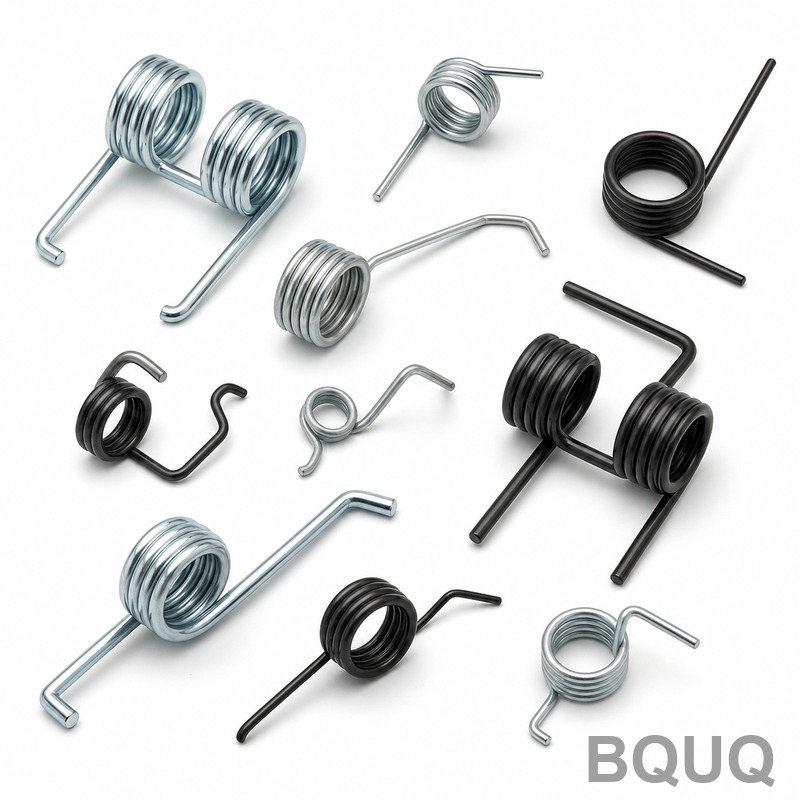
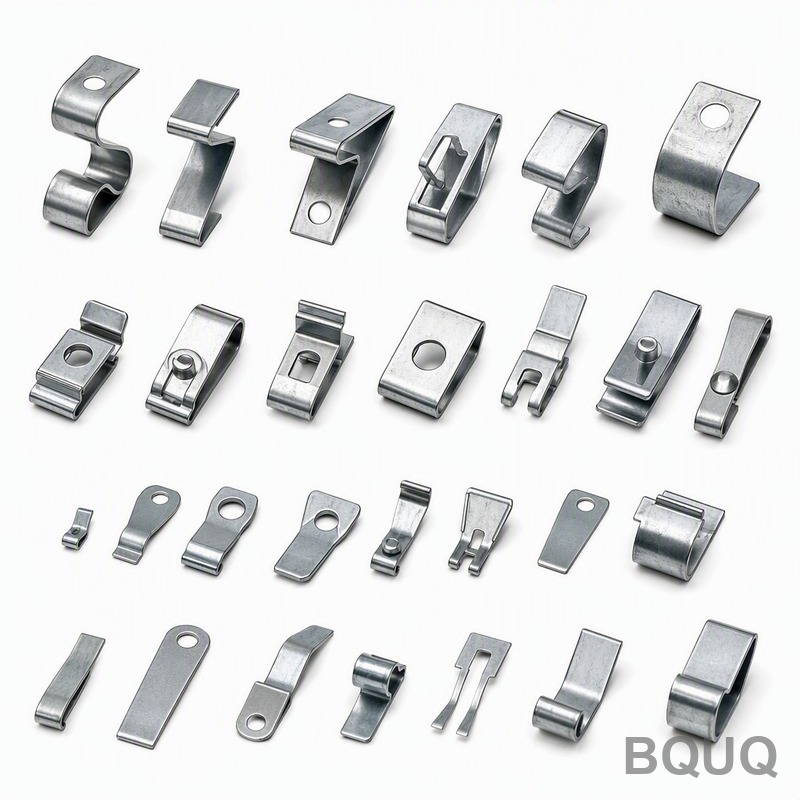
The four primary manufacturing methods are cold coiling, hot coiling, wire forming, and stamping. Cold coiling, used for wire diameters from 0.1mm to 12mm, involves bending wire at room temperature using CNC machines with rotating mandrels and pitch tools. Hot coiling, for wire above 12mm diameter, requires heating the wire to 850-1050°C to reduce yield strength and allow bending without cracking. Wire forming creates non-cylindrical shapes like torsion springs and clips using multi-axis CNC benders, while stamping produces flat springs and leaf springs from sheet metal using progressive dies.
How Does the CNC Coiling Machine Transform Wire into Coils?
A CNC coiling machine operates by feeding wire through a series of straightening rollers, then pushing it against a mandrel while a pitch tool controls the gap between coils. The machine's servo motors control feed length with an accuracy of ±0.01mm, allowing consistent coil diameter and pitch. For compression springs, the machine forms closed ends by pressing the first and last coils flat, a process called "closed and ground" which requires an additional grinding step to achieve flatness within 0.1mm. The coiling speed ranges from 30 to 100 meters per minute depending on wire diameter, with thinner wires coiling faster.
Why Is Heat Treatment Critical for Spring Performance?
Heat treatment, specifically stress relieving and tempering, is essential to remove residual stresses created during coiling and to set the spring's elastic properties. Stress relieving is performed at 250-450°C for 20-60 minutes depending on wire material, which reduces internal stress by up to 80% without significantly changing hardness. For hardened and tempered wire, the process is called "low-temperature stress relieving" and is done at 200-300°C to preserve the wire's pre-existing strength. Skipping heat treatment causes premature fatigue failure, with springs losing 50-70% of their expected cycle life.
Which Materials Are Most Commonly Used for Spring Wire?
The most common spring materials are oil-tempered steel (SAE 9254), music wire (ASTM A228), chrome silicon (ASTM A401), and stainless steel (302 and 316 grades). Oil-tempered steel is the industry standard for automotive suspension springs due to its excellent fatigue resistance at a cost of $2-4 per kilogram. Music wire offers the highest tensile strength, up to 2300 MPa for 1mm diameter, making it ideal for small precision springs. Stainless steel 302 is chosen for corrosion resistance in medical and food applications, while chrome silicon provides superior performance at elevated temperatures up to 250°C.
What Tolerances Can Be Achieved in Spring Manufacturing?
Tolerances vary by spring dimension and are defined by standards such as DIN 2095 for cold coiled compression springs and DIN 2096 for hot coiled springs. Wire diameter tolerances follow the wire manufacturer's specifications, typically ±0.01mm for wire under 1mm. Coil diameter can be held to ±0.3mm for springs under 10mm outside diameter, while free length tolerance is ±1% or ±0.5mm, whichever is greater. The following table shows typical tolerance values for a 2mm wire compression spring:
| Dimension | Standard Tolerance | Precision Tolerance | Measurement Method |
| Wire diameter | ±0.02mm | ±0.01mm | Micrometer |
| Outside diameter | ±0.5mm | ±0.2mm | Caliper |
| Free length | ±1.0mm | ±0.5mm | Height gauge |
| Total coils | ±0.25 coils | ±0.1 coils | Visual count |
| End flatness | ±0.3mm | ±0.1mm | Surface plate |
| Load at specified height | ±10% | ±5% | Load tester |
How Are Spring Ends Ground and Finished?
End grinding is required for compression springs that must stand perpendicular, typically when the spring is used in a guided application. The grinding process uses double-disc grinders with diamond or CBN wheels that remove 0.2-0.5mm from each end to achieve flatness within 0.05mm and perpendicularity within 1 degree. After grinding, the spring may undergo shot peening, where steel shot is blasted at 40-80 m/s to create compressive residual stresses on the surface, increasing fatigue life by 20-50%. Surface finishing options include zinc plating (8-12 micrometers thickness), powder coating, or electroless nickel plating for corrosion resistance.
How Do Quality Control and Testing Validate Spring Performance?
Every production batch must pass load testing, where springs are compressed to a specified height and the force is measured using a digital load tester with accuracy of ±0.5%. Fatigue testing is performed on sample springs, cycling them at 1-10 Hz for 100,000 to 1,000,000 cycles to verify they do not fracture or lose more than 5% of their initial load. Metallurgical testing, including hardness testing on the Rockwell C scale (typically 40-50 HRC for hardened spring steel), confirms the heat treatment was correct. In-process inspection checks coil diameter and pitch every 50 pieces using optical comparators with 0.01mm resolution.
Can Springs Be Manufactured with Custom Shapes and Features?
Yes, CNC wire forming machines can produce complex spring geometries including conical, barrel, hourglass, and variable pitch springs with a single setup. These machines use 3-8 servo-controlled axes that can bend, twist, and cut wire in multiple planes, achieving bend angles within ±0.5 degrees. Additional features like hooks, loops, and extended legs for torsion springs are formed in the same operation, eliminating secondary processes. For prototype or low-volume production, springs can be made on manual coiling machines with changeable mandrels, with setup times of 30-60 minutes and piece costs 2-3 times higher than CNC production.
What Are the Typical Lead Times and Costs for Custom Springs?
Standard compression and extension springs with wire diameter under 5mm have a lead time of 5-10 working days for quantities up to 10,000 pieces. Prototype quantities of 10-50 pieces can be delivered in 2-3 days using existing tooling, with a one-time setup fee of $50-150. Production costs depend on wire material, diameter, and quantity, with a typical 2mm music wire compression spring costing $0.15-0.40 per piece at 5,000 quantities. Tooling for custom spring designs is minimal, usually $100-500 for CNC programming and mandrel fabrication, which is significantly lower than stamping or injection molding tooling costs.
Conclusion
Understanding the spring manufacturing process from wire to finished product enables engineers to specify springs with realistic tolerances, appropriate materials, and cost-effective quantities. The key decisions involve selecting between cold and hot coiling based on wire diameter, choosing the correct material for the operating environment, and specifying the necessary finishing operations for fatigue and corrosion resistance. By partnering with an experienced manufacturer, you can optimize your spring design for manufacturability and reduce lead times. BQUQ provides 12-hour quoting for custom spring requirements across CNC machining, metal stamping, and spring manufacturing, with 20 years of precision manufacturing experience in Dongguan, China.
What Is the Difference Between Cold and Hot Coiling?
Cold coiling is performed at room temperature for wire diameters up to 12mm, offering tighter tolerances and better surface finish. Hot coiling is used for wire above 12mm diameter, where heating to 850-1050°C is necessary to prevent cracking during bending.
How Accurate Are Spring Load Tests?
Load testing accuracy is typically ±0.5% of the measured force using calibrated digital load cells. The test must be performed at a controlled compression speed of 5-10 mm/min to ensure consistent results.
What Is the Maximum Spring Wire Diameter That Can Be Cold Coiled?
Most CNC coiling machines can handle wire up to 12mm diameter in cold condition, though some heavy-duty machines extend to 16mm. Beyond this, hot coiling is mandatory to prevent tool breakage and wire cracking.
How Long Does a Spring Last in Fatigue Testing?
Standard fatigue testing runs 100,000 cycles for general-purpose springs and up to 1,000,000 cycles for automotive or aerospace applications. Springs that pass these tests typically have a service life of 10,000,000 cycles in actual use.
Can Springs Be Made from Titanium or Other Exotic Alloys?
Yes, titanium alloys like Ti-6Al-4V and Inconel 718 can be coiled using specialized equipment with slower speeds and higher heat treatment temperatures. These materials cost 10-20 times more than steel and require longer lead times of 3-4 weeks.
What Surface Treatments Are Recommended for Outdoor Use?
For outdoor or corrosive environments, zinc plating with yellow or clear chromate (8-12 micrometers) is the most cost-effective option. Powder coating provides better abrasion resistance with a thickness of 60-100 micrometers, while electroless nickel offers superior corrosion protection for marine applications.
How Should I Provide Spring Specifications for Quoting?
Provide the wire diameter, outside diameter, free length, total coils, end type (closed, open, ground), and material grade. Include operating parameters such as minimum and maximum load, compressed height, and expected cycle life to ensure proper design validation.
For a fast and accurate quote on your custom spring requirements, contact BQUQ at sc@bquq.com or WhatsApp +86 13713157787, or visit www.bquq.com to submit your drawings and specifications. Our engineering team responds within 12 hours with pricing, lead times, and manufacturability feedback.