How Can You Get Custom Spring Prototypes Fast From a Factory?
The fastest way to get custom spring prototypes from a factory is to provide complete engineering data—material grade, wire diameter, coil dimensions, load requirements, and quantity—and request a factory with in-house tooling and wire forming capabilities to use "rapid prototyping" processes like CNC coiling or 3D-printed molds, which can ship parts in 3 to 5 business days. For standard compression springs under 10 mm wire diameter, most precision factories can deliver 10 to 50 pieces within 72 hours using CNC wire forming machines without any hard tooling. The key to speed is not the factory's shipping method but the elimination of design revisions and the use of existing wire stock, which reduces lead time by up to 80% compared to custom-drawn wire.
What Is the Realistic Lead Time for Spring Prototypes in 2025?
Realistic lead times for spring prototypes range from 24 hours for off-the-shelf designs to 10 business days for complex torsion springs with custom ends. For a standard compression spring (wire diameter 0.5 mm to 5.0 mm, free length under 100 mm), a factory with CNC coiling machines can produce 5 to 20 samples in 3 business days, including surface finishing like passivation or light oiling. If your design requires cold-drawn wire not in stock, add 5 to 7 days for wire procurement, and if it requires custom heat treatment (e.g., stress relief at 300°C for 30 minutes), add one extra day for the thermal cycle.
How Does the Prototyping Process Differ Between Compression, Torsion, and Extension Springs?
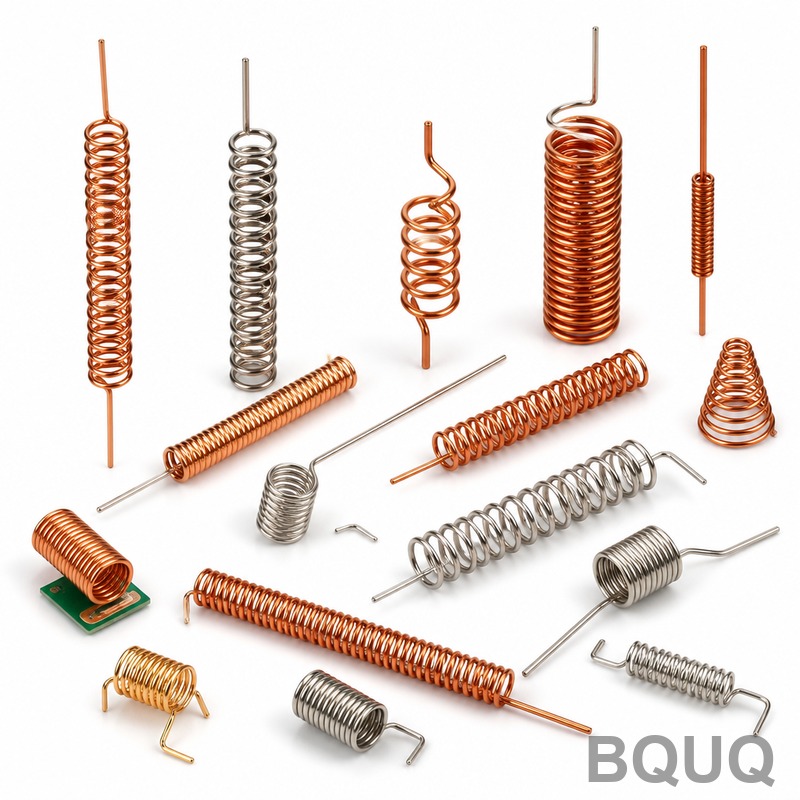
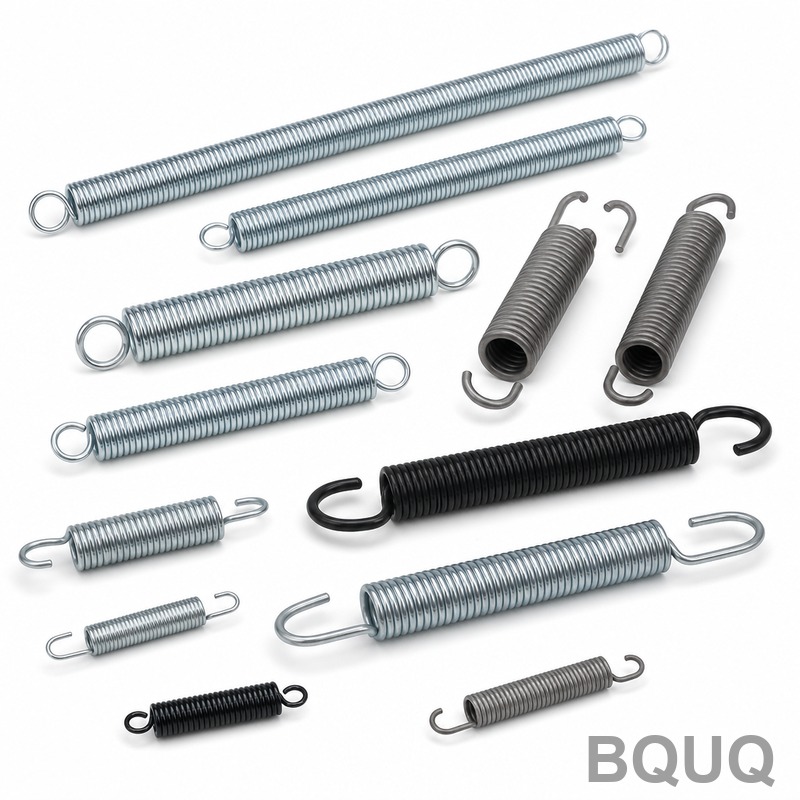
Compression springs are the fastest to prototype because they are produced on a single CNC coiling machine that forms the coils and grinds the ends in one setup, taking approximately 2 minutes per part. Torsion springs require an additional leg-bending operation, which adds 15 to 20 minutes of setup time, extending delivery by one to two days. Extension springs with loops or hooks are the slowest, as the loops are formed in a secondary operation on a four-slide machine or manual fixture, and tolerances on loop position (typically ±0.3 mm) require careful inspection, pushing lead time to 5 to 7 business days.
Which Spring Material Should You Choose for Fast Prototype Delivery?
For fastest delivery, choose stainless steel 302 (ASTM A313) or music wire (ASTM A228), as these are the most common stock wires held by factories in Dongguan, available in diameters from 0.1 mm to 12.0 mm. If your application requires corrosion resistance at temperatures above 250°C, select Inconel X-750, but note that this material is not standard stock and adds 7 to 10 days for wire ordering and 2 days for age hardening. For prototype validation only, consider using 302 stainless steel even if production will use 17-7 PH, because the elastic modulus difference is only 5% (28,000 ksi vs 29,500 ksi), which is within typical prototype acceptance tolerance for load testing.
What Information Must You Provide to Get a Quote in Under 12 Hours?
To get a quote in under 12 hours, provide a 2D drawing with GD&T or a 3D STEP file, plus a table of specifications including wire diameter (mm), outer diameter (mm), free length (mm), total coils, active coils, spring rate (N/mm), maximum load (N), solid height (mm), and end type (closed and ground, closed not ground, or open). Also specify the material grade, surface finish (zinc plating, passivation, or plain), and required quantity for samples (typically 10 to 50 pieces). Without these data, the factory must reverse-engineer from a physical sample, which adds 2 to 3 days for measurement and testing, so always include load tolerance (e.g., ±10% at a specified deflection) to avoid ambiguous calculations.
How Much Does Spring Prototyping Cost per Sample?
The cost per spring prototype ranges from $0.50 to $15.00 per piece for quantities of 10 to 100, with a minimum order charge of $100 to $300 covering setup and programming. For a standard compression spring (2 mm wire, 20 mm OD, 50 mm free length), expect $80 to $150 for 20 samples, including stress relief and grinding. Complex torsion springs with multiple bends or tight tolerances (±0.05 mm on leg angle) can cost $300 to $600 for 10 samples due to manual setup and inspection time. The table below shows typical cost breakdowns by spring type and quantity.
| Spring Type | Wire Diameter Range | Sample Quantity | Unit Price per Sample | Total Setup Fee | Lead Time (Business Days) |
| Compression spring | 0.3 mm to 3.0 mm | 20 pieces | $1.20 to $4.50 | $120 | 3 to 4 |
| Compression spring | 3.1 mm to 8.0 mm | 10 pieces | $6.00 to $15.00 | $200 | 4 to 5 |
| Torsion spring | 0.5 mm to 4.0 mm | 10 pieces | $3.00 to $8.00 | $180 | 5 to 6 |
| Extension spring | 0.5 mm to 3.0 mm | 10 pieces | $4.00 to $10.00 | $220 | 5 to 7 |
| Conical or variable pitch | 1.0 mm to 5.0 mm | 5 pieces | $12.00 to $25.00 | $300 | 6 to 8 |
Why Do Tooling-Free Methods Reduce Prototype Lead Time by 80%?
Tooling-free methods, such as CNC coiling and wire EDM for flat springs, eliminate the 3 to 6 week lead time required to machine a form tool or a progressive stamping die. For round wire springs, a CNC coiler uses servo-driven rollers to bend the wire continuously, and changing the spring design only requires reprogramming the machine, which takes 30 minutes versus 2 weeks for a new die. For flat springs or leaf springs, using wire EDM or laser cutting from sheet stock (thickness 0.1 mm to 2.0 mm) avoids the $1,500 to $5,000 die cost, but the per-part cost is higher (up to $30 per piece) due to slower processing speeds of 0.5 mm/min.
When Should You Use 3D-Printed Spring Prototypes Instead of Metal Ones?
Use 3D-printed spring prototypes only for form-fit checks or when you need a sample within 24 hours and the load-bearing behavior is not critical. SLA or SLS printing can produce a spring in 4 to 6 hours, but the tensile strength of printed resin (50 MPa) is less than 10% of music wire (2,300 MPa), so the spring rate will be inaccurate by more than 50%. For functional testing of load and fatigue, always wait the extra 2 to 3 days for a CNC-formed metal spring, because plastic springs cannot survive more than 100 cycles at 50% of rated load, whereas a 302 stainless steel spring will survive 100,000 cycles.
How Can You Validate Spring Quality Before Mass Production?
Before mass production, validate the spring prototype by measuring the free length, outer diameter, and spring rate on a compression tester, and compare these to your specified tolerances (e.g., free length ±0.5 mm, spring rate ±5%). Perform a solid height check to ensure coils do not touch prematurely, and for dynamic applications, run a fatigue test at 1,000 cycles to check for set (permanent deformation) of more than 2%. Request a material certificate (EN 10204 3.1) from the factory to verify the wire composition, especially for stainless steel grades where chromium content should be 17% to 19% for 302.
FAQ
What Is the Minimum Order Quantity for Spring Prototypes?
The minimum order quantity for spring prototypes is typically 5 to 20 pieces, depending on the spring diameter and complexity. For very small springs (wire diameter below 0.3 mm), a factory may require a minimum of 50 pieces because handling and measurement are difficult. Most factories charge a flat setup fee of $100 to $300 regardless of quantity, so ordering 20 pieces instead of 5 gives you more samples for testing at minimal extra cost.
Can a Factory Match an Existing Spring Sample Without Drawings?
Yes, a factory can reverse-engineer an existing spring sample, but this adds 2 to 4 days to the lead time. The factory will measure wire diameter, coil pitch, free length, and load at a specified height using optical comparators and load testers. You should provide at least 3 samples of the original spring so the factory can destructively test one for material analysis and keep two for dimensional reference.
How Tight Can Spring Prototype Tolerances Be?
Typical prototype tolerances are ±0.1 mm on wire diameter, ±0.5 mm on free length, and ±5% on spring rate for compression springs. For torsion springs, leg angle tolerance can be as tight as ±2 degrees, but this increases cost by 30% due to manual adjustment. Tighter tolerances than these require grinding or secondary machining, which adds 2 to 3 days to the lead time.
Which Surface Finish Is Best for Spring Prototypes?
For prototypes, plain finish with light oiling is best because it is fastest (no additional processing) and allows you to test the base material properties. Zinc plating or passivation adds 1 to 2 days and a cost of $20 to $50 per batch, but it is necessary if the spring will be exposed to humidity or salt spray. If you need corrosion resistance for medical or food applications, specify electropolishing, which adds 3 days and $50 to $100 per batch.
When Do You Need Heat-Treated Spring Prototypes?
You need heat treatment if the wire was cold-worked during forming and you require dimensional stability at elevated temperatures above 120°C. Stress relief at 260°C to 370°C for 20 to 30 minutes is standard for music wire and stainless steel springs to remove residual stress. Without stress relief, the spring may show set (loss of free length) of up to 5% after the first compression cycle.
How Fast Is the Fastest Possible Spring Prototype Delivery?
The fastest possible delivery is 24 hours for a standard compression spring using existing stock wire and no grinding or heat treatment. This requires you to place the order before 10:00 AM China Standard Time and accept a simplified surface finish (plain, no oil). The express fee adds $50 to $100 to the total cost, but the factory will use a dedicated CNC coiler and ship via DHL overnight.
What Causes Spring Prototype Lead Time Delays?
The most common delays are missing material specifications, unclear load requirements, and requests for non-standard wire diameters that require special ordering. Design revisions after the first sample is made also add 2 to 3 days per iteration. To avoid delays, always double-check that your free length and solid height are physically possible given the wire diameter and number of coils.
To get your custom spring prototypes fast, send your complete specifications to BQUQ for a quote within 12 hours. Our 20 years of experience in CNC machining, metal stamping, and spring manufacturing ensures your samples are made right the first time, with most prototypes shipped in 3 to 5 business days. Contact us at sc@bquq.com or WhatsApp +86 13713157787, or visit www.bquq.com to upload your drawings and receive a detailed quotation today.