How Does Metal Stamping Make Battery Contacts and Spring Clips Last Longer?
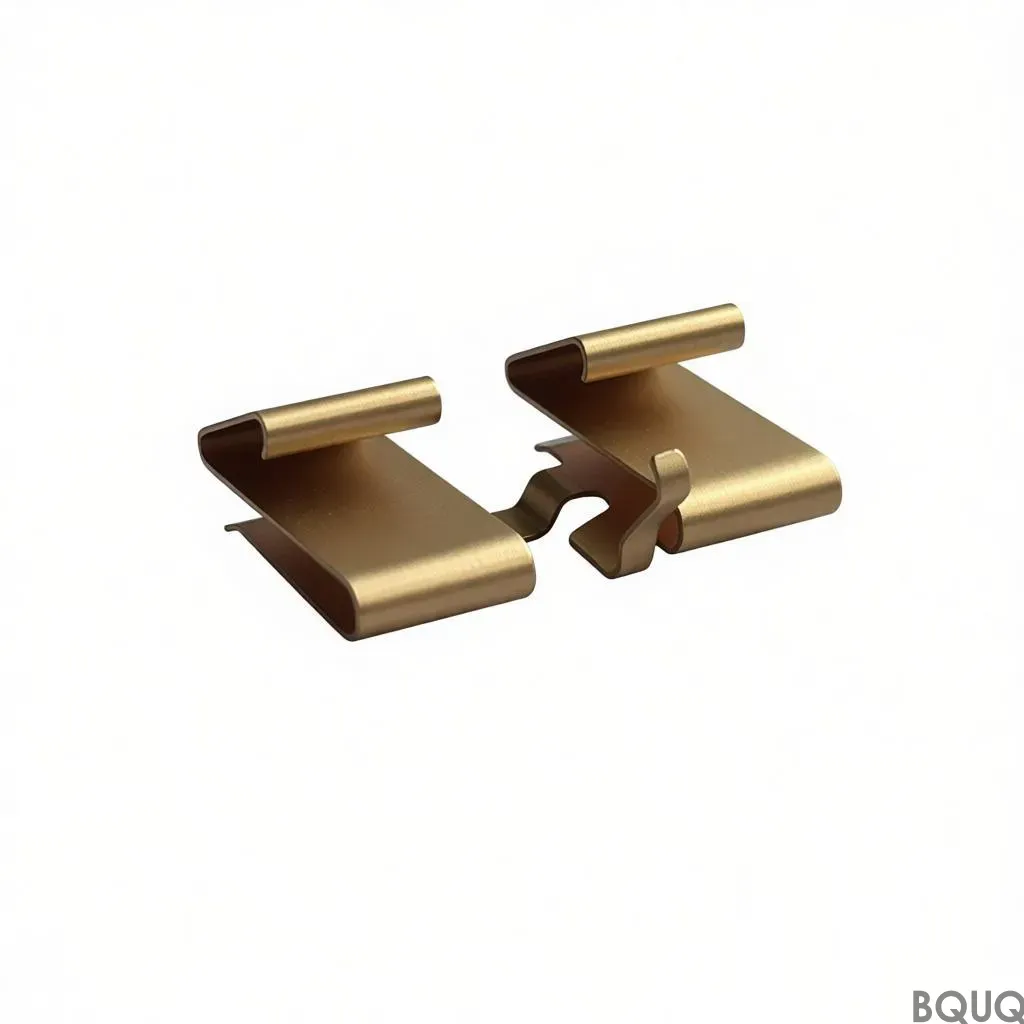
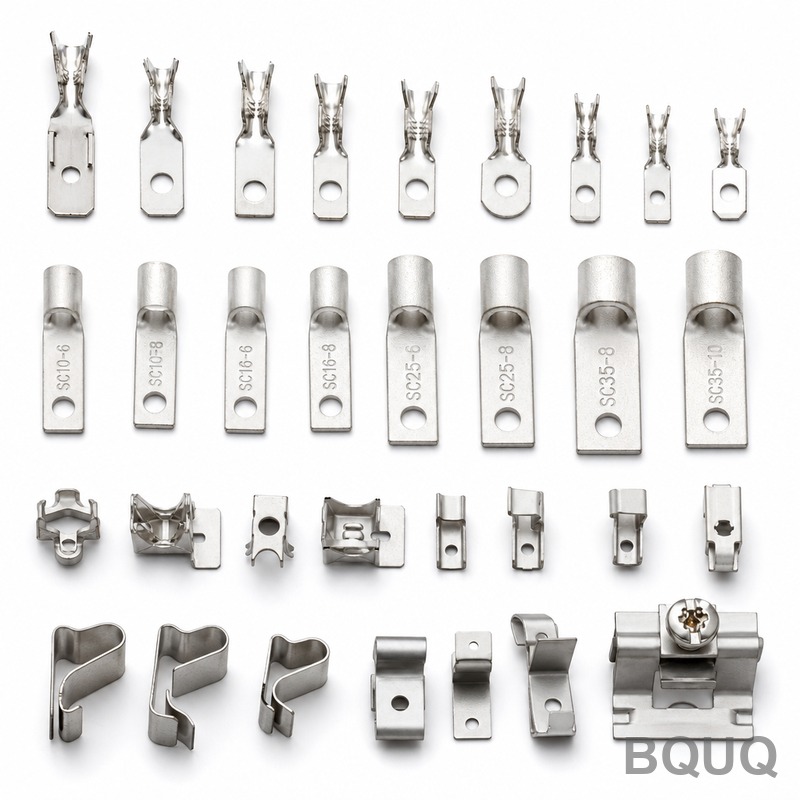
The direct answer is that metal stamping imparts superior durability to battery contacts and spring clips through work-hardening of the base metal, precise control over grain flow, and the ability to use high-performance alloys with exacting tolerances. By cold-forming the material rather than cutting or machining it, the stamped part retains a continuous grain structure that resists fatigue and stress relaxation—the two primary failure modes in these components. Furthermore, advanced stamping processes allow for selective thickening, specialized plating, and controlled spring-back compensation, which together deliver a service life of 10,000 to 50,000 insertion cycles and operational stability from -40°C to 150°C, depending on material selection.
What Are the Primary Failure Modes of Battery Contacts and Spring Clips?
Battery contacts and spring clips fail predominantly due to stress relaxation, fatigue fracture, and corrosion. Stress relaxation occurs when the elastic deflection of the spring material degrades over time under constant load, reducing the normal force below the threshold required for stable electrical contact; for example, a beryllium copper clip rated at 100 grams of force can drop to 60 grams after 1,000 hours at 125°C if improperly processed. Fatigue fracture typically initiates at micro-cracks or sharp internal radii, often after 5,000 to 20,000 cycles of repeated battery insertion and removal. Corrosion, particularly galvanic corrosion between dissimilar metals, attacks the contact surface and increases contact resistance, which can rise from a baseline 10 milliohms to over 100 milliohms in a humid environment without proper plating.
How Does the Stamping Process Improve Grain Structure and Material Strength?
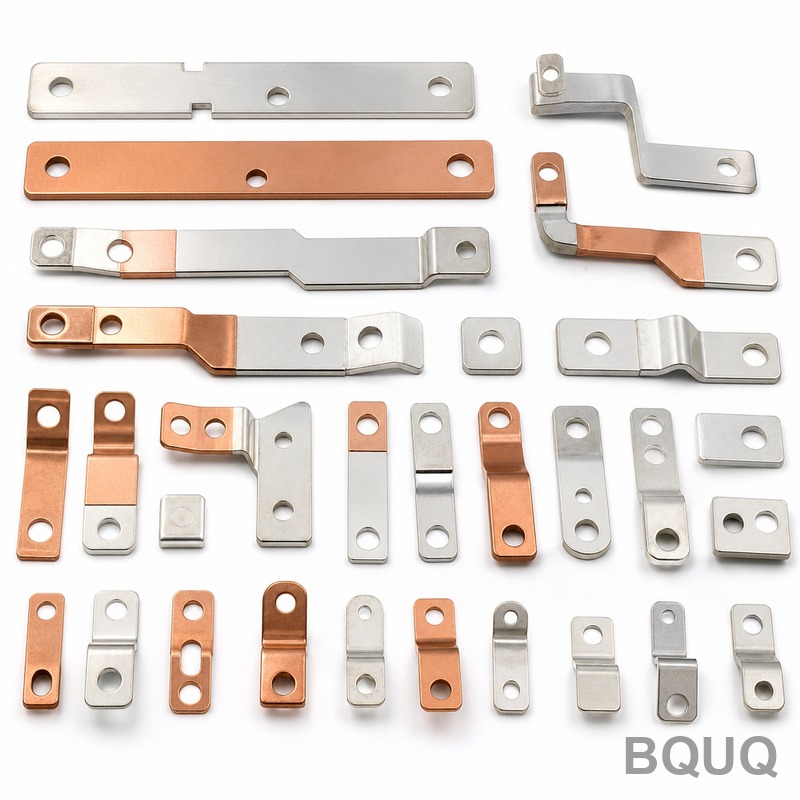
The stamping process, specifically progressive die stamping, cold-works the metal through controlled plastic deformation. When a strip of phosphor bronze or stainless steel is drawn, bent, and coined, the grain structure becomes elongated and aligned with the shape of the part, unlike machining which severs grains and creates stress concentration points. This alignment increases the yield strength by 20% to 40% compared to the annealed state; for instance, C17200 beryllium copper in the mill-hardened condition (TH04) exhibits a tensile strength of 1,275 MPa, but after stamping and age-hardening, it reaches 1,380 MPa. Additionally, the coining process—a stamping operation that applies localized high pressure—densifies the material surface, closing micro-porosity and improving resistance to crack initiation. The result is a spring clip that can endure over 50,000 deflection cycles at 90% of its yield strength without permanent set, a performance level unattainable with simple bending or wire forming.
Why Is Material Selection Critical for Long-Term Spring Performance?
Material selection is the single largest determinant of stamped contact longevity because the elastic modulus and electrical conductivity are inherently tied to the alloy composition. The most common materials are beryllium copper (C17200), phosphor bronze (C51000), and stainless steel (301 or 302), each offering a distinct trade-off between conductivity, strength, and cost. Beryllium copper provides the best combination of high conductivity (22% IACS) and high yield strength (1,100-1,380 MPa), making it ideal for critical contacts in automotive and aerospace applications, though it costs approximately $18 to $25 per kilogram. Phosphor bronze (C51000) offers a lower cost of $10 to $14 per kilogram with a yield strength of 590 MPa and conductivity of 15% IACS, suitable for consumer electronics. Stainless steel 301 is the cheapest at $4 to $6 per kilogram but has poor conductivity (2.4% IACS), requiring a thick nickel or gold plating; it is used only where high-temperature resistance above 200°C is mandatory. The engineering reasoning is that a higher yield strength allows a thinner cross-section for the same normal force, reducing material usage and weight, but the designer must balance this against the need for low contact resistance.
How Does Precision Tolerancing and Spring-Back Compensation Affect Lifespan?
Precision tolerancing in stamping directly influences lifespan because variations in the bend radius and material thickness alter the stress distribution within the spring arm. A typical stamped battery contact holds a dimensional tolerance of +/- 0.05 mm for critical features, and +/- 0.13 mm for non-critical dimensions; this precision ensures that the pre-load force remains within a +/- 10% window of the nominal design value. Spring-back compensation is a crucial engineering step—when 301 stainless steel is bent to a 90-degree angle, it springs back by 2 to 8 degrees depending on the bend radius-to-thickness ratio, so the die must be over-bent to account for this. If spring-back is not precisely compensated, the resulting contact may have a reduced deflection range, causing it to yield prematurely or lose normal force after only 3,000 cycles instead of 30,000. Advanced stamping houses use finite element analysis (FEA) to model spring-back and adjust the die geometry, achieving a final angle accuracy of +/- 0.5 degrees, which ensures uniform stress and extends fatigue life.
Which Plating and Surface Finishing Methods Maximize Corrosion Resistance?
The correct plating system converts a mechanically sound part into a reliable electrical component, and the choice depends on the operating environment and cycle life requirement. The industry standard is a three-layer system: a nickel underplate of 1.27 to 2.54 micrometers to prevent copper diffusion, followed by a gold flash of 0.76 micrometers for low contact resistance, or a selective gold plating of 0.5 to 2.5 micrometers only at the contact interface to reduce cost. For lower-cost applications, tin or tin-lead plating of 2.5 to 5.0 micrometers is used, but it is susceptible to fretting corrosion under vibration, so it is limited to stationary applications. Nickel plating alone, at 2.5 to 5.0 micrometers, is suitable for temperatures up to 250°C but offers higher contact resistance (20-50 milliohms) than gold. The stamping process aids plating adhesion because the cold-worked surface is clean and free of scale, allowing a tighter intermetallic bond; however, the part must be degreased and acid-activated within 24 hours of stamping to prevent surface oxidation that causes plating delamination.
How Does the Stamping Process Compare to Machining or Wire Forming for These Parts?
Stamping outperforms CNC machining and wire forming for battery contacts in both cost and mechanical integrity, but it has a higher initial tooling investment. The break-even point is typically 50,000 to 100,000 parts; below this volume, CNC machining or wire EDM may be more economical because they require no die set. However, for high-volume production, stamping is 5 to 10 times faster, running at 400 to 800 strokes per minute, and produces a part for $0.02 to $0.15 each compared to $0.50 to $2.00 for a machined equivalent. From a mechanical perspective, a stamped part has no machined notches that act as stress risers; wire-formed springs, while cheaper for simple shapes, cannot achieve the complex 3D geometries or tight flatness tolerances (0.025 mm) that stamping can. The table below summarizes the key performance metrics for common battery contact materials.
| Material | Yield Strength (MPa) | Conductivity (% IACS) | Max Operating Temp (°C) | Relative Cost per kg | Typical Insertion Cycles |
| C17200 Beryllium Copper | 1,275 | 22 | 150 | $18-25 | 50,000 |
| C51000 Phosphor Bronze | 590 | 15 | 100 | $10-14 | 20,000 |
| 301 Stainless Steel | 965 | 2.4 | 250 | $4-6 | 10,000 |
| C52100 Phosphor Bronze | 690 | 13 | 100 | $11-15 | 25,000 |
| 302 Stainless Steel | 1,100 | 2.4 | 250 | $4-6 | 12,000 |
What Design Rules Ensure Maximum Durability in Stamped Battery Contacts?
To maximize durability, engineers must follow specific design-for-manufacturing (DFM) rules that leverage the stamping process capability. First, the minimum bend radius should be at least 1.0 times the material thickness for beryllium copper and 1.5 times for stainless steel; a tighter radius creates micro-cracks on the outer surface that propagate under cyclic loading. Second, the ratio of the spring arm length to its thickness should be greater than 10:1 to keep the bending stress below 60% of the yield strength, preventing plastic deformation. Third, avoid sharp internal corners in the blank design; specify a corner radius of at least 0.25 mm to reduce stress concentration. Fourth, the contact normal force should be designed between 50 and 150 grams for most consumer applications, as forces below 50 grams risk intermittent contact and forces above 150 grams accelerate wear of the battery plating. Finally, specify a burnish band of at least 50% of the material thickness on the sheared edge by controlling the die clearance to 5-8% of material thickness, which prevents edge cracking and improves the fatigue life by up to 30%.
FAQ
What Is the Typical Lead Time for Stamped Battery Contact Tooling?
The lead time for a progressive die for a battery contact ranges from 3 to 5 weeks for a simple two-station die, and 6 to 8 weeks for a complex 10-station die with coining and forming operations. Tooling cost ranges from $3,000 for a basic die to $15,000 for a precision die with carbide inserts and in-die tapping. Production samples are typically available within 2 weeks of tooling completion.
Can Stamped Contacts Handle High Current Loads Without Overheating?
Yes, but the cross-sectional area and plating thickness must be sized correctly. A stamped contact with a 1.0 mm by 2.0 mm cross-section in beryllium copper can handle continuous currents up to 5 amperes with a temperature rise below 30°C. For higher currents, the contact area must be increased or multiple contact points used to spread the current and reduce local heating.
How Do You Measure the Normal Force of a Stamped Spring Clip?
Normal force is measured using a load cell and a precision positioning stage that simulates battery insertion. The clip is fixed, and a probe with the same diameter as the battery is pushed into the contact at a speed of 10 mm/min, recording the force at the final insertion depth. The acceptable range is typically +/- 15% of the nominal value, and this test is repeated for 10,000 cycles to verify stability.
What Is the Difference Between Stamped and Etched Battery Contacts?
Stamped contacts are mechanically sheared and formed, offering higher strength and lower cost at high volumes, but they have a sheared edge that may show micro-cracks. Etched contacts are chemically milled, producing a perfectly smooth edge with no stress risers, which is ideal for very thin parts (below 0.1 mm) but costs 3 to 5 times more and has a longer lead time. Stamping is preferred for spring clips and contacts over 0.15 mm thick.
When Should You Choose Gold Plating Over Tin Plating for Battery Contacts?
Gold plating should be chosen when the contact requires over 10,000 insertion cycles, operates in a corrosive environment, or must maintain less than 20 milliohms of contact resistance over its lifetime. Tin plating is acceptable for low-cycle applications (under 5,000 cycles) in clean, dry environments where cost is the primary driver. The price difference is significant: gold plating adds $0.02 to $0.05 per contact, while tin adds only $0.002 to $0.005.
How Does Temperature Affect the Lifespan of a Stamped Spring Clip?
Elevated temperature accelerates stress relaxation exponentially; for example, a phosphor bronze clip operating at 85°C will lose 20% of its normal force after 1,000 hours, while at 25°C it will take over 10,000 hours for the same loss. Beryllium copper is more stable, losing only 10% of its force after 1,000 hours at 125°C. For applications above 150°C, stainless steel is required, but the design must account for its poor conductivity by increasing the contact area.
Can Stamped Battery Contacts Be Made to Custom Shapes Quickly?
Yes, for prototyping, BQUQ offers low-volume stamped parts using a simplified die or wire EDM cut blanks, with lead times of 5 to 7 business days for quantities under 500 pieces. For production volumes, the full progressive die process takes 4 to 6 weeks from design approval to first article. All custom shapes are validated with FEA modeling before tooling to ensure the spring rate and stress levels meet the specification.
In conclusion, metal stamping is the optimal manufacturing process for battery contacts and spring clips that require long-term reliability, offering superior grain structure, tight tolerances, and cost-effectiveness at scale. The combination of proper material selection, precision die design with spring-back compensation, and appropriate plating ensures a service life of tens of thousands of cycles under demanding conditions. For engineers seeking a manufacturing partner with 20 years of experience in CNC machining, stamping, and heat sink production, BQUQ provides rapid design-for-manufacturability feedback and a 12-hour quoting service. To discuss your specific contact requirements, email us at sc@bquq.com, reach us on WhatsApp at +86 13713157787, or visit www.bquq.com for more information.