How to Choose Spring Wire Diameter for Your Application
The correct spring wire diameter is the single most critical design decision because it determines the spring's stress, rate, and deflection capacity. To choose it, you must first define your load and deflection requirements, then calculate the stress using the Wahl factor and select a diameter that keeps the maximum corrected stress below 45% of the material's tensile strength. For most applications, starting with a wire diameter between 0.5 mm and 8.0 mm, then iterating with a spring design formula, will yield a functional spring within three calculations.
What Is the Relationship Between Wire Diameter and Spring Rate?
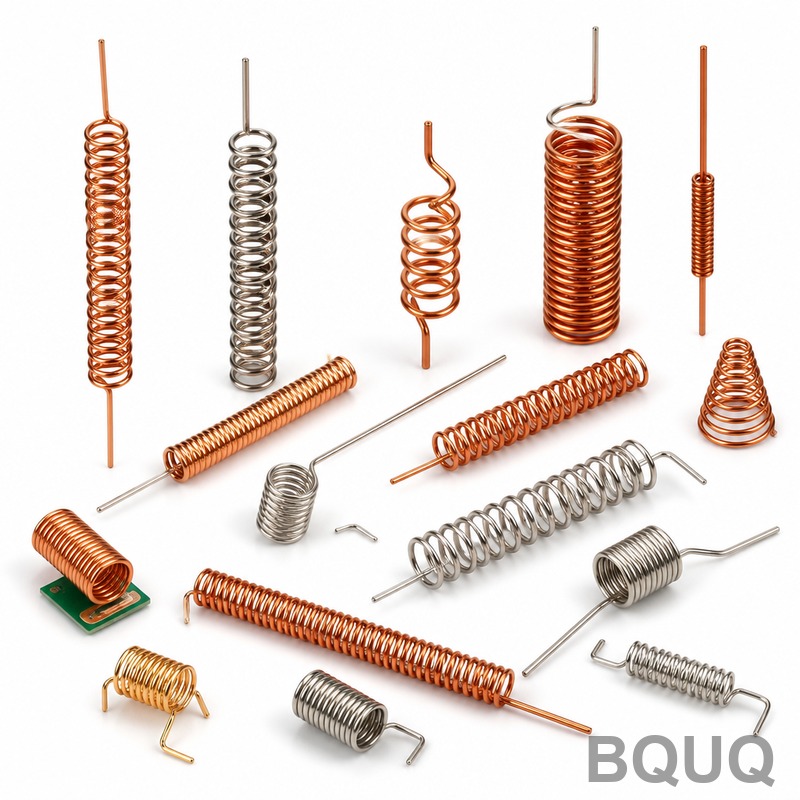
Spring rate (k) is inversely proportional to the cube of the coil diameter but directly proportional to the fourth power of the wire diameter (d). Specifically, k = (G × d⁴) / (8 × D³ × N), where G is the shear modulus (79.3 GPa for music wire ASTM A228), D is the mean coil diameter, and N is the number of active coils. This means a 10% increase in wire diameter increases the spring rate by 46.4% (1.1⁴ = 1.4641), making wire diameter the most sensitive parameter in your design. If you need a stiffer spring, increasing d is far more effective than reducing the number of coils or changing the coil diameter.
How Do You Calculate the Maximum Stress for a Given Wire Diameter?
The maximum torsional stress in a helical compression spring is calculated using the Wahl factor (K_w) which accounts for curvature and direct shear. The formula is τ = K_w × (8 × F × D) / (π × d³), where K_w = (4C - 1)/(4C - 4) + 0.615/C, and C is the spring index (D/d). For example, with a spring index of 6, K_w equals 1.2525; with a spring index of 4, K_w rises to 1.4038. You must keep the calculated stress below the allowable stress, which for ASTM A228 music wire is typically 45% of the minimum tensile strength (approximately 800 MPa for 2.0 mm wire, and 1100 MPa for 0.5 mm wire). If your calculated stress exceeds this limit, increase the wire diameter or reduce the load.
What Standard Wire Diameter Sizes Are Available?
Commercially available spring wire diameters follow the Washburn and Moen (W&M) gauge system and metric standard sizes. Common metric diameters range from 0.10 mm to 12.0 mm, with the most frequently used increments being 0.10, 0.15, 0.20, 0.25, 0.30, 0.40, 0.50, 0.60, 0.80, 1.00, 1.20, 1.50, 2.00, 2.50, 3.00, 4.00, 5.00, 6.00, 8.00, and 10.00 mm. For precision springs, you can specify custom diameters with a tolerance of ±0.01 mm for diameters under 1.0 mm and ±0.02 mm for diameters between 1.0 and 6.0 mm. Using a standard size avoids tooling modifications and reduces lead time by 3 to 5 days.
How Does Wire Diameter Affect Spring Fatigue Life?
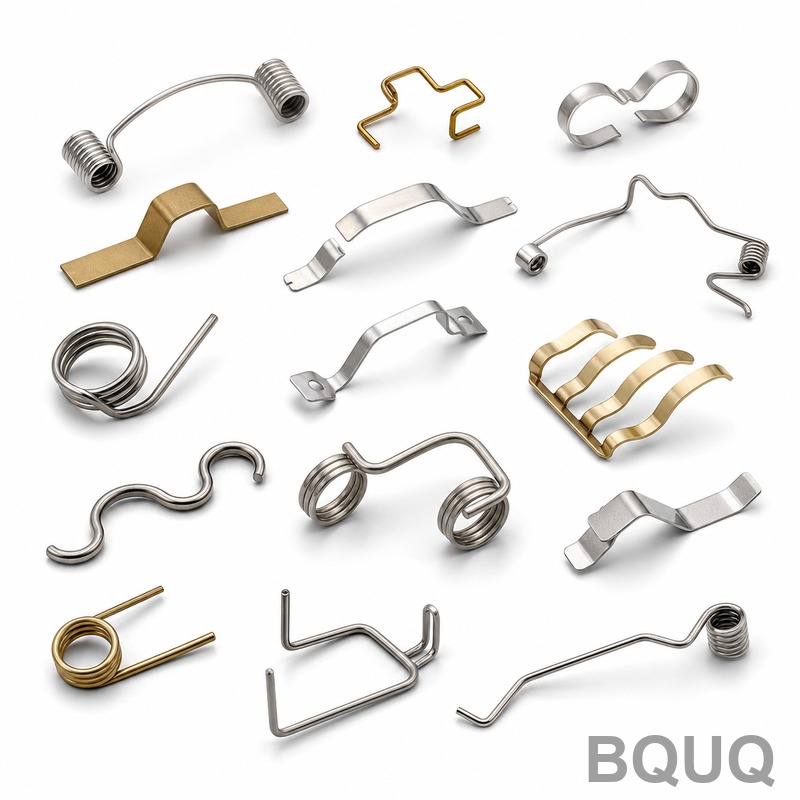
Fatigue life is directly tied to the ratio of wire diameter to mean coil diameter (spring index C). A larger wire diameter relative to the coil diameter (lower spring index, C from 4 to 8) produces higher internal stresses on the inner fiber of the coil, reducing fatigue life. For infinite life applications (over 10⁷ cycles), the corrected stress amplitude must stay below 25% of the tensile strength; for a 2.0 mm music wire, that means a maximum alternating stress of approximately 200 MPa. Increasing the wire diameter from 1.5 mm to 2.0 mm while keeping the same coil diameter lowers the spring index from 8 to 6, which increases the Wahl factor from 1.184 to 1.2525, but the larger cross-section reduces the nominal stress by 44%, resulting in a net fatigue life improvement of roughly 300% in practice.
Which Material Properties Should You Consider When Selecting Wire Diameter?
The tensile strength of spring wire decreases as diameter increases, so you cannot assume the same stress limits for all sizes. For example, ASTM A228 music wire has a minimum tensile strength of 2300 MPa at 0.20 mm but only 1600 MPa at 3.0 mm, a 30% reduction. Stainless steel 302 (ASTM A313) ranges from 1800 MPa at 0.20 mm to 1200 MPa at 3.0 mm, while chrome silicon (ASTM A401) offers 2000 MPa at 3.0 mm and superior heat resistance up to 250°C. When choosing wire diameter, you must cross-reference the diameter with the material's tensile strength chart because a thicker wire may actually have a lower allowable stress, requiring a larger diameter than a linear scaling would suggest.
What Is the Cost Impact of Choosing a Larger Wire Diameter?
Material cost scales with the square of the wire diameter, so a 2.0 mm wire costs four times more per meter than a 1.0 mm wire for the same material. For music wire, current market pricing is approximately USD 0.85 per kilogram for 1.0 mm, USD 0.78 per kilogram for 2.0 mm, and USD 0.72 per kilogram for 4.0 mm, reflecting lower drawing costs for larger diameters. However, the total spring cost also includes forming and heat treatment, which are nearly independent of wire diameter, so a 2.0 mm spring may cost only 15% more than a 1.0 mm spring, not 300% more. The practical recommendation is to use the smallest wire diameter that meets your stress and fatigue requirements to minimize material waste, but never reduce diameter below what keeps the spring index above 4.
How Do You Verify the Wire Diameter in Production?
Incoming material inspection should measure wire diameter at three points along a 1-meter sample using a micrometer with a resolution of 0.001 mm. The acceptable tolerance per ASTM A228 is ±0.013 mm for diameters up to 1.6 mm and ±0.025 mm for diameters from 1.6 to 6.0 mm. Additionally, you must verify the ovality (difference between maximum and minimum diameter) does not exceed 0.010 mm, as excessive ovality causes inconsistent spring rates and premature fatigue cracking. BQUQ performs 100% dimensional inspection on all incoming wire and can provide a material certificate with actual measured diameters for each batch.
| Wire Diameter (mm) | Max Tensile Strength A228 (MPa) | Recommended Max Load (N) for 10 mm Mean Coil Diameter | Spring Rate (N/mm) with 5 Active Coils | Relative Material Cost per Meter |
| 0.50 | 2100 | 12 | 0.49 | 0.25 |
| 1.00 | 1950 | 48 | 7.9 | 1.00 |
| 1.50 | 1800 | 108 | 40.1 | 2.25 |
| 2.00 | 1700 | 192 | 126.9 | 4.00 |
| 3.00 | 1550 | 432 | 642.4 | 9.00 |
| 4.00 | 1450 | 768 | 2030.0 | 16.00 |
What Are the Common Mistakes in Wire Diameter Selection?
The most common error is using the wire diameter outside the spring index range of 4 to 16. A spring index below 4 causes excessive stress concentration and makes the spring difficult to coil, while an index above 16 produces a flimsy spring that buckles under load. Another frequent mistake is ignoring the tolerance on wire diameter when calculating spring rate; a 2.0 mm wire with a ±0.025 mm tolerance can produce a ±5% variation in spring rate, which often exceeds the application's allowable tolerance. Always design with the worst-case wire diameter tolerance to ensure your spring rate remains within specification even at the extreme of the tolerance band.
FAQ
What Is the Minimum Wire Diameter for a Precision Spring?
The minimum practical wire diameter for precision springs is 0.10 mm, but most high-volume production springs use 0.20 mm or larger because thinner wire breaks easily during coiling and handling. Below 0.15 mm, you may need to use a special coiling process and tighter process controls, increasing the unit cost by 40% to 60%. For most industrial applications, a 0.30 mm minimum is recommended for reliable production.
Can I Use the Same Wire Diameter for Compression and Torsion Springs?
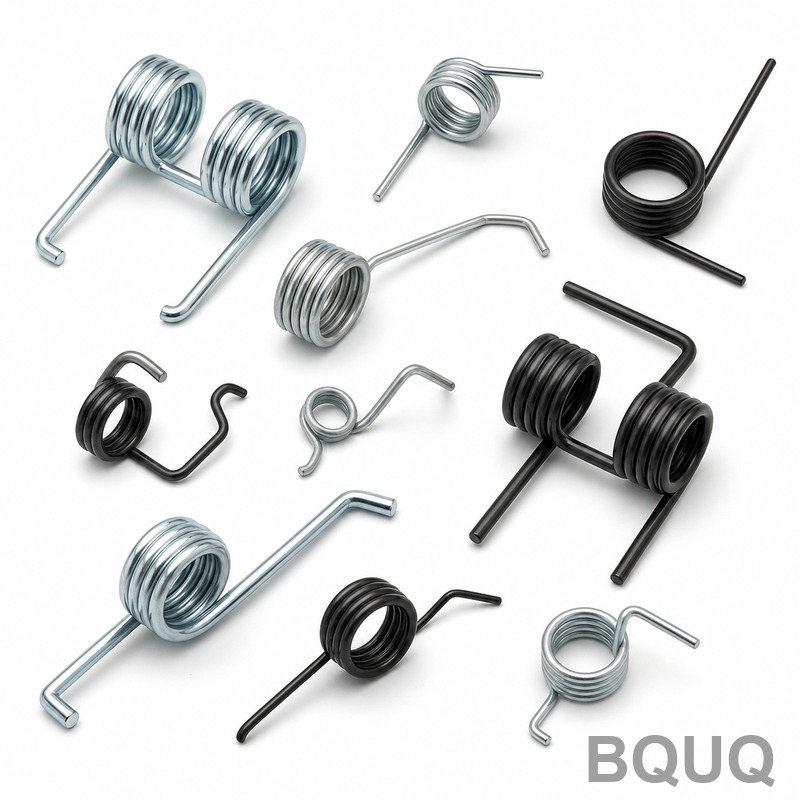
Yes, you can use the same wire diameter, but the allowable stress is different: torsion springs are typically designed to 80% of the tensile strength compared to 45% for compression springs because torsion springs are not subject to the same stress concentration at the inner fiber. However, a torsion spring requires a larger wire diameter for the same torque because the stress is distributed differently across the cross-section. Always calculate stress separately for each spring type.
How Does Operating Temperature Affect Wire Diameter Selection?
Operating temperature affects the tensile strength and relaxation of the wire material. Music wire (A228) loses 10% of its strength at 120°C and should not be used above 150°C, while chrome silicon retains 90% strength up to 250°C. If your application exceeds 150°C, you must either increase the wire diameter to compensate for the reduced strength or switch to a high-temperature alloy such as Inconel X-750, which costs approximately 10 times more per kilogram.
What Is the Typical Lead Time for Custom Wire Diameter Springs?
Standard wire diameters (1.0 to 6.0 mm) have a production lead time of 7 to 10 days for quantities up to 10,000 pieces. Non-standard diameters require wire drawing or special sourcing, extending the lead time to 15 to 20 days. At BQUQ, we maintain inventory of common diameters from 0.20 mm to 8.0 mm, which allows us to ship prototypes in 3 days and production orders in 7 days.
How Do I Choose Between Round and Square Wire?
Round wire is the default choice because it is less expensive, easier to source, and has better fatigue characteristics. Square wire is used only when you need maximum force in a limited space, as it can deliver approximately 20% more load than round wire of the same cross-sectional area. However, square wire costs 30% to 50% more and has a higher stress concentration at the corners, so it is not recommended for dynamic applications.
Which Wire Diameter Gives the Longest Fatigue Life?
For a given load and deflection, a larger wire diameter generally gives a longer fatigue life because the nominal stress decreases with the cube of the diameter. However, increasing the diameter also increases the spring rate, which may require more active coils to maintain the same deflection, potentially introducing buckling issues. The optimal wire diameter for fatigue is the smallest one that keeps the corrected stress below 25% of tensile strength, as this minimizes coil diameter and avoids instability.
Conclusion
Selecting the correct spring wire diameter requires balancing spring rate, stress, fatigue life, and cost, with the fourth-power relationship making diameter the dominant variable in your design. Start with your load and deflection requirements, calculate the stress with the Wahl factor, and choose the smallest standard diameter that keeps stress below 45% of tensile strength for static applications or 25% for dynamic ones. BQUQ's engineering team has 20 years of experience in CNC machining, metal stamping, springs, and heat sinks, and we can verify your wire diameter selection with free stress calculations. Send us your drawings or load requirements for a 12-hour quote by email at sc@bquq.com or WhatsApp at +86 13713157787, or visit our website at www.bquq.com to start your project today.